
• KZT/USD = 0.00226
  • TJS/USD = 0.10830
  • UZS/USD = 0.00009
  • TMT/USD = 0.29760
  • KZT/USD = 0.00226
  • TJS/USD = 0.10830
  • UZS/USD = 0.00009
  • TMT/USD = 0.29760
  • KZT/USD = 0.00226
  • TJS/USD = 0.10830
  • UZS/USD = 0.00009
  • TMT/USD = 0.29760
  • KZT/USD = 0.00226
  • TJS/USD = 0.10830
  • UZS/USD = 0.00009
  • TMT/USD = 0.29760
  • KZT/USD = 0.00226
  • TJS/USD = 0.10830
  • UZS/USD = 0.00009
  • TMT/USD = 0.29760
  • KZT/USD = 0.00226
  • TJS/USD = 0.10830
  • UZS/USD = 0.00009
  • TMT/USD = 0.29760
  • KZT/USD = 0.00226
  • TJS/USD = 0.10830
  • UZS/USD = 0.00009
  • TMT/USD = 0.29760
  • KZT/USD = 0.00226
  • TJS/USD = 0.10830
  • UZS/USD = 0.00009
  • TMT/USD = 0.29760
27 September 2026

Viewing results 1 - 6 of 2

Opinion: How Europe Balances Conditions and Interests in Uzbekistan

Uzbekistan has enjoyed preferential access to the EU market under GSP+ since 2021. The program removes tariffs on thousands of products for countries that commit to implementing international conventions on human rights, labor standards, environmental protection, and governance. Uzbekistan is one of two Central Asian countries, alongside Kyrgyzstan, participating in GSP+. Tajikistan receives the less generous standard GSP preferences, while Kazakhstan and Turkmenistan are outside the scheme because they are classified as upper-middle-income economies. Uzbekistan makes extensive use of the program. In 2024, its preference utilization rate, the share of eligible exports entering the EU duty-free, was 92.2%. EU imports from Uzbekistan nearly doubled between 2021 and 2024. Those benefits come with conditions. The European Commission assesses whether Uzbekistan is implementing the conventions required under GSP+. It must consider findings from the UN and International Labour Organization monitoring bodies, but it can also use evidence from governments, international organizations, civil society groups, and other sources. If the Commission has “reasonable doubt” that Uzbekistan is meeting its commitments, it can open a withdrawal procedure. Uzbekistan can respond and provide evidence of compliance. The Commission then decides whether to close the case or withdraw preferences from some or all products. The system gives Brussels a formal role in assessing whether Uzbekistan continues to meet the conditions attached to preferential market access. It also requires the Commission to decide how different evidence should be interpreted and when shortcomings are serious enough to justify action. There is no automatic formula that produces that decision. The EU–Uzbekistan Enhanced Partnership and Cooperation Agreement, or EPCA, creates a separate mechanism. It makes respect for human rights an essential part of the partnership, and a serious breach can lead to partial or full suspension of the agreement. The European Parliament’s May 2026 resolution called for implementation of the agreement’s human-rights and rule-of-law commitments and for those commitments to be assessed within three years. The EU’s own report records setbacks in media freedom, civil society, and judicial independence. It also recognizes progress on labor standards and protections for women and children. The Commission must assess compliance with each required convention; progress in one area does not remove obligations in another. That means the Commission must decide how much weight to give different evidence and when concerns are serious enough to affect trade preferences. Decisions on Uzbekistan’s domestic reforms, however, remain with the Uzbek government. Concurrently, cooperation between the EU and Uzbekistan has expanded. Brussels is pursuing closer ties with Uzbekistan on transport connectivity and critical raw materials. Uzbekistan’s position on regional transport routes, critical raw materials, and access to a growing Central Asian market also gives Tashkent leverage in its dealings with Europe. The new GSP rules apply from January 2027, raising the number of required conventions from 27 to 32. Existing beneficiaries retain their preferences during a transition period and must reapply by the end of 2028. The EPCA has applied provisionally since March 1, 2026, while full ratification remains pending. The next GSP+ review will show how...

Uzbekistan and EU Discuss €12 Billion in New Projects

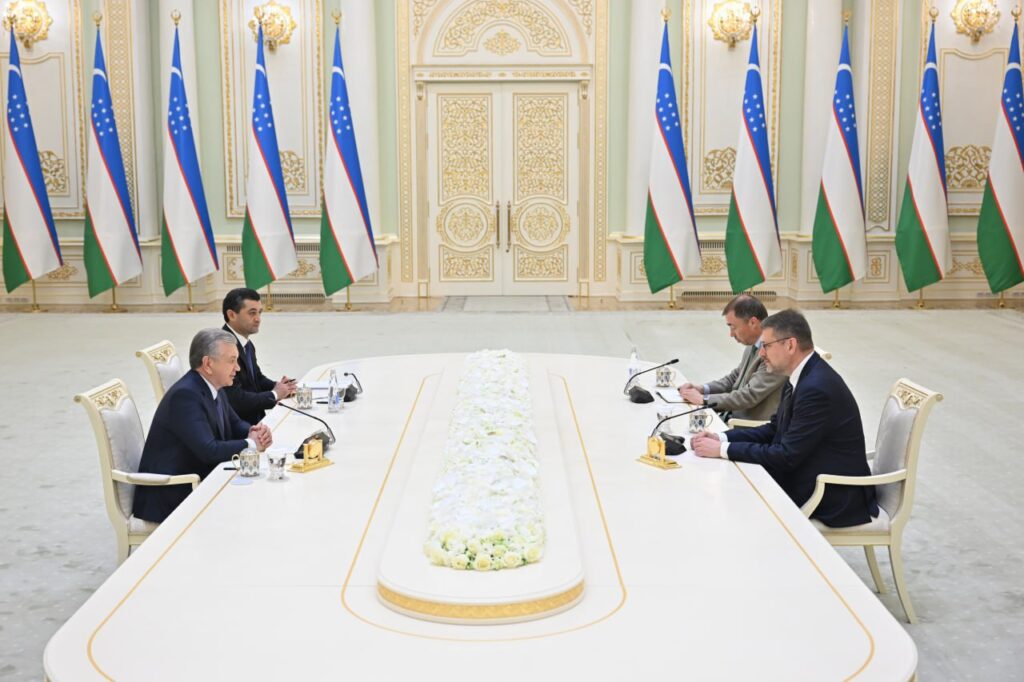
On May 13 in Tashkent, President Shavkat Mirziyoyev met with Eduards Stiprais, the European Union’s Special Representative for Central Asia, according to the presidential press service, with the two sides reviewing the outcomes of the first Central Asia-European Union Summit, held in Samarkand in April, and discussing ways to implement its decisions. Expanding Strategic Cooperation The talks focused on strengthening both bilateral and regional partnerships, with particular attention to advancing investment and technical cooperation initiatives valued at €12 billion. The parties also exchanged views on key regional developments and discussed plans for upcoming joint events. Economic ties between Uzbekistan and the EU have accelerated in recent years. Since 2020, trade between the two has doubled to more than €6 billion, while Uzbek exports to the EU have quadrupled. Over a thousand joint ventures have been launched, and the value of European investment projects in Uzbekistan now exceeds €30 billion. To attract more European investors, Uzbekistan has undertaken reforms to improve its business environment. In 2024 alone, trade with EU countries reached $6.4 billion, and more than a thousand European firms are currently operating in the country. Geopolitical Undercurrents During a separate visit to Uzbekistan in April, Russian Foreign Minister Sergey Lavrov criticized the EU’s growing presence in the region. He accused the EU of using development projects to expand geopolitical influence, particularly in sensitive areas such as customs and border management. “We are categorically against politicizing cooperation processes and introducing ideological elements associated with Western attempts to dominate,” Lavrov stated, whilst emphasizing that Russia respects the sovereignty of its neighbors and will refrain from interfering in their internal affairs. A Strategic Pivot Uzbekistan’s growing ties with the EU reflect a strategic pivot to diversify its economic partnerships and reduce dependence on traditional allies like Russia and China. This move aligns with the region’s broader efforts to balance relations with global powers while fostering local development. The EU’s €12 billion investment and technical cooperation initiatives signal a deeper commitment to Central Asia, enabling countries like Uzbekistan to modernize industries, improve infrastructure, and enhance trade networks. This shift not only boosts Uzbekistan’s economic growth but also creates new opportunities for regional integration by connecting Central Asia with European markets through preferential trade agreements and enhanced supply chains. However, the deepening EU-Uzbekistan partnership does not come without challenges in the region’s geopolitical landscape. Russia, historically a dominant influence in Central Asia, views the EU’s expanded presence as a potential threat to its sphere of influence. Likewise, China, which has established extensive connectivity projects under the Belt and Road Initiative, may perceive Uzbekistan's alignment with the EU as a cautious step towards reducing reliance on Beijing-led projects. This strategic recalibration creates a more competitive environment, with Uzbekistan leveraging its geographical position to attract diverse investments while carefully navigating tensions between rival powers. By maintaining a delicate balance, Uzbekistan could emerge as an economic and diplomatic bridge linking Europe, Central Asia, and East Asia.