
• KGS/USD = 0.01144 0%
  • KZT/USD = 0.00201 0%
  • TJS/USD = 0.10568 -0.09%
  • UZS/USD = 0.00008 0%
  • TMT/USD = 0.28571 0%
  • KGS/USD = 0.01144 0%
  • KZT/USD = 0.00201 0%
  • TJS/USD = 0.10568 -0.09%
  • UZS/USD = 0.00008 0%
  • TMT/USD = 0.28571 0%
  • KGS/USD = 0.01144 0%
  • KZT/USD = 0.00201 0%
  • TJS/USD = 0.10568 -0.09%
  • UZS/USD = 0.00008 0%
  • TMT/USD = 0.28571 0%
  • KGS/USD = 0.01144 0%
  • KZT/USD = 0.00201 0%
  • TJS/USD = 0.10568 -0.09%
  • UZS/USD = 0.00008 0%
  • TMT/USD = 0.28571 0%
  • KGS/USD = 0.01144 0%
  • KZT/USD = 0.00201 0%
  • TJS/USD = 0.10568 -0.09%
  • UZS/USD = 0.00008 0%
  • TMT/USD = 0.28571 0%
  • KGS/USD = 0.01144 0%
  • KZT/USD = 0.00201 0%
  • TJS/USD = 0.10568 -0.09%
  • UZS/USD = 0.00008 0%
  • TMT/USD = 0.28571 0%
  • KGS/USD = 0.01144 0%
  • KZT/USD = 0.00201 0%
  • TJS/USD = 0.10568 -0.09%
  • UZS/USD = 0.00008 0%
  • TMT/USD = 0.28571 0%
  • KGS/USD = 0.01144 0%
  • KZT/USD = 0.00201 0%
  • TJS/USD = 0.10568 -0.09%
  • UZS/USD = 0.00008 0%
  • TMT/USD = 0.28571 0%
24 February 2026

Viewing results 1 - 6 of 7

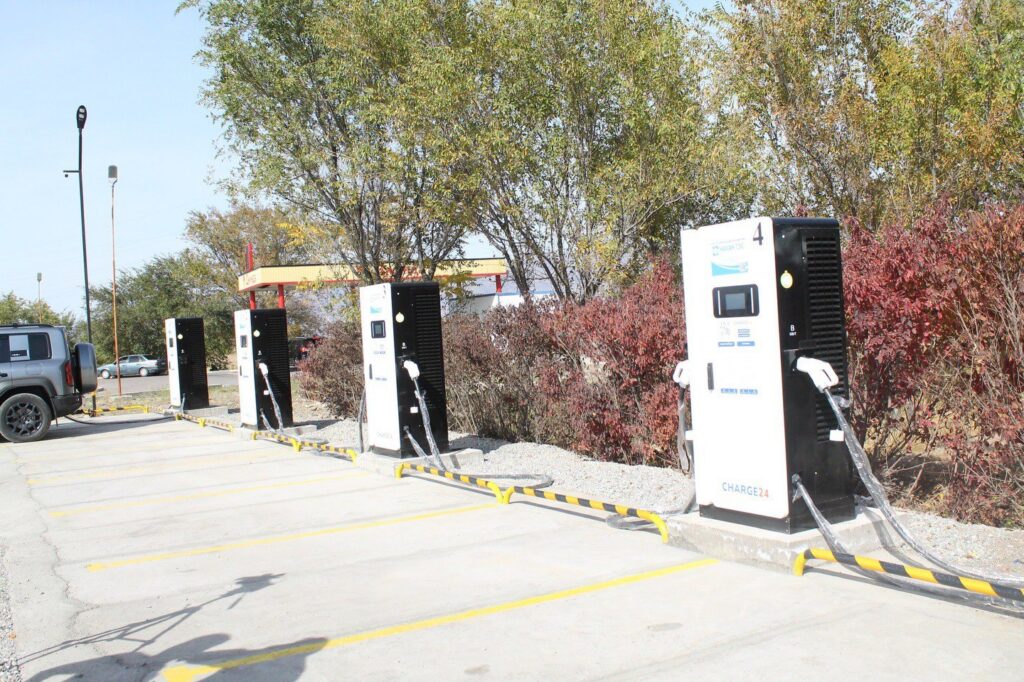
Kyrgyzstan to Install Electric Vehicle Charging Stations in Key Tourist Region

State-owned Chakan GES OJSC will install 10 electric vehicle (EV) charging stations across the Issyk-Kul region, Kyrgyzstan’s primary tourist destination, and home to Lake Issyk-Kul and the country’s largest mountain ski resort in Karakol. The initiative is being implemented with support from the Ministry of Energy as part of ongoing efforts to promote environmentally friendly transportation and enhance tourism and transport infrastructure in the region. The new stations will be located in Karakol, the administrative center of the Issyk-Kul region (2 stations); Cholpon-Ata, the main resort hub (2); Balykchy (2); and the villages of Bokonbaevo (1), Kyzyl-Suu (1), and Tyup (2). All are scheduled to begin operations later this year. The number of electric vehicles in Kyrgyzstan is steadily rising. According to First Deputy Prime Minister Daniyar Amangeldiev, more than 200 EVs are imported into the country daily under a VAT exemption scheme. As a member of the Eurasian Economic Union (EAEU), Kyrgyzstan has an annual quota allowing for the duty-free import of up to 15,000 electric vehicles. Despite this growth, EVs still make up a small share of the national vehicle fleet. According to Minister of Natural Resources, Ecology, and Technical Supervision Meder Mashiev, Kyrgyzstan had over 1.9 million registered vehicles as of early 2026, a 13% increase from 2024. Of these, 972,000 run on gasoline, 339,000 on diesel, 56,900 on gas, and 37,000 are hybrids. Electric vehicles account for just 0.8% of the total, or approximately 15,200 units. The government is also advancing plans to localize EV assembly as part of its broader strategy to expand eco-friendly transport options and combat air pollution, particularly in cities like Bishkek. In June 2025, the Ministry of Economy and Commerce signed a memorandum of understanding with South Korean firms EVSIS, NGS, and the Korea Automobile Environment Association. The agreement focuses on developing EV charging infrastructure in Bishkek. As The Times of Central Asia previously reported, South Korean partners also intend to launch production of EV charging stations in Kyrgyzstan, aiming to establish local manufacturing and create a nationwide charging network across major cities and regions.
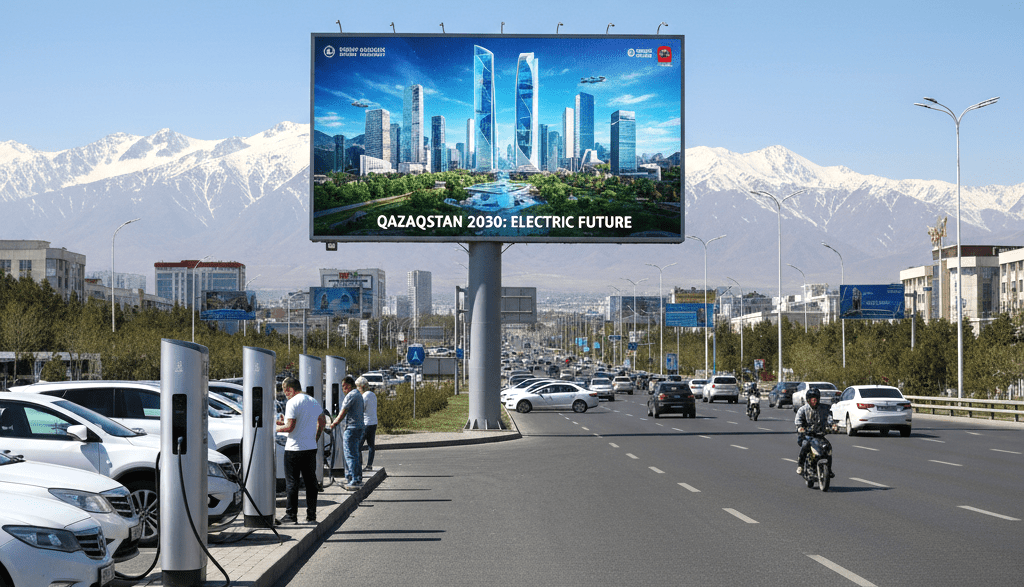
Electric Vehicles in Kazakhstan: Growth, Gaps, and the Road Ahead

Despite growing interest in environmentally friendly transport, the share of electric vehicles (EVs) in Kazakhstan remains modest. This is due to their relatively late entry into the domestic market, persistent public skepticism, and an underdeveloped charging infrastructure. Nevertheless, electric mobility is already seen as a crucial component of Kazakhstan’s future transport strategy and its broader sustainable development agenda. These are among the conclusions of a new study analyzing the state of the EV fleet in Kazakhstan and proposing measures to develop urban electric transport infrastructure. According to official registration data, more than 19,000 electric cars and motorcycles were registered in Kazakhstan in the first half of 2025, a figure that reflects steadily rising interest in EV adoption. More EVs, Fewer Charging Stations If current trends continue, the EV fleet in Kazakhstan could increase more than tenfold by 2030, says Seydulla Abdullaev, Doctor of Technical Sciences and Head of the School of Transport Engineering and Logistics at the Satbayev Kazakh National Research Technical University. However, the pace of charging infrastructure development continues to lag. “Even with the current ratio of 25 electric vehicles per charging station, Kazakhstan will need between 4,000 and 8,000 charging points by 2030. This will require significant investment, an updated regulatory framework, and more active participation from the private sector,” Abdullaev told The Times of Central Asia. By comparison, in China, the global leader in EV production and charging infrastructure, one station serves an average of ten electric vehicles, a level considered high by industry standards. In Europe, EV charging stations are installed along highways at intervals of roughly 50 km. In contrast, only 23 such stations are currently operational on Kazakh highways. International best practices highlight the value of equipping residential complexes and parking lots with courtyard chargers, especially when backed by state subsidies. In Kazakhstan, a roadmap adopted in 2023 mandates that necessary EV infrastructure be established in all major cities by 2029. However, progress has been slow. In Almaty, which accounts for approximately 60% of the nation’s EV fleet, only 23 of the 40 planned charging stations were completed by 2024. “Our analysis shows that the key barriers to electric transport development include inadequate infrastructure, a limited service base, and underdeveloped technical documentation. Moving forward, progress will largely depend on political decisions, particularly in areas such as EV production subsidies, charging station expansion, and buyer incentives,” Abdullaev noted. Incentive Cuts Threaten Market Growth Kazakhstan’s EV market has increasingly aligned with global trends, particularly the dominance of Chinese manufacturers. Today, around 70% of EVs in the country are made in China, followed by about 20% from the U.S., and the rest from Germany, Belgium, Austria, and Japan. According to Natalya Tokmurzina-Kobernyak, Associate Professor at the School of Transport Engineering and Logistics at Satbayev KazNITU, this technological diversity demands a broad and well-supported service infrastructure. The global EV fleet, which stood at 58 million in 2020, had nearly quintupled by the end of 2024, according to the International Energy Agency. That figure is expected to reach...

South Korean Firm to Launch EV Charging Station Production in Kyrgyzstan

A new partnership between Kyrgyz and South Korean stakeholders aims to bring electric vehicle (EV) charging station manufacturing to Kyrgyzstan. The Public-Private Partnership Center under the National Investment Agency of Kyrgyzstan, OJSC Chakan HPP, and South Korea’s BLUE NETWORKS CO., LTD., a company specializing in EV charging infrastructure, have signed a memorandum of cooperation to jointly implement the project. The agreement, reached under a public-private partnership (PPP) framework, outlines plans to establish a local manufacturing facility and roll out a nationwide EV charging network in major cities and regions across the country. According to the PPP Center, the initiative is designed to support sustainable and environmentally friendly transport infrastructure, localize high-tech production, and create new employment opportunities. It also reflects Kyrgyzstan’s broader goals of modernizing its energy and transport sectors and strengthening international cooperation in green technologies. In a related move, Kyrgyzstan’s Ministry of Economy and Commerce signed a memorandum of understanding in June with South Korean firms EVSIS, NGS, and the Korea Automobile Environment Association. That agreement focuses on developing EV charging infrastructure in Bishkek. The broader partnership also includes plans to collaborate with the Kyrgyz State Technical University to offer technical training and internship programs. Emphasis will be placed on building local expertise through industry-academic cooperation, particularly in the operation and maintenance of EV charging networks. The aim is to support the employment of young professionals and foster sustainable growth in the green tech sector. These initiatives are aligned with the Kyrgyz government’s strategy to promote eco-friendly transport alternatives and reduce air pollution in Bishkek and other major urban centers.
