
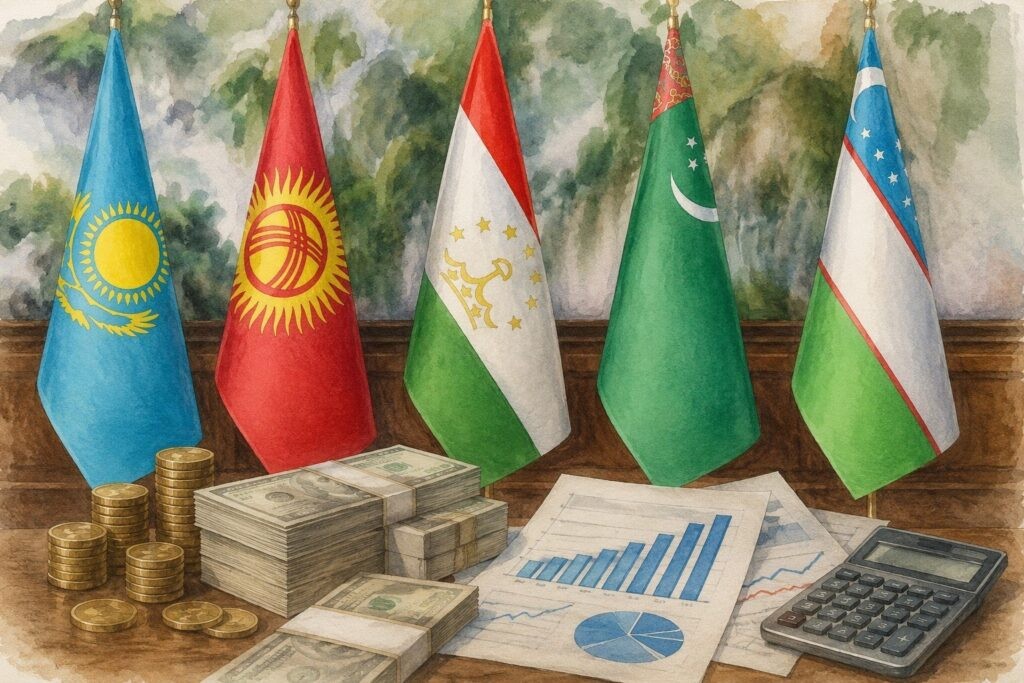
• KZT/USD = 0.00211
  • TJS/USD = 0.10800
  • UZS/USD = 0.00008
  • TMT/USD = 0.29850
  • KZT/USD = 0.00211
  • TJS/USD = 0.10800
  • UZS/USD = 0.00008
  • TMT/USD = 0.29850
  • KZT/USD = 0.00211
  • TJS/USD = 0.10800
  • UZS/USD = 0.00008
  • TMT/USD = 0.29850
  • KZT/USD = 0.00211
  • TJS/USD = 0.10800
  • UZS/USD = 0.00008
  • TMT/USD = 0.29850
  • KZT/USD = 0.00211
  • TJS/USD = 0.10800
  • UZS/USD = 0.00008
  • TMT/USD = 0.29850
  • KZT/USD = 0.00211
  • TJS/USD = 0.10800
  • UZS/USD = 0.00008
  • TMT/USD = 0.29850
  • KZT/USD = 0.00211
  • TJS/USD = 0.10800
  • UZS/USD = 0.00008
  • TMT/USD = 0.29850
  • KZT/USD = 0.00211
  • TJS/USD = 0.10800
  • UZS/USD = 0.00008
  • TMT/USD = 0.29850

Viewing results 1 - 6 of 3

The Central Asia Debt Divide: Why the Region’s Borrowing Risks Are Not the Same

Central Asia’s biggest debtor is not necessarily its most vulnerable. Kazakhstan accounts for roughly two-thirds of the region’s external liabilities, but much of that debt sits on corporate balance sheets rather than the government’s. Tajikistan owes a fraction of the amount, yet remains at high risk of debt distress. The contrast highlights the Central Asia debt divide. Kyrgyzstan and Tajikistan rely more heavily on sovereign and concessional borrowing, while Uzbekistan’s external liabilities are now split almost evenly between the public and corporate sectors. Based on the latest available figures from national authorities and international financial institutions, the combined external debt of Kazakhstan, Kyrgyzstan, Tajikistan, and Uzbekistan approached $275 billion in early 2026. Turkmenistan has not been included in the estimate because the country does not publish comprehensive official external debt statistics that can be directly compared with those of its regional neighbors. The total is an approximate calculation compiled from national statistics rather than a regional aggregate published by a single institution. The countries also release their debt data for different reporting dates and use different classifications, requiring caution when making direct comparisons. Total external debt includes obligations owed to non-residents by governments, central banks, commercial banks, private companies, and, in some countries, local subsidiaries of foreign corporations. Government external debt is a narrower measure covering liabilities that are directly serviced or guaranteed by the state. China remains an important bilateral creditor, particularly in Kyrgyzstan and Tajikistan, while multilateral institutions provide much of the region’s infrastructure and public-sector financing. Kyrgyzstan: Rising Debt, but a Broader Creditor Base Kyrgyzstan’s public debt has risen alongside increased infrastructure spending and domestic borrowing, although its creditor base has become more diversified. A smaller share is now owed to a single bilateral lender, while multilateral financing and the domestic securities market have grown in importance. According to the Kyrgyz Ministry of Finance’s public debt data, the country’s total public debt stood at approximately $8.94 billion as of May 31, 2026, including around $6.1 billion in external obligations. The debt debate has also become part of President Sadyr Japarov’s broader economic narrative. In an interview with the Kabar national news agency published on October 8, 2025, Japarov said his government was continuing to borrow but argued that new loans were being directed toward commercial projects expected to repay their own financing rather than place an additional burden on the state budget. He also said Kyrgyzstan intended to repay its older debts by 2035. The International Monetary Fund said in its 2026 Article IV consultation that Kyrgyzstan had recorded strong economic growth for a fourth consecutive year, giving the authorities an opportunity to strengthen fiscal buffers and accelerate structural reforms. It also warned that the outlook remained exposed to significant downside risks. Kazakhstan: A Large External Debt, but a Different Risk Profile Kazakhstan accounts for the largest share of Central Asia’s external debt, but its headline figure can be misleading. Unlike several of its neighbors, the country’s external liabilities are dominated by corporate and intercompany borrowing rather...

Uzbekistan’s External Debt Reaches $43.97 Billion

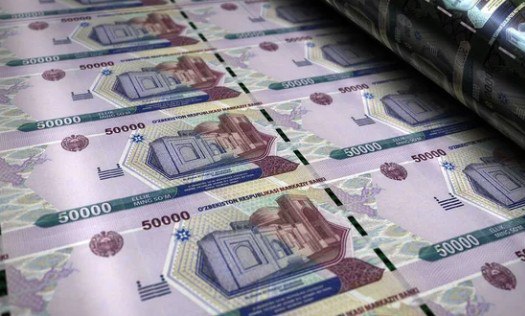
Uzbekistan’s external debt reached 43.97 billion dollars as of October 1, according to data released by the Ministry of Economy and Finance. The increase of 473 million dollars over the previous quarter reflects a slowdown in borrowing, even as the government continues to rely on foreign funding to sustain public spending and major infrastructure projects. The country’s largest creditor remains the World Bank, which has extended 8 billion dollars in loans. This is followed by the Asian Development Bank with 7.5 billion dollars and international investors who hold 5.8 billion dollars in Eurobonds. Loans from Chinese financial institutions total 3.7 billion dollars, while Japanese lenders account for 3.1 billion dollars. Additional borrowing includes 1.7 billion dollars from the Asian Infrastructure Investment Bank and 1.2 billion dollars from France. Multilateral lenders such as the Islamic Development Bank also contribute to the total, along with a group of smaller international creditors that collectively account for 2.5 billion dollars. Debt denominated in U.S. dollars comprises 63% of Uzbekistan’s total external debt, while 12% is in Uzbek som, 8% in euros, and 6% in Japanese yen. The remainder is held in Special Drawing Rights and other currencies. In a related development, RIA Novosti, citing World Bank figures, reported that Uzbekistan increased its debt to Russia by 39 million dollars in 2024. This small rise came amid a broader trend across 38 countries whose combined debt to Russia grew to 33.1 billion dollars last year, the highest level since 1998.

Tajikistan to Repay Over $500 Million to Foreign Creditors in 2026

Tajikistan plans to allocate $548 million to repay its principal external debt in 2026, according to the country’s draft state budget. This would be one of the largest annual external debt payments in recent years for the republic. Most of the repayment will be covered directly from the national budget. A portion will also come from state-owned companies and enterprises that previously received sub-loans backed by government guarantees. These entities are now participating in the repayment process. In addition to external debt, Tajikistan’s domestic obligations in 2026 are projected at more than $51 million. Of that amount, $16 million will be serviced from the budget, while the remaining $34.5 million will be financed through the Ministry of Finance’s deposits at the National Bank of Tajikistan, as well as revenue from the sale and lease of assets belonging to the now-liquidated Agroinvestbank and Tajiksodirotbank, both of which have been transferred to state ownership. Despite these substantial repayments, Dushanbe plans to continue attracting foreign financing for development purposes. More than $678 million is earmarked for state investment projects in 2026, with funding to be directed toward the energy, infrastructure, and social sectors. According to the Ministry of Finance, as of October 1, Tajikistan’s total external debt stood at $3.037 billion, down $151 million, or 4.7%, from the beginning of the year. The figures indicate a gradual reduction in the country’s debt burden. The vast majority of the debt, 95.5%, or nearly $2.9 billion, is classified as direct government debt. Debt secured by state guarantees amounts to slightly over $138 million. China remains Tajikistan’s largest creditor, with over $700 million in outstanding loans. Other major lenders include the World Bank, the Asian Development Bank, the Islamic Development Bank, and the European Bank for Reconstruction and Development.
