• KGS/USD = 0.01144 0%
  • KZT/USD = 0.00214 0%
  • TJS/USD = 0.10562 0%
  • UZS/USD = 0.00008 0%
  • TMT/USD = 0.28530 0%
  • KGS/USD = 0.01144 0%
  • KZT/USD = 0.00214 0%
  • TJS/USD = 0.10562 0%
  • UZS/USD = 0.00008 0%
  • TMT/USD = 0.28530 0%
  • KGS/USD = 0.01144 0%
  • KZT/USD = 0.00214 0%
  • TJS/USD = 0.10562 0%
  • UZS/USD = 0.00008 0%
  • TMT/USD = 0.28530 0%
  • KGS/USD = 0.01144 0%
  • KZT/USD = 0.00214 0%
  • TJS/USD = 0.10562 0%
  • UZS/USD = 0.00008 0%
  • TMT/USD = 0.28530 0%
  • KGS/USD = 0.01144 0%
  • KZT/USD = 0.00214 0%
  • TJS/USD = 0.10562 0%
  • UZS/USD = 0.00008 0%
  • TMT/USD = 0.28530 0%
  • KGS/USD = 0.01144 0%
  • KZT/USD = 0.00214 0%
  • TJS/USD = 0.10562 0%
  • UZS/USD = 0.00008 0%
  • TMT/USD = 0.28530 0%
  • KGS/USD = 0.01144 0%
  • KZT/USD = 0.00214 0%
  • TJS/USD = 0.10562 0%
  • UZS/USD = 0.00008 0%
  • TMT/USD = 0.28530 0%
  • KGS/USD = 0.01144 0%
  • KZT/USD = 0.00214 0%
  • TJS/USD = 0.10562 0%
  • UZS/USD = 0.00008 0%
  • TMT/USD = 0.28530 0%

Viewing results 1 - 6 of 36

West Monitors Syria for Plans of Jihadis, Some From Central Asia

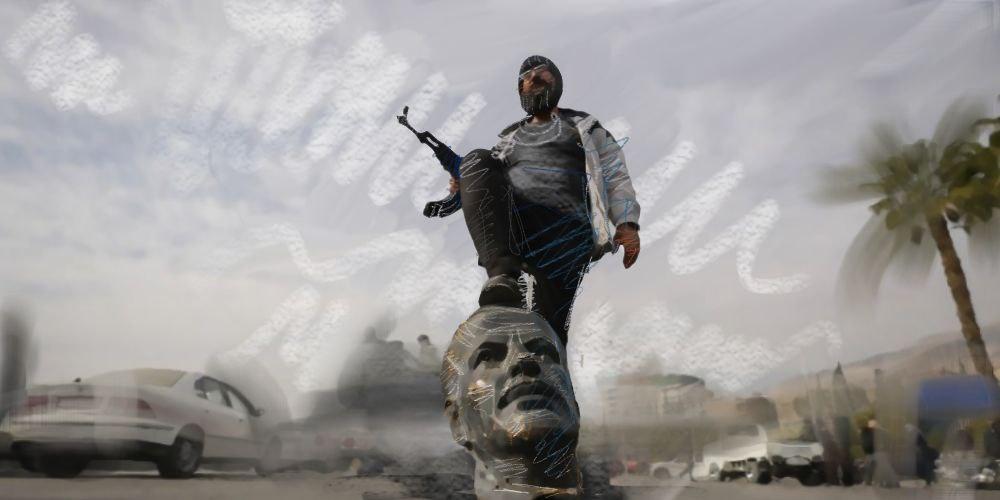
Some counterterrorism experts in the West are assessing whether the ouster of Bashar Assad´s regime in Syria will lead to a recalibration of the Islamic militant groups that opposed him, some of which include especially hardline recruits from Central Asia. Hayat Tahrir al-Sham (HTS), the Syrian group that led an offensive into Aleppo and Damascus and forced Assad to flee in a span of two weeks, is trying to turn to governance with a relatively moderate image even though it was associated with Al-Qaeda earlier in the Syrian civil war and is labeled a terrorist organization on some Western lists. It’s too early to say whether HTS leader Abu Mohammed al-Golani will stick to a message of tolerance or can make it work in a fractured country with gutted institutions, but there are signs that some jihadis object to his message of inclusiveness. “Many of them are Central Asians and they may look to go somewhere else. I think we’re inevitably going to see a certain amount of splintering from what happens in Syria,” said Colin Clarke, a terrorism researcher and author of After the Caliphate. At an Atlantic Council event in Washington on Wednesday, Clarke said there is an “interplay” between religious extremism in Afghanistan and Syria, and that a number of groups with Central Asian members have those connections. Clarke said he will be watching to see whether the connections grow following Assad’s abrupt exit after more than two decades in power. Some estimates put the number of Islamic militants who have traveled from Central Asia to Syria and Iraq over the years at around several thousand, though the figures vary and are difficult to confirm. Many joined the Islamic State group, which was defeated in Iraq and is much diminished in Syria although the U.S. recently carried out air strikes to prevent any resurgence by the group amid Syria’s current upheaval. One jihadist group with Central Asia links that collaborated with HTS in the successful campaign against Assad is Katibat al Tawhid wal Jihad, designated a terror group by the U.S. State Department in 2022. The group carried out a Saint Petersburg, Russia metro attack in 2017 that killed 14 passengers and injured 50 others, as well as a suicide car bombing of the Chinese embassy in Bishkek, Kyrgyzstan in 2016 that injured three people, according to the U.S. Katibat al Tawhid wal Jihad is comprised mainly of Uzbek, Tajik and Kyrgyz combatants, according to Daniele Garofalo Monitoring, which traces jihadist propaganda and military activity. There are an estimated 400-500 fighters in the group. Another HTS ally is Katibat Mujaheddin Ghuroba Division, which has between 200 and 400 fighters, according to the Garofalo site. Many are Uzbeks, Tajiks and Uyghurs, though the group also has Arab militants. There is also Jaysh al-Muhajireen wal-Ansar, which dates to the early stages of the Syrian civil war that began in 2011. The jihadist group is believed to have 400-500 fighters, mostly Chechens, Tajiks, Dagestanis, Azerbaijanis, Kazakhs and Ukrainians, as well as...
Central Asia Braces for Return of Radical Islamists Amid Syrian Turmoil

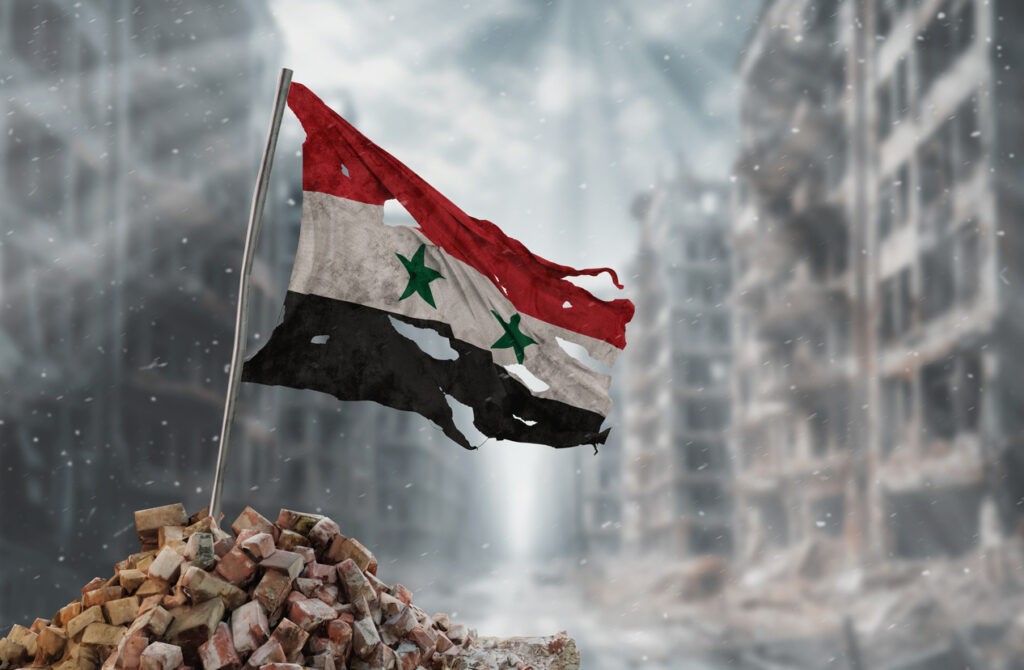
According to experts, the recent collapse of President Bashar al-Assad's regime in Syria raises concerns about potential destabilization in Central Asia. This development may force regional governments to repatriate citizens who were lured by Islamist propaganda, while the future of the Astana format negotiations on Syria remains uncertain. The swift coup d'état in Syria saw opposition forces capture Damascus and much of the country within days. Bashar al-Assad fled to Moscow, leaving a chaotic landscape dominated by the Islamist group Hayat Tahrir al-Sham, often described as a successor to ISIS and Al-Qaeda. The situation has plunged Syria into further instability. The Impact of Operation Zhusan Kazakhstan has firsthand experience dealing with the repercussions of Syria's instability. Between 2013 and 2017, hundreds of Kazakh citizens succumbed to Islamist propaganda, crossing borders illegally to join the conflict, often with their families. In response to the humanitarian crisis, Kazakhstan launched Operation Zhusan ("Wormwood") in January 2019 to repatriate citizens trapped in Syria. The operation, conducted in five stages and completed by February 2021, repatriated 607 citizens, 37 men, 157 women and 413 children (34 of whom were orphans). The government set up a rehabilitation center near Aktau on the Caspian Sea to provide treatment, restore documents, and offer vocational training for adults and education for children. All 37 repatriated men were detained and later convicted of terrorism-related activities, receiving sentences ranging between 6 and 14 years, whilst 18 women faced prosecution. Despite the operation’s success, many in Kazakhstan fear the returnees and their children might spread radical ideologies within the country. Lessons from the Region Other Central Asian countries have also grappled with the challenge of repatriating citizens from Syria. Bakhtiyor Babadjanov, an expert from the Institute for Strategic and Regional Studies under Uzbekistan’s president, detailed the experiences of Uzbek women lured to conflict zones. These women often found themselves deceived and abandoned in dire conditions, as described in an interview. "The 'happy caliphate' turned out to be a myth," Babadjanov explained, recounting stories of women and children abandoned without food or shelter during battles in Mosul. Survivors reported forced marriages, child abuse, and exploitation under the guise of religious duty. The Uncertain Future of the Astana Process Another significant connection between Central Asia and Syria has been the Astana process, a series of negotiations aimed at resolving the Syrian conflict. Since 2017, Kazakhstan has hosted 22 rounds of talks, including discussions on hostages, missing persons, and settlement efforts. However, the recent escalation in Syria casts doubt on the process. In late November and early December, armed opposition groups launched a large-scale offensive, capturing key cities, including Aleppo and Damascus. Despite this upheaval, Russian presidential spokesman Dmitry Peskov insisted the Astana process remains relevant as a platform for dialogue and consultation, notwithstanding the fact that Assad is now in Moscow. Heightened Risks of Destabilization Experts in Kazakhstan and Central Asia have warned that the fall of Assad's regime could lead to prolonged anarchy, ethnic and religious conflicts, and a refugee crisis. Political scientist,...

Uzbek President: Global Conflicts Undercut Anti-Terror Efforts

International conflicts and antagonism among the world’s most powerful countries are undermining “the fight against the threats of terrorism and extremism,” Uzbekistan’s president said at a regional anti-terror conference this week in Tashkent. President Shavkat Mirziyoyev didn’t mention any conflicts or countries by name, but he was possibly referring to Russia’s war against Western-backed Ukraine, the Gaza war that has raised fears of a wider Mideast conflict, and tension between the United States and China, the world’s two biggest economies. Uzbekistan and other Central Asian countries seek to balance their relations with these major powers, while also trying to address the threat of religious extremism that attracts some recruits from their region. “Unfortunately, geopolitical acrimony and the intensification of conflicts, the lack of mutual trust between the leading countries, the decline of the role of global security institutions have a negative impact on the development of open and effective international cooperation in the fight against the threats of terrorism and extremism,” said Mirziyoyev, who appealed for more dialogue and collaboration to counter the problem. He spoke to counter-terrorism delegates who were meeting under the umbrella of the Shanghai Cooperation Organization and the Commonwealth of Independent States, which promote cooperation on economic, security and other issues in the Eurasian region. The two-day meeting in the Uzbek capital, which ends on Thursday, is discussing education and other ways to prevent the spread of radical ideas, as well as how to prevent terrorist financing. In the biggest terror attack in the region this year, gunmen killed about 140 people at the Crocus City Hall in the Moscow area on March 22. The Islamic State group, which is believed to have successfully recruited people from Central Asia, claimed responsibility. The suspected gunmen were Tajik migrants in Russia. Threats in cyberspace are increasing, according to the Uzbek president. “Active work on illegal activities, recruitment and promotion of radical ideas is increasingly carried out through Internet networks and channels that do not recognize national borders and legal norms,” Mirziyoyev said. He warned that online manipulation is directing “relatively weak sections of the population” such as young people and labor migrants toward criminal activity.

Deadly Attacks in Russia Spark Fears of Extremism Amid Ethnic Tensions

On August 23 2024, four prison employees were killed after several prisoners staged a revolt in the remote IK-19 Surovikino penal colony in the southwestern Volgograd region of Russia. Special forces stormed the facility and “neutralized” the attackers, whom the Russian media named as Temur Khusinov, 29, and Ramzidin Toshev, 28, from Uzbekistan, and Nazirchon Toshov, 28, and Rustamchon Navruzi, 23, from Tajikistan. In a mobile phone video released by the perpetrators, the attackers identified themselves as members of Islamic State, claiming their actions were fueled by a desire to avenge the mistreatment of Muslims. The footage starkly depicted prison officials lying in pools of blood, while other clips showed the attackers moving freely through the prison courtyard. With the twentieth anniversary of the Beslan school massacre - perpetrated by members of a Chechen separatist group called the Riyad as-Saliheen Martyrs’ Brigade - drawing near, tensions in Russia are running high, with the perceived threat from extremism leading to a wave of xenophobia. The Crocus City Hall attack, which allegedly involved Tajiks, served to stoke ethnic tensions in Russia, leading to backlash by nationalists. Faced with such conditions and prejudice, an exodus of migrant workers during a time of war has left Russia with a dearth of human capital. Through the Collective Security Treaty Organization (CSTO), Russia is working with the C5 to detect and combat violent extremists, some of whom are illegally entering Central Asia before traveling to Russia. The Central Asian states, which are secular, are meanwhile trying to balance rights to religious freedom with blocking the malinfluence of oppressive and potentially violent ideologies. Three Central Asian countries border Afghanistan, and both the U.S. and the UNODC are working with Tajikistan to counter terrorism and violent extremism. While some extremist groups see Central Asia as a fertile recruiting ground, a UN report from 2023 noted that “Regional Member States estimated current ISIL-K strength at between 1,000 and 3,000 fighters, of whom approximately 200 were of Central Asian origin.” Despite these low numbers, however, the fact that some observers continue to link Islamic State Khorasan Province to the countries of Central Asia - even though the terrorist organization has purely Afghan roots - means that Central Asia once again finds itself at the center of a nexus of international security challenges.

Kazakhstan Intensifies Efforts to Combat Extremism

There appears to be a small, but growing problem with terrorism and extremism in Kazakhstan. More than 30 people from regions around the country have been detained in Kazakhstan so far in 2024, and in March, Russia’s Federal Security Service (FSB) killed two Kazakh citizens who were in Russia, allegedly to carry out a terrorist attack. In response, the country’s Committee for National Security (KNB) had conducted dozens of raids. Kazakhstan’s government gave the KNB additional powers to monitor the internet, and authorities are tightening the law on religion. Kazakhstan’s southern neighbors, Tajikistan, Turkmenistan, and Uzbekistan, border Afghanistan. Tajikistan and Uzbekistan have had problems with the Taliban and other militant groups during the last 25 years. These include domestic terrorist groups, the Islamic Movement of Uzbekistan and the Tajik-led Jamaat Ansarullah, both of which have been based in northern Afghanistan. Kazakhstan has largely avoided problems with Islamic radicals. Citizens from all the Central Asian states have gone to Afghanistan and Middle Eastern countries to join jihadist groups, including a small number of Kazakh citizens. Turkey extradited a 22-year-old Kazakh citizen back to Kazakhstan on January 27, 2024. The Kazakh national, according to the KNB, was a “native of the Turkestan region [who] went to Syria in 2020, where he joined one of the armed groups operating there.” The Islamic State of Iraq and Syria (ISIS) released a propaganda video in November 2014 that showed Kazakh nationals, including children, in a training camp in Syria. The video described them as “some of our newest brothers from the land of Kazakhstan.” A group of some 25 men whom authorities said were Islamic militants staged attacks in the northwestern Kazakh city of Aktobe, near the Russian border in early June 2016. The group robbed two stores that sold hunting rifles and were involved in shoot-outs with the police and soldiers. At least 25 people were killed, most of them the attackers. Deputies in Kazakhstan’s Mazhilis, the lower house of parliament, voiced concerns in October 2023 that radical forms of Islam were spreading in Kazakhstan. Controversial MP Yermurat Bapi said followers of these radical Islamic groups were taking over bazaars in the Atyrau, Aktobe, Mangystau, Ulytau, and Almaty provinces. Bapi and 13 other deputies called on the government and KNB to take measures against these groups and stem extremist and terrorist propaganda from being disseminated inside Kazakhstan. On February 17, 2024, the KNB staged a combined 49 raids on eight unspecified religious extremist groups in the Aktobe, Atyrau, East Kazakhstan, Zhambyl, West Kazakhstan, Turkestan, and Zhetysu provinces. The KNB said it detained 23 people and seized weapons, ammunition, religious literature, narcotics, and cash. On April 1, 2024, the KNB detained a man in the Caspian coastal city of Aktau and found material for making explosives. According to the KNB, the suspect was a follower of a “radical religious ideology,” and was planning to carry out a terrorist attack.” At the start of July, five people were detained in KNB raids in the Atyrau and...

Arrests of People from Tajikistan Who Crossed Border into U.S. Fuel Terrorism Worries

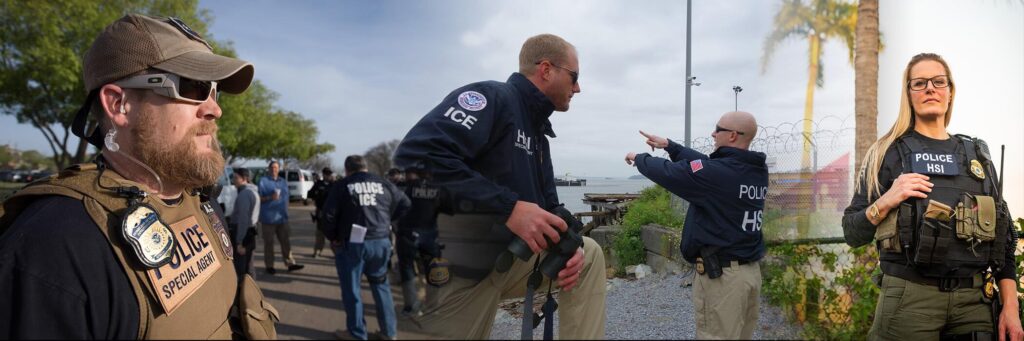
The reported arrests in the United States of eight people from Tajikistan with possible ties to a terror group has renewed concerns about extremism in the Central Asian country, which faced a backlash after the alleged involvement of some of its nationals in a terror attack in Russia in March. U.S. officials have provided little detail on the arrests of the men who had crossed into the United States from Mexico last year, though the development added to tension over the surge in illegal crossings at the southern border. Immigration and border security are a major campaign issue ahead of the U.S. presidential election in November. Patrick Lechleitner, the acting director of U.S. Immigration and Customs Enforcement, also known as ICE, was asked on Wednesday about reports that background checks on the Tajik men failed to turn up any cause for concern. In an interview with the NewsNation network, Lechleitner said another agency, the U.S. Customs and Border Protection, had first contact with the men as they crossed the border. “Sometimes there is just no information on individuals. I mean, it’s quite common…  There is nothing,” he said. “There´s no criminal convictions, there’s no threat information or whatever on these individuals, or maybe these individuals are from an area that is particularly of concern, but that pops up later.” ICE was collaborating with the FBI and “we went out and got” the suspects after becoming aware of concerns about them, Lechleitner said. American law enforcement previously warned of the growing threat of terrorism on U.S. soil after the killing of about 145 people in an attack on the Crocus City Hall, an entertainment venue on the outskirts of Moscow, on March 22. The Islamic State group said it carried out the attack, and several people from Tajikistan were among suspects arrested by Russian authorities. “Now increasingly concerning is the potential for a coordinated attack here in the homeland, akin to the ISIS-K attack we saw at the Russia concert hall a couple weeks ago,” FBI Director Christopher Wray told U.S. lawmakers on April 11. ISIS-K is an acronym used for an affiliate of the Islamic State branch that operates in Afghanistan and has sought recruits from Central Asia, particularly Tajikistan and Uzbekistan. The Crocus City Hall killings led to a backlash of suspicion against many Tajik migrants in Russia and difficult conditions for those trying to enter Russia in order to work, generating diplomatic tension between Moscow and Dushanbe and worries about the flow of remittances that are a vital part of Tajikistan’s economy. Tajikistan has not commented publicly on the arrests of the Tajik men in the United States. The Tajik government has previously said it is doing what it can to combat terrorism, downplaying questions about whether some of its internal restrictions, including on religious expression, might be contributing to radicalization. U.S. media reports, including from NBC News and ABC News, said the arrests occurred in New York, Philadelphia and Los Angeles this past weekend. The reports relied...