


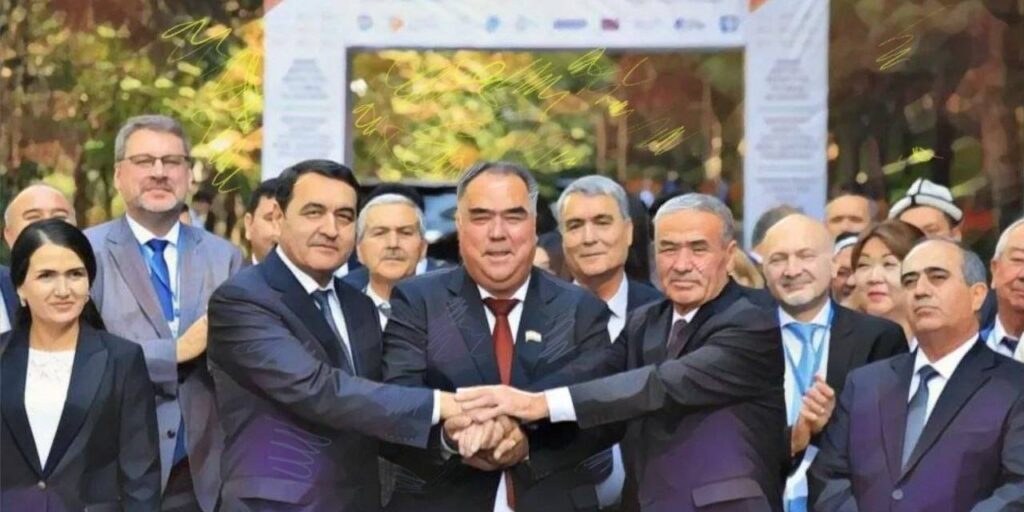
Cementing Peace in the Ferghana Valley
The Ferghana Peace Forum was just held in Tajikistan’s northern city of Guliston. There were some useful proposals and discussions during the September 28-29 event, but the greatest significance of this peace forum is that it happened at all. For most of the 35 years since the three countries that share the Ferghana Valley – Kyrgyzstan, Tajikistan, and Uzbekistan – became independent, the three governments were often at odds with each other, and the valley was the most dangerous part of Central Asia. Keeping the Momentum This was the second Ferghana Peace Forum. The first was in Uzbekistan’s eastern city of Ferghana on October 15-16, 2025. The title of that first forum was “Fergana Valley: Uniting Efforts for Peace and Progress,” and it followed the historic agreement the presidents of the three countries signed in Khujand, Tajikistan, on March 31, 2025, fixing the point where the borders of the three countries meet. The three presidents had met before at multilateral events, such as summits of the Commonwealth of Independent States or the Shanghai Cooperation Organization. But the Khujand meeting was the first time just the presidents of Kyrgyzstan, Tajikistan, and Uzbekistan had met. The Ferghana Valley is one of the most densely populated and fertile areas in Central Asia. Its communities long predate the borders that now divide the valley. Those lines were drawn as internal Soviet administrative boundaries and became international frontiers after 1991. The discussions in Guliston were about how to expand cross-border movement, trade, and mutual development. The heads of the three provinces that border each other in the Ferghana Valley were in Guliston: Khairullo Bozorov from Uzbekistan’s Ferghana Province, Rajabboy Ahmadzoda from Tajikistan’s Sughd Region, and Mamirjan Rakhimov from Kyrgyzstan’s Batken Region. EU Special Representative for Central Asia Eduards Stiprais also attended and addressed the forum, alongside representatives from the EU, OSCE, UN, and other international organizations, along with officials and experts from the three Central Asian countries. Eldor Aripov, Director of the Institute for Strategic and Regional Studies under the President of Uzbekistan, summed up the purpose of the Guliston gathering, saying it was intended to turn mutual understanding into joint initiatives and projects. Among the main goals were facilitating cross-border movement, establishing joint ventures and facilities, educational exchanges between university students in Ferghana Valley cities, and even hosting children from neighboring countries at summer camps. These might seem like small matters, but for those who have watched events in the Ferghana Valley since independence in 1991, they mark a striking change. The third Ferghana Peace Forum will be held in Kyrgyzstan in 2027. The Most Dangerous Area in Central Asia The borders drawn in Moscow during the years Central Asia was part of the USSR were quickly disputed throughout the region after the Soviet Union disintegrated. Nowhere was this more pronounced than in the Ferghana Valley, and predictably so. Agriculture and livestock remain important to livelihoods across much of the valley, so disputes over agricultural land and access to water were inevitable. As the...
