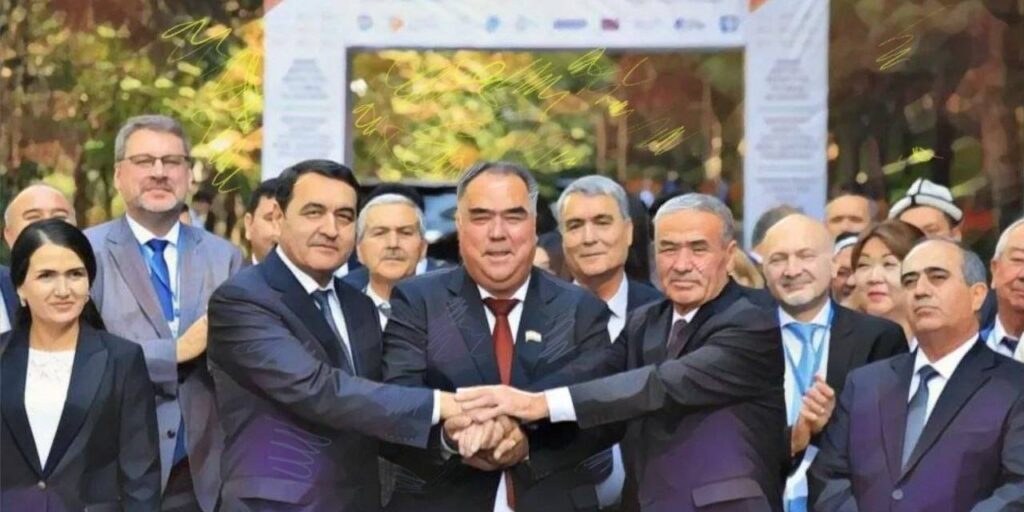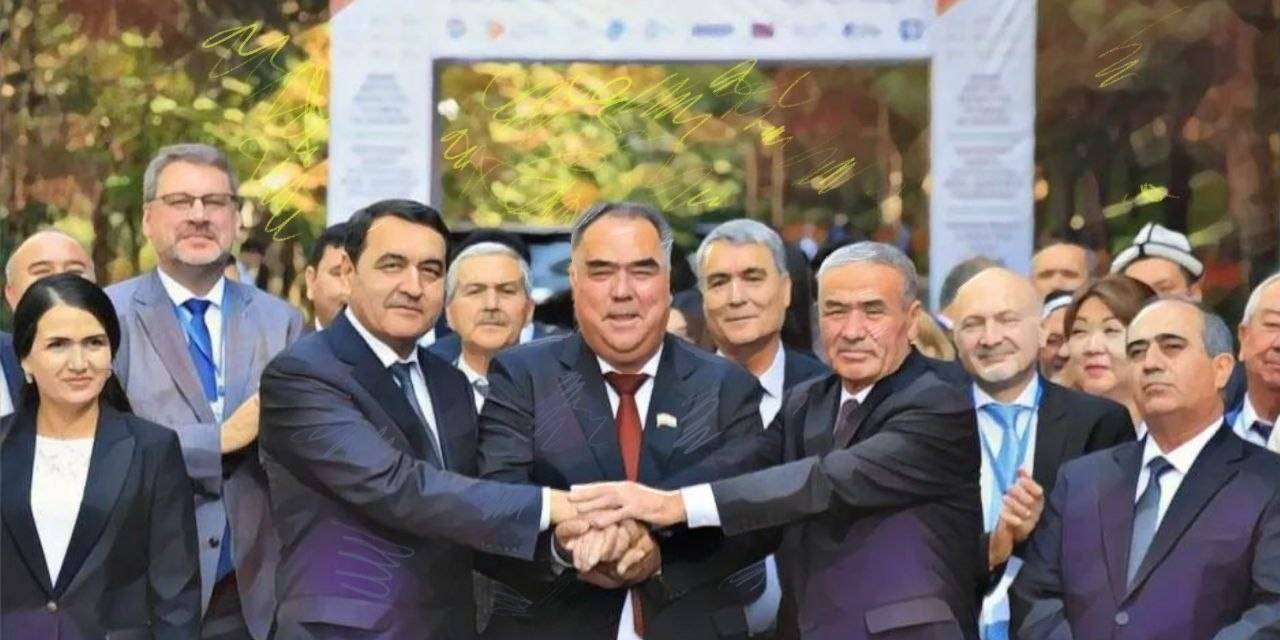
The Ferghana Peace Forum was just held in Tajikistan’s northern city of Guliston.
There were some useful proposals and discussions during the September 28-29 event, but the greatest significance of this peace forum is that it happened at all.
For most of the 35 years since the three countries that share the Ferghana Valley – Kyrgyzstan, Tajikistan, and Uzbekistan – became independent, the three governments were often at odds with each other, and the valley was the most dangerous part of Central Asia.
Keeping the Momentum
This was the second Ferghana Peace Forum. The first was in Uzbekistan’s eastern city of Ferghana on October 15-16, 2025.
The title of that first forum was “Fergana Valley: Uniting Efforts for Peace and Progress,” and it followed the historic agreement the presidents of the three countries signed in Khujand, Tajikistan, on March 31, 2025, fixing the point where the borders of the three countries meet.
The three presidents had met before at multilateral events, such as summits of the Commonwealth of Independent States or the Shanghai Cooperation Organization. But the Khujand meeting was the first time just the presidents of Kyrgyzstan, Tajikistan, and Uzbekistan had met.
The Ferghana Valley is one of the most densely populated and fertile areas in Central Asia. Its communities long predate the borders that now divide the valley. Those lines were drawn as internal Soviet administrative boundaries and became international frontiers after 1991.
The discussions in Guliston were about how to expand cross-border movement, trade, and mutual development.
The heads of the three provinces that border each other in the Ferghana Valley were in Guliston: Khairullo Bozorov from Uzbekistan’s Ferghana Province, Rajabboy Ahmadzoda from Tajikistan’s Sughd Region, and Mamirjan Rakhimov from Kyrgyzstan’s Batken Region. EU Special Representative for Central Asia Eduards Stiprais also attended and addressed the forum, alongside representatives from the EU, OSCE, UN, and other international organizations, along with officials and experts from the three Central Asian countries.
Eldor Aripov, Director of the Institute for Strategic and Regional Studies under the President of Uzbekistan, summed up the purpose of the Guliston gathering, saying it was intended to turn mutual understanding into joint initiatives and projects.
Among the main goals were facilitating cross-border movement, establishing joint ventures and facilities, educational exchanges between university students in Ferghana Valley cities, and even hosting children from neighboring countries at summer camps.
These might seem like small matters, but for those who have watched events in the Ferghana Valley since independence in 1991, they mark a striking change. The third Ferghana Peace Forum will be held in Kyrgyzstan in 2027.
The Most Dangerous Area in Central Asia
The borders drawn in Moscow during the years Central Asia was part of the USSR were quickly disputed throughout the region after the Soviet Union disintegrated. Nowhere was this more pronounced than in the Ferghana Valley, and predictably so. Agriculture and livestock remain important to livelihoods across much of the valley, so disputes over agricultural land and access to water were inevitable.
As the three countries started to enforce their borders, conflicts broke out.
There were arguments between communities on either side of the frontier. Border guards fired on civilians from neighboring countries, including smugglers and people who inadvertently crossed unmarked borders while herding livestock.
After militants from the Islamic Movement of Uzbekistan descended from Tajikistan’s mountains into southern Kyrgyzstan in summer 1999 and again into southern Kyrgyzstan and eastern Uzbekistan in summer 2000, Uzbekistan put landmines along stretches of its borders with Kyrgyzstan and Tajikistan. Dozens of people in Kyrgyzstan and Tajikistan were injured or killed by these landmines, with casualties along the Tajik border continuing for more than a decade.
The situation along the Kyrgyz-Tajik border grew to be even worse. Fistfights and rock-throwing started because of disputes over land and water use, and by 2014 border guards of the two countries were sometimes exchanging fire.
In April 2021, tensions boiled over, and, for the first time in post-independence history, the armies of two Central Asian countries clashed using heavy weapons.
Fighting erupted again along the Kyrgyz-Tajik frontier in September 2022.
More than 150 people were killed in the two conflicts, tens of thousands were temporarily displaced, and homes and commercial buildings on both sides of the border suffered extensive damage.
For most of the years of independence, crossing a border in the Ferghana Valley was difficult at the best of times, and next to impossible during bad times.
Better Days
Tajik President Emomali Rahmon went to Kyrgyzstan in March 2025 on his first state visit to the neighboring country in nearly 12 years. Rahmon and Kyrgyz President Sadyr Japarov signed a border agreement that paved the way for a new era of cooperation in the Ferghana Valley.
It might be too soon to say all the problems in the valley are resolved, but reported incidents of disputes or violence along the border have fallen sharply since early 2025. If this continues, the three countries would save a lot of money spent on defending their frontiers against each other.
But more importantly, the cooperation could greatly boost agricultural exports for all three countries, and joint plants and factories would add to the profits.
The sorts of cultural and academic exchanges that were discussed in Guliston, if realized, could also help restore cross-border social ties disrupted when Soviet administrative boundaries became international borders after the collapse of the USSR.