
• KZT/USD = 0.00222
  • TJS/USD = 0.10810
  • UZS/USD = 0.00009
  • TMT/USD = 0.29850
  • KZT/USD = 0.00222
  • TJS/USD = 0.10810
  • UZS/USD = 0.00009
  • TMT/USD = 0.29850
  • KZT/USD = 0.00222
  • TJS/USD = 0.10810
  • UZS/USD = 0.00009
  • TMT/USD = 0.29850
  • KZT/USD = 0.00222
  • TJS/USD = 0.10810
  • UZS/USD = 0.00009
  • TMT/USD = 0.29850
  • KZT/USD = 0.00222
  • TJS/USD = 0.10810
  • UZS/USD = 0.00009
  • TMT/USD = 0.29850
  • KZT/USD = 0.00222
  • TJS/USD = 0.10810
  • UZS/USD = 0.00009
  • TMT/USD = 0.29850
  • KZT/USD = 0.00222
  • TJS/USD = 0.10810
  • UZS/USD = 0.00009
  • TMT/USD = 0.29850
  • KZT/USD = 0.00222
  • TJS/USD = 0.10810
  • UZS/USD = 0.00009
  • TMT/USD = 0.29850
15 September 2026

Viewing results 1 - 6 of 2

Kyrgyzstan Fertilizer Plant Opens With $260 Million Chinese Investment

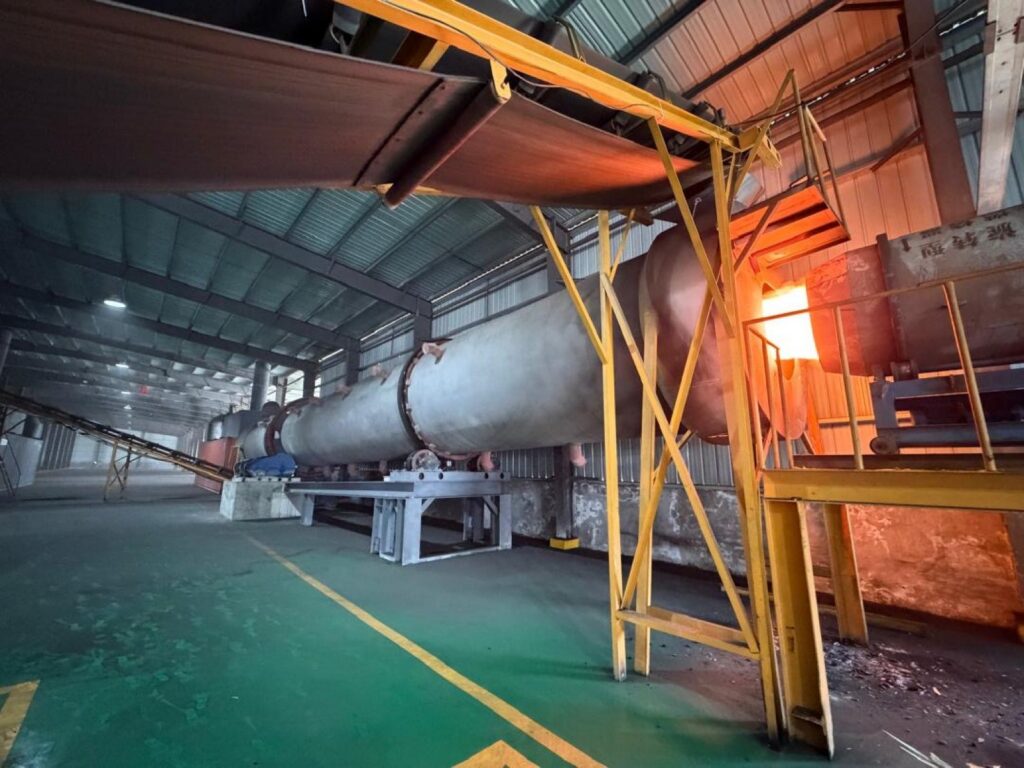
Kyrgyzstan has opened a major mineral fertilizer plant after years of dependence on imports. The $260 million project is being developed with a Chinese investor in the country’s south. Its first production line has an annual capacity of 100,000 tons, while the capacity announced for the completed project would significantly exceed current domestic demand. The plant opened on August 28 in the village of Torobai Kulatov in the Osh region. The first production line is currently operating in test mode. According to the Kyrgyz government, its capacity is 100,000 tons of fertilizer per year. At the next stage, capacity is expected to increase to 300,000 tons, and after completion of the project in 2028, to 1 million tons. For Kyrgyzstan, this represents substantial capacity. In March 2025, a representative of the Ministry of Agriculture estimated the country’s annual demand for mineral fertilizers at about 287,000 tons: 163,500 tons of nitrogen fertilizers, 105,800 tons of phosphate fertilizers, and 17,200 tons of potash fertilizers. The ministry described Kyrgyzstan at the time as entirely dependent on imports. The plant’s intermediate capacity of 300,000 tons would therefore roughly match the country’s current annual demand, although demand is split between different types of fertilizer. If it reaches the government’s stated capacity of 1 million tons, production would far exceed current domestic demand, meaning a substantial share could be exported. According to the Kyrgyz government, the plant will produce ammophos – a fertilizer containing nitrogen and phosphorus – as well as compound fertilizers containing nitrogen, phosphorus, and potassium, the main nutrients used by agricultural crops. The project began with the signing of a $260 million investment agreement in May 2023 between Kyrgyzstan’s Ministry of Agriculture and China’s Hebei Bai Dou Jia. Construction began in 2024. Equipment worth around $15 million was supplied from China. The Chinese investor also plans to participate in distributing the output. A network of local dealers is expected to be established to supply products directly to farmers. Zhao Xuejun, chairman of Baidoujia Fertilizer, told China Daily that the company intends to combine Chinese fertilizer technology and production experience with local raw materials, labor, and agricultural demand. However, figures for the plant’s eventual capacity differ. The Kyrgyz government says it will reach 1 million tons per year by 2028, while Baidoujia told China Daily that the facility will produce 500,000 tons annually once fully operational. Earlier reports from Kyrgyzstan had also put the eventual capacity at 500,000 tons. Neither side has publicly explained the discrepancy. The scale of Kyrgyzstan’s dependence on imports is evident in trade statistics. World Bank trade data show that in 2025, the country imported approximately $44 million worth of fertilizers. Russia accounted for $20.9 million and Uzbekistan for $19 million. Together, the two countries supplied about 91% of Kyrgyzstan’s fertilizer imports by value. The dependence continued in 2026. Between January and April, Kyrgyzstan imported 12,700 tons of mineral fertilizers worth $7.8 million. Import volumes increased by 13.5% year-on-year. Russia supplied 9,100 tons, or more than 71% of the total...

Kazakhstan to Build $1.35 Billion Fertilizer Plant in Mangistau

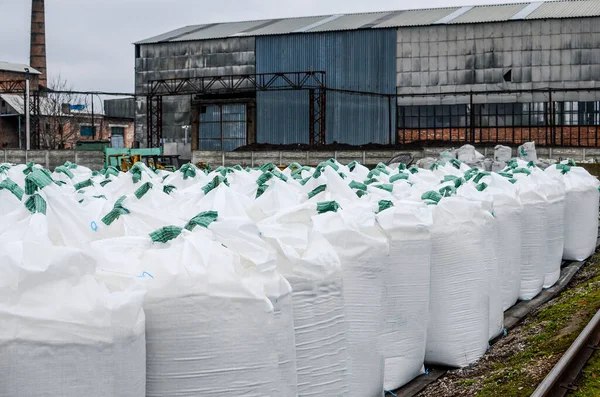
Kazakhstan will begin construction of a major fertilizer plant valued at $1.35 billion, under an investment agreement recently approved by the government. The project aims to boost domestic fertilizer production and reduce the country’s reliance on imports. Strategic Industrial Partnership The facility will be built in the Mangistau region under a joint venture between Kazakhstan’s national gas company QazaqGaz and Turkish construction firm ESTA Construction. The new company, Qazesta Fertilizers Ltd., will oversee the project, which is expected to benefit from Mangistau’s favorable logistics for export across the Caspian Sea. The plant is designed to produce up to 700,000 tonnes of urea and 42,000 tonnes of ammonia annually. Construction is scheduled to take three and a half years, creating an estimated 3,000 jobs during the building phase and 400 permanent positions upon completion. Officials say the project will support the development of Kazakhstan’s gas chemical industry and contribute to import substitution. Currently, the country produces three types of fertilizers, ammonium nitrate, ammophos, and ammonium sulfate, but domestic output meets only half of the 3.2 million tonnes required to satisfy national demand. Challenges in Fertilizer Use and Production Kazakhstan’s limited fertilizer use has drawn concern from analysts. According to Energyprom.kz, citing UN Food and Agriculture Organization (FAO) data, nitrogen fertilizer application has not exceeded 4.0 kg per hectare since 2000, and dropped to just 2.4 kg in 2022. In contrast, Uzbekistan applied 187.2 kg per hectare that year, while Russia applied 17.6 kg. Phosphate fertilizer usage in Kazakhstan was similarly low at 1.33 kg per hectare, compared to 5.91 kg in Russia. Domestic fertilizer production also declined in 2024. Total output fell by 9.3% to 367,500 tonnes. Production of nitrogen fertilizers dropped by 11.4% to 345,500 tonnes, while phosphate fertilizer output rose by 47.1% to 22,000 tonnes. Despite the gains, national supply still lags behind farmers’ needs. Import Dependency and Export Growth Kazakhstan remains dependent on foreign supplies of nitrogen fertilizers, with imports accounting for 57.8% of the market. In 2024, imports rose by 7.3% to 472,300 tonnes. Meanwhile, exports of nitrogen fertilizers nearly doubled to 214,400 tonnes. Phosphate fertilizers, however, are largely produced domestically, with imports making up just 1.2% of supply. Kazakhstan’s largest fertilizer export destinations in 2024 included Brazil (187,600 tonnes), Poland (92,500 tonnes), Ukraine (87,600 tonnes), and Russia (67,400 tonnes). However, declining global prices led to a 13.5% drop in export revenue, despite only a 1.1% decrease in volume. Global Market Dynamics Geopolitical factors continue to shape global fertilizer markets. Sanctions imposed on Russia and Belarus in 2022 initially triggered shortages and price spikes, although some restrictions were later eased to mitigate food security risks. In 2024, U.S. imports of Russian fertilizers rose by 20% to $85.5 million. At the same time, the European Union is weighing new duties on fertilizer imports from Russia and Belarus, a move that has drawn criticism from European agricultural associations concerned about rising input costs. In this shifting global context, Kazakhstan’s expanded fertilizer capacity could enhance its role as a regional...