• KGS/USD = 0.01144 0%
  • KZT/USD = 0.00211 0%
  • TJS/USD = 0.10438 0%
  • UZS/USD = 0.00008 0%
  • TMT/USD = 0.28490 0%
  • KGS/USD = 0.01144 0%
  • KZT/USD = 0.00211 0%
  • TJS/USD = 0.10438 0%
  • UZS/USD = 0.00008 0%
  • TMT/USD = 0.28490 0%
  • KGS/USD = 0.01144 0%
  • KZT/USD = 0.00211 0%
  • TJS/USD = 0.10438 0%
  • UZS/USD = 0.00008 0%
  • TMT/USD = 0.28490 0%
  • KGS/USD = 0.01144 0%
  • KZT/USD = 0.00211 0%
  • TJS/USD = 0.10438 0%
  • UZS/USD = 0.00008 0%
  • TMT/USD = 0.28490 0%
  • KGS/USD = 0.01144 0%
  • KZT/USD = 0.00211 0%
  • TJS/USD = 0.10438 0%
  • UZS/USD = 0.00008 0%
  • TMT/USD = 0.28490 0%
  • KGS/USD = 0.01144 0%
  • KZT/USD = 0.00211 0%
  • TJS/USD = 0.10438 0%
  • UZS/USD = 0.00008 0%
  • TMT/USD = 0.28490 0%
  • KGS/USD = 0.01144 0%
  • KZT/USD = 0.00211 0%
  • TJS/USD = 0.10438 0%
  • UZS/USD = 0.00008 0%
  • TMT/USD = 0.28490 0%
  • KGS/USD = 0.01144 0%
  • KZT/USD = 0.00211 0%
  • TJS/USD = 0.10438 0%
  • UZS/USD = 0.00008 0%
  • TMT/USD = 0.28490 0%

Viewing results 1 - 6 of 11

Kazakh-Spanish Film La Tregua to Premiere on Netflix

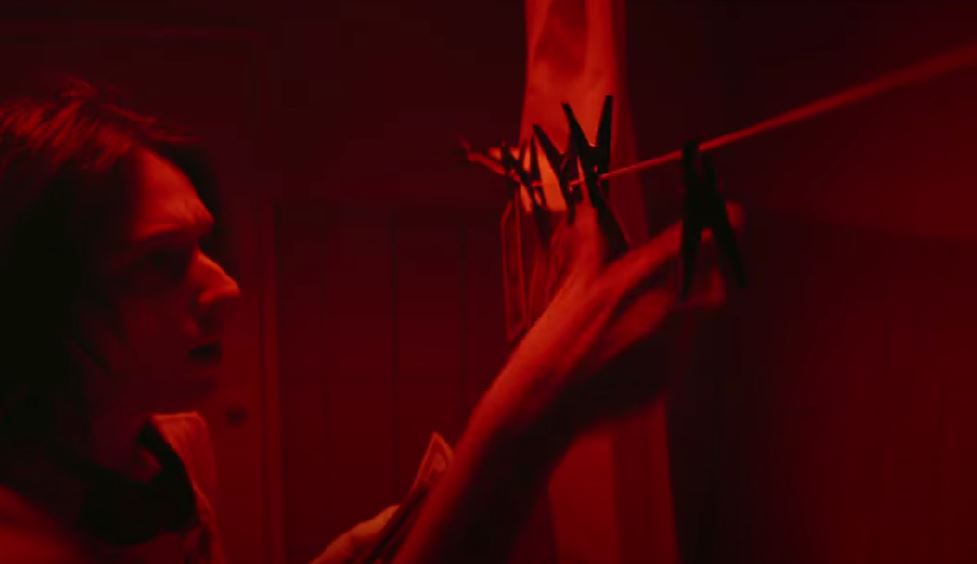
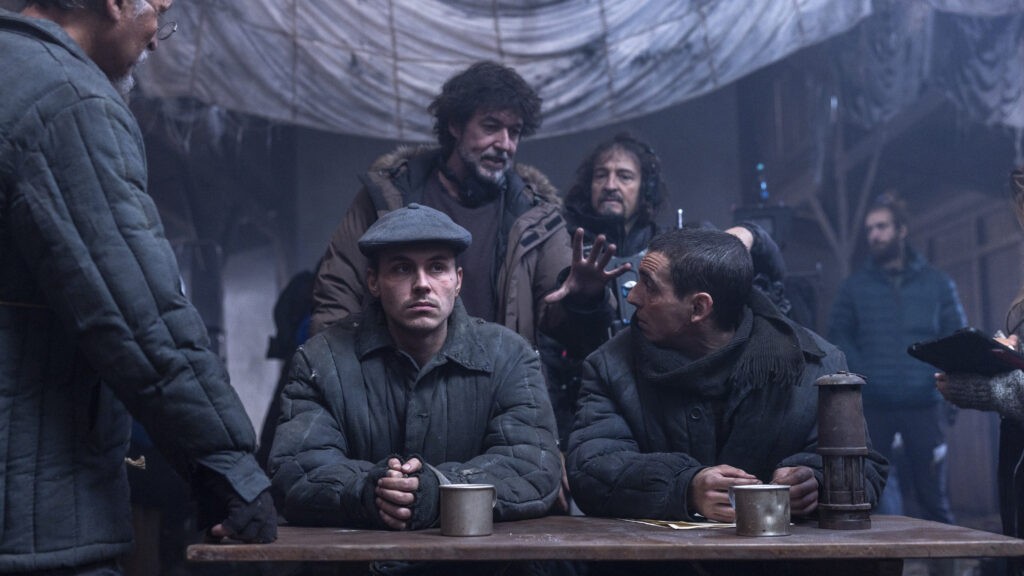
Following its premiere at the San Sebastian International Film Festival this fall, where it received a special award, the Kazakh-Spanish film La Tregua (The Truce) has been released in cinemas in Spain and Kazakhstan. It is now set to become the first Spanish-language film featuring Kazakhstan to appear on Netflix. “Although critics say the film is not for popcorn viewing, given its focus on little-known and tragic chapters in the histories of Kazakhstan and Spain, its release has generated strong emotional responses in both countries,” said Yerlan Bekhozhin, a prominent Kazakh journalist and co-producer of the film, in an interview with The Times of Central Asia. “It speaks to the timeless struggle of human confrontation.” The film presents a Kazakh narrative about Spaniards caught on opposing sides of ideological conflict. “It is a story from the last century, yet it addresses the present day,” Bekhozhin said. “When we look at today’s world, it’s clear that people lack the ability to engage in dialogue. The main message of the film is: There is always a way to negotiate.” Netflix is expected to stream the film in 2026. Distribution discussions are also underway for theatrical releases in Mexico and other Spanish-speaking countries in Latin America. [caption id="attachment_41648" align="aligncenter" width="2560"] Still from La Tregua[/caption] From Karaganda to the Screen The story is rooted in the history of Karlag, the Karaganda labor camp that operated in Kazakhstan from 1937 to 1959. Victims of Stalinist repression from across the Soviet Union, including foreign nationals, were imprisoned there for dissent, free expression, or as victims of denunciations. The idea for the film came from Spanish producer César Benítez, inspired by an event from over 30 years ago. During the Soviet era, the identities of Spanish citizens imprisoned in Karlag were kept secret. After Kazakhstan gained independence, its government handed the list of repressed Spaniards to the King of Spain, a gesture that sparked widespread attention in Spain, allowing many families to finally discover the fate of their relatives. Years earlier, the Spanish documentary, The Forgotten in Karaganda, had drawn significant attention to the subject. Now, Benítez has transformed the story into a feature film. “The title The Truce is deeply relevant today, at a time when peace requires people to sit at the same table,” said Bekhozhin. [caption id="attachment_41650" align="aligncenter" width="2560"] Still from La Tregua[/caption] Kazakh Identity on a Global Stage Bekhozhin also emphasized the film’s role in portraying Kazakh identity. “Its global release will introduce the world to the law of the steppe, the law of hospitality,” he said. “Kazakhs have long demonstrated empathy forged under harsh conditions. It’s part of our national character to welcome others, regardless of nationality or faith.” One scene in the film shows a Kazakh family near the camp inviting Spanish prisoners into their home and setting a traditional dastarkhan, a generous table of lamb-based dishes. The prisoners are seated in the place of honor, or torge, in keeping with Kazakh custom. “In the film, the hostess explains that when...

No Disneyland Planned as Uzbekistan and Disney Hold Exploratory Talks

Uzbekistan has held early-stage discussions with The Walt Disney Company on possible cooperation in children’s media and creative industries, but no agreement has been announced to build a Disneyland or theme park in the country. The talks took place during a meeting between Saida Mirziyoyeva, the Uzbek president’s daughter and head of the Presidential Administration, and a Disney vice president responsible for international partnerships. According to an account cited by Uzbek media, the sides discussed potential cooperation in producing Uzbek-language children’s content, training specialists in animation and filmmaking, and developing a creative hub focused on film and media production. [caption id="attachment_41248" align="aligncenter" width="1200"] Image: Saida Mirziyoyeva, Telegram[/caption] Public attention intensified after Zamin.uz published an English-language article titled “Disneyland Park Planned for Construction in Uzbekistan.” The article itself, however, stated that the idea was under discussion rather than approved, and did not cite any signed agreements, confirmed investment figures, or construction timelines. Subsequent reporting by other Uzbek outlets aligned more closely with the official summaries, with Gazeta.uz reporting that the meeting focused on content production, professional training, and the possible opening of a Disney regional office serving Central Asia, without reference to a theme park project. UzDaily similarly reported discussions centered on children’s television programming and creative education initiatives, noting that the talks were exploratory in nature. Neither Disney nor the Uzbek authorities have released statements confirming plans to build a theme park. No land allocation, development partner, regulatory approval, or financing structure has been announced. Disney has not included Uzbekistan in its list of active or planned theme park developments. Disney theme park projects are typically announced only after extended negotiations and formal agreements. When the company confirmed a new theme park resort project in Abu Dhabi in 2025, it disclosed the local development partner, project framework, and governance structure at the time of announcement. Uzbekistan has made the creative industries and tourism development policy priorities in recent years, seeking partnerships with major international companies to expand film production, animation, and cultural exports. Officials say discussions with global media firms are part of that broader strategy. For now, the talks with Disney remain preliminary. Until formal agreements are announced by both sides, officials have indicated that references to a Disneyland under construction in Uzbekistan do not reflect the current status of discussions.

La Tregua: A Bridge Across Wars and Worlds – An Interview with Director Miguel Ángel Vivas

In the misty green heart of Bizkaia, where mountains rise like ancient sentinels and the air carries the scent of rain and earth, a remarkable filmmaking journey unfurled. This is where director Miguel Ángel Vivas Moreno, known for Money Heist (La Casa de Papel), Cicatriz, Desaparecidos, and Secuestrados, reconstructed one of the most haunting landscapes of the twentieth century: a Soviet gulag on the distant Kazakh steppe. His new film, La Tregua (The Truce), invites viewers into a story based on actual events that unfolded far from Spain, but holds deep ties to its history. It traces the ordeal of Spanish prisoners during World War II who fell into Soviet hands and were compelled to endure the harsh, frozen conditions of a labor camp. Their struggle becomes a bridge between past and present, between countries and cultures, and between two men who must learn to recognize each other beyond the uniforms that once made them enemies. [caption id="attachment_40358" align="aligncenter" width="2560"] All images courtesy of the production[/caption] The project is an unprecedented Spanish-Kazakh co-production from Spassk 99, AIE, Amanat Capital, LTD, and Umaifilm, LLP. This partnership gives the film a reach that feels genuinely cross-continental. It is a motion picture passport that opens a window onto a forgotten corner of global history. At the center of the story are Miguel Herrán and Arón Piper, who step into the roles of Reyes and Salgado. The characters appear as ideological enemies; having fought on opposing sides during the Spanish Civil War, both carry heavy psychological baggage. Inside the camp, their former certainties fall away. What begins as uneasy coexistence becomes an inward journey shaped by hunger, fear, and the starkness of their new reality. Executive producer César Benítez recalls searching for two actors capable of expressing both the physical exhaustion of imprisonment and the spark of hope that keeps a person standing. He says that the moment he saw Miguel and Arón together, he recognized that rare blend of fragility and fire. Miguel Ángel Vivas talked to TCA to break down the challenges and highlights behind the production. [caption id="attachment_40356" align="aligncenter" width="2560"] All images courtesy of the production[/caption] TCA: The story is fictional, but it is based on real events in Kazakhstan. Can you explain the historical context and how it inspired La Tregua? Miguel: The story begins with a documentary about Spaniards in the Soviet gulags. That’s where we discovered that republicans and fascists shared the same prison two years after the Spanish Civil War ended. It struck us as a fascinating starting point for a human story about the relationships that formed between them. [caption id="attachment_40357" align="aligncenter" width="2560"] All images courtesy of the production[/caption] TCA: The premise is intriguing: how two fighters on opposite sides of the Spanish Civil War end up in a gulag in Kazakhstan. In an increasingly polarized world, is there a lesson in the film to help heal the wounds that divide Spain, or even the world in general? Miguel: That was the idea! In such a...

Top Five Central Asian Horror Films in the Run-up to Halloween

In the run-up to Halloween, TCA has compiled a short list of the best Central Asian horror films. Although the region is not widely known for its movies in the genre, here are five horror films from Central Asia that are a must-watch.   Dästür – Kazakhstan (2023) [caption id="attachment_24810" align="aligncenter" width="619"] Dästür theatrical release poster[/caption] In Dästür, the plot revolves around a girl from a remote aul (village) who is raped by the spoiled son of an influential businessman. The attacker's father does everything in his power to cover up the crime, including arranging a forced marriage in accordance with local traditions. However, after the girl moves into her husband's home, a series of strange and mysterious deaths begin to occur among those responsible for her plight.   Invisible – Uzbekistan (2011) [caption id="attachment_24825" align="aligncenter" width="374"] Invisible theatrical release poster[/caption] At the heart of Invisible is a hospital where a mysterious man arrives in critical condition. After a complicated surgery, the doctor begins to sense that something terrifying and inexplicable is affecting the patient. As events unfold, his suspicions are confirmed: some patients appear to be possessed, and he is plagued by hallucinations and unsettling nightmares.   Claustro – Kazakhstan (2023) [caption id="attachment_24811" align="aligncenter" width="539"] Claustro theatrical release poster[/caption] Kazakh horror Claustro takes viewers into the mysterious world of confined space. During a holiday party, two casual acquaintances, Kem and Max, retreat to an apartment, only to find themselves trapped as the place refuses to let them leave. Windows and doors lead to new, endless mazes of rooms, creating a feeling of complete isolation.   Albarsty – Kyrgyzstan (2017) [caption id="attachment_24812" align="aligncenter" width="524"] Albarsty theatrical release poster[/caption] Albarsty is a psychological horror that immerses viewers in the world of fear, loss, and the supernatural. The main characters, Zamir and Ainura, struggle with a deep emotional crisis following the tragic loss of their child and their inability to conceive again. Seeking comfort and renewed hope, they decide to adopt a boy, Ulan, whom they suspect has brought an unwelcome entity — a demon (albarsty) into their home.   Qash – Kazakhstan (2022) [caption id="attachment_24813" align="aligncenter" width="544"] Qash theatrical release poster[/caption] Set amidst the famine of the 1930s, Qash tells the story of a gravedigger, Isatay, who embarks on a risky journey to the nearest town to save his aul. On his way, he meets a mysterious wanderer who shows him a path that leads to nowhere. Qash delves into the theme of survival, immersing the audience in an atmosphere of despair and hopelessness while challenging the moral choices individuals make under extreme conditions.

Eurasian Creative Guild Festival Bridges Cultural Divides

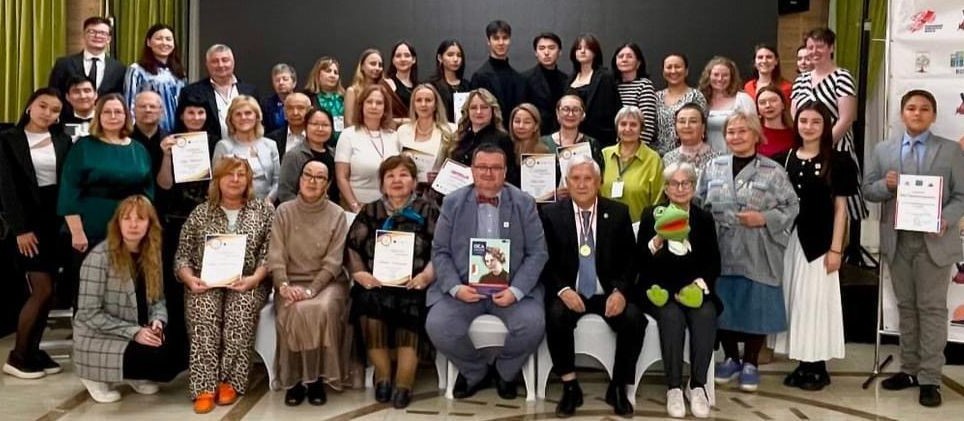
The 4th International Festival of Poetry and Visual Arts, "Voices of Friends: Poetry & Art 2024" took place from September 15 to 18 in the scenic Burabay National Park, Kazakhstan. The festival, organized by the Eurasian Creative Guild (London) and supported by various local entities, showcased a vibrant blend of poetry, visual arts, literature, and cinema. It included the 13th Open Eurasian Literary Festival and Book Forum, the third Burabay International Short Film Festival (BISFF), and the inaugural Future Cinema youth film festival. More than 50 creative individuals from 15 countries, including Kazakhstan, the UK, Belarus, Israel, the UAE, and the U.S., participated, bringing a rich tapestry of cultural expressions to the event. The festival featured an array of activities, started with an introductory meeting and progressing through screenings, presentations, and master classes. Highlights included the introduction of youth films and the BISFF screenings, which received over 80 submissions, celebrating diverse stories through film. Noteworthy films, such as In Search of Healing Water: Chunja-Burabay-Dushanbe and Teacher on Stage were showcased. The festival also encompassed literary salons, art presentations, roundtable discussions on tourism, and a charity auction, providing attendees with a deep dive into the creative and cultural industries. The festival concluded with award ceremonies celebrating achievements in film, poetry, and visual arts. Winners in various categories were recognized, such as Best Short Film awarded to As Easy As Closing Your Eyes from the United States, and announcements for future events were made. With over 500 guests, the event underscored its stated objective of celebrating the power of art to bridge cultures and enhance mutual understanding among diverse communities. The next Guild Festival will be held in Scotland later in the year.