


Uzbek-Tajik Film About Jami and Navoi Wins Prize
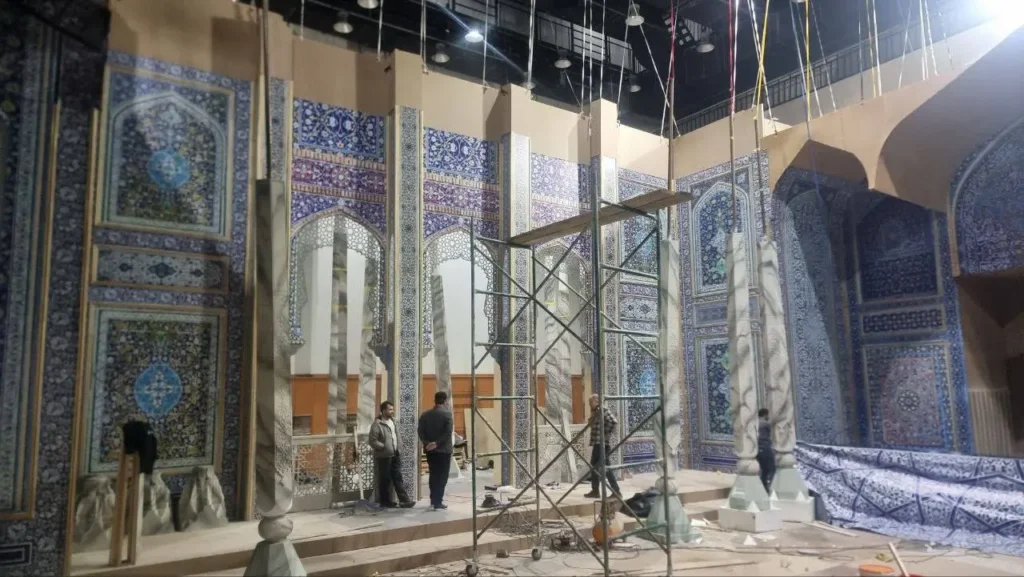
A movie about the friendship between two Central Asian literary figures that was made by a team from Uzbekistan and Tajikistan has won a top prize at a national film awards event in Dushanbe. Shining Stars: Jami and Navoi tells the story of the 15th-century friendship and collaboration between the Persian poet Abd al-Rahman Jami, a cultural icon in modern Tajikistan, and Alisher Navoi, a poet and statesman of the Timurid era who is officially revered in Uzbekistan today. As such, both figures are closely associated with the national identities of their respective countries. The joint project, which had the backing of the Tajik and Uzbek governments and sought to highlight cultural connections between the two countries, was awarded the Grand Prix at the third edition of the Toji Somon National Film Awards. It also won awards for best production design and best costume design. The five-day event ended this week in Tajikistan’s capital after featuring dozens of films from several countries, including Iran and Russia. The two men who inspired the making of Shining Stars: Jami and Navoi were discussed at a forum hosted in Tashkent last year by the International Institute for Central Asia, which is affiliated with the Uzbek state. Abdujabbor Aziz Rahmonzoda, then Tajikistan’s ambassador to Uzbekistan, told the audience that Navoi always referred to Jami as his mentor and they maintained close ties through letters, more than 430 of which have been preserved, and poetry. “The Ambassador also noted the unique nature of their literary exchange: Navoi wrote to Jami in Turkic, and Jami replied in Persian, symbolizing the unity and linguistic diversity of the region’s culture,” the institute said in a report on the symposium. Asia-Plus, a Tajik news outlet, reported last year that there were two directors: Tajik Fayzullo Fayzov and Uzbek Dilmurod Masaidov. Some 70% of the planned filming was in Uzbekistan and the rest in Tajikistan, while 60% of the cast were Uzbek and 40% from Tajikistan, it said. The total budget was about $10 million, according to Asia-Plus. Planning for the film was underway by late 2021, according to the state-supported Tajikfilm studio. The Oxford Centre for Islamic Studies describes Jami as a noted Sufi and social critic, calling him “a culminating figure in Perso-Islamic culture, whose reputation and influence have remained undiminished throughout the eastern Islamic world – the Ottoman empire and Central Asia, Iran, India, China, and the Malay world.” Navoi is regarded in Uzbekistan as the father of the Uzbek language because of his writing in the Turkic language Chagatai, or classical Uzbek, at a time when Persian was dominant in literary circles.
