• KGS/USD = 0.01143 0%
  • KZT/USD = 0.00206 0%
  • TJS/USD = 0.10811 -0.09%
  • UZS/USD = 0.00008 0%
  • TMT/USD = 0.28571 0%
  • KGS/USD = 0.01143 0%
  • KZT/USD = 0.00206 0%
  • TJS/USD = 0.10811 -0.09%
  • UZS/USD = 0.00008 0%
  • TMT/USD = 0.28571 0%
  • KGS/USD = 0.01143 0%
  • KZT/USD = 0.00206 0%
  • TJS/USD = 0.10811 -0.09%
  • UZS/USD = 0.00008 0%
  • TMT/USD = 0.28571 0%
  • KGS/USD = 0.01143 0%
  • KZT/USD = 0.00206 0%
  • TJS/USD = 0.10811 -0.09%
  • UZS/USD = 0.00008 0%
  • TMT/USD = 0.28571 0%
  • KGS/USD = 0.01143 0%
  • KZT/USD = 0.00206 0%
  • TJS/USD = 0.10811 -0.09%
  • UZS/USD = 0.00008 0%
  • TMT/USD = 0.28571 0%
  • KGS/USD = 0.01143 0%
  • KZT/USD = 0.00206 0%
  • TJS/USD = 0.10811 -0.09%
  • UZS/USD = 0.00008 0%
  • TMT/USD = 0.28571 0%
  • KGS/USD = 0.01143 0%
  • KZT/USD = 0.00206 0%
  • TJS/USD = 0.10811 -0.09%
  • UZS/USD = 0.00008 0%
  • TMT/USD = 0.28571 0%
  • KGS/USD = 0.01143 0%
  • KZT/USD = 0.00206 0%
  • TJS/USD = 0.10811 -0.09%
  • UZS/USD = 0.00008 0%
  • TMT/USD = 0.28571 0%

Viewing results 1 - 6 of 8

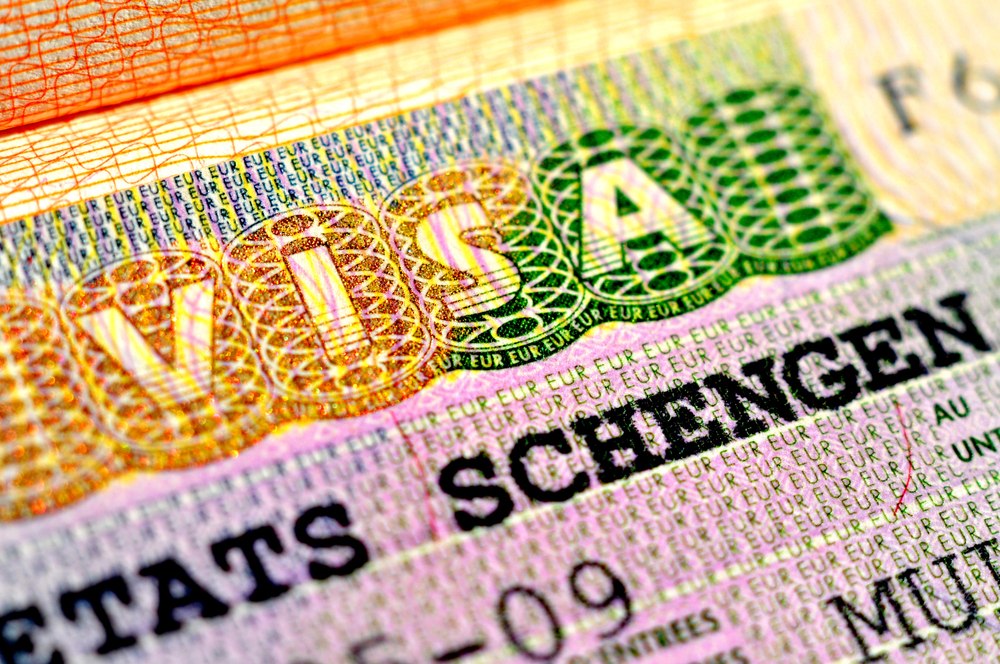
German Authorities Investigate Alleged Schengen Visa Scheme Involving Citizens of Uzbekistan

German authorities have launched a major investigation into a suspected visa fraud and migrant smuggling network accused of helping dozens of citizens of Uzbekistan enter the European Union using false information and forged documents. According to Germany’s Federal Police, around 220 officers searched seven locations in Hesse and Lower Saxony as part of an investigation led by the Public Prosecutor’s Office in Weiden in der Oberpfalz, Bavaria. The case concerns suspected commercial smuggling of foreign nationals, unauthorized residence, visa fraud, and document forgery. The investigation began after federal police inspected a traveler from Uzbekistan on a long-distance bus shortly after he entered Germany through a Bavarian border crossing. Authorities believe the suspects, described as members of an internationally operating group that included several people from Uzbekistan, arranged short-term Schengen visas for job seekers from the country. Investigators allege that false information and flight tickets were submitted to obtain the visas. According to prosecutors, after arriving in Germany, some individuals were allegedly provided with forged European Union identity documents. These documents were then reportedly used to register with health and pension insurance systems, tax authorities, municipal registration offices, employment agencies, and job centers, as well as to open bank accounts and activate mobile phone services. German authorities say the group may be linked to 76 visas issued to citizens of Uzbekistan. Investigators estimate that clients were charged €2,000 for obtaining a visa, another €2,000 for flight tickets, and €400 for forged driver’s licenses. During the searches, officers reportedly seized suspected fake identity documents and driver’s licenses from several European countries, more than 20 mobile phones, two laptops, and various banking, insurance, and registration documents. The investigation stems from an October 2025 inspection on the A6 highway near Waidhaus, close to Germany’s border with the Czech Republic. During that check, federal police stopped the passenger, who was traveling on a bus route between Prague and Amsterdam. Although he had a valid passport issued by Uzbekistan and a Czech Schengen visa, officers allegedly discovered four suspected forged Latvian identity cards and a suspected forged Polish driver’s license in his luggage. Officers located 12 people targeted in the investigation during the raids, while authorities also encountered nine other people suspected of residing illegally in Germany. Prosecutors said they are considering whether to seek an arrest warrant for the main suspect, and the investigation remains ongoing. As previously reported by The Times of Central Asia, Piergabriele Papadia de Bottini di Sant’Agnese, a former Italian ambassador to Uzbekistan, was arrested in Rome on allegations of corruption and facilitating illegal migration. Italian prosecutors allege that Papadia and his associate, Tatiana Tarakanova, operated a scheme involving the issuance of Schengen visas through the Italian Embassy in Tashkent. Prosecutors claim the pair helped arrange visas in exchange for payments.

Telephone Scammers in Kyrgyzstan Begin Using AI Tools

Kyrgyzstan has recorded an increase in telephone fraud cases involving AI. According to law enforcement agencies, dozens of citizens have fallen victim to such schemes, with total losses amounting to millions of soms. Fraudsters use AI tools to imitate voices and images, posing as law enforcement officers, representatives of the National Bank, or acquaintances of their targets. Police say international criminal groups most often target pensioners and public sector employees, including teachers, doctors, and other government workers, whom they consider more susceptible to social engineering tactics. Complaints are received on a regular basis, but in most cases the transferred funds cannot be recovered. Ulan Berdibayev, head of the Internal Affairs Department of Bishkek’s Leninsky district, told The Times of Central Asia that the schemes are organized and cross-border in nature. According to him, the networks involve multiple actors, including psychologists, call operators, and recruiters of so-called “droppers.” The latter are responsible for withdrawing funds and registering bank cards and SIM cards in their own names to facilitate the transit of money. A dropper is an individual whose bank details are used to transfer and cash out stolen funds. They are typically offered a small reward for their participation, while the bulk of the proceeds goes to the organizers of the scheme. Law enforcement officials acknowledge that apprehending the organizers, who are usually located abroad, is extremely difficult. After passing through several bank transfers, the funds are often converted into cryptocurrency, making them even harder to trace. At the same time, police report that several droppers have been detained within Kyrgyzstan. They face charges under Article 209 of the Criminal Code, which stipulates penalties including fines or imprisonment with terms ranging from five to ten years, depending on the scale of the damage. A recent case drew particular attention when fraudsters used AI to generate a fake image of former State Committee for National Security head Kamchibek Tashiev and circulated messages urging people to install a pirated application that granted access to users’ banking services.

Kazakhstan Blocked Nearly 85 Million Fraudulent Phone Calls in 2025

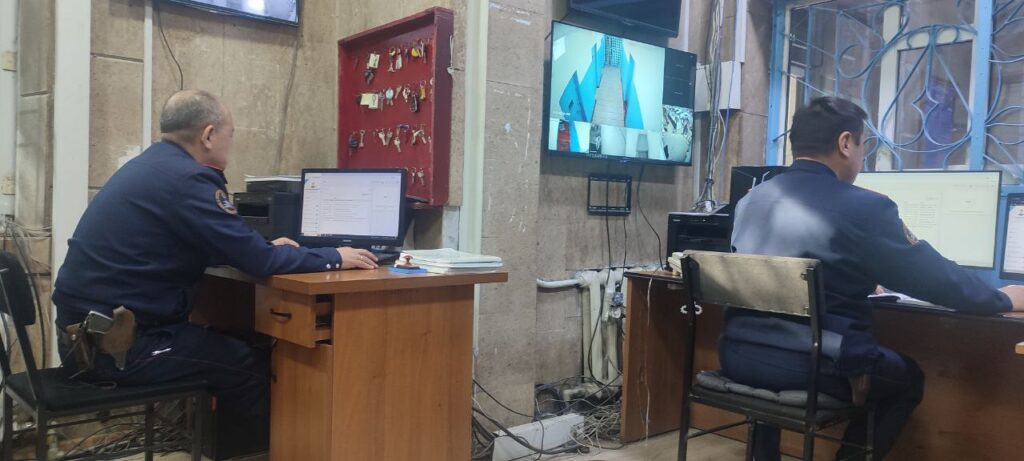
Kazakhstan’s law enforcement agencies blocked approximately 85 million fraudulent phone calls in 2025, according to Interior Minister Yerzhan Sadenov. The announcement was made during a meeting of the Ministry of Internal Affairs. “Systematic work continues to combat cybercrime and internet fraud,” Sadenov stated. “A total of 84.5 million fraudulent calls were blocked, helping to prevent significant financial losses and reduce citizen exposure to fraudulent schemes. Thirteen call centers were shut down, including some located abroad. Fifty-six criminal cases have been launched against individuals involved in so-called ‘dropperism,’ aiding internet fraudsters.” Sadenov also highlighted Kazakhstan’s signing of the United Nations Convention on Combating Cybercrime, which he said will strengthen international cooperation in addressing cross-border digital crimes. As part of its broader digital transformation, Kazakhstan introduced the Law and Order service last autumn, a new tool enabling citizens to interact with law enforcement agencies. Integrated into eGov Mobile, the government’s digital services platform, as well as the Kaspi.kz and Halyk Bank mobile apps, the service is accessible nationwide. In addition to reporting offenses, users can submit complaints against police officers and send text, voice, photo, and video messages. Every report submitted through the service is automatically registered in the Ministry’s information system, with users receiving real-time updates on the status of their submissions. To support these initiatives, the Ministry of Internal Affairs has established a Department of Digitalization and Artificial Intelligence. The department is tasked with integrating smart technologies into law enforcement. One of its flagship projects is the National Video Monitoring System, which uses video analytics to enhance street and public safety, including the ongoing development of the Safe City initiative. As previously reported by The Times of Central Asia, engineers in Karaganda unveiled three prototype unmanned aerial vehicles last year aimed at improving public safety across Kazakhstan.

Thousands of Kazakhstanis Added to Financial Watchlists Over Suspected Fraud

Several thousand citizens in Kazakhstan have been placed on so-called “dropper” lists, individuals suspected of using their bank accounts to facilitate the withdrawal of illicit funds. The announcement was made by Madina Abylkasymova, Chair of the Agency for Regulation and Development of the Financial Market (ARDFM). According to Abylkasymova, suspected individuals are initially placed on a “gray” list, where all financial transactions are temporarily blocked. If the allegations are confirmed, individuals are then transferred to a blacklist. “Currently, we already have several thousand people on these lists,” she said. The Prosecutor General’s Office recently reported identifying more than 6,000 individuals believed to be involved in embezzlement schemes using personal banking infrastructure. Beginning this fall, legislative amendments will introduce criminal liability for the unauthorized transfer of payment instruments. Abylkasymova emphasized that citizens will be prohibited from handing over bank cards even to relatives. “This reduces the risk of unauthorized access to funds and protects customers from disputed debits,” she explained. Since the start of the year, individuals have also been limited to a maximum of five bank cards per financial institution. The restriction was introduced in response to criminal cases where hundreds of cards were issued to a single person and later used in drug trafficking operations. Despite these tightening regulations, Abylkasymova reassured the public that cash will remain in circulation. “Paper tenge will always be used in Kazakhstan, alongside non-cash transactions and the digital tenge,” she said. As previously reported by The Times of Central Asia, banks and mobile operators will now be held jointly liable for internet fraud committed via their platforms, as part of broader efforts to curb financial cybercrime.

Uzbek National in U.S. Faces Deportation Following Voter Fraud Conviction

An Uzbek citizen, Sanjar Djamilov, is facing deportation from the United States after pleading guilty to conspiracy to commit voter registration fraud, according to a U.S. court ruling reported by Florida Politics. Djamilov, 33, who resides in St. Petersburg, Florida, was sentenced to time served and placed under supervised release pending deportation. He has been remanded to the custody of U.S. Marshals and is awaiting processing by the Bureau of Customs and Immigration. If deported, he will be barred from re-entering the U.S. without explicit government authorization. The court imposed a $100 assessment on Djamilov, but waived restitution and other fees. According to investigators, Djamilov and a Russian national, Dmitry Shushlebin, submitted 132 fraudulent voter registration applications to the Pinellas County Supervisor of Elections between February and March 2023. The applications were flagged for identical formatting, repeated typographical errors, sequential Social Security numbers, and recurring birth dates, raising immediate suspicion. Authorities say the pair also submitted change-of-address forms to the U.S. Postal Service to redirect official mail to three addresses under their control. The case was jointly investigated by the FBI, the U.S. Postal Inspection Service, and the Florida Department of Law Enforcement, following a referral from the Florida Department of State’s Office of Election Crimes and Security. In an April 2025 plea agreement, Djamilov admitted that Shushlebin had hired him and others to submit more than 100 fraudulent applications. While Djamilov has now been sentenced, Shushlebin has also pleaded guilty but is still awaiting sentencing. Djamilov had faced up to five years in prison for his involvement. As previously reported by The Times of Central Asia, 131 citizens from Uzbekistan, Kazakhstan, and Kyrgyzstan were repatriated from the U.S. on a special charter flight in May 2025. Funded by the Uzbek government, the operation reflected growing cooperation between Washington and Tashkent on migration and security issues.

Embezzlement Scandal at Kazakh Charity Fund Implicates Influential Officials

A high-profile scandal is unfolding in Kazakhstan involving the alleged embezzlement of billions of tenge from the Biz Birgemiz Qazaqstan (“We Are Together”) charity fund. Testimony from the fund’s embattled director, Perizat Kairat, alongside ongoing press investigations, has implicated several prominent officials. The Rise and Fall of Perizat Kairat Charitable giving in Kazakhstan remains underdeveloped, with many humanitarian organizations struggling to secure adequate funding. The Biz Birgemiz Qazaqstan fund, however, stood out. Backed by donations from large banks, business leaders, and individuals, it quickly amassed substantial sums. Established in June 2021, the fund came under scrutiny after Kairat’s arrest in November 2024. She was initially charged with embezzling more than KZT 1.5 billion ($2.8 million) raised during the spring 2024 floods, the worst to hit Kazakhstan in 80 years, affecting twelve regions and leaving thousands homeless. Subsequent investigations raised the alleged embezzled amount to KZT 2.9 billion ($5.4 million). The authorities claim Kairat and her mother, Gaini Alashbaeva, used the funds to purchase luxury real estate, vehicles, designer goods, and pay for lavish travel. Funds collected for humanitarian aid to Gaza residents were also reportedly misappropriated. Additional allegations include collecting over KZT 105 million ($200,000) for festivals such as Central Asia Fest and Almaty Uni, which were never held, and for a rehabilitation center, which was never built. Support for the fund was boosted by advertising through Kazakhstan’s largest financial platform, Kaspi.kz, which promoted it within its mobile app. During court proceedings, Kaspi.kz confirmed transferring KZT 620 million ($1.2 million) to the fund. Another major contributor, Jusan Bank (now Alatau City Bank), reportedly also donated KZT 300 million ($560,000). Misplaced Trust Public trust in the fund was bolstered by the widespread belief that it was affiliated with the state. For instance, an elderly woman from Pavlodar testified that she donated KZT 1 million, believing it was a government initiative. Parents from Nazarbayev Intellectual Schools (NIS) who transferred KZT 901,000 are now demanding its return to assist a seriously ill teacher. Witnesses claim Kairat collected cash through intermediaries using large market-style bags. Political Connections and Allegations Perizat Kairat’s defense has drawn high-level political figures into the spotlight. On July 14, she requested the court summon Bauyrzhan Baybek, former mayor of Almaty and ex-first deputy chairman of the ruling Amanat Party (formerly Nur Otan), for questioning. Kairat alleges that the fund was “created under the leadership of Baybek,” claiming all its founders, except herself, were current or former party employees. Amanat, Kazakhstan’s dominant political party, has publicly denied any connection to Kairat or the foundation. Though President Kassym-Jomart Tokayev resigned from the party leadership in April 2022, Amanat remains politically influential and retains close ties to many government officials. Kazakh outlet Orda.kz examined Kairat’s social media to explore potential links between the fund and state institutions. It found the foundation's founders had associations with the BizBirgemiz volunteer movement, launched during the COVID-19 pandemic under a state initiative of the same name. Just a month after its registration, the foundation hosted a charity...