Viewing results 1 - 6 of 4
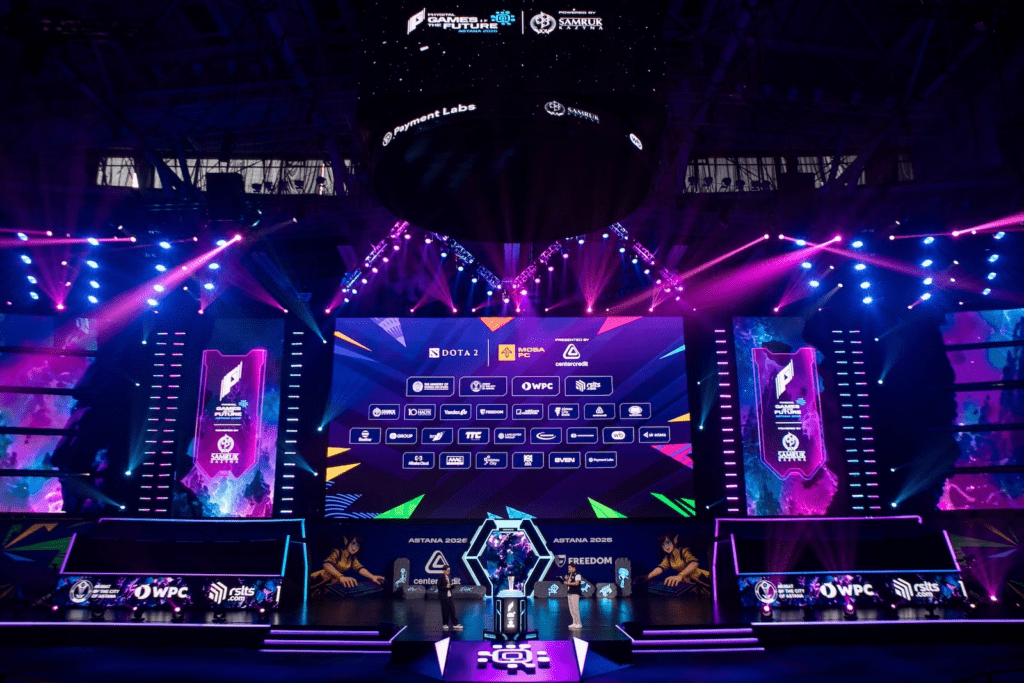
Peruvian team PlayTime won the $1 million Dota 2 tournament at the Games of the Future 2026 in Astana, defeating China's Yakult Brothers 3-0 in the grand final. The 16-team competition included clubs from China, Southeast Asia, Europe, South America, and Kazakhstan. PlayTime received $350,000, while Yakult Brothers earned $160,000 as runners-up. China's Team Resilience claimed third place after defeating Kazakhstan's Rune Eaters 2-0. Team Resilience collected $120,000, while Rune Eaters received $70,000 for finishing fourth. Team Resilience player Kongbo "Niu" Li said the team gained confidence after the opening map and maintained control throughout the series, according to the official Games of the Future website. For Rune Eaters, the highlight was a quarterfinal victory over China's LGD.Pinghu. Alim "aik" Bespayev said the win was the emotional high point of the team's campaign, while the semifinal defeat affected its preparation for the third-place match. Rune Eaters finished fourth after reaching the semifinals. The Games of the Future run from July 29 to August 9, bringing together more than 800 athletes representing over 50 nationalities across eight phygital and esports disciplines. The updated total prize pool is $4.65 million. The Games began in Kazan in 2024 and were held in Abu Dhabi in 2025. Astana is the first Central Asian city to host the tournament. Kazakhstan was selected over Peru and Chile after President Kassym-Jomart Tokayev proposed bringing the Games to the country during the inaugural event in Kazan. Earlier, The Times of Central Asia reported that China's 17 Gaming became the first champions of the Astana Games after winning the PUBG: Battlegrounds tournament.
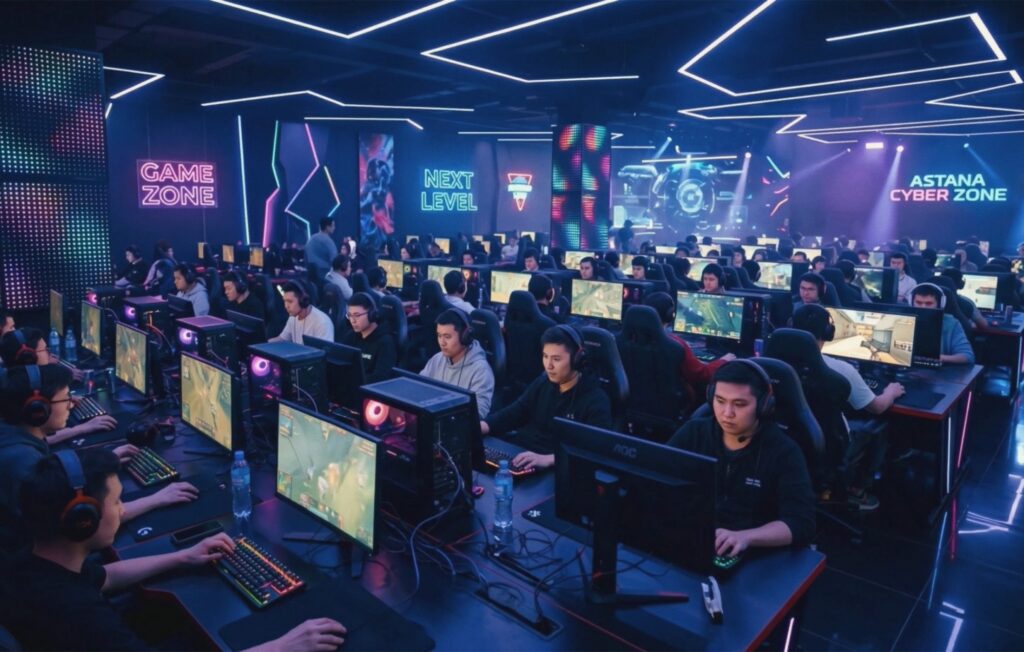
China’s 17 Gaming became the first champion crowned at the Games of the Future 2026 in Astana after winning the three-day PUBG: Battlegrounds competition. Sixteen teams played 15 matches for shares of a $1 million prize fund. 17 Gaming received $300,000 for first place. This was DIGA Esports’ first tournament of this scale. The Kazakhstani team finished 14th with 59 points and received $15,000. It won the eighth match in front of the home crowd at Beeline Arena. “The first day was about adapting to the tournament. It became easier on the second day, and I think we performed well on the third,” DIGA Esports player Sanzhar Kaliyev said in comments published by the Games of the Future. “Some of our players had never even competed in major European tournaments before, while here we were facing world champions. So finishing 14th against teams of this caliber is not a bad result for newcomers.” Kazakhstan approved a government esports development strategy in June 2025. The document estimated that around 3.5 million people in the country were interested in esports and online gaming in 2024. The strategy calls for leagues in schools and universities. It also proposes regional competitions and at least one national or international esports tournament each year. A Central Asian esports hub is listed as a long-term goal. Kazakhstan has also hosted other major competitions. In 2025, Astana staged PGL Astana 2025, a Counter-Strike 2 tournament organized by the Bucharest-based esports company PGL. Almaty hosted the PUBG Mobile Super League Central & South Asia. The sector has also received increased government support and investment. Phygital basketball is the next discipline to conclude, with its champion due to be decided on August 3. Running until August 9, the tournament features more than 800 competitors representing over 50 nationalities across eight disciplines and has a total prize fund of $4.65 million. Competitions include esports and phygital disciplines held in both digital and physical stages.
The third edition of the Future Games has opened in Kazakhstan’s capital, Astana, bringing traditional sport and esports together through digital technology. The opening ceremony was attended by President Kassym-Jomart Tokayev of Kazakhstan, President Sadyr Japarov of Kyrgyzstan, President Shavkat Mirziyoyev of Uzbekistan, and Rustam Minnikhanov, head of Russia’s Republic of Tatarstan. The competition runs from July 29 to August 9 and features more than 800 athletes from more than 50 countries competing for a prize fund of $4.75 million across eight disciplines. They include phygital football, phygital basketball, phygital martial arts, a phygital shooter, phygital dance, and tournaments in Dota 2, Mobile Legends: Bang Bang, and PUBG: Battlegrounds. Opening the Games, Tokayev said the tournament would provide fresh momentum for the development of the international phygital movement. “I am confident that the Future Games in Astana will give a powerful boost to the international phygital movement at the intersection of traditional sport and the gaming industry. It combines sport and intellect while also bringing together physical ability and intellectual potential,” Tokayev said. The Future Games have been held since 2024. The inaugural event took place in Kazan, while the second edition was hosted by the United Arab Emirates. The competition combines digital and physical formats, with athletes first competing in virtual contests before continuing the same discipline in real-world sporting events. The Times of Central Asia previously reported that Kazakhstan had originally been scheduled to host the second Future Games in 2025 but postponed the event by a year after redirecting public funds to deal with the aftermath of devastating spring floods. Several members of Kazakhstan’s parliament later proposed postponing the 2026 Games as well because of concerns over public spending.
Kazakh MP Sergey Ponomarev has proposed postponing the third edition of the Future Games, currently scheduled to be held in Kazakhstan in the summer of 2026, citing fiscal constraints. The Future Games are international competitions that combine traditional sports with their digital counterparts, with overall results determining the winners. The inaugural event took place in Kazan, Russia, in early 2024. The second edition, originally planned for Kazakhstan in 2025, was moved to the United Arab Emirates after the Kazakh government redirected funds to flood recovery efforts. The UAE is now set to host the event in December 2025. Speaking at a plenary session of the Mazhilis, Kazakhstan’s lower house of parliament, Ponomarev submitted a formal request to Prime Minister Olzhas Bektenov urging the postponement of the 2026 event. He estimated the cost of hosting the Games at 62 billion tenge (approximately $115 million), warning that such expenditures may not be prudent amid current budgetary pressures. “In 2024, the national budget posted a shortfall of 570.8 billion tenge (over $1 billion). Given the economic circumstances, it is worth questioning whether such large-scale spending in 2026 is appropriate,” Ponomarev stated. He noted that the estimated cost is equivalent to building at least six new schools. The lawmaker stated that postponing the tournament would not diminish its importance for Kazakhstan’s IT sector or international reputation but would allow more time to prepare under better conditions. “We are confident that our partners will understand, and that the Head of State will support this decision,” he said. The government has not yet issued an official response. As previously reported by The Times of Central Asia, the 2026 Future Games in Astana are expected to draw more than 1,500 athletes from nearly 100 countries, competing in 13 physical disciplines. The total prize fund is projected at $10 million.