
• KGS/USD = 0.01144 0%
  • KZT/USD = 0.00204 0%
  • TJS/USD = 0.10415 -0.19%
  • UZS/USD = 0.00008 0%
  • TMT/USD = 0.28571 0%
  • KGS/USD = 0.01144 0%
  • KZT/USD = 0.00204 0%
  • TJS/USD = 0.10415 -0.19%
  • UZS/USD = 0.00008 0%
  • TMT/USD = 0.28571 0%
  • KGS/USD = 0.01144 0%
  • KZT/USD = 0.00204 0%
  • TJS/USD = 0.10415 -0.19%
  • UZS/USD = 0.00008 0%
  • TMT/USD = 0.28571 0%
  • KGS/USD = 0.01144 0%
  • KZT/USD = 0.00204 0%
  • TJS/USD = 0.10415 -0.19%
  • UZS/USD = 0.00008 0%
  • TMT/USD = 0.28571 0%
  • KGS/USD = 0.01144 0%
  • KZT/USD = 0.00204 0%
  • TJS/USD = 0.10415 -0.19%
  • UZS/USD = 0.00008 0%
  • TMT/USD = 0.28571 0%
  • KGS/USD = 0.01144 0%
  • KZT/USD = 0.00204 0%
  • TJS/USD = 0.10415 -0.19%
  • UZS/USD = 0.00008 0%
  • TMT/USD = 0.28571 0%
  • KGS/USD = 0.01144 0%
  • KZT/USD = 0.00204 0%
  • TJS/USD = 0.10415 -0.19%
  • UZS/USD = 0.00008 0%
  • TMT/USD = 0.28571 0%
  • KGS/USD = 0.01144 0%
  • KZT/USD = 0.00204 0%
  • TJS/USD = 0.10415 -0.19%
  • UZS/USD = 0.00008 0%
  • TMT/USD = 0.28571 0%

Viewing results 1 - 6 of 5

Hungary Eyes Turkmen Gas to Diversify Energy Imports

Hungary, one of Gazprom’s largest remaining clients within the European Union, is exploring the prospect of importing natural gas from Turkmenistan, The Moscow Times reported. During a recent visit to Ashgabat, Hungary’s Deputy State Secretary for Eastern Relations Development, Ádám Stifter, described Turkmenistan as a promising partner in the energy sector. “Hungary depends on gas imports from different countries, and we view Turkmenistan with great hope. We expect Turkmenistan to become a supplier of gas to Europe, and particularly to Hungary, in the near future,” Stifter said, as quoted by Interfax. The announcement aligns with Budapest’s broader efforts to diversify its energy supply. On Thursday, Hungarian Foreign Minister Péter Szijjártó confirmed that Hungary had signed its longest-ever liquefied natural gas (LNG) agreement, a 10-year deal with French company Engie. Starting in 2028, the contract will provide Hungary with 4 billion cubic meters of LNG, with deliveries continuing through 2038. Earlier in September, Hungary also signed a contract with Shell to purchase 2 billion cubic meters of gas annually for ten years, beginning in 2026. That gas will be delivered via the Czech Republic and Germany. Analysts view Hungary’s interest in Turkmen gas as a notable policy shift. Natalia Milchakova, a senior analyst at Freedom Finance Global, said the move signals a desire to reduce dependence on Russian energy. “Hungary and Slovakia have long relied on Russian oil and gas, but the change in tone from Budapest suggests a drive to diversify supply routes,” she noted. However, the logistics remain complex. Milchakova pointed out that Turkmen gas would likely have to transit through Azerbaijan or Iran, routes complicated by infrastructure limitations and geopolitical challenges, or possibly via the TurkStream pipeline, which is operated in partnership with Gazprom. Hungary currently imports about 4.5 billion cubic meters of Russian gas annually under a long-term contract valid until 2036. According to the Centre for Research on Energy and Clean Air (CREA) in Finland, Hungary spent approximately €500 million on energy imports from Russia in July 2025 alone, €285 million on gas and €200 million on oil. Turkmenistan holds the world’s fourth-largest proven natural gas reserves. However, 80-90% of its gas exports are sent eastward to China via the Central Asia-China pipeline, highlighting the country's long-standing reliance on a single buyer. Strengthening ties with Hungary could signal Ashgabat’s intent to diversify its export geography.
Iraq Seeks Alternative Gas Import Routes Through Turkmenistan Amid Sanctions Challenge

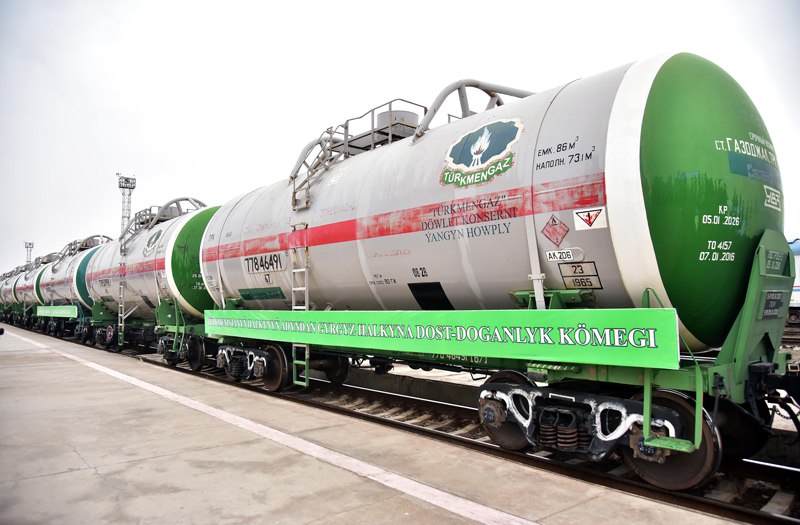
Iraq is intensifying efforts to implement a long-discussed agreement on natural gas imports from Turkmenistan, seeking to stabilize its energy sector and diversify supply sources. According to Ahmed Musa, spokesperson for Iraq’s Ministry of Energy, the plan involves importing around 20 million cubic meters of gas per day through pipelines connecting Turkmenistan and Iran. The route is intended to offset a shortfall caused by reduced gas flows from Iran, which currently supplies approximately one-third of Iraq’s energy needs. However, the implementation of this deal has faced significant hurdles. Chief among them is the issue of payments: the Trade Bank of Iraq (TBI) has been unable to issue a letter of credit due to U.S. sanctions on Iran, through whose territory the gas must transit. In an effort to resolve the deadlock, Iraqi Energy Minister Ziad Ali Fadel visited Turkmenistan to explore potential mechanisms to bypass the sanctions and operationalize the agreement. The foundations of this partnership were laid in 2023, when Iraq and Turkmenistan signed a memorandum of understanding, agreeing to continue negotiations on the logistics of fuel transit via Iran. Progress followed in November 2023, when both sides signed a protocol outlining the key commercial terms. Under the deal, Iraq is set to receive 45 billion cubic meters of gas over five years, equivalent to 9 billion cubic meters annually. The arrangement is structured as a swap: Turkmenistan will deliver gas to Iran, which in turn will transfer an equivalent volume to Iraq. Further advancing bilateral ties, Turkmenistan’s President Serdar Berdimuhamedov discussed gas supplies and the potential opening of an Iraqi embassy in Ashgabat with Iraqi Prime Minister Mohammed Shia Al-Sudani in March 2025. The talks underscored the growing strategic importance of energy cooperation between the two nations. A Strategic Energy Lifeline Iraq's reliance on natural gas to power its electricity grid makes securing reliable fuel sources a national priority. Given the country’s frequent power shortages and its current dependence on Iranian gas, diversifying suppliers is seen as crucial for both energy security and political autonomy. Turkmen gas is viewed as a strategically vital resource that could help stabilize Iraq’s energy sector and reduce vulnerability to geopolitical disruptions. The five-year agreement with Ashgabat aims to establish predictable, long-term supplies. Nevertheless, full-scale gas deliveries have yet to begin. The main obstacle remains the inability to process payments due to U.S. sanctions on Iran. Baghdad must either secure exemptions or devise alternative payment mechanisms to activate the contract. Simultaneously, technical discussions continue among Iraq, Iran, and Turkmenistan on ensuring reliable transport and infrastructure under the swap scheme. If these issues are resolved, Iraq could gain a dependable new energy partner, while Turkmenistan would expand its reach into a key southern market, strengthening both nations' strategic positions.

Turkey to Import Turkmen Gas via Caspian Pipeline Within Five Years

Turkish President Recep Tayyip Erdoğan has announced that Turkmenistan will begin supplying natural gas to Turkey through pipelines under the Caspian Sea within the next five years. The announcement was made during the Natural Resources Summit in Istanbul, as reported by Turkmenistan’s Transport and Communications Agency and cited by Business Turkmenistan. Erdoğan stated that since March 2025, Turkmen gas has already been reaching Turkey via Iran, with approximately 250 million cubic meters delivered so far. By the end of the year, that volume is expected to rise to 1.3 billion cubic meters. He emphasized that expanding energy cooperation with Turkmenistan remains a strategic priority for Ankara. A bilateral agreement was signed on February 10, 2025, following high-level talks. The long-discussed trans-Caspian pipeline project, once stalled due to political and environmental concerns, now appears to be gaining traction. If realized, it would allow direct exports of Turkmen gas to Turkey and potentially to European markets. Earlier this year, The Times of Central Asia reported that methane emissions could pose a challenge for Turkmenistan’s ambition to export gas to Europe. A February 2025 report from the U.S. Department of Energy noted that Turkmenistan holds the world’s fifth-largest natural gas reserves, estimated at 400 trillion cubic feet and produced 3.0 trillion cubic feet of dry gas in 2023, marking a record high since tracking began in 1992.
