• KGS/USD = 0.01143 -0%
  • KZT/USD = 0.00198 -0%
  • TJS/USD = 0.10899 0.93%
  • UZS/USD = 0.00008 0%
  • TMT/USD = 0.28490 -0.28%
  • KGS/USD = 0.01143 -0%
  • KZT/USD = 0.00198 -0%
  • TJS/USD = 0.10899 0.93%
  • UZS/USD = 0.00008 0%
  • TMT/USD = 0.28490 -0.28%
  • KGS/USD = 0.01143 -0%
  • KZT/USD = 0.00198 -0%
  • TJS/USD = 0.10899 0.93%
  • UZS/USD = 0.00008 0%
  • TMT/USD = 0.28490 -0.28%
  • KGS/USD = 0.01143 -0%
  • KZT/USD = 0.00198 -0%
  • TJS/USD = 0.10899 0.93%
  • UZS/USD = 0.00008 0%
  • TMT/USD = 0.28490 -0.28%
  • KGS/USD = 0.01143 -0%
  • KZT/USD = 0.00198 -0%
  • TJS/USD = 0.10899 0.93%
  • UZS/USD = 0.00008 0%
  • TMT/USD = 0.28490 -0.28%
  • KGS/USD = 0.01143 -0%
  • KZT/USD = 0.00198 -0%
  • TJS/USD = 0.10899 0.93%
  • UZS/USD = 0.00008 0%
  • TMT/USD = 0.28490 -0.28%
  • KGS/USD = 0.01143 -0%
  • KZT/USD = 0.00198 -0%
  • TJS/USD = 0.10899 0.93%
  • UZS/USD = 0.00008 0%
  • TMT/USD = 0.28490 -0.28%
  • KGS/USD = 0.01143 -0%
  • KZT/USD = 0.00198 -0%
  • TJS/USD = 0.10899 0.93%
  • UZS/USD = 0.00008 0%
  • TMT/USD = 0.28490 -0.28%
07 December 2025

Viewing results 1 - 6 of 12

Kazakhstan Government to Cut Social Spending

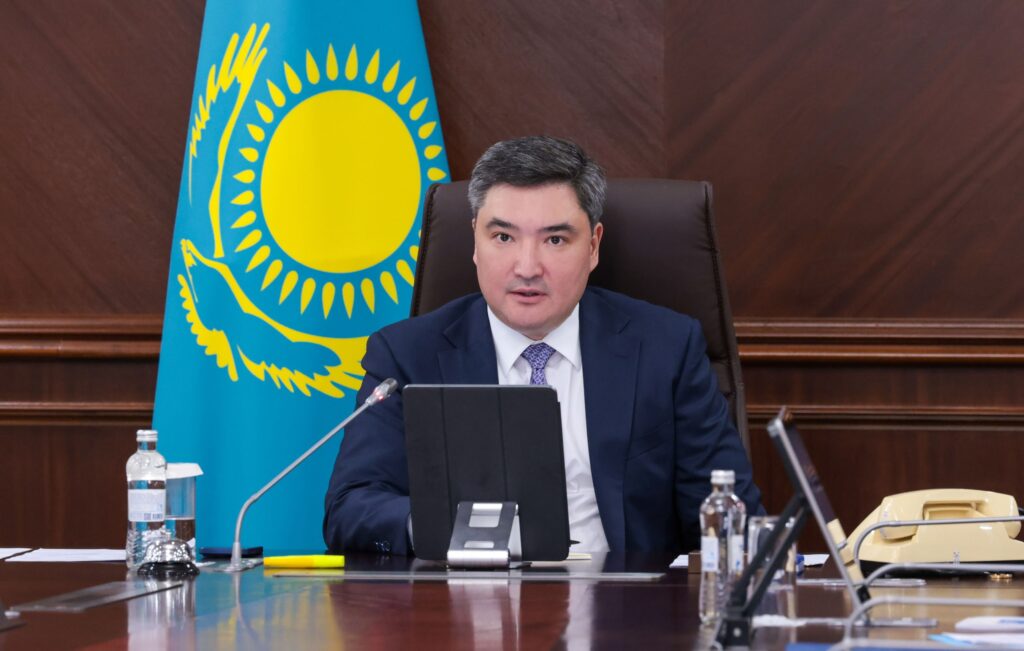
The Kazakh government plans to reduce budgetary spending on social support. Prime Minister Olzhas Bektenov told parliament that only citizens who are objectively unable to work will continue receiving state assistance. According to the Cabinet of Ministers, approximately $16.9 billion was allocated to the social sector in 2024, representing 37.3% of total budget expenditures. Of that amount, $10.2 billion went toward social security and direct assistance to the population. In 2025, social spending is projected to rise to $18.4 billion, or 37.2% of the overall budget, with social payments continuing to represent a significant portion. “The social sector places a very heavy burden on the budget: benefits, payments, and various support measures account for about 60% of the total budget. For many years, these expenditures exceeded 40% of the republican budget. When forming the budget for the next three years, we reduced them to 38%,” Bektenov said during his remarks in parliament. He added that the government will continue its optimization efforts. Only citizens who are unable to work for objective reasons will qualify for state support, while those capable of working are expected to support themselves. According to the Ministry of Labor and Social Protection, as of October 1, 2025, targeted social assistance (TSA) was being provided to 274,400 individuals from 51,000 families. The total amount disbursed thus far in 2025 was $47 million, out of a planned $190 million for the full year. TSA is distributed quarterly to low-income families, with employable recipients required to participate in state employment programs. As previously reported by The Times of Central Asia, Deputy Prime Minister Serik Zhumangarin stated that the government would revisit the issue of increasing the minimum wage no earlier than 2027.

Tokayev Proposes Linking Farm Subsidies to Advanced Technologies

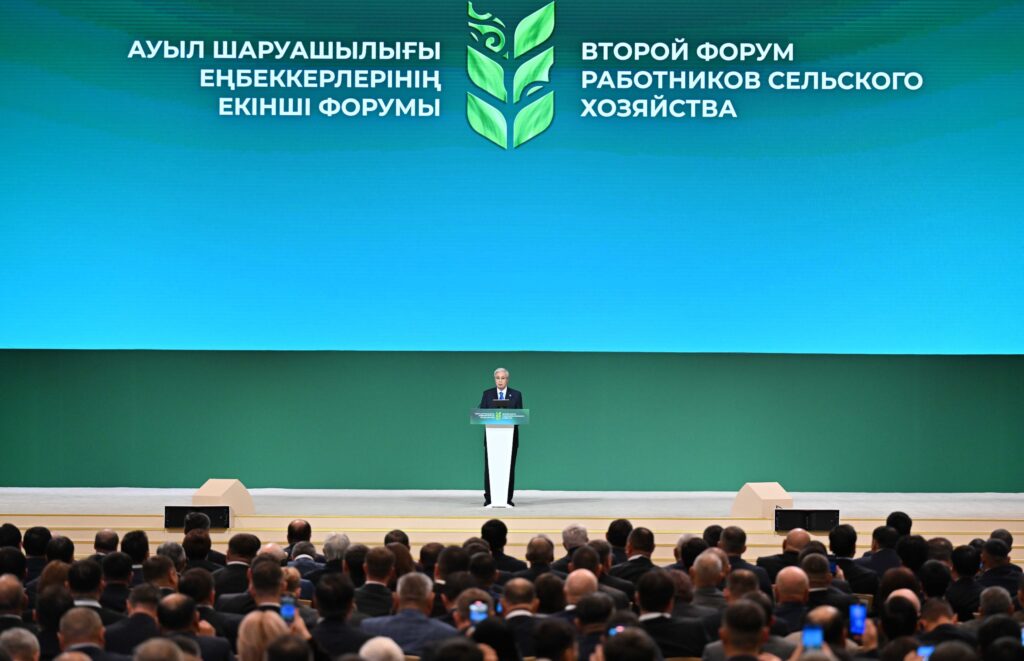
Kazakhstan’s President Kassym-Jomart Tokayev has proposed that state support for farmers be tied to their adoption of advanced technologies, including artificial intelligence (AI). The proposal was made during his speech at the country’s second Agricultural Workers Forum. Tokayev noted that while many farms are already using innovations such as smart farming systems, agricultural drones, satellite monitoring, and AI, technological development at the national level remains uneven. “We must move from isolated ‘smart’ solutions to full-scale digital agricultural production,” Tokayev stated. “Every farm should be incentivized to adopt digital technologies. State support should be directed toward those enterprises implementing innovations, including artificial intelligence.” Tokayev also reported that preferential lending to the agricultural sector has exceeded $1.9 billion in 2025, ten times more than five years ago. He stressed that the adoption of innovative technologies must extend beyond producers to include the regulatory authorities overseeing the agro-industrial sector. “It is necessary to develop an effective system for tracking and controlling state grain reserves using digital technologies and AI tools,” he said. “This requires modernizing existing grain elevators and constructing new, modern facilities. In state-backed financing programs for private elevators, having electronic systems for grain intake and dispatch should be a mandatory requirement.” Tokayev also highlighted persistent issues in agricultural data systems, which he described as fragmented and lacking integration. This, he said, results in policy decisions based on unreliable statistics. He called for comprehensive, objective data to be provided by the upcoming National Agricultural Census, which should serve as the foundation for updating digital infrastructure across the agro-industrial complex. Previously, The Times of Central Asia reported that Kazakhstan achieved a record harvest this year of grains, oilseeds, and legumes.

Government Securities Drive Growth on Kyrgyz Stock Exchange

The trading volume of government securities on the Kyrgyz Stock Exchange (KSE) has nearly doubled in 2025. From January to August, turnover from treasury bonds and treasury bills reached $64.3 million, almost twice the figure for the same period in 2024. Despite this increase, government securities still account for a relatively small share of total market activity. According to local brokers, the market for government securities in Kyrgyzstan remains in its formative stages but is showing steady progress. Analysts attribute the growth to increased government focus on capital markets and active public outreach aimed at building trust in both sovereign and corporate instruments. “The fact that the state is entering the stock market and that the president publicly encourages investment, while legislative changes are being made to improve market regulation, all this has a positive impact on the development of the financial sector,” said Meerim Askarbekova, director of the financial company Senti, in an interview with The Times of Central Asia. “It builds confidence in the Kyrgyz stock market. The effect is not yet visible in numbers, but the authorities have set a strong direction for growth. Even foreign brokers and financiers have started to talk about the Kyrgyz market.” Askarbekova added that a decade ago, Kyrgyz financial professionals had limited visibility abroad and the stock exchange was undervalued domestically. Today, with greater government engagement, the KSE is attracting international attention and rising interest from local investors. Between January and August 2025, the KSE recorded 1,711 transactions totaling $1.8 billion, compared to 1,200 transactions worth $1.07 billion over the same period in 2024. The share of government securities in total trading volume rose from 2.7% to 3.4% year-on-year. KSE data shows that the primary buyers of treasury securities are large corporations and financial institutions. Notably, commercial banks now hold one-third of Kyrgyzstan’s domestic public debt. A major catalyst for market growth was the 2023 law mandating all state-owned enterprises to list their securities on the KSE. The Ministry of Finance led the way, setting a precedent for other public entities. Reform momentum continued in June 2025, when the government introduced new measures to boost stock market participation. Companies can now submit listing documents electronically, a green bond issuance framework has been established, and foreign issuers have been granted access to the exchange. These steps are expected to enhance cross-border investment and improve overall market liquidity.

Kazakhstan’s Rare Earth Reserves Surpass Projections Following New Geological Surveys

Geological exploration at Kazakhstan’s largest rare earth metal deposit, Kuirektykol, in the Karaganda region, has revealed significantly higher reserves than previously estimated. The latest data suggests that the site holds 28.2 million tons of commercially viable rare earth elements, up from an initial estimate of 20 million tons. Exploration work began in 2022, and by November 2024, geologists had already confirmed significant concentrations of cerium and other lanthanides across four key zones at depths of up to 300 meters. Regional Potential Expands Alibek Aldeney, Deputy Akim of the Karaganda region, said that the surveys also revealed new prospective sites for gold, copper, and tungsten. “Foreign companies are already conducting surveys. This will allow us to expand our mineral resource base and create new production facilities for processing rare earth and precious metals,” Aldeney said. Industry experts have long maintained that Kazakhstan holds the potential to ensure stable supplies of critical minerals amid rising global demand. Strategic Priorities and Government Support In August, Prime Minister Olzhas Bektenov convened a meeting to discuss the development of Kazakhstan’s rare earth sector. He emphasized the need to modernize production, adopt advanced technologies, and increase scientific research. According to the Ministry of Industry, rare and rare earth metals currently account for 2.4% of the country's metallurgical sector. Since 2018, the government has invested KZT 67 billion (approximately $124 million) in the industry. Kazakhstan is currently exploring 25 promising rare earth sites across a combined area of 100,000 square kilometers. In 2024 alone, 38 new deposits of solid minerals were identified. Production of beryllium, tantalum, niobium, scandium, titanium, rhenium, and osmium is already underway, along with the extraction of associated elements such as bismuth, antimony, selenium, and tellurium. Future Outlook and Strategic Concerns There are emerging industrial opportunities include the production and recycling of battery materials, heat-resistant alloys, semiconductors, and permanent magnets. However, as The Times of Central Asia previously reported, with the sector’s strategic value increasing, members of parliament have called for tighter regulation of rare earth exports to safeguard national interests.