
• KGS/USD = 0.01144 0%
  • KZT/USD = 0.00214 0%
  • TJS/USD = 0.10815 0.19%
  • UZS/USD = 0.00008 0%
  • TMT/USD = 0.28571 0%
  • KGS/USD = 0.01144 0%
  • KZT/USD = 0.00214 0%
  • TJS/USD = 0.10815 0.19%
  • UZS/USD = 0.00008 0%
  • TMT/USD = 0.28571 0%
  • KGS/USD = 0.01144 0%
  • KZT/USD = 0.00214 0%
  • TJS/USD = 0.10815 0.19%
  • UZS/USD = 0.00008 0%
  • TMT/USD = 0.28571 0%
  • KGS/USD = 0.01144 0%
  • KZT/USD = 0.00214 0%
  • TJS/USD = 0.10815 0.19%
  • UZS/USD = 0.00008 0%
  • TMT/USD = 0.28571 0%
  • KGS/USD = 0.01144 0%
  • KZT/USD = 0.00214 0%
  • TJS/USD = 0.10815 0.19%
  • UZS/USD = 0.00008 0%
  • TMT/USD = 0.28571 0%
  • KGS/USD = 0.01144 0%
  • KZT/USD = 0.00214 0%
  • TJS/USD = 0.10815 0.19%
  • UZS/USD = 0.00008 0%
  • TMT/USD = 0.28571 0%
  • KGS/USD = 0.01144 0%
  • KZT/USD = 0.00214 0%
  • TJS/USD = 0.10815 0.19%
  • UZS/USD = 0.00008 0%
  • TMT/USD = 0.28571 0%
  • KGS/USD = 0.01144 0%
  • KZT/USD = 0.00214 0%
  • TJS/USD = 0.10815 0.19%
  • UZS/USD = 0.00008 0%
  • TMT/USD = 0.28571 0%

Viewing results 1 - 6 of 2

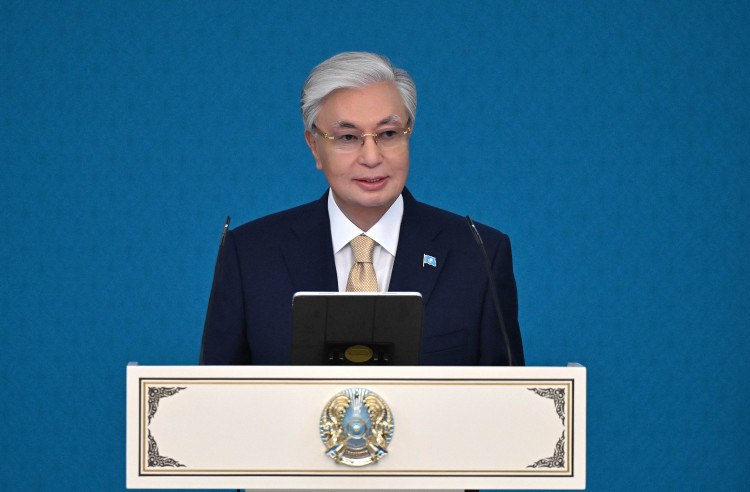
Tokayev Says Kazakhstan Offers Healthcare Benefits Unavailable in Some Western Countries

Kazakhstan provides its citizens with a range of social guarantees that, according to President Kassym-Jomart Tokayev, are unavailable even in some of the world’s most developed countries. Tokayev made the remarks during an awards ceremony for healthcare workers ahead of their professional holiday. Kazakhstan marks Medical Workers’ Day annually on the third Sunday of June, which falls on June 21 this year. Speaking at the ceremony, Tokayev said Kazakhstan remains a social state and that fulfilling social obligations is a constitutional responsibility of all branches of government. He noted that more than 9 trillion tenge, or almost $18 billion, was allocated from the national budget for social spending last year alone. “The implementation of the Guaranteed Volume of Free Medical Care Program is also a constitutional obligation. This is a unique program with no equivalent abroad, at least in terms of the scale of free medical services provided,” Tokayev said. He also pointed to maternity benefits as another example. “Women in Kazakhstan receive three years of maternity leave with payments and job security. These are unique conditions for young mothers. I worked in the West, particularly in Switzerland, and studied their system. Such arrangements do not exist there or in other Western countries,” he said. Tokayev added that Kazakhstan is developing as a regional center for medical tourism, citing high treatment standards and competitive pricing. Earlier this month, Tourism and Sports Minister Yerbol Myrzabosynov reported that about 80,000 foreign patients had received medical care in Kazakhstan. Tokayev linked much of the sector’s progress to accelerated digitalization in healthcare. “Kazakhstan has actively begun introducing advanced technologies across all sectors, including medicine. This has given a new impulse to the development of our healthcare system,” he said. According to the president, the use of digital technologies has reduced diagnostic times by four times and increased the detection rate of malignant tumors by 30%. Artificial intelligence tools are now assisting doctors in making complex clinical decisions. More than 1,800 medical institutions across the country have switched to digital systems, while the integration of healthcare information platforms has reduced administrative costs by up to 40%, he said. Tokayev also highlighted the government’s efforts to improve the social standing of healthcare workers. He said state support for medical professionals has increased seven times over the past three years, with wages rising gradually. This year, Kazakhstan allocated 33 billion tenge, or about $67.4 million, for salary increases and additional support measures. “These initiatives have helped stabilize the staffing of the healthcare system,” Tokayev said. “New specialized scientific institutes, multidisciplinary hospitals, modern clinics, and perinatal centers are being launched in the capital and the regions. The government must now carry out a large-scale renovation of the entire healthcare infrastructure and modernize its material and technical base.” As previously reported by The Times of Central Asia, Kazakhstan opened Central Asia’s first Brain Research Institute this summer. Tokayev also announced last autumn that science cities would be established in Almaty and Kurchatov, with nuclear medicine among the planned research...


Tax Reform in Kazakhstan Could Lead to Drug Shortages

Kazakhstan’s new tax policy has triggered concerns over potential disruptions in the supply of medicines and medical devices. Industry leaders warn that complexities in administering value-added tax (VAT), along with legal inconsistencies in the updated Tax Code, could destabilize the country's pharmaceutical market. Ruslan Sultanov, chairman of Kazakhstan’s Association of Pharmaceutical and Medical Product Manufacturers, raised concerns during an online meeting with government and business representatives. He said the changes have already led distributors to refuse purchases of several essential medicines. Last year, Kazakhstan adopted a new Tax Code that increased the VAT rate from 12% to 16%. It also introduced zero and reduced VAT rates for specific sectors. During parliamentary discussions, lawmakers proposed exempting essential medicines from VAT and reducing the tax burden on medical institutions.  Ultimately, authorities agreed to fully exempt more than 3,000 medicines purchased under the Guaranteed Volume of Free Medical Care (GVFMC) and Compulsory Social Health Insurance (CSHI) programs from VAT. However, Sultanov said these exemptions have not been sufficient to stabilize the market. According to him, the pharmaceutical sector is facing unprecedented administrative pressure. One of the most critical problems is the inconsistent taxation of medical devices procured under the GVFMC and CSHI frameworks. While medical services are completely exempt from VAT, a 5% VAT rate is still applied to medical devices. “As a result, hospitals are in a situation where they cannot offset the tax when purchasing medical equipment. After factoring in administrative costs, companies are losing 5-7%. This affects both domestic and foreign manufacturers,” Sultanov explained. The lack of clear guidance from government agencies has further complicated matters. Socially significant medicines, which were previously taxed at 5%, are now VAT-exempt but ambiguity around the new rules has led to widespread reluctance among distributors to place orders. “The confusion has created a bottleneck. For example, paracetamol is physically available in warehouses, but its movement is being blocked. Without timely clarification, we will face a shortage,” Sultanov warned. To resolve the issue, he proposed eliminating the fragmented VAT structure currently applied to the pharmaceutical sector. Sultanov also highlighted the risks associated with the under-declaration of customs values for imported drugs. He stated that customs officials continue to rely on outdated price data from a year ago, ignoring current market rates. This, combined with delays in approving maximum retail prices by the Ministry of Health, threatens the viability of long-term drug supply contracts signed before January 2026, particularly those involving medicines not produced domestically. His concerns are echoed by pharmacy industry leaders. Talgat Omarov, Chairman of the Kazakhstan Association of Independent Pharmacies, confirmed that the organization has submitted formal appeals to President Kassym-Jomart Tokayev and Senate leadership, calling for the complete exemption of the pharmaceutical sector from VAT, not just medications supplied under state programs. “Every day, customers come into pharmacies, see new price tags, complain, and leave. We hear this negativity constantly. Medicines are socially significant goods, and applying additional taxes in the current climate is dangerous,” Omarov said. To cope with increased taxes...