
• KZT/USD = 0.00215
  • TJS/USD = 0.10810
  • UZS/USD = 0.00008
  • TMT/USD = 0.29850
  • KZT/USD = 0.00215
  • TJS/USD = 0.10810
  • UZS/USD = 0.00008
  • TMT/USD = 0.29850
  • KZT/USD = 0.00215
  • TJS/USD = 0.10810
  • UZS/USD = 0.00008
  • TMT/USD = 0.29850
  • KZT/USD = 0.00215
  • TJS/USD = 0.10810
  • UZS/USD = 0.00008
  • TMT/USD = 0.29850
  • KZT/USD = 0.00215
  • TJS/USD = 0.10810
  • UZS/USD = 0.00008
  • TMT/USD = 0.29850
  • KZT/USD = 0.00215
  • TJS/USD = 0.10810
  • UZS/USD = 0.00008
  • TMT/USD = 0.29850
  • KZT/USD = 0.00215
  • TJS/USD = 0.10810
  • UZS/USD = 0.00008
  • TMT/USD = 0.29850
  • KZT/USD = 0.00215
  • TJS/USD = 0.10810
  • UZS/USD = 0.00008
  • TMT/USD = 0.29850
13 August 2026

Viewing results 1 - 6 of 9

Central Asian Startups See Investment Surge

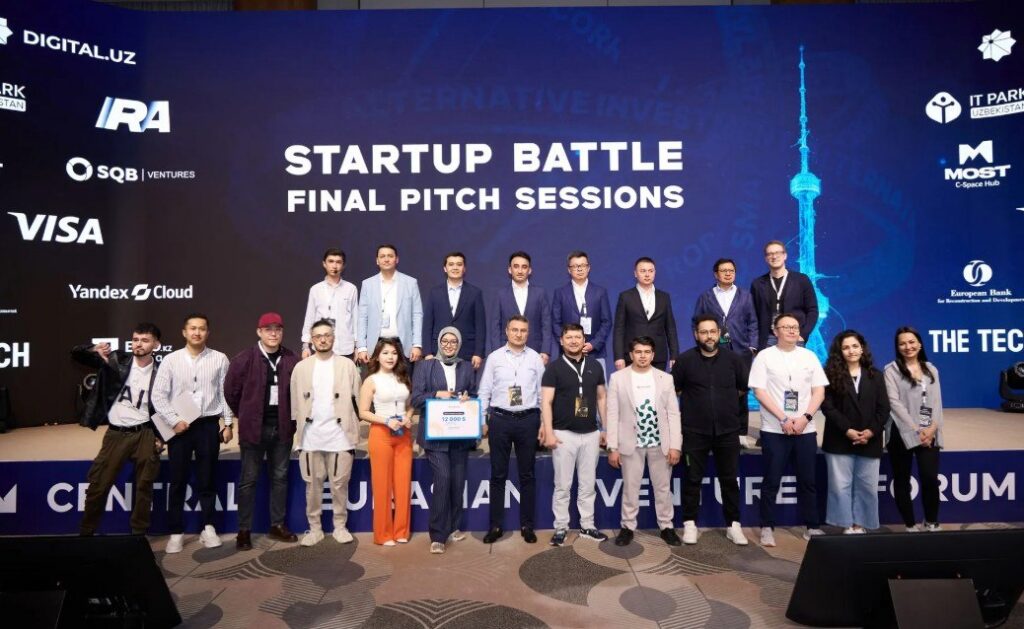
The fifth Central Eurasian Venture Forum (CEVF 2026) opened in Uzbekistan for the first time, drawing around 800 investors, startups, and technology companies from Central Asia, Europe, the U.S., Southeast Asia, and the Middle East and North Africa. Minister of Digital Technologies Sherzod Shermatov attended the opening ceremony. The event was organized by MOST Holding and IT Park Uzbekistan with government support. Partners included Astana Hub, the European Bank for Reconstruction and Development, the International Finance Corporation, Visa, and others. During the forum, the report Startups and Venture Capital in Central Asia 2026, prepared by RISE Research, was presented. According to the study, total venture capital investment in the region reached $320 million in 2025. The two largest deals, $130 million for Higgsfield and $65.5 million for Uzum, accounted for 61% of the total. Excluding these deals, the market reached $124.5 million, marking a 31% increase compared to 2024 and indicating steady organic growth. At the forum, the analytical agency RISE Research presented a study of the Central Asian venture capital market for 2025. According to the study, the volume of venture capital investments in Kazakhstan nearly tripled, reaching $209 million, with artificial intelligence being the main driver, accounting for approximately half of the total investment.  In Uzbekistan, funding reached $33.8 million, an increase of more than eleven times compared to 2022. Including major deals, the Uzbek market is estimated at $99.3 million, with 85% of investment coming from domestic investors. The forum also hosted the CEVF Awards ceremony, recognizing key players in the regional venture ecosystem. In addition, the European Bank for Reconstruction and Development announced 13 finalists for its Star Venture program for Central Asia, aimed at supporting high-tech startups. During the forum, cooperation agreements were signed with international partners, including companies from South Korea and the Middle East, to support the development of the startup ecosystem and attract investment. The second cohort of the Investment Readiness Accelerator (IRA) Tashkent program, focused on early-stage startups, was also launched.
Kazakh Startup Higgsfield AI: From “Unicorn” to Racism and Sexism Scandal

In October 2025, the Kazakh startup Higgsfield AI officially joined the ranks of “unicorns” – companies valued at more than $1 billion. The rapid growth continued: by early 2026, the platform had surpassed 15 million users, and its annual revenue approached $200 million. From the outset, the project targeted the international market. Although its headquarters is registered in San Francisco, Kazakh engineers play a significant role in its development, and the startup is a participant in the Astana Hub program. For many observers, the emergence of the first Kazakh “unicorn” symbolized the country’s transition to a new stage of technological development, attracting the attention of global investors and stimulating the domestic IT sector. However, the company’s rise was soon overshadowed by controversy. By early 2026, Higgsfield found itself at the center of an international scandal. Media reports and social media discussions cited allegations of aggressive advertising, opaque subscription practices, and, more worryingly, promotional content containing racist and sexist messages. Approximately 85% of its users were marketers utilizing the service to create advertising videos, a factor that significantly contributed to its rapid scaling. In Kazakhstan, the development was widely presented as a national achievement. However, questions soon emerged regarding the company’s business practices. Shortly after achieving unicorn status, Higgsfield faced a wave of user complaints, primarily concerning subscriptions and refunds. During major promotional campaigns, including “Black Friday” discounts of up to 65%, reducing the monthly price to $25, customers were promised unlimited access to advanced models. However, many users later reported a sharp decline in video generation speed after payment. According to these accounts, the application became difficult to use without purchasing additional credits, despite advertised “unlimited” access. The company attributed the disruptions to bot attacks, stating that tens of thousands of fake accounts had been blocked, and that approximately $1.35 million had been refunded to legitimate users due to service issues. In December 2024, the situation escalated when users reported widespread account suspensions without prior notice. The peak occurred on December 25-26, when clients with Russian IP addresses were reportedly restricted. Affected users lost not only access to paid services, but also the ability to download previously created content. Initially, the company did not publicly comment. It later stated that the suspensions were linked to suspicious payment activity and anti-bot measures. Additional criticism focused on alleged “dark patterns” in subscription management. Users claimed that payments were processed instantly, while subscription cancellation was difficult or technically inaccessible. On social media platforms, users compiled complaints alleging unfair practices, and warning others about what they described as a problematic business model. Under mounting pressure, Higgsfield reinstated certain accounts and issued refunds. Controversial Marketing: Racism and Sexism Allegations Particular criticism targeted the company’s marketing strategy. In early 2026, reports emerged that Higgsfield’s marketing team had distributed ready-made promotional materials to content creators, including videos that allegedly contained racist and sexually explicit language inserted into the voices of well-known cartoon characters. According to media reports, some clips included racially charged phrases and statements widely perceived...

Kazakh Startup Higgsfield Becomes AI Unicorn, Signaling Nation’s Tech Aspirations

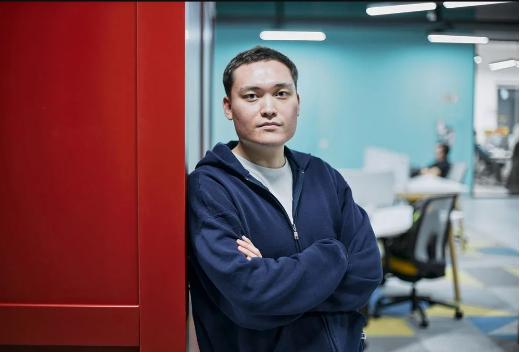
When Kazakh AI startup Higgsfield announced an $80 million funding round this month, its valuation soared past $1.3 billion, officially granting it “unicorn” status. For Silicon Valley observers, it marked another chapter in the ongoing boom in AI. But for Kazakhstan, a country seldom spotlighted in global tech circles, the milestone carries broader significance: the emergence of a homegrown company with global reach and competitiveness. Higgsfield was co-founded by 29-year-olds Erzat Dulat and Alex Mashrabov. The startup focuses on AI-generated video tools tailored for marketing and social media use and currently reports annual revenue of $200 million. Remarkably, the company reached $10 million in recurring revenue within just a few weeks, a rare achievement, even in the fast-paced AI sector. Leading venture capital firms, including Accel, GFT Ventures, and Menlo Ventures, cited this momentum as a key factor behind their investment. Rather than competing directly with giants like OpenAI or Google, Higgsfield leverages existing AI models to build practical tools for businesses. Its platform targets marketers, creative agencies, and social media professionals, an expanding segment that some analysts believe could rival traditional entertainment industries like Hollywood in both scale and value. The company’s success has not gone unnoticed by Kazakhstan’s leadership. President Kassym-Jomart Tokayev recently met with Dulat and Murat Abdrakhmanov, founder of the venture capital platform MA7 Ventures, to discuss artificial intelligence’s role in government, economic development, and national tech strategy. Tokayev praised Higgsfield as a model of Kazakh innovation with global potential and reaffirmed the country’s goal of becoming a launchpad for IT companies that can scale internationally without relocating abroad. Dulat noted that roughly 95% of Higgsfield’s workforce is Kazakh, highlighting the strength of the country’s domestic talent pool. He also expressed readiness to partner with the government on workforce development and AI-focused education initiatives. Abdrakhmanov emphasized that building a strong venture capital ecosystem is essential to Kazakhstan’s technological future and argued that the country is well-positioned to play a greater role in global investment networks. The meeting reflects a broader shift among emerging tech economies: instead of serving merely as consumer markets, they are increasingly aiming to foster globally competitive companies while retaining talent and intellectual property at home. [caption id="attachment_43381" align="aligncenter" width="936"] Higgsfield’s team @digitalbusiness.kz[/caption] Nonetheless, challenges remain. The AI-generated video market is highly competitive. Higgsfield plans to scale its team from 70 to 300 employees by year’s end, a move that will test its organizational capacity. Regulatory and ethical concerns around synthetic media also remain unresolved. Still, Higgsfield’s rapid rise underscores that AI innovation is no longer confined to traditional power centers like Silicon Valley, Beijing, or Europe. It offers a compelling example of Kazakhstan’s growing ambition to establish itself as a meaningful player in the global technology economy. For U.S. investors and tech analysts, it’s a reminder that the future of AI may be shaped as much by emerging markets as by established ones.
