• KZT/USD = 0.00210
  • TJS/USD = 0.10810
  • UZS/USD = 0.00008
  • TMT/USD = 0.29850
  • KZT/USD = 0.00210
  • TJS/USD = 0.10810
  • UZS/USD = 0.00008
  • TMT/USD = 0.29850
  • KZT/USD = 0.00210
  • TJS/USD = 0.10810
  • UZS/USD = 0.00008
  • TMT/USD = 0.29850
  • KZT/USD = 0.00210
  • TJS/USD = 0.10810
  • UZS/USD = 0.00008
  • TMT/USD = 0.29850
  • KZT/USD = 0.00210
  • TJS/USD = 0.10810
  • UZS/USD = 0.00008
  • TMT/USD = 0.29850
  • KZT/USD = 0.00210
  • TJS/USD = 0.10810
  • UZS/USD = 0.00008
  • TMT/USD = 0.29850
  • KZT/USD = 0.00210
  • TJS/USD = 0.10810
  • UZS/USD = 0.00008
  • TMT/USD = 0.29850
  • KZT/USD = 0.00210
  • TJS/USD = 0.10810
  • UZS/USD = 0.00008
  • TMT/USD = 0.29850

Viewing results 1 - 6 of 3

How a New Generation of Startups From Kazakhstan Attracted International Investors

A software engineering team writes code in Almaty for a parent company incorporated in Delaware. Most of its revenue comes from customers in the United States and Singapore, with the United Kingdom another important market. Until recently, this business model was unusual in Kazakhstan. It is now becoming more common as entrepreneurs launch international companies from the outset rather than focus solely on the domestic market. Rather than adapt foreign products for Kazakhstan’s population of about 20 million, these founders are developing technology for customers abroad. Their success is drawing interest from international venture capital firms and raising Kazakhstan’s profile as a source of high-growth technology companies. Growth Measured in Numbers The latest Startups and Venture Capital in Central Asia 2026 report by RISE Research shows how quickly Kazakhstan’s venture sector is growing. Venture investment reached $209 million in 2025, nearly three times the $71 million raised a year earlier. The figure also exceeded the combined total elsewhere in Central Asia. The aggregate valuation of funded startups in Kazakhstan rose to $2.16 billion. RISE Research also found that U.S.-oriented startups with roots in Kazakhstan raised more than $214 million in 2025. This helps explain the rise in international interest. Venture funds are backing companies built for global markets rather than businesses dependent on a relatively small domestic customer base. Among the best-known examples is Higgsfield AI, which develops software for creating and editing AI-generated video. The company raised $50 million in Series A financing in September 2025. An $80 million extension in January 2026 brought the round to more than $130 million and valued the company at over $1.3 billion, confirming its status as Kazakhstan’s first unicorn. Cerebra AI develops software that analyzes CT scans to help clinicians detect ischemic and hemorrhagic strokes. The platform uses the ASPECTS scale and can return an analysis within minutes. Codiplay supplies educational software and Internet of Things kits used to teach programming and hands-on electronics in 13 countries, including South Korea and the UK. The company raised $9 million in Series A financing in January 2025. Parqour develops parking management software with automated license plate recognition. Its systems operate in 22 countries and cover more than 300 parking areas. These companies work in different fields, but their businesses are built mainly around software and intellectual property, even where hardware is part of the product. That makes expansion abroad less capital-intensive and helps explain their appeal to foreign investors. Why Investors Are Paying Attention Now Kazakhstan’s emergence as Central Asia’s leading venture capital market did not happen overnight. The record investment figures of 2025 followed several years of work in the startup sector, including Astana Hub’s accelerator programs and tax incentives. More founders also began developing products for international markets. One clear sign was international recognition. Three startups with founders from Kazakhstan were accepted into Y Combinator in 2025, matching the total accepted in all previous years combined, according to RISE Research. For international investors, acceptance into the Silicon Valley accelerator provides external validation as...

Global Tech Weekend Brings International Investors and Startups to Uzbekistan

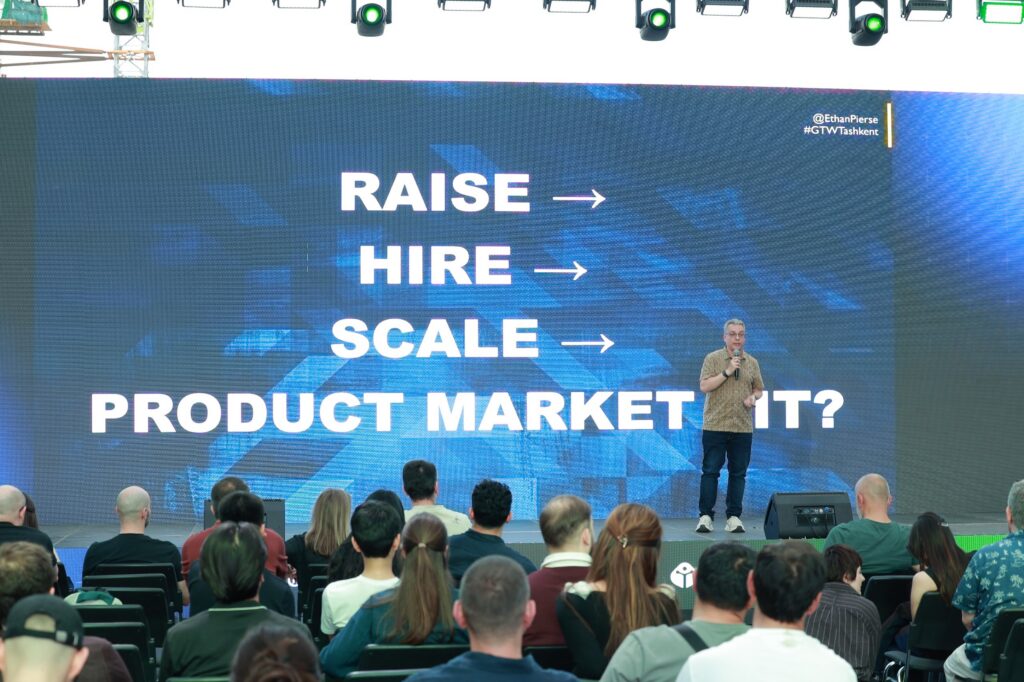
More than 2,500 startup founders, investors, developers, venture capital representatives, and technology experts gathered in Uzbekistan’s capital from May 15-17 for the inaugural Global Tech Weekend × TECH FEST, an event organizers say reflects the region’s growing role in the international innovation economy. Held in partnership with IT Park Uzbekistan, the three-day festival featured more than 40 events and over 120 speakers from Central Asia, Europe, the Middle East, and the United States. Discussions covered artificial intelligence, venture capital, gaming, digital transformation, startup scaling, and cross-border investment. The event marks Global Tech Weekend’s first edition in Uzbekistan. Founded in Los Angeles in 2024, the event debuted in Tbilisi in 2025 before expanding in 2026 to Tashkent, Tbilisi, and Baku as flagship host cities. “You have everything you need to achieve your goals. IT Park and the government provide strong support. I wish every country had this level of support,” said Jaba Kikvidze, co-founder of Global Tech Weekend, during the festival. “My advice to founders in Uzbekistan is to work hard, look beyond the local market, explore new opportunities, and make use of the ecosystem being built around you,” he added. [caption id="attachment_49077" align="aligncenter" width="300"] @IT Park Uzbekistan[/caption] One of the recurring themes of the event was how Central Asian startups can move beyond domestic markets and attract international investment. During a panel titled “Roots: Local Playbooks on Investing and Building within Central Asia,” regional investors discussed how funding strategies and startup expectations are evolving across emerging economies. Representatives from global accelerators and investment networks also highlighted growing international interest in founders from less traditional technology hubs. Speaking to The Times of Central Asia, Farrukh Erkinov, head of the Startup Ecosystem Development Department at IT Park Uzbekistan, said one of the festival’s main objectives was to create direct links between local entrepreneurs and global investors. “One of the most important factors in today’s startup ecosystem is connection to the global community,” Erkinov said. “Through Global Tech Weekend, we aimed to create a direct platform for startups in Uzbekistan to interact with international investors, accelerators, and technology partners.” [caption id="attachment_49078" align="aligncenter" width="300"] @IT Park Uzbekistan[/caption] Artificial intelligence was another major focus of the festival. Speakers including Ethan Pierse, a partner at Borderless Ventures whose work focuses on the AI economy, argued that traditional investment models are becoming less effective as AI reshapes industries and shortens startup development cycles. The event also included startup pitch competitions featuring projects from Uzbekistan and neighboring countries, mentorship sessions with international experts, and esports tournaments centered on PUBG MOBILE and Mobile Legends. Organizers said the festival is intended to connect Central Asia more closely with the Caucasus and other neighboring regions. “We believe we can unite Central Asia and the Caucasus,” Global Tech Weekend co-founder Guri Koiava told The Times of Central Asia. “This means friendship, bridges between countries, joint investments, and new business opportunities. Here I see a strong drive from young people. They believe in what they are building."

Central Asian Startups See Investment Surge

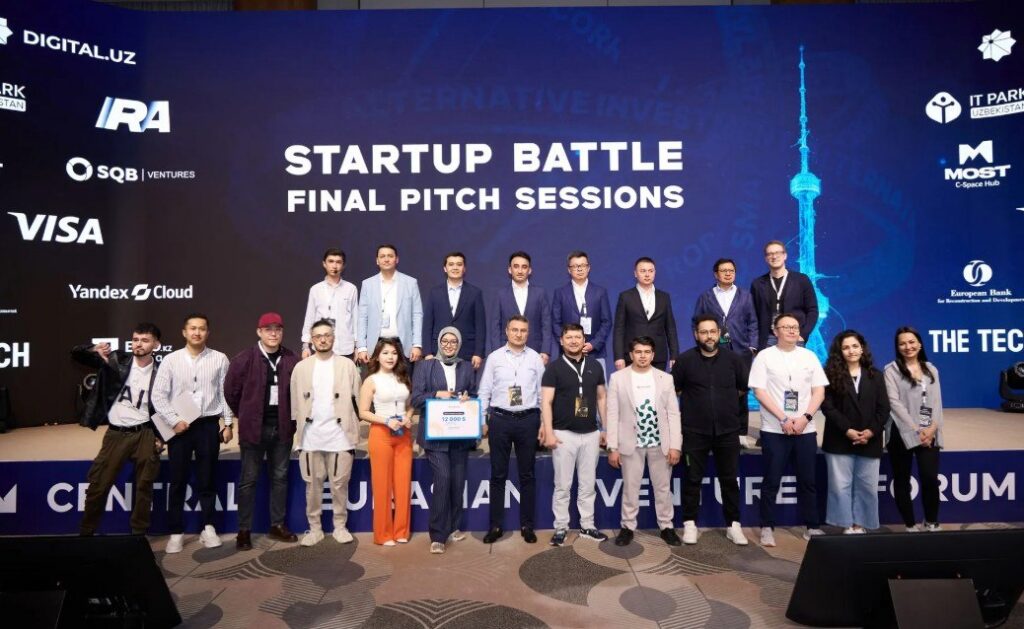
The fifth Central Eurasian Venture Forum (CEVF 2026) opened in Uzbekistan for the first time, drawing around 800 investors, startups, and technology companies from Central Asia, Europe, the U.S., Southeast Asia, and the Middle East and North Africa. Minister of Digital Technologies Sherzod Shermatov attended the opening ceremony. The event was organized by MOST Holding and IT Park Uzbekistan with government support. Partners included Astana Hub, the European Bank for Reconstruction and Development, the International Finance Corporation, Visa, and others. During the forum, the report Startups and Venture Capital in Central Asia 2026, prepared by RISE Research, was presented. According to the study, total venture capital investment in the region reached $320 million in 2025. The two largest deals, $130 million for Higgsfield and $65.5 million for Uzum, accounted for 61% of the total. Excluding these deals, the market reached $124.5 million, marking a 31% increase compared to 2024 and indicating steady organic growth. At the forum, the analytical agency RISE Research presented a study of the Central Asian venture capital market for 2025. According to the study, the volume of venture capital investments in Kazakhstan nearly tripled, reaching $209 million, with artificial intelligence being the main driver, accounting for approximately half of the total investment.  In Uzbekistan, funding reached $33.8 million, an increase of more than eleven times compared to 2022. Including major deals, the Uzbek market is estimated at $99.3 million, with 85% of investment coming from domestic investors. The forum also hosted the CEVF Awards ceremony, recognizing key players in the regional venture ecosystem. In addition, the European Bank for Reconstruction and Development announced 13 finalists for its Star Venture program for Central Asia, aimed at supporting high-tech startups. During the forum, cooperation agreements were signed with international partners, including companies from South Korea and the Middle East, to support the development of the startup ecosystem and attract investment. The second cohort of the Investment Readiness Accelerator (IRA) Tashkent program, focused on early-stage startups, was also launched.