
• KZT/USD = 0.00226
  • TJS/USD = 0.10850
  • UZS/USD = 0.00009
  • TMT/USD = 0.29850
  • KZT/USD = 0.00226
  • TJS/USD = 0.10850
  • UZS/USD = 0.00009
  • TMT/USD = 0.29850
  • KZT/USD = 0.00226
  • TJS/USD = 0.10850
  • UZS/USD = 0.00009
  • TMT/USD = 0.29850
  • KZT/USD = 0.00226
  • TJS/USD = 0.10850
  • UZS/USD = 0.00009
  • TMT/USD = 0.29850
  • KZT/USD = 0.00226
  • TJS/USD = 0.10850
  • UZS/USD = 0.00009
  • TMT/USD = 0.29850
  • KZT/USD = 0.00226
  • TJS/USD = 0.10850
  • UZS/USD = 0.00009
  • TMT/USD = 0.29850
  • KZT/USD = 0.00226
  • TJS/USD = 0.10850
  • UZS/USD = 0.00009
  • TMT/USD = 0.29850
  • KZT/USD = 0.00226
  • TJS/USD = 0.10850
  • UZS/USD = 0.00009
  • TMT/USD = 0.29850
01 October 2026

Viewing results 1 - 6 of 3

Kazakhstan, Uzbekistan, and UAE Study CASA Rail Route to Indian Ocean

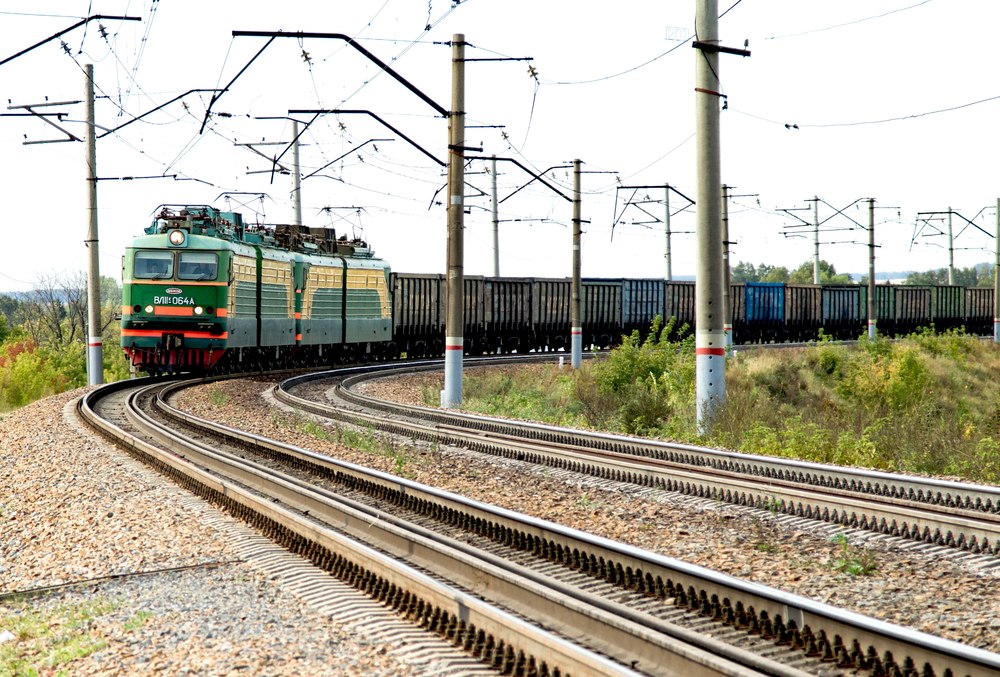
Kazakhstan, Uzbekistan, and the United Arab Emirates have agreed to study a proposed railway corridor through Afghanistan to Pakistan’s seaports. The transport ministries of Kazakhstan and Uzbekistan and the UAE Ministry of Energy and Infrastructure signed a memorandum on the Central Asia-South Asia (CASA) project on September 30. They agreed to study its technical and economic feasibility and examine possible financing. The memorandum leaves the route and construction timetable open and provides no cost estimate. Kazakhstan and Uzbekistan are both landlocked, and Uzbekistan is one of only two countries worldwide that must cross at least two national borders to reach the open sea. Kazakh authorities estimate that CASA could eventually carry up to 10 million tons of freight a year toward Karachi and Gwadar. Uzbekistan is working with Afghanistan and Pakistan on a railway from Termez through central Afghanistan to Kharlachi on the Pakistani border. The three countries agreed in July 2025 to prepare a feasibility study. Estimates put the cost at around $7 billion, although some have been higher. Kazakhstan is involved in a separate proposal from Torghundi on the Turkmen border through Herat and Kandahar to Spin Boldak near Pakistan. In April 2025, Kazakhstan and Afghanistan signed a protocol of intent, with the Torghundi-Herat railway and a logistics center in Herat envisaged as an initial stage. A new 43-kilometer section of the Khaf-Herat railway connecting Afghanistan with Iran was inaugurated on September 28. Kazakhstan’s Integra Construction KZ helped build it, and Afghan authorities say work is under way on further links from Herat toward the Turkmen and Pakistani borders. A study by the Moscow-based Institute of World Economy and International Relations (IMEMO) found that Afghanistan’s Taliban-led authorities had signed more than 15 railway-related agreements by March 2026. By then, no new mainline track had entered service under those initiatives, and active projects represented less than 1% of the estimated cost of the announced plans. Dauren Ilesaliev, a professor at Tashkent State Transport University, points to the need for steady freight. “Having railway infrastructure does not guarantee that it will work,” Ilesaliev said. Countries along the route would also need to agree on a through-tariff. Kazakhstan’s trade with Afghanistan could provide some of that freight. Bilateral trade reached $581.1 million in January-July 2026, with Kazakh exports accounting for $572.9 million. Flour accounted for $215.6 million and wheat for $122 million of those exports. Kazakhstan has also explored prospective mineral deposits in Afghanistan’s Nuristan Province and is discussing exports of locally assembled vehicles. In an interview with Novastan, Uzbek analyst Aziza Mukhammedova said a corridor’s value to Afghanistan would depend on the jobs and investment it generates there, alongside transit freight. She also cited unresolved financing as a challenge. The UAE sits outside the proposed route, and the memorandum names neither an Emirati company nor a possible investment amount. If a trans-Afghan line is built, Uzbekistan’s China-Kyrgyzstan-Uzbekistan railway could form part of a rail route from China to Pakistan. For Kazakhstan, CASA would provide an Indian Ocean outlet alongside the...
Kyrgyzstan’s Eldik Bank Secures CNY 1 Billion Loan from China Development Bank

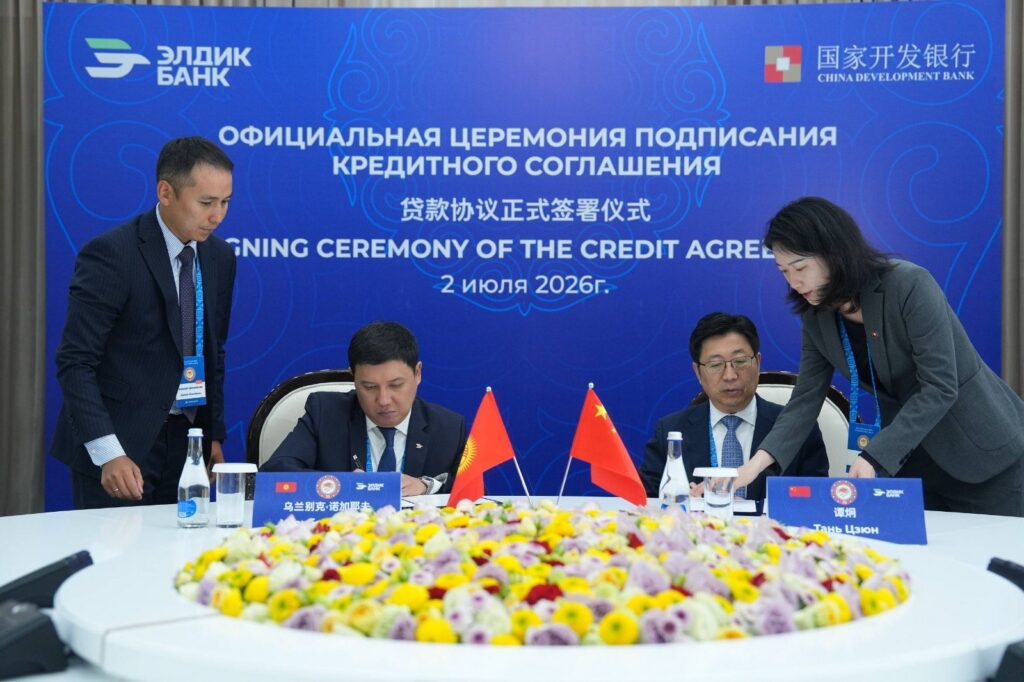
Kyrgyzstan’s state-owned Eldik Bank has signed a loan agreement worth 1 billion Chinese yuan (CNY), or about $147 million, with China Development Bank to finance priority projects and deepen economic cooperation between Bishkek and Beijing. The agreement was signed on July 2 by Eldik Bank Chairman Ulanbek Nogaev and China Development Bank President Tan Jiong. According to Eldik Bank, the funds will be used to finance small and medium-sized enterprises in infrastructure, green energy, industry, agriculture, and other priority sectors. The bank said the facility would give entrepreneurs in Kyrgyzstan access to long-term capital to modernize production and carry out investment projects that create jobs. The two sides also plan to sign an additional agreement allocating CNY 700 million to Eldik Bank’s subsidiaries, Eldik Leasing and Sky Mobile, which will oversee projects under the financing framework. Eldik Bank said the agreement reflected trust between the two financial institutions and a shared interest in expanding financial and investment ties. “Our partnership with China Development Bank has been developing successfully for more than 20 years and has made a significant contribution to supporting Kyrgyzstan’s economy,” Nogaev said. “This new agreement creates additional opportunities for financing priority projects and will further strengthen the economic ties between Kyrgyzstan and China.” The signing took place during the 22nd meeting of the council of the Interbank Consortium of the Shanghai Cooperation Organization in Cholpon-Ata, Kyrgyzstan, where Eldik Bank currently holds the rotating chairmanship. Delegations from member banks in Belarus, China, India, Kazakhstan, Kyrgyzstan, Pakistan, Russia, Tajikistan, and Uzbekistan attended the meeting. Participants discussed expanding interbank cooperation, joint investment projects, and sustainable finance initiatives within the SCO framework. China remains one of Kyrgyzstan’s largest external creditors. In late June, Kyrgyzstan’s parliament approved a separate preferential loan agreement with the Export-Import Bank of China to finance part of the country’s share in the construction of the China-Kyrgyzstan-Uzbekistan railway, one of Central Asia’s largest transport infrastructure projects. As of January 31, 2026, Kyrgyzstan’s debt to China’s Export-Import Bank stood at approximately $1.5 billion.

Chinese Investment in Uzbekistan Surpasses $8 Billion This Year

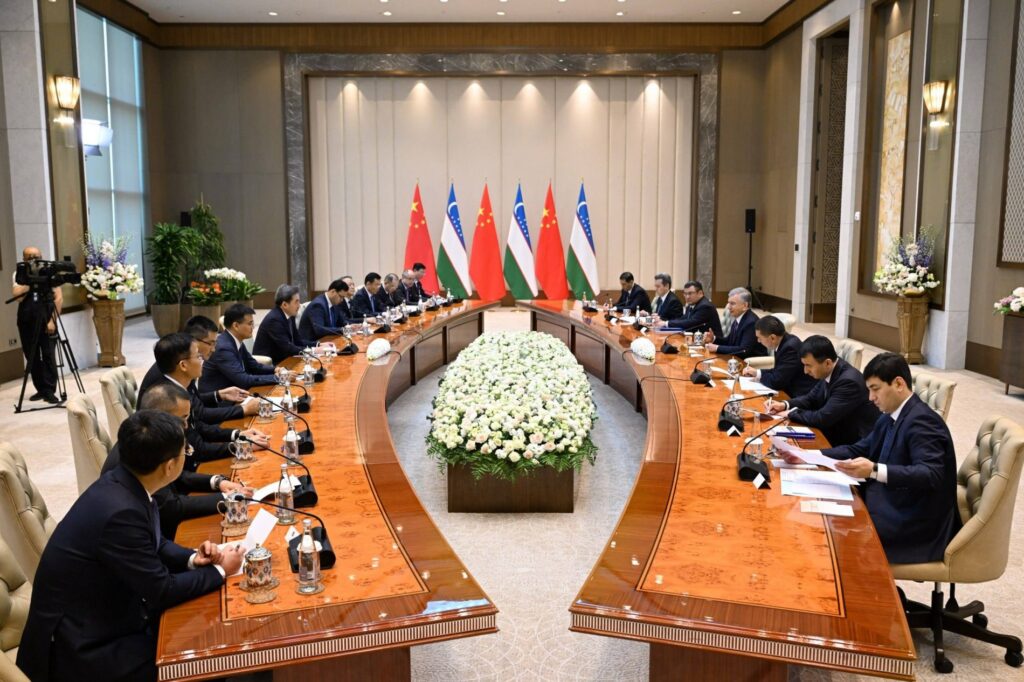
President Shavkat Mirziyoyev met with a delegation of leading Chinese companies and financial institutions on the sidelines of the Tashkent International Investment Forum. The meeting focused on new investment projects in energy, mining, infrastructure, and finance. The Chinese delegation was led by Wang Hongzhi, head of China’s National Energy Administration. It included executives from China Energy Engineering Corporation, China Datang, Sinoma Energy Conservation, China Southern Power Grid, China CAMC Engineering, China National Nuclear Corporation, and State Nuclear Uranium Resource Development. Representatives of the Export-Import Bank of China and Bank of China also attended. According to Uzbekistan’s presidential press service, the talks focused on high-tech projects in the energy and geological sectors, as well as cooperation in banking and finance. Mirziyoyev welcomed the rapid growth of Uzbekistan-China economic ties. Since the beginning of the year, bilateral trade has exceeded $6 billion, while direct Chinese investment in Uzbekistan has surpassed $8 billion. Nearly 6,000 joint ventures involving Chinese partners are operating in the country. Renewable energy projects formed a major part of the discussion. Chinese companies are already involved in building solar and wind power plants, as well as energy storage systems, across Uzbekistan. Participants supported plans to accelerate ongoing projects and launch new initiatives. These include expanding photovoltaic power generation capacity, introducing agrivoltaic technologies that combine agriculture and solar energy production, and building new transmission lines. The meeting also covered cooperation in waste-to-energy generation and advanced technological solutions, including modern data centers. In mining and geology, officials discussed joint exploration and development of mineral deposits. They also reviewed long-term partnerships in the supply of critical raw materials. Financial cooperation was another key topic. Participants reviewed opportunities for Chinese banks to support infrastructure projects, irrigation modernization, high-speed road construction, hydropower development, agricultural machinery supplies, and financing for small and medium-sized businesses. Earlier this year, the third Uzbekistan-China Interregional Forum in Xi’an resulted in more than $3.5 billion in investment and export agreements, including $3.35 billion in investment projects and $156 million in export contracts. Officials said the agreements would support infrastructure modernization, transport development, environmental services, and industrial production. Speakers at the Xi’an forum said bilateral trade reached nearly $18 billion last year, while accumulated Chinese investment in Uzbekistan totaled $17 billion.
