• KZT/USD = 0.00213
  • TJS/USD = 0.10800
  • UZS/USD = 0.00008
  • TMT/USD = 0.29850
  • KZT/USD = 0.00213
  • TJS/USD = 0.10800
  • UZS/USD = 0.00008
  • TMT/USD = 0.29850
  • KZT/USD = 0.00213
  • TJS/USD = 0.10800
  • UZS/USD = 0.00008
  • TMT/USD = 0.29850
  • KZT/USD = 0.00213
  • TJS/USD = 0.10800
  • UZS/USD = 0.00008
  • TMT/USD = 0.29850
  • KZT/USD = 0.00213
  • TJS/USD = 0.10800
  • UZS/USD = 0.00008
  • TMT/USD = 0.29850
  • KZT/USD = 0.00213
  • TJS/USD = 0.10800
  • UZS/USD = 0.00008
  • TMT/USD = 0.29850
  • KZT/USD = 0.00213
  • TJS/USD = 0.10800
  • UZS/USD = 0.00008
  • TMT/USD = 0.29850
  • KZT/USD = 0.00213
  • TJS/USD = 0.10800
  • UZS/USD = 0.00008
  • TMT/USD = 0.29850

Viewing results 1 - 6 of 14

Kyrgyzstan’s Eldik Bank Secures CNY 1 Billion Loan from China Development Bank

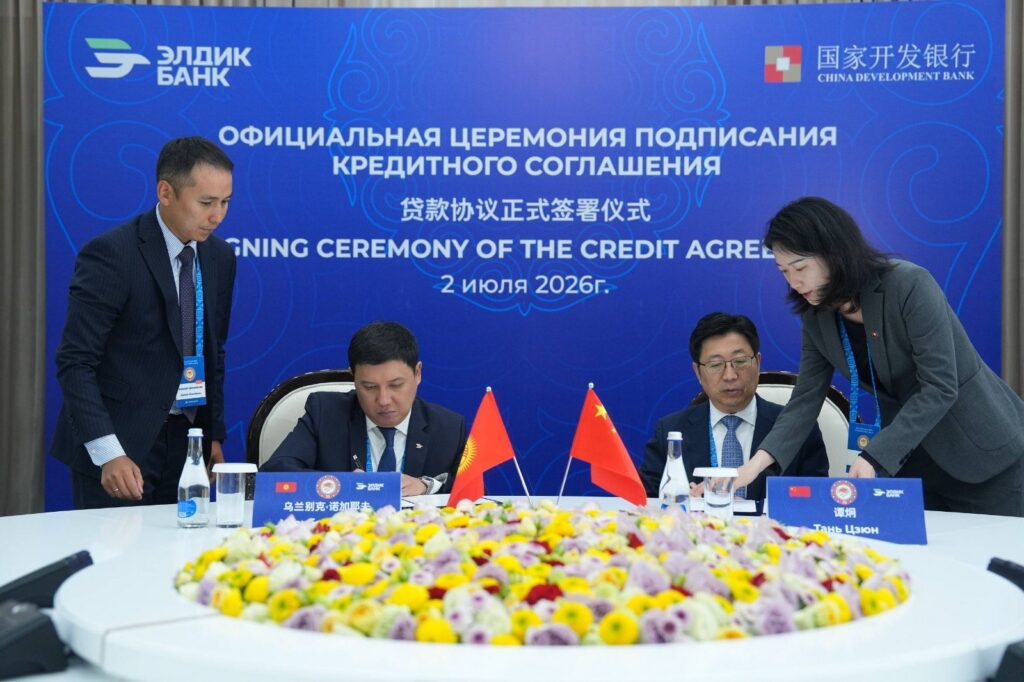
Kyrgyzstan’s state-owned Eldik Bank has signed a loan agreement worth 1 billion Chinese yuan (CNY), or about $147 million, with China Development Bank to finance priority projects and deepen economic cooperation between Bishkek and Beijing. The agreement was signed on July 2 by Eldik Bank Chairman Ulanbek Nogaev and China Development Bank President Tan Jiong. According to Eldik Bank, the funds will be used to finance small and medium-sized enterprises in infrastructure, green energy, industry, agriculture, and other priority sectors. The bank said the facility would give entrepreneurs in Kyrgyzstan access to long-term capital to modernize production and carry out investment projects that create jobs. The two sides also plan to sign an additional agreement allocating CNY 700 million to Eldik Bank’s subsidiaries, Eldik Leasing and Sky Mobile, which will oversee projects under the financing framework. Eldik Bank said the agreement reflected trust between the two financial institutions and a shared interest in expanding financial and investment ties. “Our partnership with China Development Bank has been developing successfully for more than 20 years and has made a significant contribution to supporting Kyrgyzstan’s economy,” Nogaev said. “This new agreement creates additional opportunities for financing priority projects and will further strengthen the economic ties between Kyrgyzstan and China.” The signing took place during the 22nd meeting of the council of the Interbank Consortium of the Shanghai Cooperation Organization in Cholpon-Ata, Kyrgyzstan, where Eldik Bank currently holds the rotating chairmanship. Delegations from member banks in Belarus, China, India, Kazakhstan, Kyrgyzstan, Pakistan, Russia, Tajikistan, and Uzbekistan attended the meeting. Participants discussed expanding interbank cooperation, joint investment projects, and sustainable finance initiatives within the SCO framework. China remains one of Kyrgyzstan’s largest external creditors. In late June, Kyrgyzstan’s parliament approved a separate preferential loan agreement with the Export-Import Bank of China to finance part of the country’s share in the construction of the China-Kyrgyzstan-Uzbekistan railway, one of Central Asia’s largest transport infrastructure projects. As of January 31, 2026, Kyrgyzstan’s debt to China’s Export-Import Bank stood at approximately $1.5 billion.

Chinese Workers Return to Tajik Highway Under Guard After Afghan Border Attacks

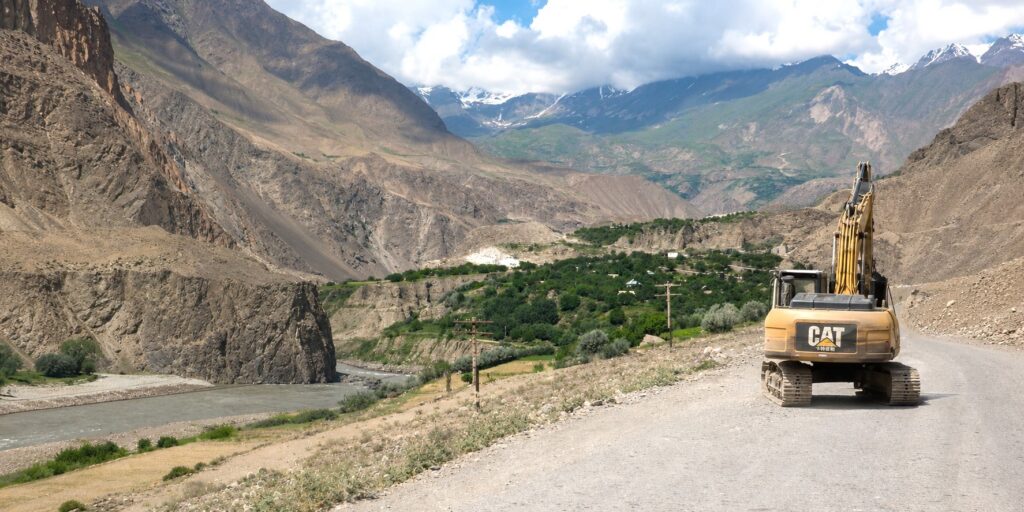
Chinese engineers and workers have returned to a highway site in eastern Tajikistan under armed protection. Their return restarts work on a road toward China that stopped after two attacks from Afghanistan killed five Chinese nationals in November. Tajikistan's Transport Ministry said Chinese specialists came back in April to the Kalai-Khumb to Vanj section of the Dushanbe-Kulma highway in Gorno-Badakhshan. They are advising local crews, pouring concrete, fitting tunnel lighting and completing other works. Ozodi said its correspondent saw Tajik special forces guarding Chinese workers in Darvaz in late May, but security officers did not allow photos or video. The return keeps the China-funded Dushanbe-Kulma corridor moving. The road links Dushanbe with the Kulma Pass on the Chinese frontier through the Pamir. The Kalai-Khumb-Vanj works sit close to the Pyanj River, where attacks from the Afghan side are impacting the cost of Chinese projects. Construction on the Kalai-Khumb-Vanj section began on Sept. 20, 2022, with the contract running until September 20, 2026. The contractor is China Road and Bridge Corporation. China is funding the work with a $230 million grant. Once complete, the road section should shrink from 109 kilometers to 92.3 kilometers. It includes two tunnels, five anti-avalanche corridors and 14 bridges. The route crosses Darvaz, one of Tajikistan's hardest mountain road sections. The Transport Ministry has described it as a route that had gone for years without major repairs. The work is meant to allow year-round movement and lower fuel and travel costs. By January, crews had finished 12 of the 14 bridges. Two bridges, avalanche corridors and tunnel systems remained under construction. Work stopped after the November 30 attack in Shodak, a village in Darvaz district. Tajikistan's Border Troops said an armed group came from Ruzvayak in Afghanistan's Badakhshan province and attacked CRBC employees. Two Chinese citizens were killed and two were wounded. Dushanbe called the attackers members of an armed terrorist group, but did not publicly name the organization. Four days earlier, another attack hit Shamsiddin Shohin district in Khatlon, also from Afghan territory. The Chinese embassy said three Chinese citizens were killed and one Chinese citizen was wounded. TCA previously reported that Tajikistan described the strike as using an unmanned aerial vehicle carrying explosives. China reacted with a rare public warning. On December 1, the Chinese embassy urged Chinese companies and personnel to evacuate the Tajik-Afghan border area. Its latest June 9 public warning still told Chinese citizens not to work or travel in Tajikistan's southern border areas, citing a complex security situation and extreme weather. Afghanistan's Taliban government promised cooperation after the killings. Reuters quoted Afghan Foreign Minister Amir Khan Muttaqi as saying, "The Islamic Emirate is fully prepared to strengthen border security, conduct joint investigations, and engage in any form of coordination… joint measures against malicious elements are a pressing necessity." Taliban officials later said suspects had been detained in Afghanistan's Badakhshan province. The Tajik authorities say the border is stable and under control, while continuing to announce smuggling cases and armed incidents....

Chinese Investment in Uzbekistan Surpasses $8 Billion This Year

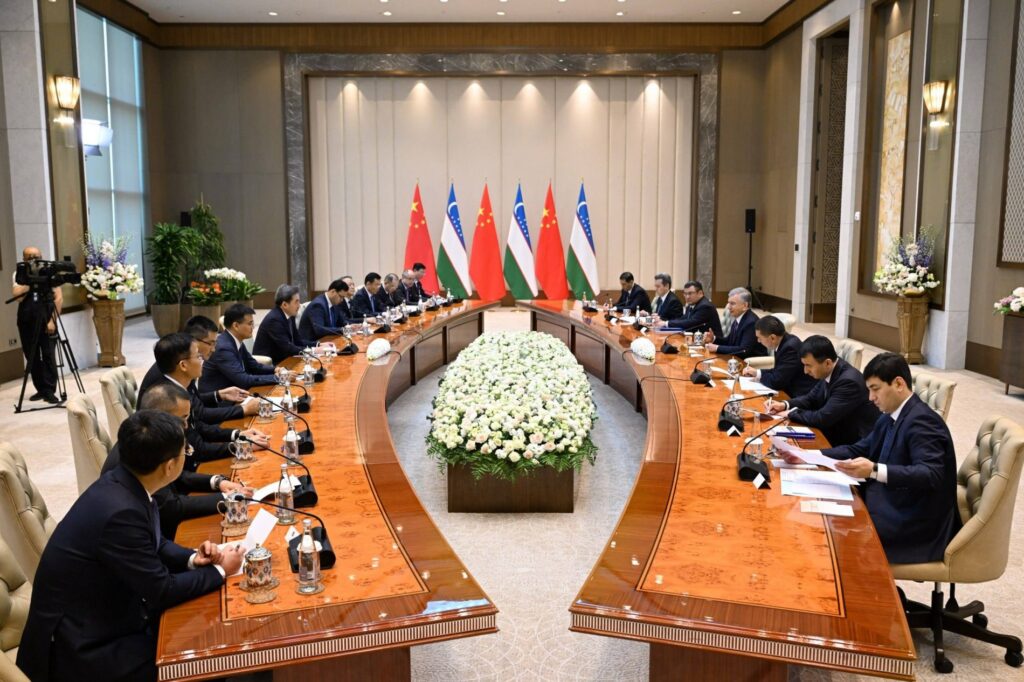
President Shavkat Mirziyoyev met with a delegation of leading Chinese companies and financial institutions on the sidelines of the Tashkent International Investment Forum. The meeting focused on new investment projects in energy, mining, infrastructure, and finance. The Chinese delegation was led by Wang Hongzhi, head of China’s National Energy Administration. It included executives from China Energy Engineering Corporation, China Datang, Sinoma Energy Conservation, China Southern Power Grid, China CAMC Engineering, China National Nuclear Corporation, and State Nuclear Uranium Resource Development. Representatives of the Export-Import Bank of China and Bank of China also attended. According to Uzbekistan’s presidential press service, the talks focused on high-tech projects in the energy and geological sectors, as well as cooperation in banking and finance. Mirziyoyev welcomed the rapid growth of Uzbekistan-China economic ties. Since the beginning of the year, bilateral trade has exceeded $6 billion, while direct Chinese investment in Uzbekistan has surpassed $8 billion. Nearly 6,000 joint ventures involving Chinese partners are operating in the country. Renewable energy projects formed a major part of the discussion. Chinese companies are already involved in building solar and wind power plants, as well as energy storage systems, across Uzbekistan. Participants supported plans to accelerate ongoing projects and launch new initiatives. These include expanding photovoltaic power generation capacity, introducing agrivoltaic technologies that combine agriculture and solar energy production, and building new transmission lines. The meeting also covered cooperation in waste-to-energy generation and advanced technological solutions, including modern data centers. In mining and geology, officials discussed joint exploration and development of mineral deposits. They also reviewed long-term partnerships in the supply of critical raw materials. Financial cooperation was another key topic. Participants reviewed opportunities for Chinese banks to support infrastructure projects, irrigation modernization, high-speed road construction, hydropower development, agricultural machinery supplies, and financing for small and medium-sized businesses. Earlier this year, the third Uzbekistan-China Interregional Forum in Xi’an resulted in more than $3.5 billion in investment and export agreements, including $3.35 billion in investment projects and $156 million in export contracts. Officials said the agreements would support infrastructure modernization, transport development, environmental services, and industrial production. Speakers at the Xi’an forum said bilateral trade reached nearly $18 billion last year, while accumulated Chinese investment in Uzbekistan totaled $17 billion.

Kyrgyzstan to Establish National Taxi Aggregator With Chinese Support

A Chinese company will help Kyrgyzstan establish its own electric vehicle taxi aggregator in a market currently dominated by Russian ride-hailing platforms. The National Investment Fund of the Kyrgyz Republic and China’s Shenzhen Wuyou Technology Co., Ltd. have signed framework agreements on investment projects to establish a national taxi aggregator, a modern electric vehicle fleet, and a network of EV charging stations across Kyrgyzstan, according to the Ministry of Economy and Commerce. At the signing ceremony, Deputy Minister of Economy and Commerce Benazir Nurlanova said Kyrgyzstan attaches particular importance to developing its partnership with China. She said the new projects would contribute to the development of a green economy in Kyrgyzstan, the adoption of modern technologies, and investment cooperation between the two countries. The Chinese side expressed readiness for long-term cooperation, including the exchange of experience and technology, and noted the high potential of joint initiatives in electric transport and digital infrastructure. Kyrgyzstan’s taxi market is currently served through taxi aggregators: ride-hailing platforms that connect passengers with private drivers through a single digital system. The state-backed project involving the Chinese company could become an alternative to existing aggregators, including Russia’s Yandex Taxi, which currently dominates Kyrgyzstan’s taxi market, and Wildberries Taxi, which has entered the local market.

Kazakhstan and Chinese Investors Launch “Green” Copper Metallurgy Project in Aktobe

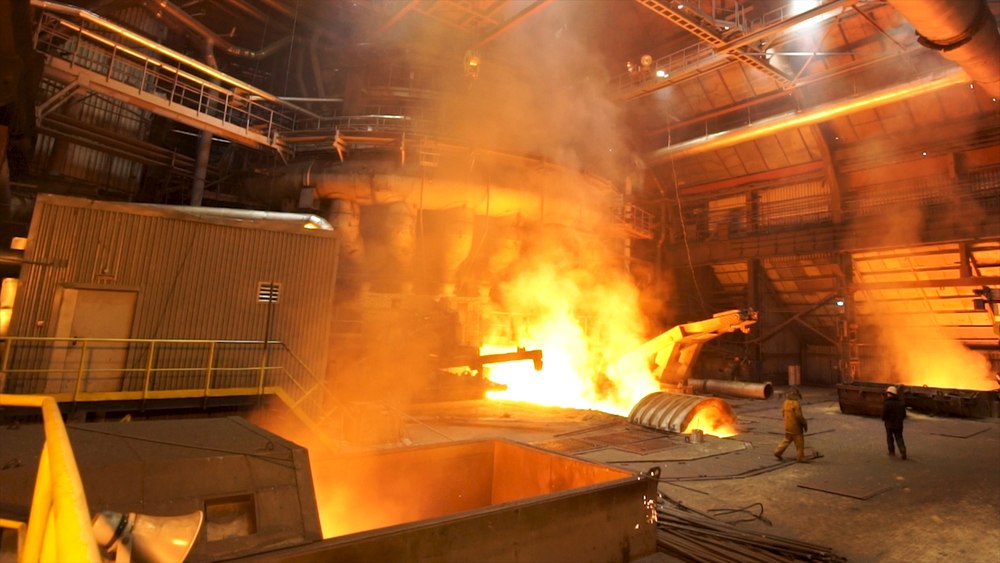
Kazakhstan has begun construction of a copper scrap recycling and copper rod production plant in Aktobe with the participation of Chinese investors, as the country seeks to develop higher-value metals processing and expand lower-carbon industrial production. The $100 million project is being implemented in the Aktobe Special Economic Zone (SEZ) with support from KAZAKH INVEST and the Aktobe Region administration. It involves China’s Beijing Jinyi Yuanfang Holding Group and Kazakhstan’s Phoenix Industrial Group. The new facility will process copper scrap collected across Kazakhstan and produce up to 25,000 tons of refined copper annually. Authorities hope the project will help turn Aktobe into a regional center for the copper industry and expand exports to markets in the Eurasian Economic Union and the European Union. The plant is scheduled to begin operations in 2027 and is expected to create about 250 jobs. “This project is a concrete result of negotiations conducted during our working visit to the People’s Republic of China,” Deputy Akim of the Aktobe Region Abzal Abdikarimov said. According to Abdikarimov, the plant will be the first major industrial enterprise launched within the Aktobe SEZ and is expected to become a new driver of regional economic growth. The use of copper scrap as raw material is being presented as part of a “green metallurgy” strategy aimed at reducing the sector’s carbon footprint and increasing the localization of industrial production. The project also points to China’s growing role in Kazakhstan’s industrial development and Beijing’s efforts to expand its economic influence across Central Asia. KAZAKH INVEST Chairman Sultangali Kinzhakulov said cumulative Chinese investment in Kazakhstan has already reached $25 billion. He added that around 250 joint projects involving Chinese participation are currently at various stages of implementation, while approximately 60% of all Chinese investment in Central Asia is concentrated in Kazakhstan. “Over the next three to five years, total Chinese investment is expected to reach $100 billion,” Kinzhakulov said. Locating the enterprise within a SEZ provides investors with tax and customs incentives, as well as access to the transport infrastructure of western Kazakhstan. The project is being launched as Kazakhstan modernizes its metallurgical sector. As previously reported by The Times of Central Asia, Kazakhstan plans to invest approximately $174 million in non-ferrous metallurgy projects in 2026.

Tajikistan’s Rahmon Seeks Deeper Economic Ties During China Visit

More than 700 companies with Chinese capital are operating in Tajikistan, and about 12.5% of the nearly $7 billion in foreign investment that entered the Central Asian country’s economy last year came from China, according to Tajikistan’s presidency. Tajikistan’s President Emomali Rahmon shared the data after arriving in Beijing on Monday to push for even closer economic ties with China, which surpassed Russia last year to become Tajikistan’s largest trading partner. The Chinese Foreign Ministry said Rahmon was making the May 11-14 trip at the invitation of President Xi Jinping, who will then host U.S. President Donald Trump from May 13 to 15 China is expanding economic projects and investment across Central Asia, and the rapid pace of development is evident in numerous initiatives currently underway in Tajikistan. Last month, government and industry officials from the two countries met in Dushanbe to discuss “green minerals,” the materials – abundant in Tajikistan – that are used in clean energy technologies such as solar power and electric vehicle batteries. In February, the first container train from China arrived in Tajikistan’s capital after passing through Kyrgyzstan and Uzbekistan on what the Chinese embassy said was a new trade route. “The development of modern transport and economic corridors through Tajikistan linking China and South Asian countries with the Middle East was described as another factor promoting cooperation with neighboring China,” Tajikistan’s presidency said in a summary of Rahmon’s speech in Beijing on Monday. More than 50 agreements were signed between Tajik and Chinese companies during the presidential visit. The deals are projected to attract more than $8 billion in investment to Tajikistan, the presidency said. Despite the escalation in trade ties, some economists warn that Tajikistan is becoming more economically dependent on China and that its trade deficit is deepening that vulnerability. China has also expressed concern about the safety of its Tajikistan-based workers after attacks on Chinese installations from the Afghan side of the border in the last year.