• KZT/USD = 0.00220
  • TJS/USD = 0.10860
  • UZS/USD = 0.00008
  • TMT/USD = 0.29850
  • KZT/USD = 0.00220
  • TJS/USD = 0.10860
  • UZS/USD = 0.00008
  • TMT/USD = 0.29850
  • KZT/USD = 0.00220
  • TJS/USD = 0.10860
  • UZS/USD = 0.00008
  • TMT/USD = 0.29850
  • KZT/USD = 0.00220
  • TJS/USD = 0.10860
  • UZS/USD = 0.00008
  • TMT/USD = 0.29850
  • KZT/USD = 0.00220
  • TJS/USD = 0.10860
  • UZS/USD = 0.00008
  • TMT/USD = 0.29850
  • KZT/USD = 0.00220
  • TJS/USD = 0.10860
  • UZS/USD = 0.00008
  • TMT/USD = 0.29850
  • KZT/USD = 0.00220
  • TJS/USD = 0.10860
  • UZS/USD = 0.00008
  • TMT/USD = 0.29850
  • KZT/USD = 0.00220
  • TJS/USD = 0.10860
  • UZS/USD = 0.00008
  • TMT/USD = 0.29850
02 November 2026

Viewing results 1 - 6 of 2

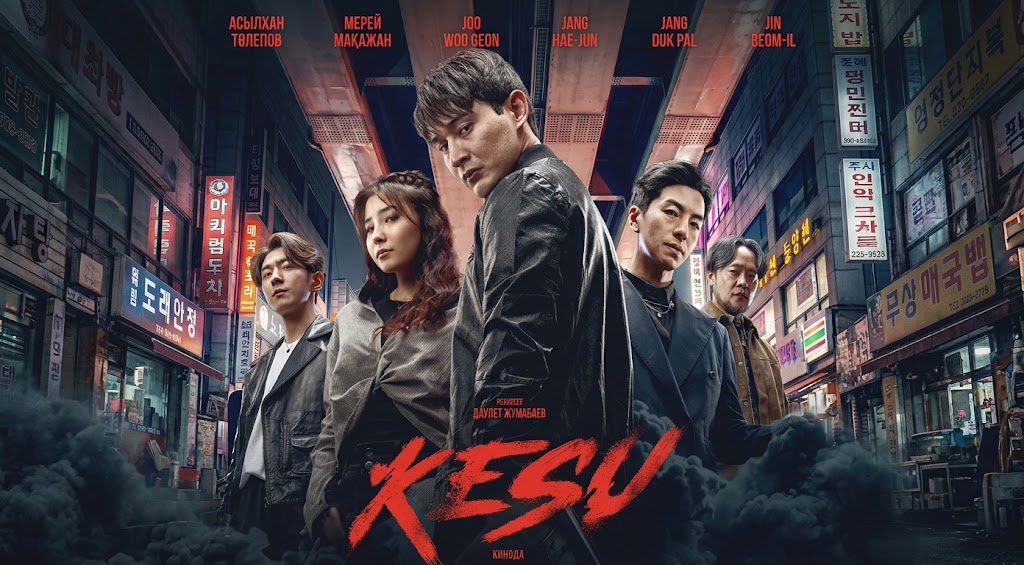
Kazakh–Korean Action Film KESU Sets Sights on South Korean Cinemas

A Kazakh former special forces officer and a South Korean taekwondo champion find themselves on the same side when their shared mentor disappears. Their search takes them from Kazakhstan to Seoul, where they become entangled in a dangerous conflict rooted in their teacher's past. This is the story of KESU, a Kazakhstan–South Korea action film directed by Daulet Zhumabayev that opened in Kazakhstan on October 15. The film topped the country's box office during its opening weekend, earning approximately 77 million tenge ($160,000), according to Forbes Kazakhstan. The film was commissioned by the Kazakhstan Taekwondo Federation, whose president, Kudret Shamiyev, served as its principal producer. Shamiyev has said the project aims to attract young people to taekwondo and present the sport as a philosophy and a way of life. The film stars Asylkhan Tolepov as Didar, a former special forces officer haunted by a fatal mission. South Korean actor Joo Woo Geon plays Ryu, a taekwondo champion visiting Kazakhstan for a tournament. Merey Makazhan plays Asiya, who also becomes involved in their increasingly dangerous adventure. KESU opens with a special forces raid before shifting to taekwondo competition and confrontations with criminal gangs. The film is Zhumabayev's second feature, following the boxing drama Arlan: The Final Round. Video: Kesu Official Trailer Taekwondo's History in Kazakhstan The story also pays tribute to Mustafa Öztürk, an ethnic Kazakh martial artist born in Türkiye who helped establish taekwondo in Kazakhstan in the early 1990s. Öztürk founded the Kazakhstan Taekwondo Federation in 1991 and trained some of the country's first international competitors. He died in 1995, but his name remains closely associated with the development of the sport. A memorial tournament honoring Öztürk features in the film. Although KESU is fictional, its connection to Öztürk provides a historical backdrop to the collaboration between Kazakh and Korean filmmakers. The fight choreography was directed by Zhandos Aibasov, working with Kazakhstan's Nomad Stunts team. The action draws heavily on taekwondo techniques, particularly its kicks and spinning attacks, while incorporating the elaborate confrontations familiar from Asian martial-arts cinema. The fight sequences have attracted favorable reviews. Writing for Vlast, film critic Galiya Baizhanova praised the choreography and the clarity with which the fights were filmed. She also highlighted the film's treatment of taekwondo as a discipline grounded in self-control and respect for opponents. In a separate review for 365info, Aisulu Basenova highlighted the film's combination of taekwondo, Korean crime drama, and family relationships. Both reviewers singled out the action sequences choreographed by Zhandos Aibasov and Nomad Stunts. Zhumabayev recently spoke to The Times of Central Asia about directing the international cast. He described how Tolepov helped his South Korean co-star settle into the production and how the visiting actors were introduced to Kazakh traditions, including a trip to Shymbulak and a meal of beshbarmak. The Korean actors also underwent physical training, studied Kazakh, and rehearsed demanding scenes. Zhumabayev said he applied the same standards to actors from both countries. A South Korean Release The filmmakers are now looking to bring...

Kazakhstani Cinema at a Turning Point: Screenwriter Sergey Litovchenko Discusses the Industry

Kazakhstani cinema may be entering a “golden age.” Kazakh films are increasingly appearing at international festivals, while television series are reaching major global streaming platforms and attracting millions of viewers. Yet the country has not broken through at the Oscars, and the reasons go beyond funding. Screenwriter and creative producer Sergey Litovchenko discusses the changes and challenges shaping the industry, why the pandemic unexpectedly benefited Kazakhstani cinema, and which projects he considers the most significant milestones to date. TCA: Sergey, the Oscars have just taken place. Will Kazakhstan ever win an Oscar? And when might that happen? Sergey: Our industry is developing rapidly, with the pace increasing every year. I believe we are close to that moment. However, it will probably come sooner in the short-film category. Although it may seem like an unattainable goal, that is not the case. Look at Brazil, for example, which has been prominent in the Oscar race for the second year in a row. Last year, the film I’m Still Here received three nominations and won an Oscar for Best International Feature Film. This year, Brazilian entries have already secured four nominations, including Best Picture. So anything is possible. At present, the main factor holding us back is technical capacity. TCA: The relatively low-budget film Sentimental Value won Best International Feature Film this year. Is technical prowess really the most important factor? Sergey: It is technically very well made. We should also remember that it participated in a major festival and featured Hollywood star Elle Fanning. The reason I mentioned the Brazilian example is that Brazilian cinema is not widely known to mass audiences, yet the technical quality and acting impressed me. It is clear they have the time and resources to prepare thoroughly for filming. For Kazakhstan, the situation is more complex. We often operate in a “we should have filmed this yesterday” mode. The only film to reach not just the shortlist but the nominations was Sergei Bodrov’s Mongol. It is a masterpiece of technical craftsmanship. Its $17 million budget is evident on screen. It is not only technically accomplished, but also a strong film artistically. There have been other worthy candidates: Sergei Dvortsevoy’s Aika and Tulpan, Yermek Tursunov’s Kelin, and Askhat Kuchinchirekov’s Bauryna Salu. All are high-level works. But for a major breakthrough, we need stronger production capacity. TCA: Is this primarily a question of money? Sergey: Not always. I often hear filmmakers say, “Give us a budget and we will make it happen.” I ask them how much they need, a billion? Two? Asghar Farhadi shot A Separation for $400,000. Andrey Zvyagintsev filmed The Return for about $300,000. So it is not only about money. Nor is it about casting, we have many talented people. To create a breakthrough film, you need not only a profound story but also extensive preparation and a certain uncompromising attitude, in a positive sense. In Kazakhstan, however, we often adapt films to circumstances. If the weather is unsuitable, we proceed anyway. If the actor...