
• KGS/USD = 0.01144 0%
  • KZT/USD = 0.00204 0%
  • TJS/USD = 0.10394 -0.38%
  • UZS/USD = 0.00008 0%
  • TMT/USD = 0.28490 -0.28%
  • KGS/USD = 0.01144 0%
  • KZT/USD = 0.00204 0%
  • TJS/USD = 0.10394 -0.38%
  • UZS/USD = 0.00008 0%
  • TMT/USD = 0.28490 -0.28%
  • KGS/USD = 0.01144 0%
  • KZT/USD = 0.00204 0%
  • TJS/USD = 0.10394 -0.38%
  • UZS/USD = 0.00008 0%
  • TMT/USD = 0.28490 -0.28%
  • KGS/USD = 0.01144 0%
  • KZT/USD = 0.00204 0%
  • TJS/USD = 0.10394 -0.38%
  • UZS/USD = 0.00008 0%
  • TMT/USD = 0.28490 -0.28%
  • KGS/USD = 0.01144 0%
  • KZT/USD = 0.00204 0%
  • TJS/USD = 0.10394 -0.38%
  • UZS/USD = 0.00008 0%
  • TMT/USD = 0.28490 -0.28%
  • KGS/USD = 0.01144 0%
  • KZT/USD = 0.00204 0%
  • TJS/USD = 0.10394 -0.38%
  • UZS/USD = 0.00008 0%
  • TMT/USD = 0.28490 -0.28%
  • KGS/USD = 0.01144 0%
  • KZT/USD = 0.00204 0%
  • TJS/USD = 0.10394 -0.38%
  • UZS/USD = 0.00008 0%
  • TMT/USD = 0.28490 -0.28%
  • KGS/USD = 0.01144 0%
  • KZT/USD = 0.00204 0%
  • TJS/USD = 0.10394 -0.38%
  • UZS/USD = 0.00008 0%
  • TMT/USD = 0.28490 -0.28%

Viewing results 1 - 6 of 5

Kyrgyzstan Expands Security Cooperation with the U.S.

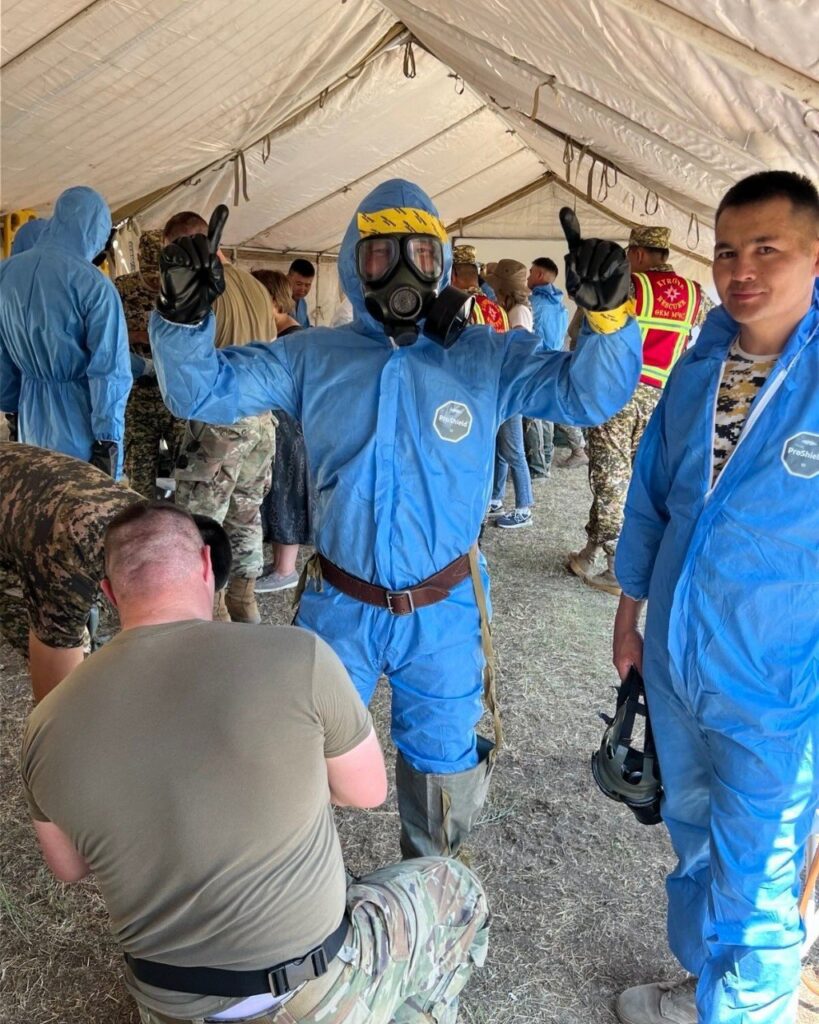
Alongside U.S. business leaders and government officials who arrived in Bishkek for the B5+1 business forum, security representatives from U.S. Central Command, the U.S. Air Force, and the Montana National Guard also visited the Kyrgyz capital, according to the U.S. Embassy in Bishkek. At a meeting held at the Kyrgyz Ministry of Defense in the village of Koy-Tash, both sides discussed military cooperation plans for the 2027 fiscal year. Participants carried out detailed planning of joint activities, focusing on experience-sharing and establishing common objectives for the near future. “We thank the Ministry of Defense of the Kyrgyz Republic for organizing this event. The participants joined forces to promote our regional goals aimed at enhancing security and stability,” the U.S. Embassy stated. U.S. Chargé d'Affaires Les Zentos emphasized that over the past 30 years of Kyrgyzstan's independence, a strong partnership has developed between the Montana National Guard and the Kyrgyz Ministry of Defense, as well as with the Ministry of Emergency Situations and the Border Service. This relationship, he noted, is based on trust and a commitment to shared goals. [caption id="attachment_43371" align="aligncenter" width="960"] Image: kg.usembassy.gov[/caption] “We hope to improve and optimize plans for military contacts in 2026 and 2027. Today's meeting is important for strengthening mutual understanding and finding common ground,” Zentos said. This is not the first visit by representatives of the Montana National Guard and the U.S. Air Force to Kyrgyzstan. Approximately six months ago, the two sides held joint military exercises under the name “Ak-Shumkar-2025.” According to U.S. officials, the drills facilitated exchanges of expertise in humanitarian operations, disaster relief, air medical evacuation, search and rescue, and border security. The Montana National Guard has maintained a long-standing relationship with Kyrgyzstan since 1996, under the U.S. National Guard Bureau’s State Partnership Program. The U.S. Embassy also noted that bilateral military cooperation extends beyond this program. It includes participation in regional exercises organized by U.S. Central Command, which bring together countries from Central and South Asia to pursue shared security objectives.
Kazakhstan’s Rollout of Aitu Messenger Sparks Fears Over Internet Freedom

Kazakhstan is mandating the use of the national messenger Aitu among officials and state-owned enterprises, raising concerns that this move could signal future restrictions on internet freedom. The rollout of Aitu coincides with Russia's introduction of its own national messaging app, Max, which has been accompanied by efforts to block international platforms like WhatsApp and Telegram. The parallels are fueling fears that Kazakhstan may follow a similar path. Why Is Aitu Being Introduced? By September 15, employees of all government agencies and quasi-public sector organizations in Kazakhstan are required to switch to Aitu. The directive comes from the Digital Headquarters under the leadership of Prime Minister Olzhas Bektenov. On August 11, President Kassym-Jomart Tokayev instructed the government to strengthen protections around citizens’ personal data. “A significant part of business and official communication, including the transfer of citizens’ personal data, now takes place through international messengers,” he noted. Tokayev cited examples of sensitive data, such as individual identification numbers and medical information, being transmitted via foreign platforms. He linked this to repeated data breaches, stating that Kazakhstan experienced over 40 major leaks in 2025 alone, including a major incident in June that exposed data on millions of citizens. He argued that Aitu is a necessary step to prevent further leaks. Security Concerns Remain Unanswered Originally launched in 2018, Aitu was used on a limited scale during the COVID-19 pandemic and in educational initiatives. Despite its recent promotion, serious questions about its security remain unanswered. On August 29, Deputy Minister of Digital Development Dmitry Mun confirmed that Aitu is owned by Kazakhtelecom JSC, a national monopoly, and BTS. The app's infrastructure is reportedly hosted entirely within Kazakhstan. However, Yevgeny Pitolin, co-chair of the QazTech Alliance's Information Security Committee, criticized the lack of transparency: “There is almost no information about security. In official responses, the administration avoids these questions, claiming it is a matter of national security.” So far, six million people have registered with Aitu, according to the Ministry of Digital Development. Although this represents nearly one-third of Kazakhstan’s population of 20 million, the ministry has not disclosed how frequently the app is used. A Step Toward a Sovereign Internet? A major point of concern among Kazakhstanis is whether Aitu could pave the way for a sovereign internet model similar to those in Russia or China both of which tightly control domestic digital ecosystems. Russia’s Max messenger, modeled after China’s WeChat, integrates payments, government services, banking, and social networking. Though introduced by VK Corporation, the Russian government has embedded itself in its development. In July, the State Duma passed legislation mandating all official communication between citizens and government agencies to occur via Max. It now comes pre-installed on smartphones, and schools and hospitals are transitioning to it. Crucially, Max works only with SIM cards registered in Russia or Belarus, making cross-border communication difficult. Users have reported frequent disruptions in WhatsApp and Telegram access. Critics argue that the Russian state may be moving toward outright bans on foreign messengers. Kazakhstan Denies Similar Plans...

Tokayev Backs Expansion of UN Security Council for Greater Global Representation

Kazakhstan's President Kassym-Jomart Tokayev has called for expanding the United Nations Security Council to better reflect contemporary global dynamics. Speaking at the Astana International Forum (AIF), he emphasized that reforming the UN’s most powerful body is essential to restoring trust and maintaining international peace and security. The Security Council currently consists of 15 members, five permanent (the United States, China, Russia, France, and the United Kingdom) and ten non-permanent members elected for two-year terms by the UN General Assembly. “Kazakhstan supports the expansion of the UN Security Council to include broader regional representation,” Tokayev stated. “This year, we celebrate the 80th anniversary of the United Nations. Founded in 1945 by 51 states in the aftermath of a devastating global war, the UN envisioned a more peaceful and secure world. Today, it has grown to 193 member states.” Tokayev criticized the Council’s structure as outdated. “The gap between institutional design, frozen in the post-World War II era, and modern realities undermines both trust in the UN and its effectiveness. Critical decisions affecting billions should not rest in the hands of only a few,” he argued. He called for a structural overhaul of the Council to ensure its continued relevance, emphasizing that major powers must recommit to the foundational principles of peace, security, and respect for the territorial integrity of all nations. Highlighting the scale of current global unrest, Tokayev noted that 52 countries were in active armed conflict last year. The economic toll from these hostilities reached an estimated US$19 trillion, approximately 13.5% of global GDP. “Beyond the staggering numbers lies a more troubling reality,” he said. “Modern conflicts are becoming longer, more complex, and increasingly involve non-state actors. Many are rooted in deep historical and structural contradictions.” Tokayev emphasized the growing role of so-called “middle powers” in shaping a fairer and more inclusive world order. “Middle powers must be ready to assume greater responsibility in rethinking global governance,” he concluded. As previously reported by The Times of Central Asia, the 2025 Astana International Forum, themed “Uniting Minds, Shaping the Future,” gathered global leaders, international organizations, investors, businesspeople, and policy experts in Kazakhstan’s capital.
