• KGS/USD = 0.01144 0%
  • KZT/USD = 0.00212 0%
  • TJS/USD = 0.10864 0%
  • UZS/USD = 0.00008 0%
  • TMT/USD = 0.28571 0%
  • KGS/USD = 0.01144 0%
  • KZT/USD = 0.00212 0%
  • TJS/USD = 0.10864 0%
  • UZS/USD = 0.00008 0%
  • TMT/USD = 0.28571 0%
  • KGS/USD = 0.01144 0%
  • KZT/USD = 0.00212 0%
  • TJS/USD = 0.10864 0%
  • UZS/USD = 0.00008 0%
  • TMT/USD = 0.28571 0%
  • KGS/USD = 0.01144 0%
  • KZT/USD = 0.00212 0%
  • TJS/USD = 0.10864 0%
  • UZS/USD = 0.00008 0%
  • TMT/USD = 0.28571 0%
  • KGS/USD = 0.01144 0%
  • KZT/USD = 0.00212 0%
  • TJS/USD = 0.10864 0%
  • UZS/USD = 0.00008 0%
  • TMT/USD = 0.28571 0%
  • KGS/USD = 0.01144 0%
  • KZT/USD = 0.00212 0%
  • TJS/USD = 0.10864 0%
  • UZS/USD = 0.00008 0%
  • TMT/USD = 0.28571 0%
  • KGS/USD = 0.01144 0%
  • KZT/USD = 0.00212 0%
  • TJS/USD = 0.10864 0%
  • UZS/USD = 0.00008 0%
  • TMT/USD = 0.28571 0%
  • KGS/USD = 0.01144 0%
  • KZT/USD = 0.00212 0%
  • TJS/USD = 0.10864 0%
  • UZS/USD = 0.00008 0%
  • TMT/USD = 0.28571 0%

Viewing results 1 - 6 of 52

EU and Turkmenistan Launch Coordination Platform of Trans-Caspian Transport Corridor

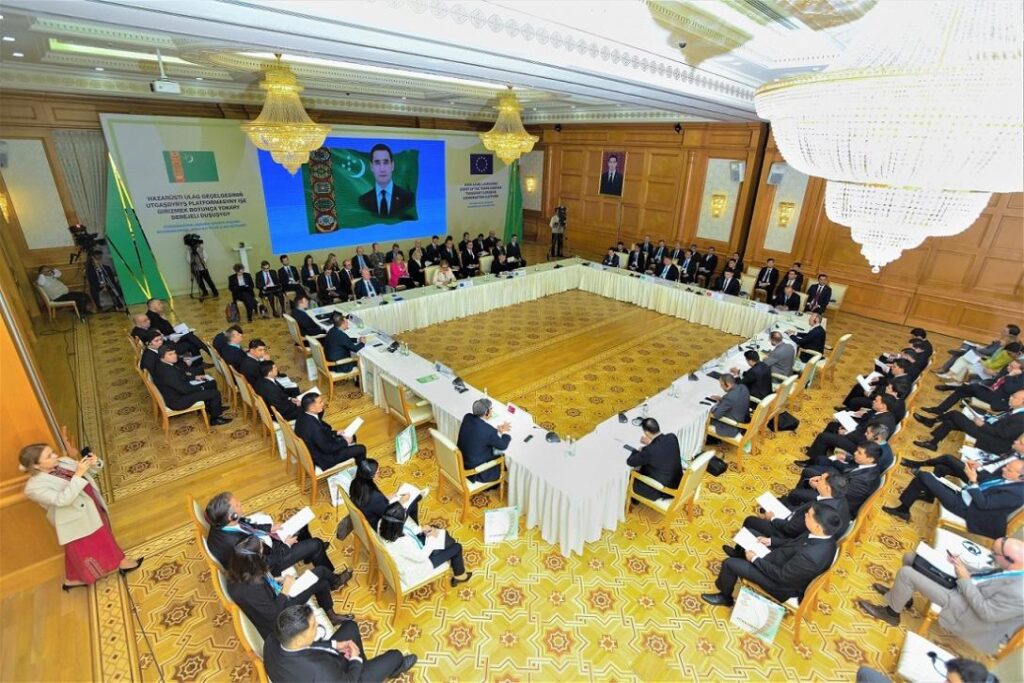
On October 3 in Ashgabat, the European Union and Turkmenistan launched the Trans-Caspian Transport Corridor Coordination Platform. The platform aims to strengthen connectivity by developing transport routes within Central Asia and the European Union. The event brought together the European Union, representatives of the countries along the Trans Caspian Transport Corridor in Central Asia, the South Caucasus, and Türkiye, and international financial institutions. The European Union delegation was led by European Commissioner for International Partnerships Jutta Urpilainen. As reported by the EU Delegation to Turkmenistan, the Trans-Caspian Transport Corridor is a flagship of the EU’s Global Gateway investment strategy, and the establishment of the Coordination Platform is one of the key deliverables of the Global Gateway Investors Forum for EU-Central Asia Transport Connectivity held in January 2024. European and international financial institutions at the Forum committed to mobilizing €10 billion for sustainable transport connectivity in Central Asia. The EU aims to work with partners towards a modern route that boosts trade and facilitates the flow of goods between Central Asia and Europe while driving economic development and regional integration. The platform's main role will be to promote the corridor and coordinate efforts to implement priority projects in hard and soft infrastructure in Central Asia. It will also coordinate with investments and activities in the South Caucasus and Turkey that are relevant to strengthening operational efficiency and seamless connections across the Trans-Caspian Transport Corridor. Urpilainen said: “Central Asia, as a region at the crossroads of Europe and Asia, plays a pivotal role in the EU Global Gateway investment strategy and connectivity vision. The Trans-Caspian Transport Corridor is a critical artery linking Europe and Asia, boosting trade, facilitating exchanges, and driving prosperity across our regions while ensuring improved connectivity, cooperation, and economic growth between all Corridor countries. Harnessing this potential will require massive infrastructure investments in the coming years; I am pleased to see governments from countries along the Corridor, key International Financing Institutions, EU Member States, G7 countries, and other partners coming together.” Urpilainen said that to the European Union, Turkmenistan is an important partner in Central Asia. She also emphasized the European Union's commitment to supporting Turkmenistan's transition to a sustainable, green economy while enhancing its business environment. The EU has further allocated €18 million to strengthen its partnership with Turkmenistan, highlighting its dedication to fostering sustainable development and economic growth.

China-Kyrgyzstan-Uzbekistan Railway Company Opened in Bishkek

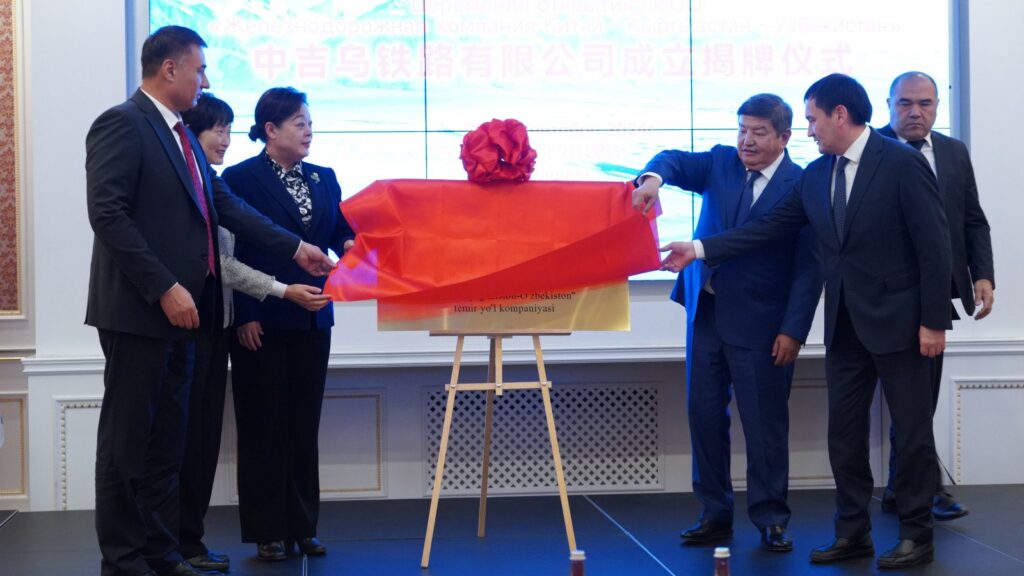
On September 28, LLC China-Kyrgyzstan-Uzbekistan Railway Company opened in Bishkek for the purpose of constructing and operating a line connecting the three countries. The opening ceremony was attended by the Chairman of the Cabinet of Ministers of the Kyrgyz Republic, Akylbek Japarov, the Chinese Ambassador to Kyrgyzstan, Du Dewen, high-ranking officials from the Department of Foreign Capital and Overseas Investment of China’s National Development and Reform Commission, and Uzbekistan’s Minister of Transport, Ilkhom Makhkamov. Emphasizing the railway's importance for the region, Japarov stated: "We call this project ‘the construction of the century.’ It will take economic cooperation between China and Central Asian countries to a qualitatively new level." Currently, neither Kyrgyzstan nor Uzbekistan has a rail link with China, with Central Asia only having a connection to China through Kazakhstan. Kyrgyzstan and Uzbekistan also have no railway connecting the two countries. China, Kyrgyzstan, and Uzbekistan signed an intergovernmental agreement on the railway construction project on June 6 in Beijing. As previously reported by The Times of Central Asia, the 523 km railway will run through Kashgar (China), Torugart, Makmal, Jalal-Abad (Kyrgyzstan), and Andijan (Uzbekistan). A transit and logistics infrastructure will be developed along the route. Once completed, the line will see 15 million tons of cargo annually. In June, Akylbek Japarov confirmed a statement made by Kyrgyz President Sadyr Japarov in April 2024, stating that the railway construction would cost $8 billion as opposed to the preliminarily estimate of $4.7billion. 

Pakistan Joins Transport Corridor Between Indian Ocean and Eastern Europe

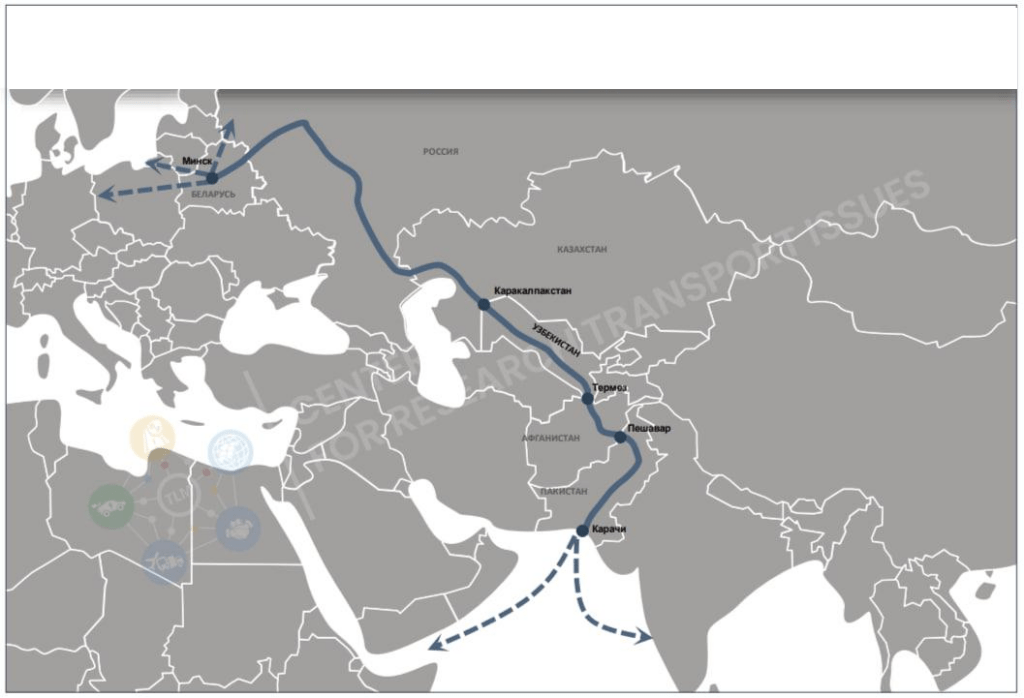
Uzbekistan’s Ministry of Transport has announced that Pakistan has officially joined the memorandum of understanding on establishing and developing the international transport corridor "Belarus–Russia–Kazakhstan–Uzbekistan–Afghanistan–Pakistan–Indian Ocean." The Pakistani Ministry of Communications signed this memorandum on September 18. The process of creating this multimodal transport corridor began in August 2022, at a meeting between the Uzbek government and the Eurasian Economic Commission – the governing body of the Russian-led Eurasian Economic Union that also includes Armenia, Belarus, Kazakhstan, and Kyrgyzstan. In November 2023, the transport ministries of Russia, Kazakhstan, and Uzbekistan signed a memorandum of understanding, launching the project's active phase of work. The group's first meeting on developing the proposed multimodal transport corridor was held in April 2024 in Termez, Uzbekistan. During that meeting, Belarus joined the memorandum, while Afghanistan and Pakistan announced the beginning of internal procedures for joining the project. At that meeting, a roadmap was signed, including specific plans for the development of cargo transportation, analysis of cargo flows, introduction of electronic digital documents, and optimization of customs procedures. The participating countries expect that the new corridor will become an important link in Eurasia's transport system, providing convenient and efficient routes for the transit of goods and strengthening economic cooperation.

Kazakh-German Consortium to Build Cargo-Passenger Airport in Khorgos–Eastern Gate SEZ

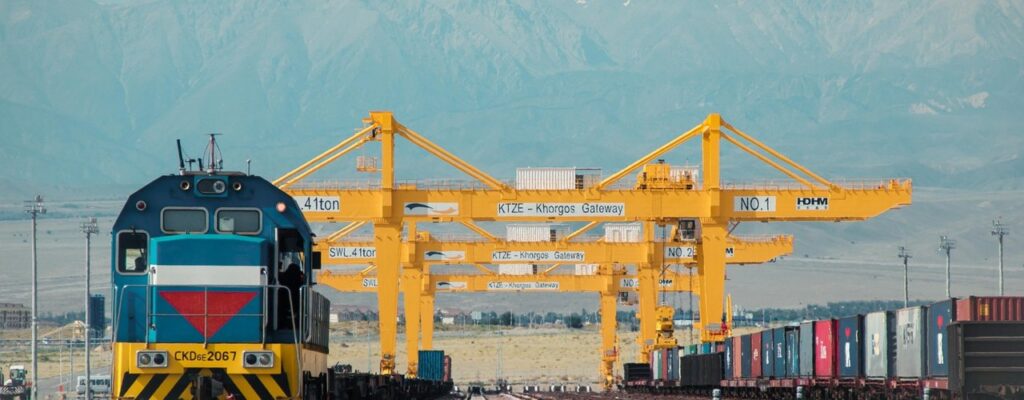
On September 16, Kazakhstan’s Ministry of Transport and Kazakh-German consortium SKYHANSA signed a framework agreement on a project to construct a cargo-passenger airport in the special economic zone (SEZ) Khorgos-Eastern Gate on the border between Kazakhstan and China. The document was signed as part of the official visit of Germany’s Federal Chancellor Olaf Scholz to Kazakhstan. The Khorgos–Eastern Gate SEZ is located in Kazakh territory, one kilometer from the state border and China’s border city, Khorgos. The SEZ is strategically located on the route of the Western Europe – Western China highway. It is also a central hub on the Trans-Caspian International Transport Route (TITR) that connects China and Europe. The SEZ includes a dry port and a multimodal logistics zone. The first stage of construction of a China-Kazakhstan industrial park on the territory of the SEZ began in November 2023. The Kazakh-German project involves the construction of an airport with a passenger terminal capable of handling up to 500 passengers per hour, a cargo terminal capable of handling up to 250,000 tons per year, a fuel storage facility capable of holding 550,000 tons, a technical center for servicing aircraft, and tourism, shopping, and entertainment facilities. Private investments in the project are expected to exceed $500 million, and more than 300 permanent jobs will be created. The administration of Kazakhstan’s Zhetysu region, where the SEZ is located, has now allocated a land plot for the airport's construction, and the investor plans to begin construction works after concluding the Investment Agreement.

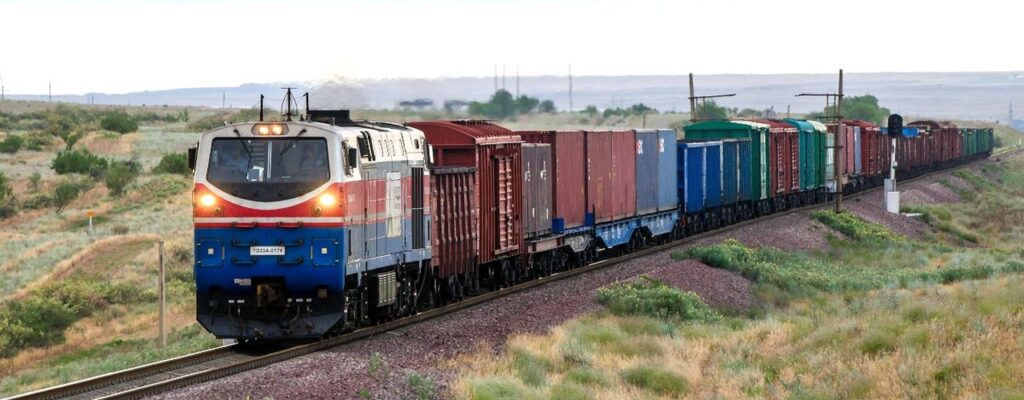
200th Container Train from China Arrives in Kazakhstan’s Aktau Port on Middle Corridor

A container train from China arrived last week in the port of Aktau on Kazakhstan’s Caspian coast. Kazakhstan’s national railway company, Kazakhstan Temir Zholy, announced that it was the 200th container train since the beginning of 2024. Last year, 11 container trains went through Aktau Port along the Trans-Caspian International Transport Route (TITR), known as the Middle Corridor. The Middle Corridor is an 11,000-kilometer international multimodal transport corridor that runs from China to Europe via Kazakhstan, the Caspian Sea, Azerbaijan, Georgia, the Black Sea, and Turkey. The container train originally departed from the Kazakhstan terminal in Xi'an (China). From Aktau, it will depart for Azerbaijan on a barge across the Caspian Sea. The Kazakh terminal in Xi'an is an important logistics hub that consolidates cargo from various provinces of China. It has given a new impetus to the development of the TITR. In November 2023, Kazakhstan and China signed a number of agreements to develop the TITR, including a route for China-Europe container trains. Middle Corridor Multimodal Ltd. is a joint venture that was established at the Astana International Financial Center, bringing together the railway administrations of Kazakhstan, Azerbaijan, and Georgia to manage the route on a parity basis. The Kazakhstani terminal in the dry port of Xi'an opened in February 2024. It consolidates 40% of all container trains heading towards Kazakhstan, which has contributed to a significant increase in transit traffic along the TITR. Transportation along the TITR is growing steadily. In 2023, 2.8 million tons of cargo were transported along the route, compared to about 1.7 million tons in 2022. In the first seven months of 2024, the traffic totaled 2.56 million tons. By 2027, the capacity of the TITR is planned to increase to 10 million tons.

Kazakhstan’s Longest Road Tunnel Opens on Western Europe – Western China Transport Corridor

On September 12, a new tunnel was opened at the Shakpak Baba pass in Kazakhstan’s southern Turkestan region. As the Kazakh Ministry of Transport reported, it is the longest automobile tunnel in Kazakhstan. The two-lane tunnel is 840 meters long, 11 meters wide, and 8 meters high. Control centers on both sides of the tunnel monitor lighting, ventilation, and traffic lights. The tunnel's opening will facilitate traveling and cargo transportation during winter. At the tunnel's opening ceremony, Kazakhstan’s Deputy Minister of Transport Satzhan Ablaliyev stated: "The opening of this tunnel is an important event for Kazakhstan's transport infrastructure. It will not only improve the region's year-round transport accessibility but will also significantly increase traffic safety in this difficult section. The tunnel will prevent drivers from being trapped in the snow on the Shakpak Baba pass in winter. In addition, the main traffic flow will now be redirected to bypass the village of Shakpak Baba, increasing safety in the village." The tunnel is part of the Kazakh section of the international road transport corridor Western Europe-Western China. With a total length of 8,445 km, the corridor runs 2,233 km through Russia, 2,787 km through Kazakhstan, and 3,425 km through China. In July, Kazakh Minister of Transport Marat Karabayev announced that in 2024, Kazakhstan planned to repair and construct 12,000 kilometers of road.