• KGS/USD = 0.01144 0%
  • KZT/USD = 0.00215 0%
  • TJS/USD = 0.10640 0.76%
  • UZS/USD = 0.00008 0%
  • TMT/USD = 0.28530 0%
  • KGS/USD = 0.01144 0%
  • KZT/USD = 0.00215 0%
  • TJS/USD = 0.10640 0.76%
  • UZS/USD = 0.00008 0%
  • TMT/USD = 0.28530 0%
  • KGS/USD = 0.01144 0%
  • KZT/USD = 0.00215 0%
  • TJS/USD = 0.10640 0.76%
  • UZS/USD = 0.00008 0%
  • TMT/USD = 0.28530 0%
  • KGS/USD = 0.01144 0%
  • KZT/USD = 0.00215 0%
  • TJS/USD = 0.10640 0.76%
  • UZS/USD = 0.00008 0%
  • TMT/USD = 0.28530 0%
  • KGS/USD = 0.01144 0%
  • KZT/USD = 0.00215 0%
  • TJS/USD = 0.10640 0.76%
  • UZS/USD = 0.00008 0%
  • TMT/USD = 0.28530 0%
  • KGS/USD = 0.01144 0%
  • KZT/USD = 0.00215 0%
  • TJS/USD = 0.10640 0.76%
  • UZS/USD = 0.00008 0%
  • TMT/USD = 0.28530 0%
  • KGS/USD = 0.01144 0%
  • KZT/USD = 0.00215 0%
  • TJS/USD = 0.10640 0.76%
  • UZS/USD = 0.00008 0%
  • TMT/USD = 0.28530 0%
  • KGS/USD = 0.01144 0%
  • KZT/USD = 0.00215 0%
  • TJS/USD = 0.10640 0.76%
  • UZS/USD = 0.00008 0%
  • TMT/USD = 0.28530 0%

Viewing results 1 - 6 of 52

New Guzor to Beinau Highway Brings Uzbekistan Closer to Europe

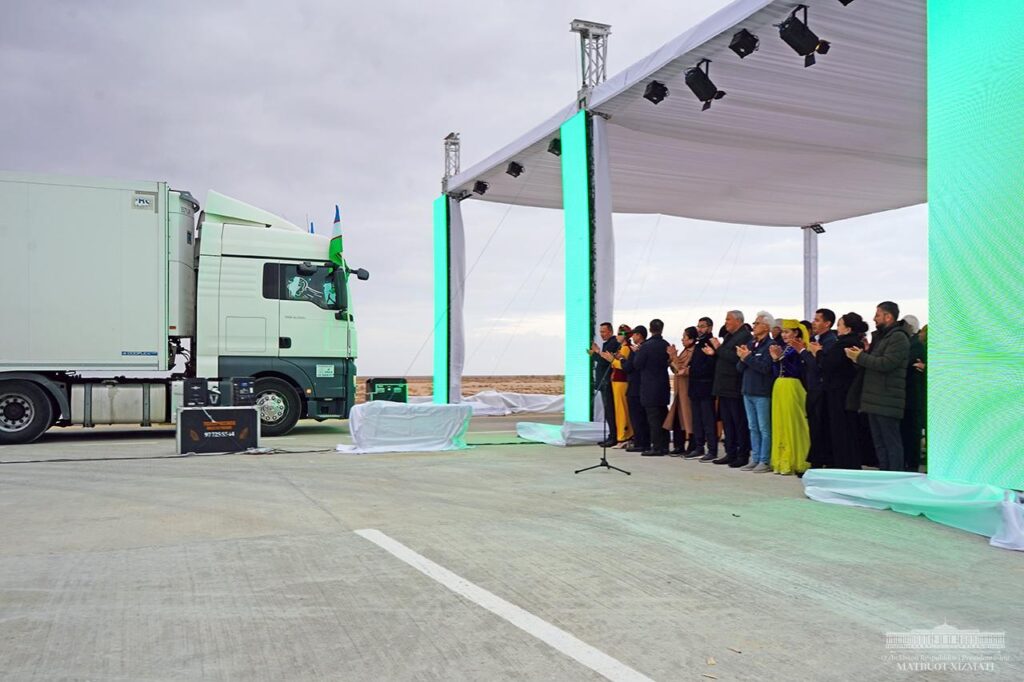
Uzbekistan has completed a new 240-kilometer section of the A380 highway connecting the cities of Guzor, Bukhara, Nukus, and Beineu, passing through the Kungirot district of Karakalpakstan. The road, built with a cement-concrete coating, is a strategic road connecting Uzbekistan with Europe. The Asian Development Bank allocated $274.9 million to the construction, while Uzbekistan contributed $108.5 million. Turkish and Azerbaijani companies managed the first 120 kilometers of the road, with Chinese companies managing the rest. The highway aims to boost the capacity and quality of international and national highways, cutting road maintenance costs by 2.5 times. This new road will reduce travel time by 2.2 times, double transit traffic, cut fatal accidents by half, and contribute to regional GDP growth. It will also reduce Uzbekistan's international transport distance to 1,000 kilometers, lowering shipping costs by 25%. New trade and service centers are planned alongside the highway, initially creating 2,000 jobs and an additional 5,000 expected. This development is projected to boost Karakalpakstan’s annual transit and service revenue by $200 million and exports by at least $300 million.

Uzbekistan Opens Strategic Highway Link to Europe

A 240km section of the Kungrad-Beineu highway in Uzbekistan has been reopened after reconstruction. The road runs through Uzbekistan’s northwestern region of Karakalpakstan to the border with Kazakhstan. It is part of a strategic highway corridor connecting Uzbekistan with European countries. Uzbekistan's President Shavkat Mirziyoyev said that the distance of international transportation through Uzbekistan will now be reduced to 1,000 kilometers, and transportation costs will be lowered by 25 percent. “This road will become part of the logistics network reliably connecting our country with European markets through the Caspian and Black Sea ports. On this section of the international corridor "A-380" that passes through Uzbekistan, the daily traffic flow will increase threefold,” Mirziyoyev noted. In recent years, double-landlocked Uzbekistan has been striving to become a key transit hub in trade turnover between the EU and Turkey and Kyrgyzstan, Tajikistan, and Afghanistan.

Kazakhstan and Afghanistan Discuss Transport Links for Trade with China

At a meeting in Almaty on October 21, Kazakhstan's Deputy Prime Minister Serik Zhumangarin and Afghanistan's Minister of Industry and Commerce Nuriddin Azizi addressed the logistics of transportation of goods from China to Afghanistan and back through Kazakhstan. In June, Kazakhstan’s President Kassym-Jomart Tokayev announced that his country had removed the Taliban from its list of terrorist organizations in a move to develop trade and economic ties with Afghanistan. In late August, Kazakhstan’s Foreign Ministry accredited a chargé d’affaires of Taliban-led Afghanistan to expand trade, financial, and humanitarian cooperation between the two countries. As the Kazakh Ministry of Trade and Integration reported, one critical issue is the reverse loading of railcars and containers on their way back from Afghanistan. To reduce the cost of logistics, Kazakhstan is considering loading empty railcars with Afghan fruits and vegetables, persimmons, beans, and other food products for delivery to Kazakhstan. Bauyrzhan Urynbasarov, managing director of Kazakhstan Temir Zholy (KTZ), the country's national railway company, proposed two options for reverse loading empty containers and railcars. The first is a circular train route: container trains traveling from China through Kazakhstan to Afghanistan are loaded with Afghan goods bound for China. From there, they pass through the port of Karachi in Pakistan before returning to China. In the second route, trains reach Afghanistan, where they are reloaded and loaded with Afghan goods, then return to Kazakhstan, where, after unloading, they are packed with Kazakh goods and go to China. Zhumangarin proposed that the Afghan side use the capacities of the Kazakh terminal in the Chinese dry port in Xi'an, the Kazakh-Chinese logistics terminal in the port of Lianyungang, and the terminal currently under construction in the dry port of Urumqi in China’s Xinjiang. The parties also agreed to organize an interregional Kazakh-Afghan forum, where the provinces of Afghanistan and the regions of Kazakhstan could discuss cooperation projects. According to Kazakh statistics, trade turnover between Kazakhstan and Afghanistan amounted to $330.7 million from January to August 2024. Exports from Kazakhstan to Afghanistan totaled $316.5 million, including flour, sunflower oil, natural gas, and fertilizers. Afghanistan's exports reached $14.1 million, mainly mineral water, fruits, juices, and aluminum products. The Afghan delegation arrived in Almaty on October 20 to participate in an exhibition of Afghan food and industrial products.

Levies on Uzbek Drivers in Afghanistan Reduced

According to the Ministry of Transport in Uzbekistan, negotiations with Afghanistan have reduced the levies collected from Uzbek drivers in Afghanistan by 5,000 Afghanis (about $80). A levy of 12,000 Afghanis (about $180) was previously charged to cross the Amudarya bridge. Since September 28, this amount has been set at 7,000 Afghani (about $100). The fee for entering Afghanistan with a cargo vehicle, which was 5,000 Afghanis (about $75), has decreased to 3,500 Afghanis (about $55). According to the announcement, the Ministry of Transport continues to create favorable conditions for cargo transportation through the Trans-Afghan multimodal transport corridor, and to optimize the number of levies. This transport corridor accelerates and simplifies the increase and processing of transit cargo through Uzbekistan, Afghanistan, and Pakistan. In recent years, the volume of transit cargo through Afghanistan has increased by over 30%, reaching almost 1 million tons per year. Following a transit trade agreement between Uzbekistan and Pakistan in 2021, cargo volumes have increased significantly, and in 2022, cargo transportation between the two countries through Afghanistan increased 2.5-fold. This year, Uzbekistan plans to transport more than 1 million tons of cargo through Afghanistan to Pakistan.

Kazakhstan and Russia Increase Rail Cargo Transportation to and from China

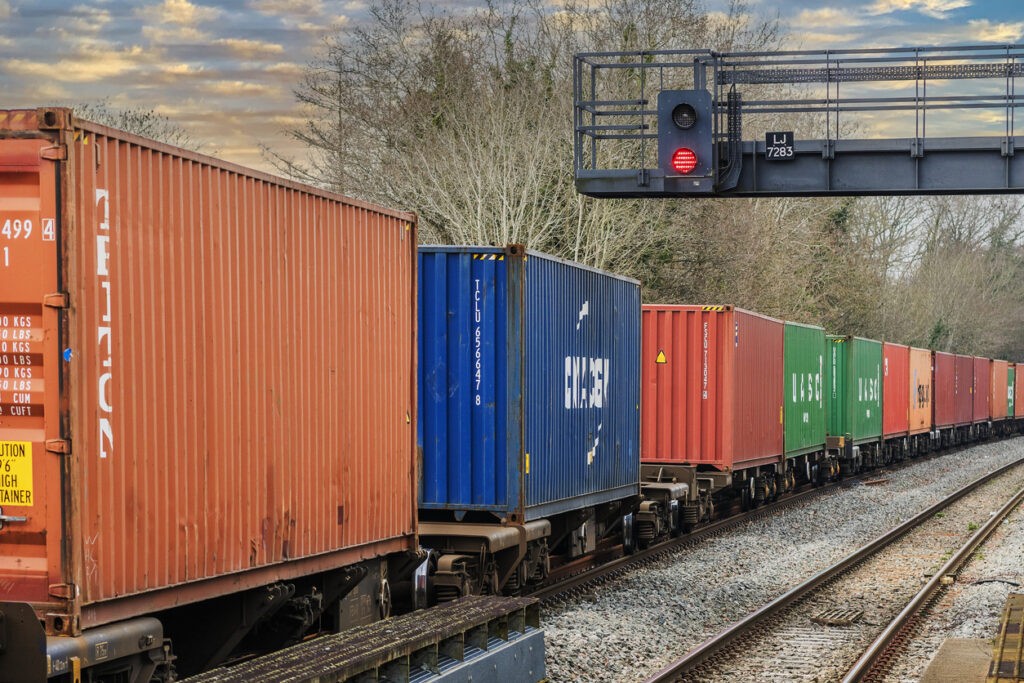
On October 18, Kazakhstan's Deputy Prime Minister Serik Zhumangarin, and Russia's Deputy Chairman of the Government Alexey Overchuk attended a meeting of the Intergovernmental Commission on Cooperation in Moscow, on Kazakhstan and Russia's transport and logistics sectors. As reported by the Kazakh government's press service, between January and September 2024, the volume of containers transported by rail from Russia to China through Kazakhstan, increased by 63% compared to the same period in 2023, while container transportation along the China-Europe-China route through Russia and Kazakhstan increased by 65%. During the meeting an agreement was made to further increase the flow of container trains on the China-Kazakhstan-Russia route by constructing the necessary transport infrastructure at the Selyatino rail station in the Moscow region. In April,  Kazakhstan’s national railway’s company Kazakhstan Temir Zholy (KTZ), Russia’s Slavtrans-Service JSC, and China’s Xian Free Trade Port Construction and Operation Co., Ltd began construction on a new transport and logistics center, CRK Terminal, at Selyatino, aimed at ensuring the efficient handling of cargo following the route Xi'an (China) - Dostyk/Altynkol (Kazakhstan) - Selyatino (Russia). The center is set to become an essential link in developing international transport corridors and increase the competitiveness of transportation through Kazakhstan. In 2023, the volume of cargo transported by rail between China and Russia through Kazakhstan amounted to 3.8 million tons, an increase of 35% compared to 2022. Kazakhstan also remains an important transit and transport link along the Trans-Caspian International Transport Route (TITR), which known as the Middle Corridor, connects China and Europe via Central Asia and the Caucasus.

China and Afghanistan are the Main Importers of Kazakh Grain and Flour

In January-September 2024, Kazakhstan’s national railways company, Kazakhstan Temir Zholy (KTZ), transported 6.6 million tons of Kazakh grain and 2.7 million tons of flour. Of that amount, 5 million tons of grain and 2.1 million tons of flour were exported. KTZ Managing Director Bauyrzhan Urynbasarov announced this at a government meeting on October 7. According to Urynbasarov, Kazakhstan exported grain mainly to neighboring Central Asian countries (2.9 million tons), China (1.3 million tons), and Afghanistan (127,000 tons). Kazakhstan resumed grain supplies to Iran (211,000 tons), and 423,000 tons of grain were exported to Italy, Turkey, and Russia. From January to September, 495,000 tons of flour were exported to Central Asian countries, 639,000 tons to China, and 666,000 tons to Afghanistan. At the meeting, Deputy Prime Minister Serik Zhumangarin said that Kazakhstan must supply 2 million tons of grain to China this year, but the figure can be increased to 3 million tons. He also ordered an increase in flour supplies to Afghanistan. According to the Ministry of Agriculture, as of October 7, Kazakhstan had completed harvesting 93.2% of grain crops on 15.5 million hectares, and 23.5 million tons of grain had been threshed.