• KGS/USD = 0.01144 0%
  • KZT/USD = 0.00201 0%
  • TJS/USD = 0.10528 -0.19%
  • UZS/USD = 0.00008 0%
  • TMT/USD = 0.28571 0%
  • KGS/USD = 0.01144 0%
  • KZT/USD = 0.00201 0%
  • TJS/USD = 0.10528 -0.19%
  • UZS/USD = 0.00008 0%
  • TMT/USD = 0.28571 0%
  • KGS/USD = 0.01144 0%
  • KZT/USD = 0.00201 0%
  • TJS/USD = 0.10528 -0.19%
  • UZS/USD = 0.00008 0%
  • TMT/USD = 0.28571 0%
  • KGS/USD = 0.01144 0%
  • KZT/USD = 0.00201 0%
  • TJS/USD = 0.10528 -0.19%
  • UZS/USD = 0.00008 0%
  • TMT/USD = 0.28571 0%
  • KGS/USD = 0.01144 0%
  • KZT/USD = 0.00201 0%
  • TJS/USD = 0.10528 -0.19%
  • UZS/USD = 0.00008 0%
  • TMT/USD = 0.28571 0%
  • KGS/USD = 0.01144 0%
  • KZT/USD = 0.00201 0%
  • TJS/USD = 0.10528 -0.19%
  • UZS/USD = 0.00008 0%
  • TMT/USD = 0.28571 0%
  • KGS/USD = 0.01144 0%
  • KZT/USD = 0.00201 0%
  • TJS/USD = 0.10528 -0.19%
  • UZS/USD = 0.00008 0%
  • TMT/USD = 0.28571 0%
  • KGS/USD = 0.01144 0%
  • KZT/USD = 0.00201 0%
  • TJS/USD = 0.10528 -0.19%
  • UZS/USD = 0.00008 0%
  • TMT/USD = 0.28571 0%
26 February 2026

Viewing results 1 - 6 of

How Much is Berdymuhamedov’s 8 March “Gift” to Turkmen Women Actually Worth?

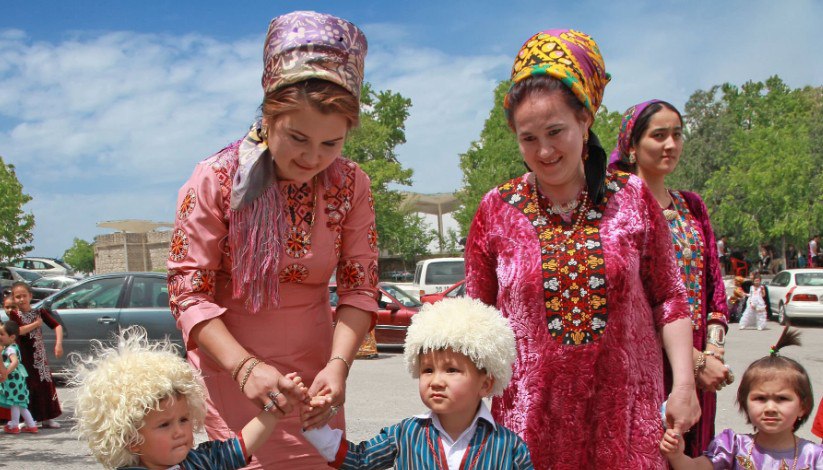
Turkmenistan’s President Serdar Berdymuhamedov has ordered that female residents of the country receive 60 manats each in honor of March 8, International Women’s Day. At the current market exchange rate of 19.5 manats to the U.S. dollar, this amounts to approximately $3. Officially, the decision is described as recognition of “the great contribution of women in bringing about changes for the prosperity of the country, in raising a healthy and enthusiastic generation devoted to the Motherland, in order to continue the noble traditions of our ancestors in honoring our beloved mothers and dear sisters in the era of the rebirth of a new era of a powerful state.” Payments are scheduled to be distributed between March 2 and March 6. Eligible recipients include women employed in enterprises and organizations regardless of ownership, pensioners and recipients of state benefits, graduate and doctoral students, clinical residents on leave from work, students of the Academy of Public Administration with a term of study of at least two years, as well as schoolgirls, university students, and kindergarten pupils. Turkmen women have received the equivalent of about $3 for the holiday for seven consecutive years. However, since 2019, the cost of food and consumer goods in the country has risen significantly. The official exchange rate of the Turkmen manat has remained fixed at 3.5 manats per dollar since 2015. By that rate, 60 manats would equal approximately $17. However, the widely used parallel market rate currently stands at about 19.5 manats per dollar, reducing the real value of the payment to roughly $3. As a result, the actual purchasing power of the “gift” is significantly lower than the figure implied by calculations based on the official exchange rate. In September 2025, one elder publicly called for an end to increasing such payments, stating that “the social and living conditions of the country’s population have reached a high level.”

How Women in Central Asia Celebrate International Women’s Day

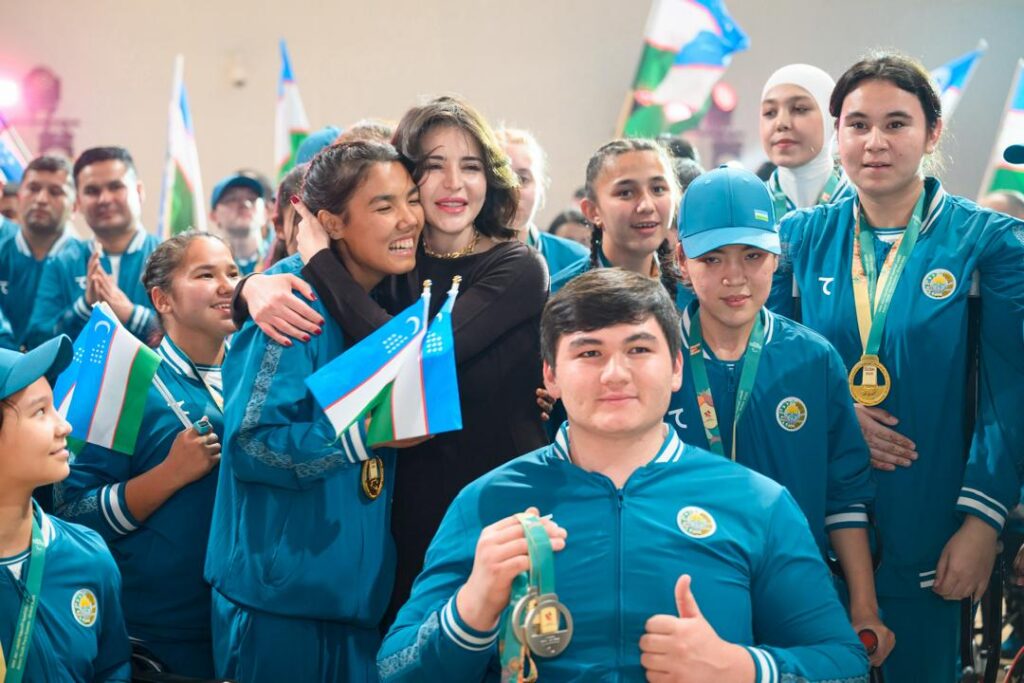
March 8, International Women’s Day, holds a special place in Central Asia. Over the years, the holiday has evolved from its Soviet-era roots into a modern celebration that blends tradition with contemporary interpretations. The Soviet Past: March 8 as a Day for Working Women During the Soviet Union, March 8 was more than a celebration of spring and femininity, it symbolized the struggle for women’s rights and equality. The day honored working women, with official ceremonies highlighting their achievements. State-run enterprises and organizations staged formal events and presented flowers and gifts to female employees, and media outlets published articles about the country’s outstanding women. The Transition Period: The 1990s Following the collapse of the Soviet Union, Central Asian countries began redefining their identities, which was reflected in how they marked March 8. The holiday took on a more personal and familial character, with less ideological emphasis. While state celebrations continued, they became more subdued. Men still gifted flowers and presents to women, but the political significance of the day gradually faded into the background. Modern Celebrations: Balancing Tradition and New Trends Today, March 8 in Central Asia is primarily a day to recognize women’s contributions and express gratitude. The holiday remains widely celebrated across Kazakhstan, Kyrgyzstan, Uzbekistan, Tajikistan, and Turkmenistan, though each country has developed its distinct traditions. Kazakhstan: Major cities host flash mobs, charity events, and cultural programs. In recent years, feminist activism has gained momentum, with some using the holiday to highlight gender inequality. “For me, March 8 is not just about receiving flowers, it’s a reminder that equality is not a privilege but a necessity,” Ainur, 24, from Almaty told TCA. Uzbekistan: The holiday remains warm and family-oriented. Women receive flowers, sweets, and gifts from colleagues and relatives, while government agencies organize concerts and celebrations. “My friends and I always celebrate March 8. It’s wonderful to receive gifts from my brothers, friends, and husband, but I wish there was more year-round appreciation for women,” Madina, 27, from Tashkent told TCA. Kyrgyzstan: Alongside traditional celebrations, women's organizations and activists hold marches and discussions on gender rights, reflecting a shift toward reinterpreting the holiday. “I participate in the women’s rights march every year because this day is not just about flowers; it’s about our opportunities and freedoms,” Gulzat, 23, from Bishkek told TCA. Tajikistan and Turkmenistan: March 8 remains an official holiday, but without any strong political agenda. “For me, this day is a time to gather with family, but I see that younger women are giving it a new meaning,” Zarina, 40, from Dushanbe told TCA. Changing Values and Perspectives Each year, debates over the significance of March 8 grow stronger. Some argue that it should remain a celebration of spring and femininity, while others emphasize its role in promoting gender equality. Regardless of interpretation, International Women’s Day remains an important occasion that unites different generations of women and reinforces the need for respect and support. Over time, the holiday in Central Asia has evolved from a Soviet...

Great Women in the History of Kazakhstan

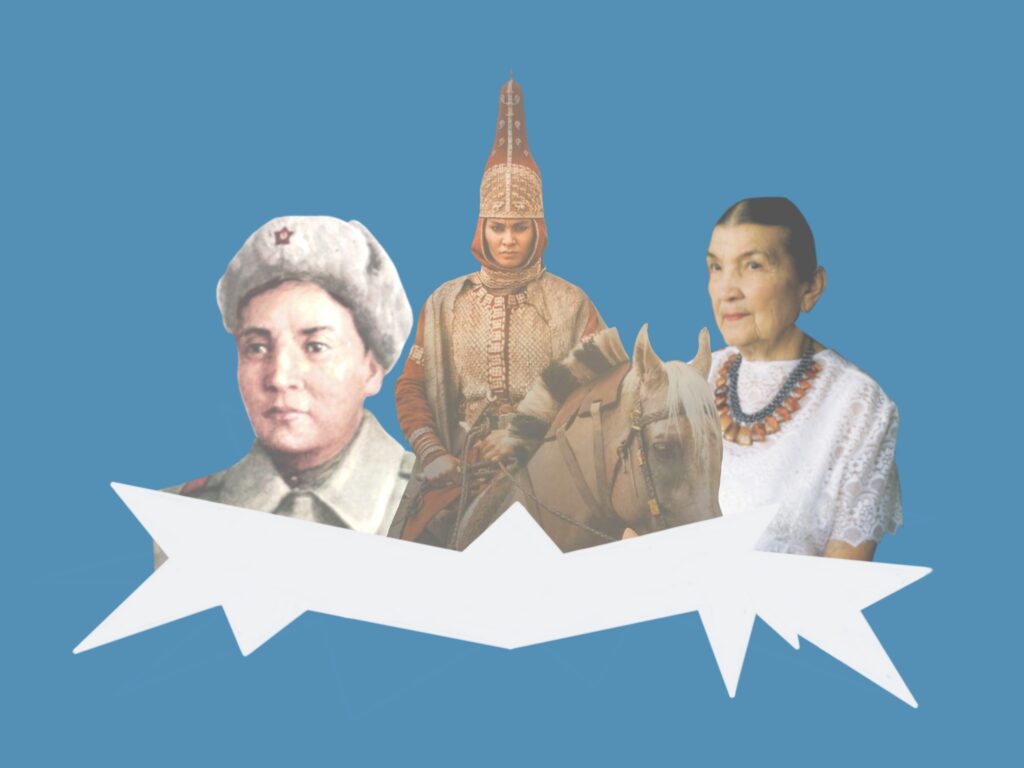
Women have played an important role in the history of Kazakhstan, making a significant contribution to the development of the country. They have shown courage, determination and talent in various walks of life, from politics and education to culture. Today, their role is being recognized, and women in Kazakhstan are becoming more aware of their actions than ever before. "I have always been inspired by our women, the women of the great steppe," Karina from Taraz told TCA, "especially in the field of culture, because at that time, such professions were considered solely for men. Thanks to them, we now have the opportunity not only to work in such professions, but also to become respected individuals." "Because of them, I have the opportunity to become whatever I want to be," Alina from Astana told TCA. "Their talent and drive has given freedom to the next generation." Today, on International Women's Day, we take a look at some of the outstanding women whose lives have had a fundamental impact on the course of the nation's history. Tomyris[/vc_column_text][vc_single_image image="15001" img_size="full" el_class="scond-image" parallax_scroll="no" woodmart_inline="no"][vc_column_text woodmart_inline="no" text_larger="no"]A still from the movie, "Tomyris" The name of Tomyris, the Queen of the Massagetes, is well-known in the culture of Kazakhstan, and is a source of pride and inspiration for Kazakhstani women. Queen Tomyris fought the mighty Persian king, Cyrus the Great, demonstrating her military prowess and intransigence. Tomyris won the battle, in which most of the Persian Army was destroyed. According to a legend, she placed Cyrus’ head in a wine fur filled with blood, saying: "You thirsted for blood, king of the Persians, so drink it now to your heart's content." Thus, Tomyris brought peace to her people. Nazipa Kul zhanova[/vc_column_text][vc_single_image image="15002" img_size="full" el_class="scond-image" parallax_scroll="no" woodmart_inline="no"][vc_column_text woodmart_inline="no" text_larger="no"]Photo: kaznu.kz Nazipa Kul zhanova was the first accredited female teacher in Kazakhstan and the first female journalist on the editorial staff of Yenbekshi Kazakh (Working Kazakh). An educator, ethnographer and translator, she became the preeminent specialist in the preparation of the Kazakh alphabet. Among other things, her philosophical articles addressed the role of a woman's place in public life and in the family. A proponent of the importance of education and the active participation of women in the progress and development society, Kulzhanova stated that "A woman is the mother of the people. Only an educated, skillful, free woman is able to raise her people to the level of advanced nations." Nagima Arykova[/vc_column_text][vc_single_image image="15003" img_size="full" el_class="scond-image" parallax_scroll="no" woodmart_inline="no"][vc_column_text woodmart_inline="no" text_larger="no"]Photo: Rate.kz Nagima Arykova was an outstanding woman stateswoman and one of the leading lights of the women's movement in Kazakhstan. She was the author of "The Role of a Woman Commissioner" and "The Struggle for the Rights of Working Women in Kazakhstan." Arykova was the editor of the newspaper Kazakh capital, and was the first woman to become a leading member of the government of Kazakhstan. Manshuk Mametova[/vc_column_text][vc_single_image image="15004" img_size="full" el_class="scond-image" parallax_scroll="no" woodmart_inline="no"][vc_column_text woodmart_inline="no" text_larger="no"]Photo: pochta-polevaya.ru Manshuk Mametova was a machine-gunner during the Second World War and...