Central Asia Trade Rises 25% as Kazakhstan and Uzbekistan Dominate
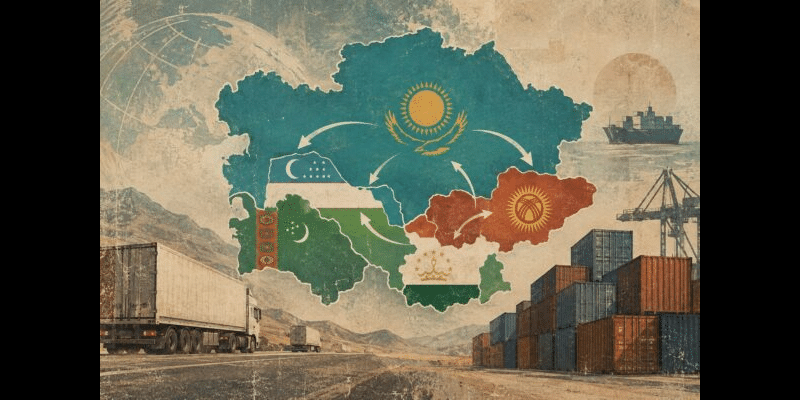
Central Asian countries are trading more actively with one another, although the regional market continues to be dominated by its two largest economies, Kazakhstan and Uzbekistan. In January-July 2026, the five countries exported $8.1 billion worth of goods to their neighbors, up 25.4% from a year earlier. Kazakhstan and Uzbekistan accounted for more than 80% of those shipments. Smaller bilateral routes have expanded as well. Uzbekistan’s trade with Kyrgyzstan increased by more than half, while trade with Tajikistan rose by 45%. Trade between Kyrgyzstan and Tajikistan rose by a factor of 3.3 after several years of border closure and sharply reduced economic ties. In absolute terms, trade between Kazakhstan and Uzbekistan remains the region’s largest bilateral flow. The figures were published by Uzbekistan’s Center for Economic Research and Reforms (CERR). Kazakhstan remains the region’s largest exporter. Over the seven-month period, it shipped $4.5 billion worth of goods to its neighbors, accounting for 55.9% of total intra-regional exports. Uzbekistan exported $2 billion, representing another 24.7%. Kazakhstan’s Central Asian neighbors still account for a relatively small share of the country’s overall foreign trade. In January-July, its total foreign trade turnover amounted to $87.75 billion. Central Asia accounted for around 6.7% of Kazakhstan’s total trade and 8.9% of its exports. By contrast, Kyrgyzstan’s trade volumes are much smaller, but neighboring markets are considerably more important to the country’s exporters, absorbing almost one-third of its exports. During the same period, Kyrgyzstan exported $523 million worth of goods to its neighbors and imported nearly $1.5 billion. Tajikistan buys considerably more from its neighbors than it sells to them. Its imports from Central Asia increased by 35% to $1.2 billion, while exports rose 6.2% to $209 million. Kazakhstan and Uzbekistan account for around 94% of Tajikistan’s trade with the region. Figures reported by Turkmenistan’s trading partners show that the country exported $844 million worth of goods to neighboring countries. Uzbekistan and Kazakhstan remain its main regional markets. The Eurasian Development Bank estimated that trade among Central Asian countries reached $12.3 billion in 2025, nearly double the 2020 level. Kazakhstan accounted for 54% of regional exports, as The Times of Central Asia previously reported. New transport and energy links are developing alongside intra-regional trade. In February, the World Bank approved an $846 million guarantee to mobilize $1.41 billion in commercial financing for a railway project in Kazakhstan. The project includes construction of the 201-mile Mointy-Kyzylzhar railway line on Kazakhstan’s section of the Trans-Caspian International Transport Route, or Middle Corridor. The new line is expected to shorten the route by 149 kilometers and relieve congestion on heavily used sections of the corridor. Central Asian countries are seeking closer integration of their power systems. In January, the World Bank approved the 10-year Regional Electricity Market Interconnectivity and Trade Program, with indicative financing of more than $1 billion, to establish Central Asia’s first regional electricity market. Cross-border electricity trade currently amounts to only around 3% of the region’s total electricity demand. In an earlier CERR analysis, researcher Ruslan Abaturov argued...