

• KGS/USD = 0.01144 0%
  • KZT/USD = 0.00211 0%
  • TJS/USD = 0.10582 0%
  • UZS/USD = 0.00008 0%
  • TMT/USD = 0.28530 0%
  • KGS/USD = 0.01144 0%
  • KZT/USD = 0.00211 0%
  • TJS/USD = 0.10582 0%
  • UZS/USD = 0.00008 0%
  • TMT/USD = 0.28530 0%
  • KGS/USD = 0.01144 0%
  • KZT/USD = 0.00211 0%
  • TJS/USD = 0.10582 0%
  • UZS/USD = 0.00008 0%
  • TMT/USD = 0.28530 0%
  • KGS/USD = 0.01144 0%
  • KZT/USD = 0.00211 0%
  • TJS/USD = 0.10582 0%
  • UZS/USD = 0.00008 0%
  • TMT/USD = 0.28530 0%
  • KGS/USD = 0.01144 0%
  • KZT/USD = 0.00211 0%
  • TJS/USD = 0.10582 0%
  • UZS/USD = 0.00008 0%
  • TMT/USD = 0.28530 0%
  • KGS/USD = 0.01144 0%
  • KZT/USD = 0.00211 0%
  • TJS/USD = 0.10582 0%
  • UZS/USD = 0.00008 0%
  • TMT/USD = 0.28530 0%
  • KGS/USD = 0.01144 0%
  • KZT/USD = 0.00211 0%
  • TJS/USD = 0.10582 0%
  • UZS/USD = 0.00008 0%
  • TMT/USD = 0.28530 0%
  • KGS/USD = 0.01144 0%
  • KZT/USD = 0.00211 0%
  • TJS/USD = 0.10582 0%
  • UZS/USD = 0.00008 0%
  • TMT/USD = 0.28530 0%

Viewing results 1 - 6 of 12

Istanbul Strait Rail Project to Boost Trade Along Trans-Caspian Transport Route

On March 31, the World Bank approved a $2 billion loan for the Istanbul North Rail Crossing Project (INRAIL), aimed at strengthening railway connectivity across the Istanbul Strait (Bosphorus) and reinforcing Türkiye’s role as a key logistics hub linking Europe, Asia, and the Middle East. With the Baku-Tbilisi-Kars railway, Turkey serves as a key node in the Trans-Caspian International Transport Route (TITR), also known as the Middle Corridor. The route connects China and Europe via Kazakhstan, the Caspian Sea, the South Caucasus, and Turkey. Turkey's major rail corridors passing through Istanbul, including the Middle Corridor, the Iraq Development Road, and the Turkey-EU corridor, are essential for international trade but currently face a significant bottleneck at the Bosphorus. INRAIL will involve the construction of a 127-kilometer electrified, high-capacity railway line providing a new overland rail crossing of the strait. The project will utilize the rail-ready Yavuz Sultan Selim Bridge and bypass central Istanbul, increasing both freight and passenger capacity while reducing logistics costs and improving reliability across national and intercontinental transport corridors, including the TITR. Once operational, rail freight capacity across the Bosphorus is expected to increase from approximately 3 million tons per year to as much as 50 million tons, significantly improving transit times, reliability, and predictability for freight operators. “By removing a critical rail bottleneck at the Istanbul Strait and enhancing the resilience and efficiency of rail infrastructure, Turkey is boosting its competitiveness and reinforcing its role as a logistics hub,” said Humberto Lopez, World Bank Country Director for Turkey. “INRAIL will also generate benefits for the wider region by connecting to international corridors such as the Middle Corridor and the Development Road, facilitating trade between Europe, Central Asia, and the Gulf.” The project aligns with Kazakhstan and Türkiye’s broader efforts to develop the Middle Corridor. In July 2025, Kazakhstan’s national railway operator, Kazakhstan Temir Zholy (KTZ), and TCDD Taşımacılık A.Ş. signed a cooperation agreement to enhance freight transportation along the TITR. The agreement aims to improve the route’s efficiency and competitiveness by launching regular rail services between Kazakhstan and Turkey, increasing freight volumes along the Baku-Tbilisi-Kars railway, and expanding cargo flows between China and Europe. KTZ has also held discussions with Mersin International Port, part of PSA International, on expanding cooperation to strengthen the Middle Corridor and develop more efficient multimodal logistics links between Asia and Europe. KTZ Chairman Talgat Aldybergenov reaffirmed both sides’ commitment to ensuring stable freight volumes and highlighted Mersin’s role as a strategic transshipment hub for the corridor. To further strengthen the logistics chain, Kazakhstan has proposed leveraging the potential of KPMC, a joint venture between KTZ and PSA International, which is already involved in developing multimodal services along the Xi’an-Istanbul route.

Second Uzbek Woman Confirmed Dead in Istanbul Murder Case

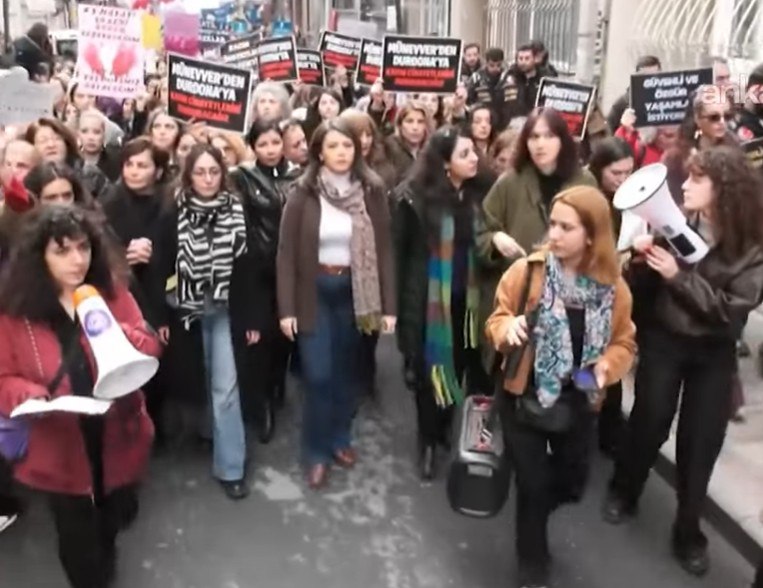
A second Uzbek national has been confirmed dead in Istanbul, according to the Consulate General of Uzbekistan in Istanbul. The victim, identified as Sayyora Ergashalieva, born in 1994 in the Namangan region, had previously been reported missing. Turkish law enforcement authorities informed the consulate that Ergashalieva disappeared shortly after the killing of her close friend, Durdona Khakimova, whose dismembered body was discovered in a garbage container in Istanbul in January 2026. Ergashalieva and Khakimova were reportedly close friends. According to Turkish media reports, Ergashalieva’s family in Uzbekistan lost contact with her after January 23 and sought assistance from the Uzbek Women’s Rights Association in Turkey. The association’s president, Azade Islamova, together with lawyers Ezgi Ekin Arslan and Cevat Bozkurt, met with the family and outlined possible legal steps after suspicions emerged that Ergashalieva may have been present at the residence where Khakimova was killed. The family traveled to Turkey and filed a formal complaint with the prosecutor’s office on February 6. Subsequent investigative actions confirmed Ergashalieva’s death. Her parents, who had gone to Turkey hoping to find her alive, were informed of the outcome as the investigation progressed. Preliminary information from Turkish investigators indicates that on January 22, the two women and several suspects met for lunch at a restaurant in Istanbul’s Fatih district. During the meeting, a dispute allegedly arose between Ergashalieva and one of the suspects. Investigators believe the conflict may have been linked to Ergashalieva’s stated intention to return to Uzbekistan. Authorities allege that on January 23, two suspects, identified as Dilshod Turdimurotov and Gofurjon Kamalkhojaev killed Ergashalieva and disposed of her body in garbage containers in the same district. The following day, investigators say, the suspects used her phone to send a message to Khakimova, luring her to a meeting. Khakimova was subsequently killed, and her body was found in Istanbul’s Şişli district. Turkish prosecutors have detained the suspects, who have reportedly confessed. A preventive detention measure has been imposed, and the case materials have been submitted to the court. The investigation remains ongoing. Local media reported that Ergashalieva’s body had been located but had not yet been transferred to the Istanbul Forensic Medicine Institute, according to the Consulate General. Officials have not released further details pending confirmation. Earlier, the killing of Khakimova sparked public protests in Turkey. Groups of women gathered in Istanbul and Ankara, condemning what they described as systemic violence against women, including migrant women. Feminist organizations organized a march in the Şişli district, beginning near the Osmanbey metro station and ending on the street where Khakimova’s body was discovered. Participants carried banners and called for stronger protective measures and prevention mechanisms. The Consulate General of Uzbekistan in Istanbul stated that it is closely monitoring the case and cooperating with Turkish law enforcement authorities. It expressed condolences to the victims’ families and said the public would be informed as additional verified information becomes available.

Killing of Uzbek Migrant Woman in Istanbul Sparks Protests in Turkey

The killing of an Uzbek migrant woman in central Istanbul has sparked protests in Istanbul and Ankara, and reignited debate over violence against women, the safety of migrants, and the effectiveness of state protection mechanisms. The body of a 36-year-old Uzbek national was discovered on January 24 in a waste container in Istanbul’s Şişli district, one of the city’s busiest areas. According to Turkish media reports, the body was found by a person collecting recyclable materials, who immediately alerted the authorities. Police later confirmed that the victim had been wrapped in bedding material and that parts of her body were missing at the time of discovery. Initial searches failed to locate all of her remains. Turkey’s Interior Ministry and law enforcement agencies launched an immediate investigation. Surveillance footage reviewed by investigators showed two individuals leaving a suspicious suitcase near another container in the area. Turkish media outlets, including WELG and Cumhuriyet, reported that three men have been detained in connection with the crime, two of whom are citizens of Uzbekistan. Two suspects were apprehended at Istanbul Airport while allegedly attempting to flee the country. One suspect reportedly confessed during police questioning. However, the investigation remains ongoing, and judicial proceedings have not yet concluded. The victim was identified as Durdona H., an Uzbek citizen. This information was confirmed by the Consulate General of Uzbekistan in Istanbul, which issued an official statement expressing deep sorrow. Identification was made in coordination with Turkish law enforcement, forensic experts, and prosecutors. “The investigation into this case is under the close supervision of the Consulate General,” the statement read. Uzbek diplomats have contacted the victim’s family and are providing consular and legal assistance. The consulate also extended its condolences and stated that further updates would be shared through official channels. The killing provoked immediate public outrage. Large numbers of women took to the streets in Istanbul and Ankara to protest what they described as systemic violence against women, particularly migrant women. Feminist groups and women’s rights organizations organized a march in Şişli, starting near Osmanbey metro station and ending on the street where the body was found. Protesters carried banners and chanted slogans, stressing that the killing was not an isolated case but part of a broader pattern of gender-based violence. Demonstrators also highlighted the heightened vulnerability of migrant women and called for stronger protection and prevention mechanisms. Police briefly intervened in the protests, warning against the use of certain slogans deemed unlawful, according to Turkish media. Nevertheless, demonstrations proceeded peacefully, with participants demanding accountability and transparency. Similar protests took place in Ankara on the same day. Women’s organizations gathered near the Human Rights Monument on Yüksel Street, echoing calls for systemic reform. Activists argued that violence against women is not an individual problem but a structural one. Turkish women’s rights groups, including the We Will Stop Femicide Platform and the Federation of Turkish Women’s Associations, issued statements in response. They criticized the inadequate enforcement of protection orders and what they described as a culture of...

Turkish Police Detain Teenagers Linked to ISIS, Including Turkmen Citizen

Turkish security forces have detained two teenagers in Istanbul, one identified as a Turkmen national, on suspicion of planning terrorist attacks and communicating with members of the so‑called Islamic State (ISIS), Turkish press reported. The arrests were carried out in two Istanbul districts after police discovered evidence of contact with ISIS operatives on encrypted messaging apps. Authorities say a search of one suspect’s computer turned up files with instructions for making Molotov cocktails and explosives, materials on assembling long‑barreled weapons and shooting training, and a large volume of ISIS‑related propaganda and instructional videos. A court ordered that teenager held in custody. The same reporting says a separate case in July involved a 14‑year‑old Turkmen national, identified by initials D.R., who was detained in the Maltepe district after allegedly being radicalized online. Investigators reportedly found “training materials” on bomb‑making, assassination techniques, videos on using drones and attack vehicles, and other instructions. The court placed that teenager under house arrest. Turkish media cited broader figures showing intensified counter‑terror operations: 3,686 people suspected of links to ISIS have been detained in Turkey over the past nine months, with 784 formally arrested, the reporting states. Earlier cases involving Central Asian nationals have also drawn attention. The Times of Central Asia previously reported that Turkish police had detained a Tajik man (named in reporting as Faziljon A.) and a Kyrgyz woman (named as Zulfiya S.) on suspicion of planning attacks for ISIS; authorities said they found police uniforms, emergency lights, knives and other equipment in the apartment where the suspects were hiding.
