


Japanese Investment Tackles Uzbekistan’s Aral Sea Crisis
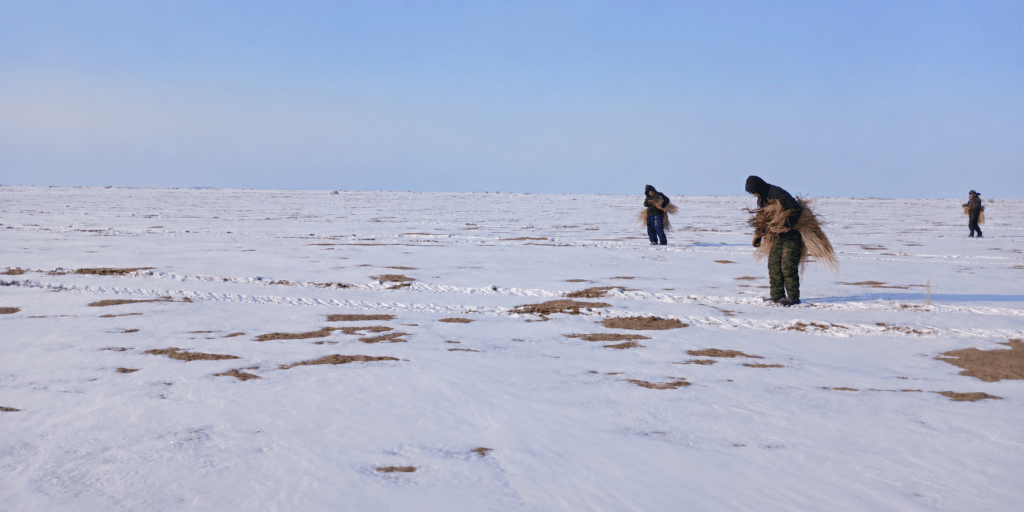
Until recently, the rehabilitation center in Akmangit, a settlement in Karakalpakstan, relied on sewage trucks to remove wastewater. Although it receives about 3,500 patients with disabilities each year, the center had no sewer system. In March 2025, a Johkasou system, a compact Japanese unit that treats wastewater biologically, was installed at the center. The treated water can now be reused for irrigation instead of being hauled away. Similar systems were installed at a kindergarten and a specialized school. In their first four months of operation, the three units treated more than 16,400 cubic meters of wastewater. Although these installations are small relative to Karakalpakstan’s water and sanitation needs, they illustrate Japan’s approach in Uzbekistan’s Aral Sea region through local pilot projects tied to longer-term development programs. During an October 2025 visit, a United Nations Development Programme (UNDP) delegation and a representative of the Embassy of Japan in Uzbekistan saw residents using the program to introduce drip irrigation and expand small businesses. A smoked-fish producer in Samanbay employed 12 people. Since 2020, Japan has funded trials of water-saving and wastewater-treatment technologies in the region, supported climate-resilient agriculture, and introduced local business-development models. These projects draw less attention than Central Asia’s uranium, critical-mineral, energy, and transport deals. In Karakalpakstan, however, Japan has pursued influence through smaller projects intended to remain in place for years. Water and Agriculture Projects In September 2023, Japan provided $2 million for a UNDP program promoting climate-resilient agriculture in four districts of Karakalpakstan. By the program’s conclusion in 2025, more than 7,700 residents had gained access to clean drinking water. The Johkasou units were among the program’s most visible elements. Developed in Japan in the late 1940s amid sanitation problems, the decentralized systems offer an alternative where centralized sewer networks are impractical. Their treated water can be reused for irrigation. The program tested another Japanese technology on the dried Aral Sea bed. In 2024, UNDP planted 1,000 saxaul seedlings using a superabsorbent polymer (SAP) that retains moisture around plant roots. Saxaul, a desert shrub or small tree, helps stabilize sand and limit the spread of salt and dust from the former seabed. The 1,000 seedlings formed part of UNDP’s Green Aral Sea initiative. Between 2020 and March 2025, the program planted 823,000 trees across 658.2 hectares. In February 2026, Japan and UNDP launched a $4.6 million project scheduled to run through 2028. Its work includes irrigation rehabilitation, digital water monitoring, wastewater reuse, and desalination powered by renewable energy. More than 1,000 farmers and households are expected to benefit. Local Business Models Japan has paired these technologies with models for local economic development. One is the One Village, One Product Movement (OVOP), which began in Japan’s Oita Prefecture in 1979. Under the model, communities develop marketable products based on local resources and skills. In Karakalpakstan, OVOP has been applied to agriculture, handicrafts, and food processing, including the small businesses visited by the delegation in October 2025. Another Japanese approach is kaizen ("continuous improvement"). It seeks to improve production and...
