• KZT/USD = 0.00218
  • TJS/USD = 0.10800
  • UZS/USD = 0.00008
  • TMT/USD = 0.29850
  • KZT/USD = 0.00218
  • TJS/USD = 0.10800
  • UZS/USD = 0.00008
  • TMT/USD = 0.29850
  • KZT/USD = 0.00218
  • TJS/USD = 0.10800
  • UZS/USD = 0.00008
  • TMT/USD = 0.29850
  • KZT/USD = 0.00218
  • TJS/USD = 0.10800
  • UZS/USD = 0.00008
  • TMT/USD = 0.29850
  • KZT/USD = 0.00218
  • TJS/USD = 0.10800
  • UZS/USD = 0.00008
  • TMT/USD = 0.29850
  • KZT/USD = 0.00218
  • TJS/USD = 0.10800
  • UZS/USD = 0.00008
  • TMT/USD = 0.29850
  • KZT/USD = 0.00218
  • TJS/USD = 0.10800
  • UZS/USD = 0.00008
  • TMT/USD = 0.29850
  • KZT/USD = 0.00218
  • TJS/USD = 0.10800
  • UZS/USD = 0.00008
  • TMT/USD = 0.29850
27 November 2026

Viewing results 1 - 6 of 2

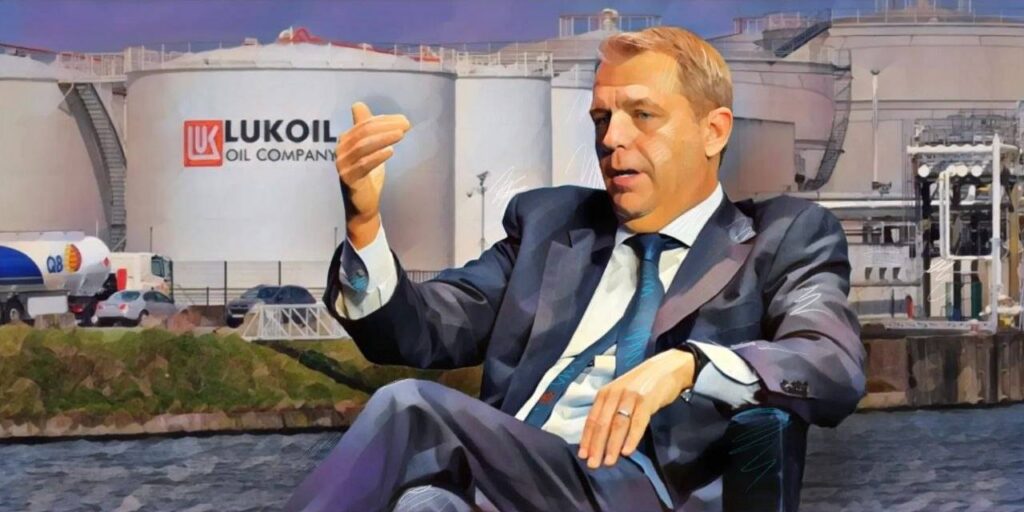
U.S.-Backed Lukoil Deal Could Reshape Kazakhstan’s Oil Sector

A U.S.-backed deal to acquire the international assets of Russian oil giant Lukoil could complicate Kazakhstan’s plans to increase its ownership of some of the country’s largest oil and gas projects. On November 25, a consortium led by Todd Boehly’s U.S. investment group Eldridge announced an agreement to acquire 100% of Lukoil International GmbH (LIG), Lukoil’s international holding company. The buyers include the U.S. International Development Finance Corporation (DFC), a government agency that finances private sector investment overseas, investment firm Xtellus Partners, and the UAE-based Catena Investment Holding. Completion of the transaction requires approval from the U.S. Treasury Department and other regulators. According to Reuters, the consortium intends to acquire Lukoil’s overseas business in exchange for Russian securities worth approximately $10 billion. The consortium says these include shares in Lukoil and other Russian companies. Sources cited by the news agency value the international portfolio itself at around $16 billion. According to Boehly, completing the transaction could take up to a year. Lukoil’s overseas portfolio includes major holdings in Azerbaijan and Uzbekistan, European refineries, and an international network of gas stations. Its stakes in three Kazakh oil and gas projects alone are valued at approximately $6 billion. What Astana Hopes to Gain Lukoil has operated in Kazakhstan since the 1990s. The Russian company holds a 5% stake in Tengizchevroil, which operates the Tengiz oilfield, a 13.5% stake in the Karachaganak oil and gas project, and a 12.5% stake in the Caspian Pipeline Consortium (CPC). The CPC pipeline carries around 80% of Kazakhstan’s crude oil exports to a marine terminal near the Russian Black Sea port of Novorossiysk. Lukoil also holds a 50% stake in the development of the Kalamkas-Sea, Khazar, and Auezov fields in the Caspian Sea and a 49.99% stake in the Al-Farabi exploration project. Its other interests in Kazakhstan include a lubricants plant and a growing network of franchised gas stations. The research arm of Chinese oil company Sinopec values Lukoil’s holdings in Karachaganak at $2.48 billion, Tengiz at $2.17 billion, and Kalamkas-Khazar at $1.38 billion. These figures exclude its stake in the CPC. After the United States imposed sanctions on Lukoil in October 2025, Kazakhstan began exploring the possibility of acquiring the company’s stakes in domestic oil and gas projects. In January, Kazakhstan’s Energy Minister Yerlan Akkenzhenov announced that an official request had been submitted to the U.S. Treasury Department’s Office of Foreign Assets Control (OFAC), which administers U.S. sanctions. The minister cited the state’s preemptive right under Kazakh law to acquire oil and gas assets when they are sold. Financing options under consideration included deferred payments and the use of future proceeds from oil and gas sales. On June 1, however, the Energy Ministry said that it had yet to decide whether to exercise this right in any of the projects. If Kazakhstan’s state-owned oil and gas company KazMunayGas (KMG) were to acquire Lukoil’s stakes, its ownership in Tengiz could increase from 20% to 25%, while its stake in Karachaganak could more than double, from 10% to...

Karachaganak Maintenance to Cut Kazakhstan’s Oil Output by Up to 450,000 Tons

Karachaganak, one of Kazakhstan’s three largest oil and gas fields, entered planned maintenance on September 7, a shutdown expected to reduce the country’s oil and gas condensate output by 400,000–450,000 metric tons before work ends on October 1. The interruption comes in a year when the government has already lowered its national production forecast following repeated disruptions to the Caspian Pipeline Consortium (CPC), the main export route for Kazakhstan’s oil. In August, Energy Minister Yerlan Akkenzhenov said Kazakhstan had lowered its 2026 oil production target from 98 million to 96 million metric tons. He put production losses from attacks on CPC infrastructure in January, June, and July at about 3.5 million metric tons. CPC loadings rebounded by 22% in August after July’s disruptions, reaching around 1.6 million barrels per day (bpd). CPC exports are expected to fall to about 1.5 million bpd in September, partly because of the Karachaganak maintenance. More than 80% of Kazakhstan’s oil exports move through CPC. The July shutdown at the Black Sea terminal showed how quickly an export disruption can force production cuts at fields far inland. On July 22, Kazakhstan’s oil and gas condensate output fell by about 21%, while output at Tengiz dropped 56%, from roughly 925,000 to 406,000 bpd. Karachaganak also depends on Russian processing infrastructure. Raw gas from the field is sent to Russia’s Orenburg gas processing plant. In June, Karachaganak reduced production after an incident at the plant sharply curtailed its intake of gas from the field. Karachaganak Petroleum Operating B.V. (KPO), the field’s operator, is expanding its gas reinjection capacity. The process returns some of the produced gas to the reservoir, helping to maintain pressure and sustain oil and gas condensate output. A fifth gas reinjection compressor began operating in 2024. In June 2026, KPO announced that the KEP-1B project, which includes a sixth compressor, had begun reinjecting gas ahead of schedule. The Energy Ministry has said the two compressors would help maintain Karachaganak’s liquid hydrocarbon production at around 11–12 million metric tons a year. Following the expansion of Tengiz, Kazakhstan had expected national oil production to approach 100 million metric tons a year. Its production capacity has increased, but the events of 2026 have exposed the limits of the infrastructure used to move that oil to market. In May, Akkenzhenov said there was no full-scale alternative to CPC. Some oil can be rerouted across the Caspian into the Baku-Tbilisi-Ceyhan pipeline or east to China, but these routes cannot absorb CPC-scale volumes. CPC can carry up to 72.5 million metric tons a year from Kazakhstan. Whether or not the maintenance reduction was already incorporated into the revised forecast, Kazakhstan has little room for further disruption to the export and processing infrastructure on which its production depends.