• KGS/USD = 0.01144 0%
  • KZT/USD = 0.00215 0%
  • TJS/USD = 0.10696 0.09%
  • UZS/USD = 0.00008 0%
  • TMT/USD = 0.28490 0%
  • KGS/USD = 0.01144 0%
  • KZT/USD = 0.00215 0%
  • TJS/USD = 0.10696 0.09%
  • UZS/USD = 0.00008 0%
  • TMT/USD = 0.28490 0%
  • KGS/USD = 0.01144 0%
  • KZT/USD = 0.00215 0%
  • TJS/USD = 0.10696 0.09%
  • UZS/USD = 0.00008 0%
  • TMT/USD = 0.28490 0%
  • KGS/USD = 0.01144 0%
  • KZT/USD = 0.00215 0%
  • TJS/USD = 0.10696 0.09%
  • UZS/USD = 0.00008 0%
  • TMT/USD = 0.28490 0%
  • KGS/USD = 0.01144 0%
  • KZT/USD = 0.00215 0%
  • TJS/USD = 0.10696 0.09%
  • UZS/USD = 0.00008 0%
  • TMT/USD = 0.28490 0%
  • KGS/USD = 0.01144 0%
  • KZT/USD = 0.00215 0%
  • TJS/USD = 0.10696 0.09%
  • UZS/USD = 0.00008 0%
  • TMT/USD = 0.28490 0%
  • KGS/USD = 0.01144 0%
  • KZT/USD = 0.00215 0%
  • TJS/USD = 0.10696 0.09%
  • UZS/USD = 0.00008 0%
  • TMT/USD = 0.28490 0%
  • KGS/USD = 0.01144 0%
  • KZT/USD = 0.00215 0%
  • TJS/USD = 0.10696 0.09%
  • UZS/USD = 0.00008 0%
  • TMT/USD = 0.28490 0%

Viewing results 1 - 6 of 9

Poems by the Kazakh Poet Abay Recited in Paris in Nine Languages

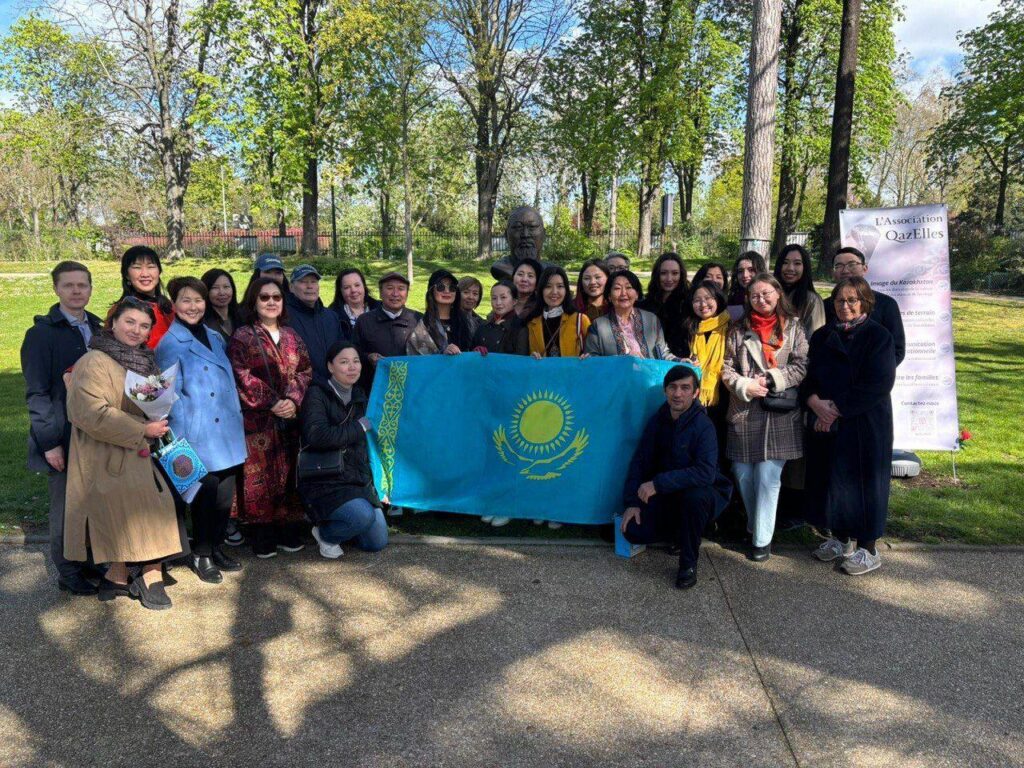
The legacy of the Kazakh poet Abay Kunanbayev recently brought together representatives of different nations in Paris. His works were recited in Kazakh, French, Russian, Chechen, Buryat, Kalmyk, Ingush, Tuvan, and Yakut. The Association of Kazakh Women in France, “QazElles,” thus supported the recently announced proposal to include Abay’s work Words of Admonition on the UNESCO World Heritage List. “As you know, UNESCO’s headquarters are in Paris, so the news that one of Kazakhstan’s most significant literary monuments could officially become part of UNESCO’s World Heritage List is very personal to us. How can we support this? By bringing together those who are not yet familiar with Abay’s work and introducing them to his major poetic masterpieces. This year, Abay’s works will be presented in the languages of various diasporas living in France with whom we are friends,” said Madina Kulmanova, president of the “QazElles” association, in an interview with The Times of Central Asia. [caption id="attachment_46355" align="aligncenter" width="225"] QazElles photos archive[/caption] The monument to Abay, located in the Poets’ Square of the French capital, has become a regular meeting place for admirers of his work since its unveiling in 2021. For Kazakhs living in France, it has become a tradition to hold the “Abay Readings” annually at the poet’s bust to promote the legacy of the founder of Kazakh written literature. This time, Abay in Paris brought together not only Kazakh and French people, but also representatives of the peoples of the Caucasus, as well as Buryat and Kalmyk associations in France. Said Musa Batyrgereev, a representative of the Chechen diaspora: “I am here representing the Association ‘Guardians of Mountain Cultures in France’ and as a representative of the Chechen people. Today we have gathered at the monument to Abay Kunanbayev to honor his memory. Abay was a great poet and a wise man who taught kindness, respect, and humanity. And today I would like to thank the Kazakh people from the bottom of my heart for the help and support they provided to the Chechen people in 1944. We will never forget this.” Representatives of the “Peuple du Baïkal” association, which unites representatives of the peoples of Russia’s Baikal region, thanked the “QazElles” association for the invitation to the annual readings of Abay Kunanbayev’s poems. In the poem they chose to read, “Quiet Night Under the Moon” (“Jelsiz tünde jaryq ai”), the poet lovingly describes the beauty of nature and the tenderness of relationships. [caption id="attachment_46356" align="aligncenter" width="225"] QazElles photos archive[/caption] Radmila Boyer, a representative of the association, noted that listening to Abay’s poem immerses one in a world of beauty and love. “This poetic morning brought us, different peoples, closer together, gave us a wonderful mood, the joy of communication, and inspiration for future joint cultural projects,” she said. Tulips were laid at the Abay monument in honor of the readings. This served as a reference to another project by the “QazElles” association, which, with the support of the Shymkent city authorities, the Embassy of Kazakhstan in...

NoMad Nights: Celebrating Kazakh Identity at New Year in New York

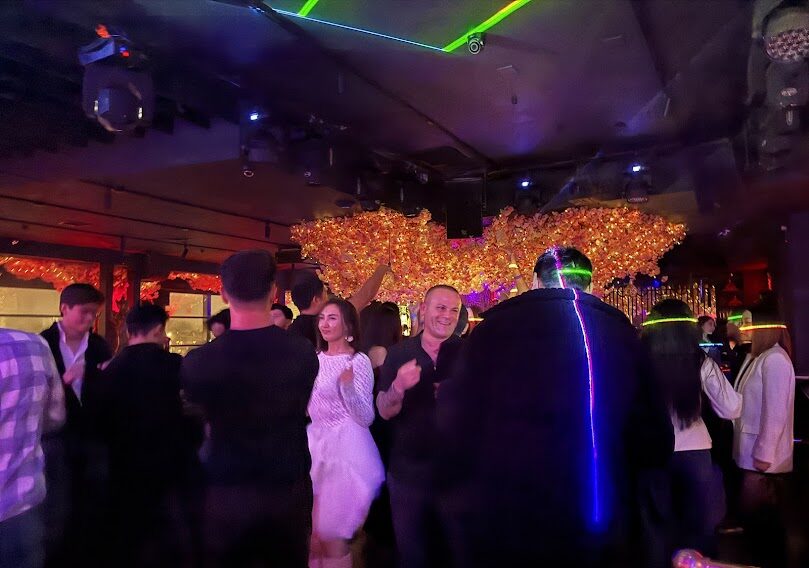
There’s no party like a New Year NoMad Kazakh Party. Staged slightly ahead of New Year’s Eve to align with the weekend, the glamorous event marked a welcome to the incoming 2026 as well as a celebration of Kazakh culture in New York City. The Sky Wise Lounge, a fashionable Asian fusion venue with regular live entertainment, is located in Brooklyn’s Sheepshead Bay. The neighborhood has a sizable Central Asian population rooted in the former Soviet diaspora and sustained by post-Soviet migration. Events like this one are part of an expanding series of multi-city gatherings across the United States hosted by ATB Promotions, led by Kazakhstani entrepreneur, Talgat Abdrakhmanov. A rotating group of about half a dozen DJs brings high-energy sets that fuse their own mixes with crowd-favorite Kazakhstani hits. [caption id="attachment_41575" align="aligncenter" width="455"] Talgat Abdrakhmanov (right) at NoMad Nights[/caption] Abdrakhmanov, originally from Karaganda, has achieved the American dream. Like other successful immigrants, he has built a business by adopting, adapting, and commercializing the enterprising customs of the U.S. After arriving in New York City in 2012, Abdrakhmanov worked his way up from a dishwasher and a waiter to a customer service representative. He later worked as an IT quality assurance analyst and in the competitive worlds of Wall Street and Silicon Valley. But it was not all work. While navigating employment and IT studies, Abdrakhmanov also embraced the play element of his American life, particularly nightlife and dance music, where he began to notice an unmet demand within his community. During this time, he developed an idea rooted in his own downtime preferences and a desire to cater to fellow immigrants from Kazakhstan. Initially, he organized small meetups with friends at restaurants and sports bars, as well as group outings to soccer games and boxing matches, including bouts featuring former Kazakhstani middleweight world champion Gennady Golovkin, widely known as GGG. “That was the initial spark that gave me an idea to make parties and events in the future,” Abdrakhmanov told The Times of Central Asia. “That’s how ATB Promotions came up.” The Kazakhstani community in the U.S. was receptive to Abdrakhmanov’s first networking foray, KazCommunity USA. “I started KazCommunity USA back in 2016, because I had held many jobs and gained a lot of experience, and people were often asking me for advice, where to find a job, where to find a place to live, how to do this, how to do that. Based on those questions, I decided to create chats and groups on Facebook, Telegram, and WhatsApp, so they exist across different social media platforms. “KazCommunity USA is really about the community. I never charged any money for it. It’s more like a nonprofit initiative that helps people find work, find a place to live, and connect with each other. That includes organizing meetups and events, some of which I later did through ATB Promotions. But KazCommunity itself is free and focused on helping people and building connections within the community.” Abdrakhmanov’s efforts to connect U.S.-based Kazakhstani...

Özgecan Kesici-Ayoubi on How the Alash Movement Is Studied in the West

Özgecan Kesici-Ayoubi is a poet and academic whose work bridges literature and Kazakh intellectual history. Though born and raised in Europe, her writing and scholarship show a deep affinity with the Kazakh people. Her early poetry earned attention and acclaim, and during her university studies she began researching the Alash Movement, work that culminated in a PhD completed in Ireland. We recently spoke with her in a short but insightful interview. TCA: Your academic research focuses on the Alash Party. How did you come to choose this topic while studying in a Western country? Özgecan: Growing up as a Kazakh in Germany, I was always interested in the formation of my identity and cultural heritage. I studied Political Science at both undergraduate and master’s level, and for my master’s thesis, I explored the process of Kazakh nation-building after independence. I then wanted to delve deeper into the foundations of the modern Kazakh nation, which I believe were significantly shaped by the Alash movement in the early 20th century. In Sociology, there's a major subfield focused on the historical sociology of nations and nationhood, which I used as a framework to study the Alash movement. TCA: In developed countries, academic standards are typically very high. What kind of support did your supervisor provide? Özgecan: My supervisor, Professor Siniša Malešević, is a Full Professor of Comparative Historical Sociology at University College Dublin. He was extremely supportive of my research. His expertise in historical sociology and theories of nationalism gave me the academic guidance I needed. Moreover, Ireland’s own colonial past means that its universities have research profiles that aligned well with my work on the Alash movement. TCA: Conducting research on the Alash movement from abroad must have presented challenges. How did you overcome them? Özgecan: It’s important to note that my research was sociological, not purely historical. I wasn’t aiming to discover new archival materials but rather to position the Alash movement within the broader sociological field of nations and nationalism and explore its theoretical implications. That said, I did require primary sources, which I accessed during fieldwork. I connected with local Kazakh scholars who helped me find the necessary materials and books, and I’m very grateful for their support. TCA: Are Western scholars aware of the Alash intellectuals' civic ideals and national identity struggles? Has the topic been studied where you lived? Özgecan: In Ireland, where I was based, the topic hadn’t been studied. However, the Alash movement has been examined by a number of Western scholars. When I began my PhD, several articles and dissertations had already been written in English, many by Kazakh scholars themselves. TCA: You previously mentioned you're working on a book. Can you tell us more about it? Özgecan: Since completing my PhD, I’ve been writing a novel based on my grandparents’ migration from the Altay region in China during the 1930s to Turkey and later the West. The novel is written from a female perspective. TCA: I've read your poems. What inspired your shift...