
• KZT/USD = 0.00222
  • TJS/USD = 0.10830
  • UZS/USD = 0.00008
  • TMT/USD = 0.29760
  • KZT/USD = 0.00222
  • TJS/USD = 0.10830
  • UZS/USD = 0.00008
  • TMT/USD = 0.29760
  • KZT/USD = 0.00222
  • TJS/USD = 0.10830
  • UZS/USD = 0.00008
  • TMT/USD = 0.29760
  • KZT/USD = 0.00222
  • TJS/USD = 0.10830
  • UZS/USD = 0.00008
  • TMT/USD = 0.29760
  • KZT/USD = 0.00222
  • TJS/USD = 0.10830
  • UZS/USD = 0.00008
  • TMT/USD = 0.29760
  • KZT/USD = 0.00222
  • TJS/USD = 0.10830
  • UZS/USD = 0.00008
  • TMT/USD = 0.29760
  • KZT/USD = 0.00222
  • TJS/USD = 0.10830
  • UZS/USD = 0.00008
  • TMT/USD = 0.29760
  • KZT/USD = 0.00222
  • TJS/USD = 0.10830
  • UZS/USD = 0.00008
  • TMT/USD = 0.29760
13 October 2026

Viewing results 1 - 6 of 2

Kazakhstan China Joint Investment Fund to Finance New Projects

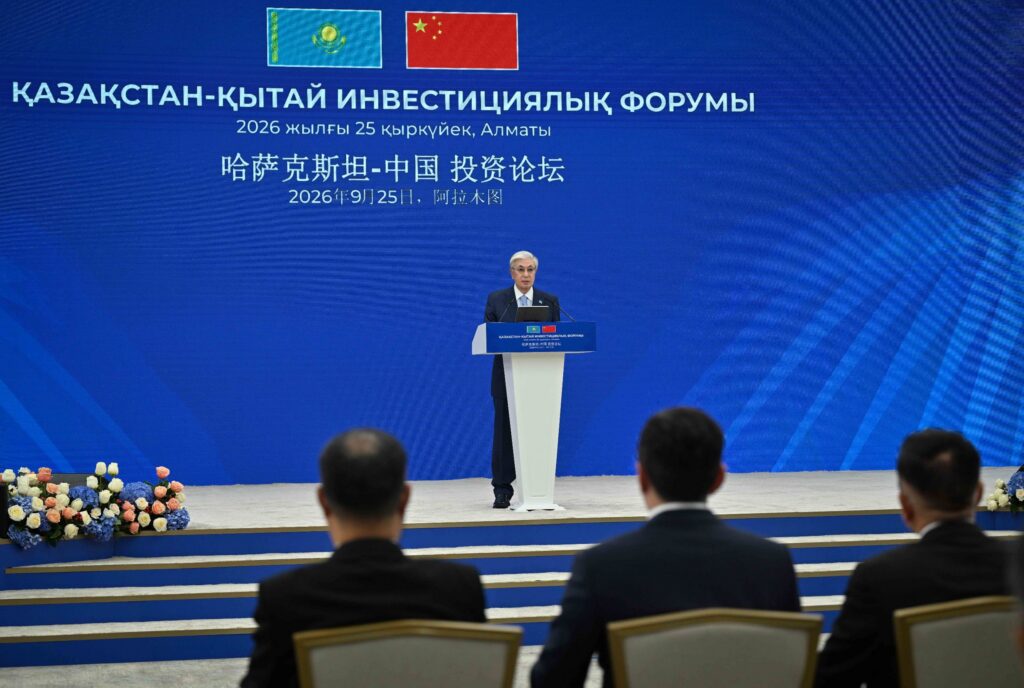
Kazakhstan and China are moving to establish a specialized investment fund to finance new projects in Kazakhstan. An agreement on the basic terms of the fund was signed by national investment promotion company Kazakh Invest and Silk Road Finance Corporation on September 25 at the Kazakhstan-China Investment Forum in Almaty. The fund is expected to operate through the Astana International Financial Centre. The forum brought together more than 600 representatives of businesses, government agencies, and development institutions. It began with a minute of silence in memory of 14 Kazakh servicemen who were killed the previous day during military exercises on the Caspian Sea. China is Kazakhstan’s largest trading partner. Chinese customs data cited by Kazakhstan’s Foreign Ministry put bilateral trade at $48.7 billion in 2025, although Kazakhstan’s own customs data recorded $34.1 billion. Kazakh Invest said Chinese direct investment in Kazakhstan reached a record $2.8 billion last year. The two countries have set a longer-term target of increasing bilateral trade to $100 billion. Government figures released for the forum put Kazakhstan’s industrial cooperation portfolio with China at 260 major projects worth more than $62 billion. Transport projects include the Mointy-Kyzylzhar and Bakhty-Ayagoz railway lines, which are nearing completion. Kazakhstan is also working with Minmetals Logistics on a logistics corridor incorporating autonomous transportation technologies and digital systems. Other projects presented around the forum include plans by China’s UBTECH to build its first humanoid robot manufacturing plant outside China in Almaty, and plans to localize the production of oncology drugs with BeOne and INKAR. Transport and logistics projects include the development of Kuryk Port and a smart logistics park in the Khorgos-Eastern Gate Special Economic Zone. The Times of Central Asia previously reported that Kazakhstan’s technology cooperation with Beijing is expanding alongside its participation in U.S.-backed initiatives involving AI and technology supply chains. Forum organizers said beforehand that around 45 commercial documents were expected to be exchanged. Ten agreements highlighted at the event covered projects including an electrolytic aluminum plant and associated wind power facility in Abai Region, wind farms with a combined capacity of 450 MW in Akmola Region, automobile manufacturing, urea fertilizer production, and preparations for a dim sum bond issue by the Almaty city administration on the Hong Kong Stock Exchange.

Kazakhstan and China Aim to Double Bilateral Trade to $100 Billion

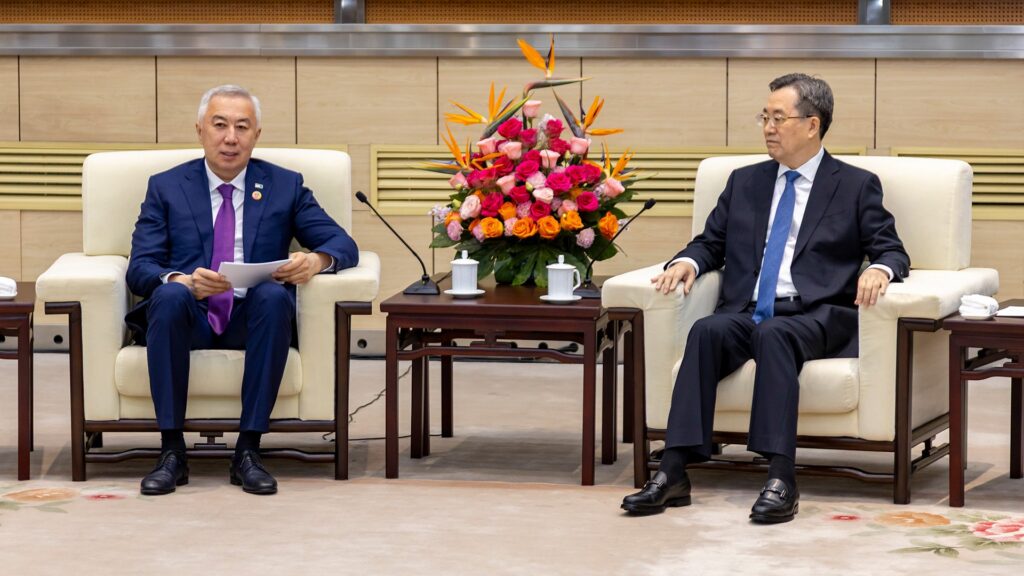
Kazakhstan and China plan to increase bilateral trade to $100 billion in the coming years, nearly doubling the expected volume for 2026, Kazakhstan’s Deputy Prime Minister and Minister of National Economy Serik Zhumangarin said. According to Kazakhstan’s government press service, Zhumangarin held talks with Chinese Vice Premier Ding Xuexiang on the sidelines of the 9th China-Eurasia Expo in Urumqi. The talks focused on expanding strategic partnership, joint investment projects, transport and logistics infrastructure, and broader trade cooperation. Kazakhstan said bilateral trade reached a record $48.7 billion in 2025. In the first five months of 2026, trade volume totaled $22 billion, up 27% compared with the same period a year earlier. Officials expect trade to exceed $50 billion by the end of this year, with more than half of total turnover linked to China’s Xinjiang Uyghur Autonomous Region, which remains the key hub of economic interaction between the two countries. “Our main task is to achieve $100 billion in mutual trade in the near future. To do this, we need to accelerate the approval of the Kazakhstan-China Trade and Economic Cooperation Program and Roadmap for 2027-2030,” Zhumangarin said. China has invested around $30 billion in Kazakhstan since independence, making it one of the country’s largest foreign investors, he added. Kazakhstan has invited Chinese businesses to expand participation in high value-added projects, including deep agricultural processing, full-cycle metallurgical production, agrochemicals, and drone manufacturing. Zhumangarin also praised the technological level of the China-Eurasia Expo and called on Chinese manufacturers and investors to localize production in Kazakhstan. Agricultural trade was another priority in the talks. Bilateral trade in agricultural products has already reached $2 billion, while China has approved imports of 34 categories of Kazakhstan's agricultural goods. Another nine categories, including chilled meat, are still under review. Zhumangarin said around 85% of all overland freight traffic between China and Europe currently passes through Kazakhstan. Following the completion of the new Bakhty-Ayagoz rail crossing, the combined capacity of border checkpoints between the two countries is expected to reach 100 million tons annually. China also confirmed its readiness to jointly implement the construction of the new railway crossing, which officials say will improve the resilience and security of international transport routes. Ding said Beijing was interested in expanding cooperation with Kazakhstan in the digital economy, artificial intelligence, energy, and navigation technologies, and encouraged Kazakhstani companies to use the China-Eurasia Expo as a platform to expand their presence in the Chinese market. As previously reported by The Times of Central Asia, China now accounts for nearly a quarter of Kazakhstan’s total foreign trade turnover. However, the growth of Chinese imports continues to outpace the increase in Kazakhstani exports.