• KGS/USD = 0.01144 0%
  • KZT/USD = 0.00213 0%
  • TJS/USD = 0.10543 -0.09%
  • UZS/USD = 0.00008 0%
  • TMT/USD = 0.28530 0%
  • KGS/USD = 0.01144 0%
  • KZT/USD = 0.00213 0%
  • TJS/USD = 0.10543 -0.09%
  • UZS/USD = 0.00008 0%
  • TMT/USD = 0.28530 0%
  • KGS/USD = 0.01144 0%
  • KZT/USD = 0.00213 0%
  • TJS/USD = 0.10543 -0.09%
  • UZS/USD = 0.00008 0%
  • TMT/USD = 0.28530 0%
  • KGS/USD = 0.01144 0%
  • KZT/USD = 0.00213 0%
  • TJS/USD = 0.10543 -0.09%
  • UZS/USD = 0.00008 0%
  • TMT/USD = 0.28530 0%
  • KGS/USD = 0.01144 0%
  • KZT/USD = 0.00213 0%
  • TJS/USD = 0.10543 -0.09%
  • UZS/USD = 0.00008 0%
  • TMT/USD = 0.28530 0%
  • KGS/USD = 0.01144 0%
  • KZT/USD = 0.00213 0%
  • TJS/USD = 0.10543 -0.09%
  • UZS/USD = 0.00008 0%
  • TMT/USD = 0.28530 0%
  • KGS/USD = 0.01144 0%
  • KZT/USD = 0.00213 0%
  • TJS/USD = 0.10543 -0.09%
  • UZS/USD = 0.00008 0%
  • TMT/USD = 0.28530 0%
  • KGS/USD = 0.01144 0%
  • KZT/USD = 0.00213 0%
  • TJS/USD = 0.10543 -0.09%
  • UZS/USD = 0.00008 0%
  • TMT/USD = 0.28530 0%

Viewing results 1 - 6 of 15

Kazakhstan Prepares for Its First-Ever Administrative Amnesty

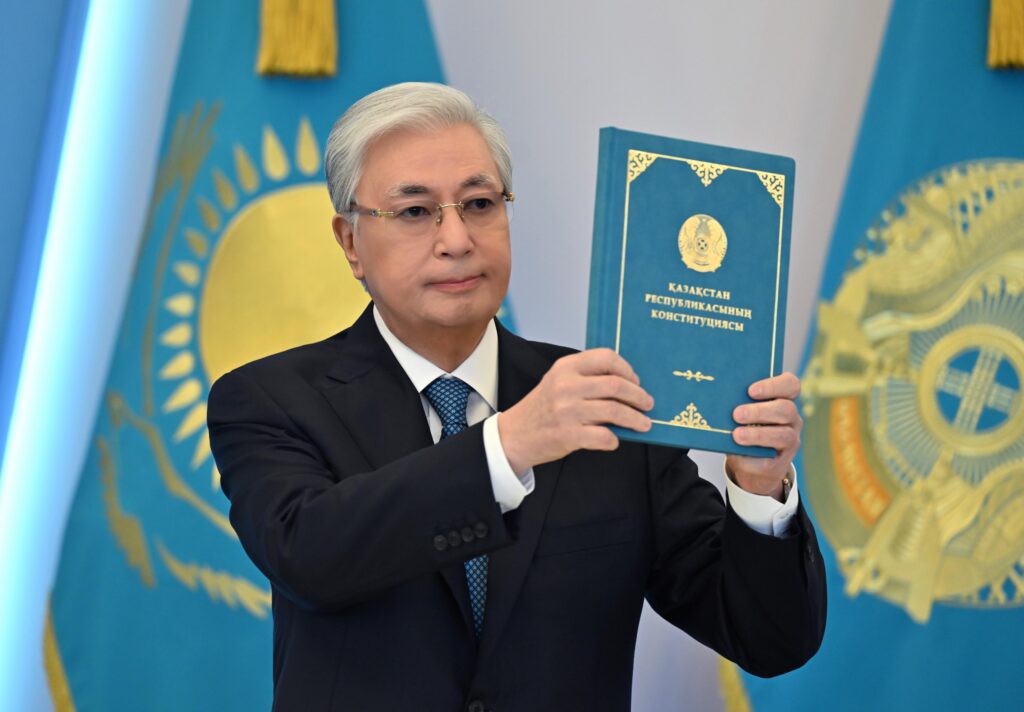
President Kassym-Jomart Tokayev has announced plans to introduce Kazakhstan’s first-ever administrative amnesty. The statement was made during a ceremony marking the adoption of the country’s new Constitution. In the past, Kazakhstan has periodically granted amnesties to individuals convicted of criminal offenses, often timed to coincide with national anniversaries. The most recent such amnesty was carried out in 2025 to mark the 30th anniversary of the Constitution. The new initiative is linked to the adoption of the updated Constitution. On March 15, a nationwide referendum was held in which a majority of voters supported the new basic law. The document is scheduled to enter into force on July 1, 2026. Speaking at the ceremony, Tokayev said that constitutional reform represents a transition to a new stage in the country’s development and requires a reassessment of the relationship between the state and society. “The People’s Constitution is a strategic mandate of trust and a new social contract aimed at long-term goals and horizons of progress,” the president said. He instructed parliament to adopt an amnesty law by the end of the current session. The proposed amnesty is expected to cover a range of criminal and administrative offenses that do not pose a threat to public or national security. The current parliamentary session is due to conclude at the end of June. Under the new Constitution, however, the powers of the existing parliament will cease on July 1, 2026, the same day the new constitutional framework enters into force. In the near future, five new constitutional laws are expected to be submitted to parliament, including legislation governing the presidency, the Kurultai (the future parliament), the Halyk Kenesi (People's Council), as well as laws regulating the status of the capital and the country’s administrative-territorial structure. According to Tokayev, eight existing constitutional laws and more than 60 regulatory acts, including key legal codes, will also require revision. These legislative changes are expected to be synchronized with upcoming parliamentary elections. Elections to the new unicameral parliament are likely to take place before the opening of the next parliamentary session, which traditionally begins on September 1. As a result, voting could be held within the coming months. “By that time, preparation of the necessary legal framework must be fully completed. The comprehensive transformation of Kazakhstan’s legal and political system will continue throughout this year and possibly into the next,” the president said. According to Tokayev, the reforms envisage the creation of new state institutions, as well as structural and personnel changes within existing government bodies.
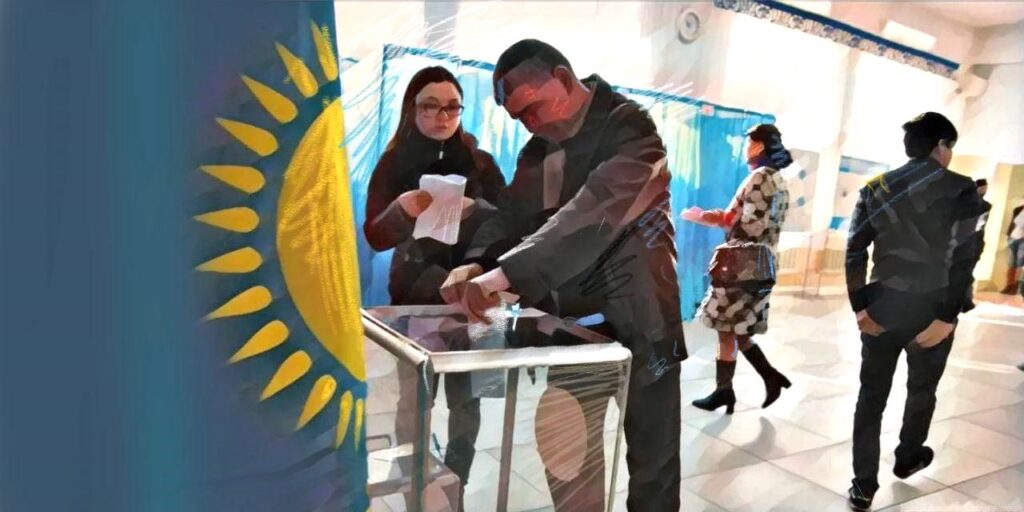
Foreign Leaders Congratulate Tokayev After Kazakhstan Approves New Constitution

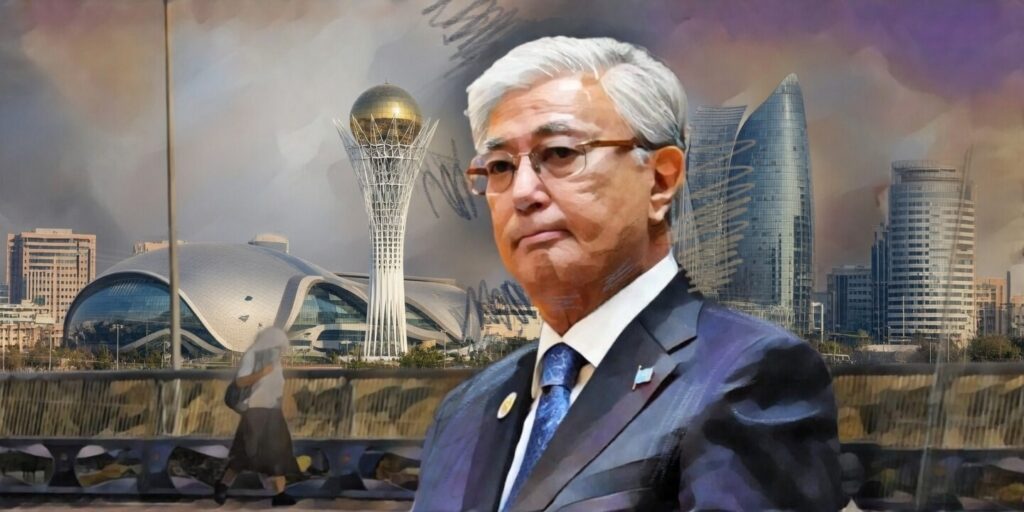
Updated March 24, 2026: This article has been updated to include remarks from French President Emmanuel Macron and congratulatory messages from Turkish President Recep Tayyip Erdoğan and Pakistani President Asif Ali Zardari. https://x.com/aqorda_press/status/2036454765148905967?s President Kassym-Jomart Tokayev began receiving congratulations from foreign leaders on March 16 after Kazakhstan announced that voters had approved a new constitution in a nationwide referendum. As reported by The Times of Central Asia, turnout reached 73.12%, with 87.15% of voters supporting the proposed amendments. The March 15 referendum backed sweeping institutional changes aimed at modernizing the political system and strengthening state institutions to meet the demands of a rapidly changing global landscape, including replacing Kazakhstan’s bicameral parliament with a single chamber, restoring the post of vice president, and creating a new People’s Council (Kurultai) with the power to initiate legislation and referendums. Several regional leaders reached out directly to Tokayev after the results were announced. Uzbek President Shavkat Mirziyoyev congratulated Tokayev during a telephone conversation on March 16. Russian President Vladimir Putin, Kyrgyz President Sadyr Japarov, Azerbaijani President Ilham Aliyev, Belarusian President Alexander Lukashenko, Serbian President Aleksandar Vucic, Armenian Prime Minister Nikol Pashinyan and Pakistani President Asif Ali Zardari also sent congratulatory messages. French President Emmanuel Macron likewise congratulated Tokayev during a March 17 telephone call, describing the referendum as a historic step forward in Kazakhstan’s modernization and expressing interest in deepening bilateral cooperation, particularly in industry and energy. Recep Tayyip Erdoğan congratulated Kassym-Jomart Tokayev on successfully holding a national referendum and adopting a new constitution, expressing confidence that it would strengthen Kazakhstan’s future development and global standing in a call on March 24. Beyond Kazakhstan’s immediate regional partners, the U.S. Mission to Kazakhstan also publicly congratulated the people of Kazakhstan in a post on X following the referendum. Tokayev has described the vote as a historic moment that will shape the country’s future political system. The government is now expected to begin implementing the constitutional changes, including preparing for new parliamentary elections under the revised framework.

Kazakhstan’s Constitutional Referendum Opens the Door to Major Institutional Reform

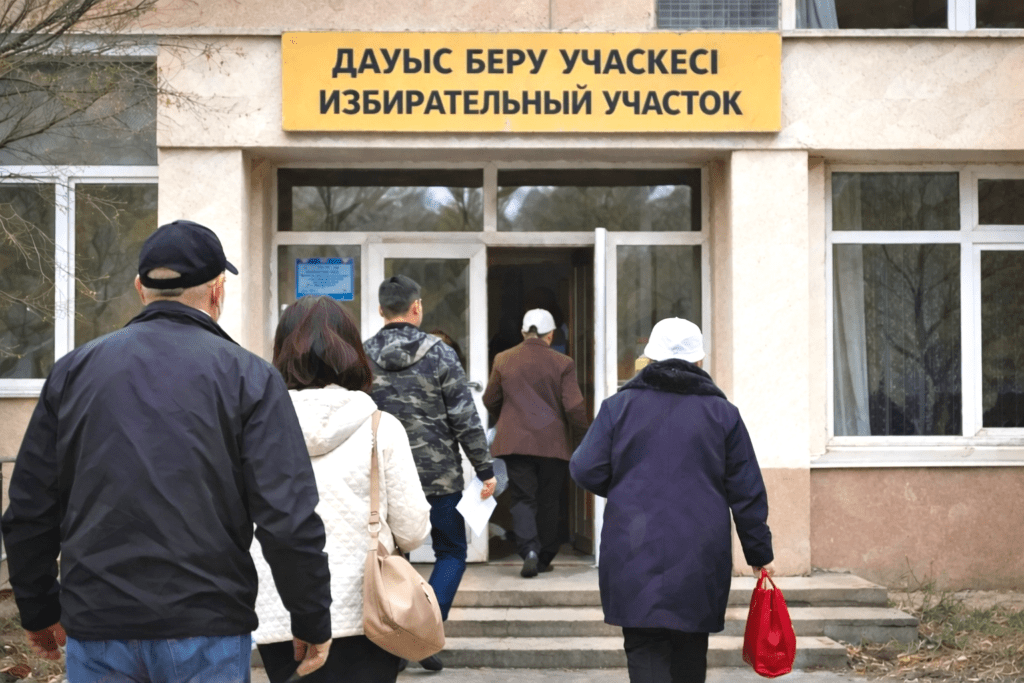
Kazakhstan will hold its constitutional referendum on March 15 on a draft that would replace the current bicameral parliamentary structure, restore the vice presidency, and reset the legal framework for the country’s post-2022 political order. The Central Referendum Commission has presented the vote as procedurally ready. On February 20, Qazinform reported that the commission had briefed the OSCE/ODIHR mission on preparations, saying infrastructure upgrades at all polling stations were complete, that voter lists included 12,416,759 eligible citizens, and that online services would allow voters to check their registration status. The same report said that public information efforts were underway across multiple channels, including personalized voter invitations with QR codes, and that the legal conditions were in place for accredited civic associations, non-profit organizations, and media representatives to work at polling stations. Administrative readiness, however, is only part of the story. The referendum’s significance lies in what adoption would change and what measures will be employed to move to the implementation stage afterward. Earlier TCA coverage examined the draft’s broader constitutional architecture and discussed its implications for the reordering of state authority. The issue now is narrower. A “yes” vote would approve a new institutional framework, but it would not by itself answer every question about how that framework will be interpreted, implemented, or used. However, the new constitution could allow future laws to move through parliament more expeditiously. The referendum is more than a routine exercise in constitutional amendment. The move announced in February was toward a new constitution rather than a narrower package of revisions. The draft would replace the current bicameral parliament with a single chamber, reduce the number of lawmakers, and reinstate the office of vice president. The text now before voters is being treated as a new basic law, not merely as a technical adjustment to the 1995 constitution. If approved, it will establish a new legal baseline from which later political interpretation begins. In addition, adoption would set a tight institutional timetable. If approved, the constitution would enter into force on July 1, and parliamentary elections would follow in August. Polling will take place at 10,402 stations, including 71 abroad, and official results must be published within seven days. In practical terms, March 15 would settle the text and begin the transition from constitutional approval to institutional implementation. That implementation phase has its own political weight. The referendum is considered valid if more than half of the eligible voters participate. The draft constitution will be adopted if a majority of those voting support it, provided the measure also receives majority support in at least two-thirds of Kazakhstan’s regions, cities of national significance, and the capital. Those thresholds are not unusual, but in this case, the authorities are seeking a public mandate for a new constitutional order. At the same time, the package also reaches beyond institutional mechanics. The draft would change the constitutional wording on the Russian language so that it would be used “along with” Kazakh rather than “on an equal footing” with it, and...

Kazakhstan Faces Landmark Constitutional Referendum

On March 15, citizens will vote in a nationwide referendum on sweeping constitutional amendments that could significantly reshape Kazakhstan’s political system. Kazakhstan’s Constitution has undergone periodic revision since independence, with changes adopted in 1998, 2007, 2011, 2017, 2019, and most recently in 2022, when 56 amendments to the basic law were approved in a national referendum. According to official statements, the proposed draft would affect about 84% of the Constitution, making it the most extensive revision in the country’s modern history. President Kassym-Jomart Tokayev has described the proposed document as “essentially a new Constitution.” At the same time, the draft retains several core principles. Kazakhstan would continue to be defined as a secular, democratic, unitary state, with the people recognized as the sole source of state power. Attempts to overthrow the constitutional order would remain punishable by law. The draft also proposes the creation of a new representative body, the Kurultai, which would replace the current bicameral parliament, consisting of the Mazhilis (lower house) and the Senate (upper house), with a unicameral legislature. The scale of the proposed reforms has generated significant public attention. The draft Constitution has been widely debated, and the referendum campaign has been accompanied by a large-scale public information effort. Supporters argue that the changes could streamline governance and modernize political institutions, while critics have raised concerns about the concentration of authority and the pace of reform. Rights and Freedoms The current Constitution states that human rights and freedoms must not infringe on the rights of others, the constitutional order, or public morality. The new draft expands this provision, specifying that the exercise of rights and freedoms must not violate the rights or restrict the freedoms of other individuals, undermine the constitutional order, disrupt public order, threaten public health, or contradict societal morality. The document continues to guarantee freedom of speech and prohibit censorship, stating, “Freedom of speech and scientific, technical, and artistic creativity is guaranteed.” It also introduces an additional clause stipulating that the dissemination of information must not infringe upon the honor and dignity of others, public health, or public order. The list of prohibited forms of propaganda is also broadened. It includes advocacy for violent changes to the constitutional order, violations of territorial integrity and sovereignty, threats to national security, incitement to war or armed conflict, and the promotion of social, racial, national, ethnic, or religious superiority or discord, as well as the glorification of cruelty and violence. Supporters of the draft say these provisions are intended to strengthen social stability and national security. However, some observers note that broader restrictions linked to public order or morality may raise questions about how such norms would be interpreted and applied in practice. In family law, the draft specifies that marriage is defined as a voluntary and equal union between a man and a woman, registered by the state in accordance with the law. President and Vice President Proposed changes to the structure of executive power have been among the most widely discussed aspects of the...

Kazakhstan Reduces Number of Overseas Polling Stations for Referendum

Kazakhstan has reduced the number of overseas polling stations for the nationwide referendum scheduled for March 15 due to the deteriorating security situation in the Middle East. The announcement was made by Yerlan Alimbayev, Ambassador-at-Large at the Ministry of Foreign Affairs. The Times of Central Asia previously reported the announcement of a referendum on adopting a new constitution. Among the most notable proposed changes are a transition from a bicameral parliament to a unicameral body known as the Kurultai; the restoration of the position of vice president; and the enshrinement in the basic law of commitments to digital transformation, economic modernization, and the strengthening of sovereignty. Some Kazakh citizens will vote abroad, but the number of overseas polling stations has been reduced in response to military escalation in the Middle East. Military operations in the region, including on Iranian territory, began on February 28. “Due to the escalation of the situation in the Middle East and taking into account security considerations, it was decided to reduce the number of polling stations by 11 across ten countries. As a result, 71 polling stations will operate in 54 countries at Kazakhstan’s foreign missions. The number of registered voters abroad is 14,230,” Alimbayev said. According to him, referendum commissions have already been formed at Kazakhstan’s diplomatic missions. All commission members have been tested on their knowledge of the law and have received the appropriate certification. “We can assure you that all polling stations are ready to operate. Information materials, ballot boxes, and ballots have been delivered. Starting tomorrow, they will be sent via diplomatic mail,” the Foreign Ministry representative added. According to the ministry, at the time the conflict escalated in the Middle East there were more than 10,000 Kazakh citizens in countries across the region, including 47 in Iran, 163 in Israel, more than 3,000 in Qatar, more than 4,000 in the United Arab Emirates, and about 1,800 in Saudi Arabia. As of March 10, 8,585 Kazakh citizens had been evacuated from conflict-affected areas, according to Foreign Ministry spokesman Yerlan Zhetibayev. “We are doing everything possible to ensure the safety of our citizens and are providing the necessary support. At this time, we have received no information about Kazakh citizens who have been killed or injured,” he said.