


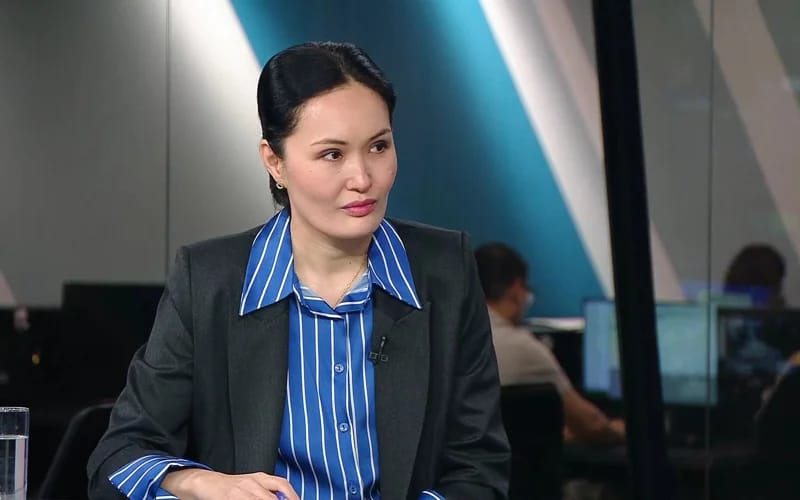
Kazakhstan Interfaith Center Chair Gulsana Kozhabay: Astana Congress Must Turn Dialogue into Action
Kazakhstan wants the Astana Congress of the Leaders of World and Traditional Religions to take a more active role in conflict prevention and postwar reconciliation, including through permanent expert engagement and a possible Islamic-Jewish roundtable in Israel in 2027. In an interview with The Times of Central Asia, Gulsana Kozhabay, chair of the board of the International Center for Interfaith and Interreligious Dialogue, explains how the Congress could expand its work between its triennial gatherings while remaining politically neutral. Speaking in a personal capacity, she discusses the limits of religious diplomacy in the conflict in Gaza. She also addresses Kazakhstan’s ambition to develop its own school in this field and explains why she believes interfaith dialogue must increasingly lead to practical action rather than declarations alone. TCA: What role can Kazakhstan’s humanitarian and spiritual diplomacy play in promoting peace, and how can the International Center contribute? Kozhabay: Let us begin by explaining in simple terms what spiritual diplomacy means. In the context of this interview, we primarily understand it as religious diplomacy. It has several layers. It includes relations between different religions, dialogue within a single religion, engagement among the Abrahamic faiths, and work at local, regional and international levels. Religious leaders and organizations can work with states, international organizations and civil society, or act independently. Many researchers believe that we are living in a post-secular period. Jürgen Habermas is one of the principal theorists associated with this approach. Modernization and technological development have clearly not pushed religion to the margins. Religions continue to play an important role in society, culture, and even politics. In many countries, including the Vatican, states in the Middle East, Egypt, Israel, the United States, and Russia, religious leaders command considerable trust, exercise influence in society, and have direct access to very large audiences. Habermas’s work is widely associated with the concept of a post-secular society and the continuing place of religion in public life. Religious diplomacy cannot, of course, prevent or resolve every conflict and crisis, or replace political negotiations. Its main value lies in preserving channels of communication alongside political dialogue, or when that dialogue becomes difficult. Reducing mistrust, countering hate speech, and explaining to the public the value of peace and human life are important elements of religious diplomacy and are reflected in the Astana Peace Declaration 2025. In his ecological encyclical Laudato si’, Pope Francis wrote that religions should engage in dialogue to protect nature, defend the poor, and build networks of respect and fraternity. Kazakhstan has always supported peaceful dialogue and a constructive international agenda. This is one of our strengths. We do not claim the role of a great power and do not seek to impose our decisions on other countries. Kazakhstan acts as a middle power that can build bridges, bring different parties to the same table, and offer neutral venues for dialogue. This is also part of Kazakhstan’s soft power. Kazakhstan is trusted as a state that consistently supports dialogue at the political level and among cultures,...
