
• KZT/USD = 0.00216
  • TJS/USD = 0.10800
  • UZS/USD = 0.00009
  • TMT/USD = 0.29850
  • KZT/USD = 0.00216
  • TJS/USD = 0.10800
  • UZS/USD = 0.00009
  • TMT/USD = 0.29850
  • KZT/USD = 0.00216
  • TJS/USD = 0.10800
  • UZS/USD = 0.00009
  • TMT/USD = 0.29850
  • KZT/USD = 0.00216
  • TJS/USD = 0.10800
  • UZS/USD = 0.00009
  • TMT/USD = 0.29850
  • KZT/USD = 0.00216
  • TJS/USD = 0.10800
  • UZS/USD = 0.00009
  • TMT/USD = 0.29850
  • KZT/USD = 0.00216
  • TJS/USD = 0.10800
  • UZS/USD = 0.00009
  • TMT/USD = 0.29850
  • KZT/USD = 0.00216
  • TJS/USD = 0.10800
  • UZS/USD = 0.00009
  • TMT/USD = 0.29850
  • KZT/USD = 0.00216
  • TJS/USD = 0.10800
  • UZS/USD = 0.00009
  • TMT/USD = 0.29850
19 August 2026

Viewing results 1 - 6 of 2

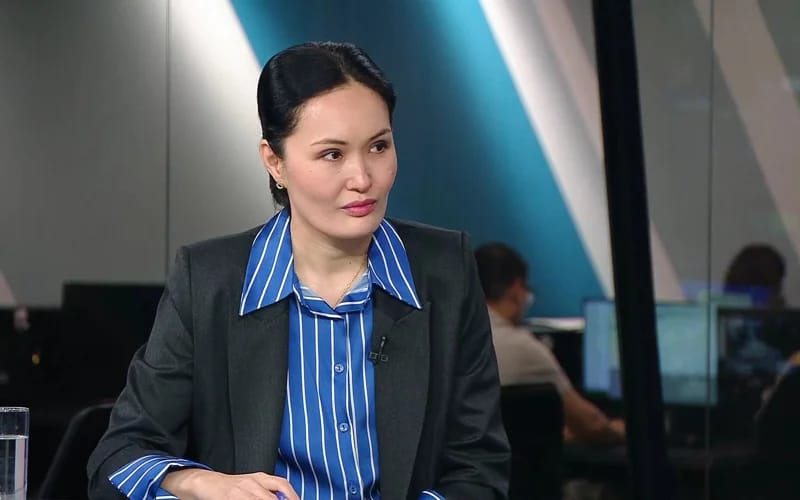
Kazakhstan Interfaith Center Chair Gulsana Kozhabay: Astana Congress Must Turn Dialogue into Action

Kazakhstan wants the Astana Congress of the Leaders of World and Traditional Religions to take a more active role in conflict prevention and postwar reconciliation, including through permanent expert engagement and a possible Islamic-Jewish roundtable in Israel in 2027. In an interview with The Times of Central Asia, Gulsana Kozhabay, chair of the board of the International Center for Interfaith and Interreligious Dialogue, explains how the Congress could expand its work between its triennial gatherings while remaining politically neutral. Speaking in a personal capacity, she discusses the limits of religious diplomacy in the conflict in Gaza. She also addresses Kazakhstan’s ambition to develop its own school in this field and explains why she believes interfaith dialogue must increasingly lead to practical action rather than declarations alone. TCA: What role can Kazakhstan’s humanitarian and spiritual diplomacy play in promoting peace, and how can the International Center contribute? Kozhabay: Let us begin by explaining in simple terms what spiritual diplomacy means. In the context of this interview, we primarily understand it as religious diplomacy. It has several layers. It includes relations between different religions, dialogue within a single religion, engagement among the Abrahamic faiths, and work at local, regional and international levels. Religious leaders and organizations can work with states, international organizations and civil society, or act independently. Many researchers believe that we are living in a post-secular period. Jürgen Habermas is one of the principal theorists associated with this approach. Modernization and technological development have clearly not pushed religion to the margins. Religions continue to play an important role in society, culture, and even politics. In many countries, including the Vatican, states in the Middle East, Egypt, Israel, the United States, and Russia, religious leaders command considerable trust, exercise influence in society, and have direct access to very large audiences. Habermas’s work is widely associated with the concept of a post-secular society and the continuing place of religion in public life. Religious diplomacy cannot, of course, prevent or resolve every conflict and crisis, or replace political negotiations. Its main value lies in preserving channels of communication alongside political dialogue, or when that dialogue becomes difficult. Reducing mistrust, countering hate speech, and explaining to the public the value of peace and human life are important elements of religious diplomacy and are reflected in the Astana Peace Declaration 2025. In his ecological encyclical Laudato si’, Pope Francis wrote that religions should engage in dialogue to protect nature, defend the poor, and build networks of respect and fraternity. Kazakhstan has always supported peaceful dialogue and a constructive international agenda. This is one of our strengths. We do not claim the role of a great power and do not seek to impose our decisions on other countries. Kazakhstan acts as a middle power that can build bridges, bring different parties to the same table, and offer neutral venues for dialogue. This is also part of Kazakhstan’s soft power. Kazakhstan is trusted as a state that consistently supports dialogue at the political level and among cultures,...
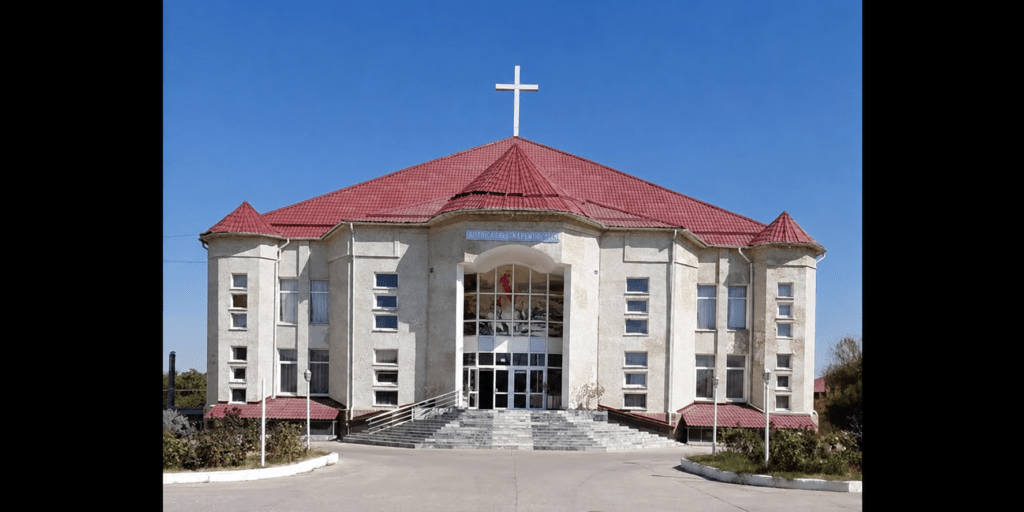

Opinion: Christian Missions in Central Asia: Religious Freedom and Social Tensions

Central Asia has long been a crossroads of civilizations, cultures, and religions. For more than two millennia, the region has connected East and West, with Zoroastrianism, Buddhism, Judaism, Christianity, Islam, and indigenous belief systems coexisting, interacting, and, at times, competing. Christianity flourished here centuries ago through Nestorian and other Eastern Christian communities, while Russian Orthodoxy endured throughout the Soviet period. Under Soviet rule, religion was heavily suppressed, yet Christianity survived among Russians, Germans, Poles, Ukrainians, and other communities that had been deported or resettled across the region. Following the collapse of the Soviet Union, decades of official atheism gave way to a religious revival, creating space for a new wave of missionary activity. The principles of Christian missionary work are similar across denominations, with preaching, charity, education, medical assistance, and moral renewal at their core. In practice, however, missionary efforts in the newly independent Central Asian states evolved far beyond religious services. Amid the economic hardship that followed the collapse of the Soviet system, many churches combined evangelism with humanitarian assistance, language courses, youth programs, computer training, sports clubs, and cultural activities. These initiatives proved particularly attractive to young people, students, socially vulnerable groups, and urban residents seeking new educational and social opportunities. Among the five Central Asian republics, Kazakhstan emerged as one of the most favorable environments for Christian missions. During the 1990s, its relatively liberal religious climate, large urban centers, multiethnic society, sizeable Korean diaspora, Russian-speaking environment, and comparatively open legal framework enabled numerous foreign churches to establish seminaries, schools, charitable foundations, and places of worship. South Korean Protestant organizations became especially active. Presbyterian, Baptist, Methodist, and Pentecostal churches initially found a natural base within the Koryo-saram community, but their activities gradually expanded well beyond ethnic Koreans. It is at this point that a more sensitive issue emerges. Missionary churches generally regard religious conversion as a legitimate expression of freedom of conscience. Many Muslim families, however, particularly in rural and traditionally conservative communities, view the conversion of their children as a rupture with family heritage, ancestral traditions, and communal identity. Across much of Central Asia, religion is not merely a matter of personal belief. It is closely intertwined with kinship, ethnic identity, marriage, burial customs, and family authority. As a result, active proselytizing among indigenous youth can provoke strong opposition from relatives and local Muslim communities. The issue reflects the interaction between missionary strategies and social pressures such as limited interfaith dialogue, economic hardship, youth vulnerability, foreign funding, government suspicion, and concerns over cultural continuity. When religious conversion becomes associated with financial assistance, educational opportunities, foreign sponsorship, or improved social mobility, critics may portray it as an attempt to “buy souls,” even when churches describe such activities as humanitarian or charitable work. One of the most serious examples occurred in Tajikistan on October 1, 2000, when bombs exploded during a Sunday service at Sonmin Grace Church, a Korean Protestant church in Dushanbe associated with South Korean missionaries. The congregation had attracted local converts. Several people were killed and dozens...