

• KGS/USD = 0.01144 0%
  • KZT/USD = 0.00218 0%
  • TJS/USD = 0.10663 0.38%
  • UZS/USD = 0.00008 0%
  • TMT/USD = 0.28530 0%
  • KGS/USD = 0.01144 0%
  • KZT/USD = 0.00218 0%
  • TJS/USD = 0.10663 0.38%
  • UZS/USD = 0.00008 0%
  • TMT/USD = 0.28530 0%
  • KGS/USD = 0.01144 0%
  • KZT/USD = 0.00218 0%
  • TJS/USD = 0.10663 0.38%
  • UZS/USD = 0.00008 0%
  • TMT/USD = 0.28530 0%
  • KGS/USD = 0.01144 0%
  • KZT/USD = 0.00218 0%
  • TJS/USD = 0.10663 0.38%
  • UZS/USD = 0.00008 0%
  • TMT/USD = 0.28530 0%
  • KGS/USD = 0.01144 0%
  • KZT/USD = 0.00218 0%
  • TJS/USD = 0.10663 0.38%
  • UZS/USD = 0.00008 0%
  • TMT/USD = 0.28530 0%
  • KGS/USD = 0.01144 0%
  • KZT/USD = 0.00218 0%
  • TJS/USD = 0.10663 0.38%
  • UZS/USD = 0.00008 0%
  • TMT/USD = 0.28530 0%
  • KGS/USD = 0.01144 0%
  • KZT/USD = 0.00218 0%
  • TJS/USD = 0.10663 0.38%
  • UZS/USD = 0.00008 0%
  • TMT/USD = 0.28530 0%
  • KGS/USD = 0.01144 0%
  • KZT/USD = 0.00218 0%
  • TJS/USD = 0.10663 0.38%
  • UZS/USD = 0.00008 0%
  • TMT/USD = 0.28530 0%

Viewing results 1 - 6 of 5

The Influence of Korean Culture on Uzbekistan: Personal Stories and Impressions

From fan meet-ups in shopping malls to Korean universities and supermarket shelves stocked with beauty brands, Korean culture in Uzbekistan has long ceased to be a niche interest. Yet behind bright music videos and conversations about Korean standards lies a more complex picture. For some, it represents a sense of community and part of personal identity; for others, it is a passing trend or even a source of disappointment. How exactly is the Korean wave structured in Uzbekistan, and why is its influence perceived so differently? The answer lies in personal stories and observations. How the Korean “Wave” Is Structured in Uzbekistan When discussing the influence of Korean culture in Uzbekistan, it is important to recognize that this is not a single, monolithic phenomenon. Rather, it consists of several parallel streams that have gradually entered everyday life. These include popular culture — K-pop, television dramas, fan meetings, and new urban leisure formats — as well as consumer practices such as cosmetics, fashion, and gastronomy. Institutional ties also play a role, including language centers, university programs, cultural associations, and humanitarian initiatives. In academic discourse, the concept of the Korean Wave, or Hallyu, refers to the global spread of South Korean cultural products and associated lifestyles beyond the country’s borders since the late 1990s. Mass media, internet platforms, and carefully designed state cultural policy have played key roles in this process. In Uzbekistan, Hallyu has taken on a particular resonance. Here, Korean culture is not merely a trend introduced through new media; it is also part of the country’s social fabric. Uzbekistan has a historically significant Korean community composed of descendants of Koreans resettled during the Soviet period. For many people, interest in contemporary South Korea is therefore linked not only to fashion or pop culture but also to questions of identity, memory, and intergenerational dialogue. Pop Culture and Urban Aesthetics The most visible and widely discussed channel of influence is youth pop culture. It is through this sphere that the Korean wave becomes most noticeable. Researchers in the region describe K-pop as one of the main drivers of Hallyu’s popularity in Central Asia, including Uzbekistan. Interest in music often leads to language learning, the formation of fan communities, and increased online engagement. For many, everything begins with a music video, bright, dynamic, and visually polished. Then come fan chats, dance cover groups, and attempts to analyze song lyrics. Music becomes a form of social glue, bringing teenagers together in Telegram channels, on university campuses, and in shopping malls where spontaneous flash mobs take place. Alongside this runs what might be called the drama channel. Korean television series in Uzbekistan are no longer a niche interest. Academic publications analyze their growing popularity and explore why this format has proven so resilient and widely appealing. The explanation is often found in a combination of emotional storytelling, family-centered plots, and visual aesthetics that resonate with local audiences. Pop-cultural influence does not remain confined to screens; it spills into the city itself. In 2023, Korea...

Woosong University Kazakhstan Campus Officially Opens

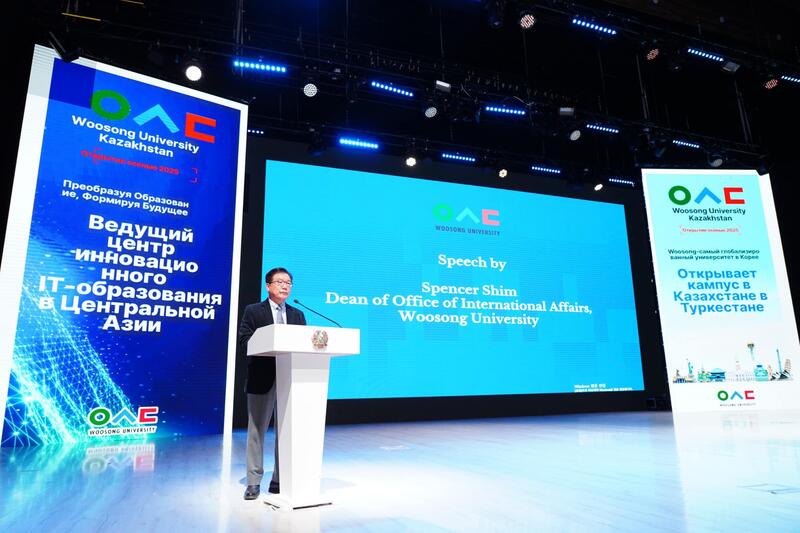
On September 25, Woosong University launched its new branch, Woosong University Kazakhstan, which will initially offer a program in AI and Big Data, with plans to expand into broader technology and software engineering fields. At the opening ceremony, former Deputy Prime Minister Yermek Kusherbayev, who assumed the post of Minister of Foreign Affairs the following day, highlighted the significance of the event: "To date, 40 strategic partnerships of various formats have been implemented, including 33 branches of foreign universities. Today, we are witnessing a historic event, the opening of a branch of one of the leading universities of the Republic of Korea in the spiritually rich and ancient Turkestan. This university will become not just an educational platform but also a center for international cooperation, innovation, and the training of highly qualified specialists who will shape the intellectual capital of our country." Minister of Science and Higher Education Sayasat Nurbek added that Kazakhstan aspires to become Central Asia’s leading educational hub, with foreign university branches playing a central role in this transformation. Expanding Kazakh-Korean Cooperation Several higher education partnerships are already underway between Kazakhstan and South Korea: Dong-Eui University is collaborating with Akhmet Baitursynov University to train engineers for automobile manufacturing in Kostanay. Korkyt Ata University in Kyzylorda has launched dual-degree programs with the Seoul National University of Science and Technology (SeoulTech). Satbayev University in Almaty is working with the Korea Advanced Institute of Science and Technology (KAIST) to establish a center for rare earth metals processing. Kazakhstan as an International Education Hub As previously reported by The Times of Central Asia, Kazakhstan is attracting an increasing number of prestigious foreign institutions: On September 3, Cardiff University (Wales) opened Cardiff University Kazakhstan in Astana Germany’s Anhalt University of Applied Sciences launched a branch in Almaty Italy’s Marche Polytechnic University, based in Ancona, has opened a branch campus at Zhetysu University in Taldykorgan. Looking ahead, two additional institutions are set to establish campuses in 2026: Grenoble INP-Phelma, UGA, France’s premier engineering school in physics, electronics, and materials science, will open a branch in Almaty. The Colorado School of Mines will open its first international campus in Zhezkazgan, specializing in geology and mining.

Korean Universities Expand Cooperation with Kazakhstan

South Korea’s Woosong University is set to open its branch in Turkestan, Kazakhstan, before the start of the new academic year, according to Kazakhstan’s Minister of Science and Higher Education, Sayasat Nurbek. The announcement came during a meeting with South Korea’s Vice Minister of Education, Oh Seok Hwan, on April 28 in Almaty.  Construction of the university premises is currently underway. For the initial intake, Woosong University has allocated 110 scholarships, which will supplement academic grants provided by the Kazakh government. Strengthening Educational Ties During the meeting, Minister Nurbek highlighted several ongoing joint educational and scientific projects between Korean and Kazakhstani institutions: Dong-Eui University, one of South Korea’s leading mechanical engineering universities, is collaborating with Akhmet Baitursynov University to train mechanical engineers for automobile plants in Kostanay. Korkyt Ata University in Kyzylorda has launched dual-degree programs with Seoul National University of Science and Technology (SeoulTech). Satbayev University in Almaty is partnering with the Korea Advanced Institute of Science and Technology (KAIST) to establish a center for rare earth metals processing. According to Nurbek, the establishment of foreign university branches plays a crucial role in Kazakhstan’s ambition to become a regional hub for higher education and to further integrate into the global educational landscape. Vice Minister Oh Seok Hwan expressed confidence that Kazakhstan’s systemic approach and academic potential would ensure its leadership position in the Central Asian educational market. Following their meeting, Nurbek and Oh Seok Hwan attended the opening of the Study in Korea exhibition in Almaty, which featured participation from more than 30 Korean universities. Kazakhstan’s Expanding Educational Horizon Kazakhstan’s growing reputation as an academic hub is further evidenced by other international initiatives. As previously reported by The Times of Central Asia, the Moscow State Institute of International Relations (MGIMO), one of Russia’s top universities, will open a branch in Astana in September 2025.  Additionally, Cardiff University in Wales plans to launch a campus in Astana later this year, reinforcing the Kazakh capital’s rising status as a regional center for higher education.
