
• KZT/USD = 0.00218
  • TJS/USD = 0.10810
  • UZS/USD = 0.00009
  • TMT/USD = 0.29850
  • KZT/USD = 0.00218
  • TJS/USD = 0.10810
  • UZS/USD = 0.00009
  • TMT/USD = 0.29850
  • KZT/USD = 0.00218
  • TJS/USD = 0.10810
  • UZS/USD = 0.00009
  • TMT/USD = 0.29850
  • KZT/USD = 0.00218
  • TJS/USD = 0.10810
  • UZS/USD = 0.00009
  • TMT/USD = 0.29850
  • KZT/USD = 0.00218
  • TJS/USD = 0.10810
  • UZS/USD = 0.00009
  • TMT/USD = 0.29850
  • KZT/USD = 0.00218
  • TJS/USD = 0.10810
  • UZS/USD = 0.00009
  • TMT/USD = 0.29850
  • KZT/USD = 0.00218
  • TJS/USD = 0.10810
  • UZS/USD = 0.00009
  • TMT/USD = 0.29850
  • KZT/USD = 0.00218
  • TJS/USD = 0.10810
  • UZS/USD = 0.00009
  • TMT/USD = 0.29850
21 August 2026

Viewing results 1 - 6 of 2

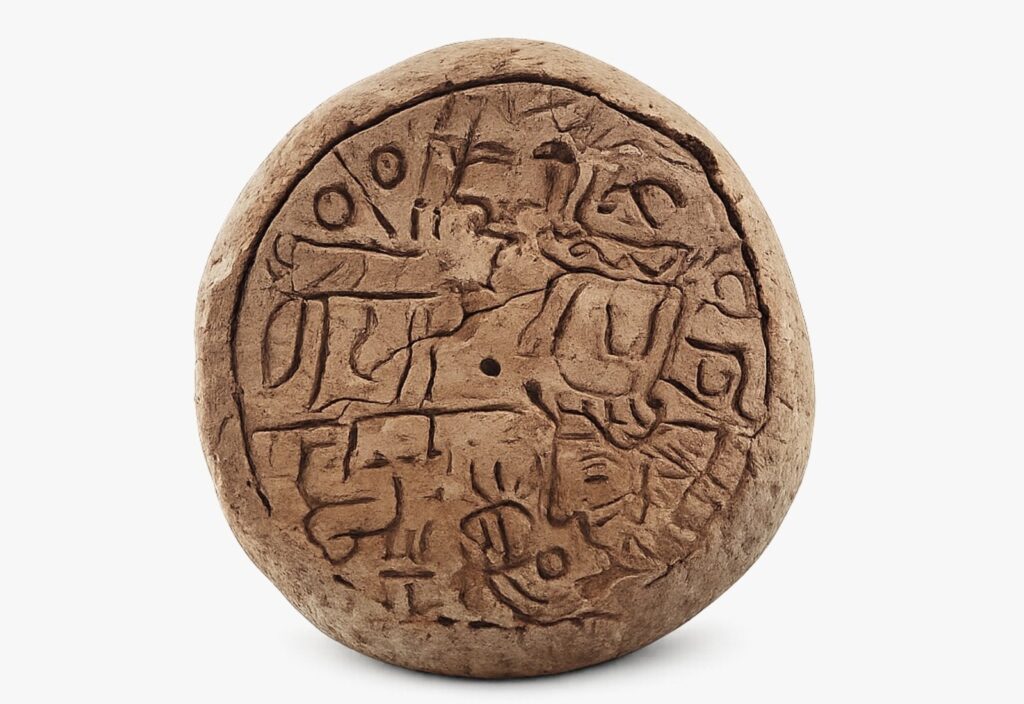
Ancient Royal Seal Discovered in Tajikistan

Archaeologists from Tajikistan’s National Museum say they have made a significant discovery, a royal seal made of fired clay from the Kushan period, which began about 2,000 years ago and lasted for several centuries. The circular, pea-green seal has a perforation for threading a cord and was found in very good condition in the Abdurahmoni Jomi district of Khatlon region in southwest Tajikistan, the museum said on August 14. “This discovery may mark a new stage in the study of the Kushan period in the region, providing a solid scholarly basis for reassessing certain existing theories and interpretations concerning its history,” the museum said in a statement. The Kushan Empire extended across a vast area at the height of its power, including swaths of present-day Tajikistan, Uzbekistan, Pakistan, Afghanistan and northern India. It emerged from the Yuezhi, a nomadic people who had migrated from what is today northwestern China and established themselves in Bactria, an ancient Central Asian region. The decorated surface of the newly discovered seal, engraved within a circular field measuring six centimeters in diameter, features what the museum’s archaeologists describe as significant political, cultural and artistic elements of the Kushan period. “The composition includes a Bactrian inscription, geometric ornamentation, a bust of a king wearing a crenellated crown, depictions of mountain goats, symbols associated with the royal authority and statehood of the Kushan rulers, as well as motifs associated with the authority of local rulers and other symbolic elements,” the Tajik museum said. Specialists from the Department of Archaeology and Numismatics at the National Museum are analyzing the seal and, once finalized, their findings will be shared with a wider circle of researchers. Arkeonews, an archaeology news platform, said the Bactrian inscription on the seal could be especially important because it might “help determine whether the seal belonged to a royal official, a local ruler or another figure operating within the Kushan political system.” The platform said “the seal may ultimately provide evidence for the relationship between Kushan rulers and regional elites in what is now southern Tajikistan.” Arkeonews said that until the museum’s analysis is complete, some of the “most important questions -- who used the seal, what it was intended to authenticate, and how it functioned within Kushan administration -- remain unanswered.”
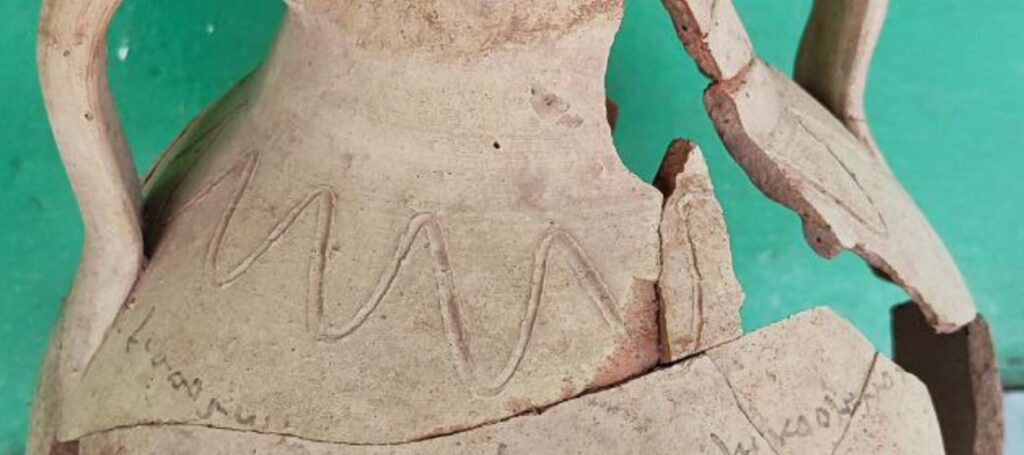

Unique Artifact from Kushan Era Unearthed in Tajikistan

Archaeologists from the National Museum of Tajikistan have unearthed a rare and significant artifact, a clay vessel bearing a complete inscription in the Bactrian language, dating to the Kushan era. The discovery was made at the Khalkhajar archaeological site near the village of Sarband, according to the museum’s announcement. A Jug with a Story Excavations at Khalkhajar began on May 20 under the direction of Mirali Zamon Karimdodzoda, head of the museum’s archaeology and numismatics department. The team uncovered the remains of ancient architectural structures, including clay and brick walls with traces of whitewash and well-preserved sections of interior spaces. Most of the artifacts unearthed date back to the Kushan Empire’s peak between the 1st and 3rd centuries AD. Among the most notable finds is a two-handled clay jug, recovered in fragments and meticulously restored. What makes the vessel exceptional is its intact inscription in Bactrian, written in a distinct broken script, an exceedingly rare occurrence in Tajikistan. Deciphering the Inscription To analyze the text, the museum enlisted the expertise of internationally renowned scholars: Professor Nicholas Sims-Williams, a specialist in ancient Iranian languages, and numismatist Joe Cribb. Based on their interpretation, the inscription reads: “eiado gō(l)z[o ]sido finzo sagkino ol(o) mo(.)” Translation: “This water jug belongs to the woman Sagkina.” This simple phrase is of considerable linguistic and cultural significance. It offers a rare glimpse into everyday life and personal property practices in the Kushan period, shedding light on literacy, gender, and identity in ancient Central Asia. Cultural and Historical Significance The name “Sagkina” provides valuable material for onomastic studies and enriches understanding of female naming conventions in the region during the Kushan era. The presence of such inscriptions suggests a relatively advanced level of literacy and a societal norm of marking personal belongings, an important insight into domestic life and social organization at the time. Experts note that finds of this nature are vital for tracing the evolution of writing systems in Eastern Iran and for better understanding the intersection of language and material culture in ancient societies. Echoes of Empire The Kushan Empire was one of the most expansive and influential states in ancient Central Asia, encompassing areas of present-day Afghanistan, Pakistan, India, southern Uzbekistan, and parts of Tajikistan. The Bactrian language, written in a modified Greek script, served as a key medium for administration and trade, and today remains essential to reconstructing the region’s historical narrative. Archaeological efforts at Khalkhajar are ongoing. All discoveries are being catalogued for future public exhibition at the National Museum of Tajikistan, where the inscribed jug will take pride of place as a symbol of the region’s rich cultural heritage.