• KGS/USD = 0.01143 0%
  • KZT/USD = 0.00200 0%
  • TJS/USD = 0.10593 -0.19%
  • UZS/USD = 0.00008 0%
  • TMT/USD = 0.28575 0%
  • KGS/USD = 0.01143 0%
  • KZT/USD = 0.00200 0%
  • TJS/USD = 0.10593 -0.19%
  • UZS/USD = 0.00008 0%
  • TMT/USD = 0.28575 0%
  • KGS/USD = 0.01143 0%
  • KZT/USD = 0.00200 0%
  • TJS/USD = 0.10593 -0.19%
  • UZS/USD = 0.00008 0%
  • TMT/USD = 0.28575 0%
  • KGS/USD = 0.01143 0%
  • KZT/USD = 0.00200 0%
  • TJS/USD = 0.10593 -0.19%
  • UZS/USD = 0.00008 0%
  • TMT/USD = 0.28575 0%
  • KGS/USD = 0.01143 0%
  • KZT/USD = 0.00200 0%
  • TJS/USD = 0.10593 -0.19%
  • UZS/USD = 0.00008 0%
  • TMT/USD = 0.28575 0%
  • KGS/USD = 0.01143 0%
  • KZT/USD = 0.00200 0%
  • TJS/USD = 0.10593 -0.19%
  • UZS/USD = 0.00008 0%
  • TMT/USD = 0.28575 0%
  • KGS/USD = 0.01143 0%
  • KZT/USD = 0.00200 0%
  • TJS/USD = 0.10593 -0.19%
  • UZS/USD = 0.00008 0%
  • TMT/USD = 0.28575 0%
  • KGS/USD = 0.01143 0%
  • KZT/USD = 0.00200 0%
  • TJS/USD = 0.10593 -0.19%
  • UZS/USD = 0.00008 0%
  • TMT/USD = 0.28575 0%
22 February 2026

Viewing results 1 - 6 of 30

Mandatory Participation in Elections Proposed in Kyrgyzstan

On January 13, Marlen Mamataliev, a member of Kyrgyzstan's parliament, the Jogorku Kenesh, introduced a bill proposing mandatory participation in elections and referendums, along with penalties for non-participation and incentives to encourage voting. The draft legislation has been submitted for public discussion. According to the bill, all Kyrgyz citizens registered as eligible voters would be required to participate in elections. However, the proposal affirms that freedom of political expression remains protected: voters would retain the right to support any candidate or to vote “against all”, as currently allowed on the ballot. The bill outlines several exemptions. Citizens over 70 years old, those legally deemed incapacitated, individuals outside Kyrgyzstan on election day, and voters who fail to appear due to valid reasons, such as illness, natural disasters, military service, or other emergencies, would not be penalized. Proposed penalties for non-participation without a valid excuse include: A written warning for the first offense; An administrative fine for repeat violations; A temporary ban of up to five years on running for elected office or holding public service positions for systematic evasion (defined as three or more violations). The bill also proposes incentives to boost voter engagement, including discounts on state and municipal services, and awarding additional points for candidates seeking public sector employment. Notably, the legislation includes a provision for issuing a lottery ticket along with each ballot, with the Central Commission for Elections and Referendums tasked with organizing state-sponsored lotteries and prize drawings during election periods. The bill’s explanatory note highlights declining voter turnout as one of the most serious challenges facing Kyrgyzstan’s electoral system. Turnout statistics illustrate a steady drop over the past 15 years. In the 2011 presidential election, participation was 61.28%; it fell to 56.11% in 2017, and to 39.16% in 2021. Parliamentary election turnout followed a similar trend: 59.19% in 2010, 39.78% in 2015, 54.38% in the contested 2020 vote, 34.61% in 2021, and just 36.9% in the most recent parliamentary elections held on November 30, 2025. The bill’s authors point to international examples of compulsory voting, in countries such as Belgium, Australia, Turkey, Singapore, and several Latin American nations, where turnout regularly exceeds 80-90%. This initiative follows concerns voiced by President Sadyr Japarov about low voter participation in the 2025 parliamentary elections. The president addressed the issue at the fourth People’s Kurultai (National Assembly), a national forum for direct dialogue between citizens and the state, held in Bishkek in December 2025, one month after the election.

Kyrgyzstan Election Delivers Wins for Women and the President’s Allies

Kyrgyzstan held snap parliamentary elections on November 30 that seem not to have elicited widespread enthusiasm among the electorate. Not long ago, Kyrgyzstan had the most vibrant political culture in Central Asia. Campaigning for parliamentary elections was a lively period that was impossible not to notice. Parties and candidates were in the news constantly in the weeks before the elections. There were campaign posters and signs, and public events with concerts organized by parties or candidates all around the country. The rapid pace of these latest elections, in which candidates had only 20 days to campaign, might have contributed to voter confusion and apathy on election day, but the elections do seem to have come off without any major controversy. In a country that has had three revolutions in the last 20 years, two of them directly connected to parliamentary elections, a quiet election day is a victory of sorts. Election Day Polls opened at 8:00 local time, and several hours after they closed at 20:00, Kyrgyzstan’s Central Election Commission reported that 36.9% of eligible voters had cast ballots. The last few elections in Kyrgyzstan have seen turnouts of less than 40%. This time, the Kyrgyz authorities were hoping for a significant increase in participation to validate the new system for parliamentary elections approved earlier this year. However, the turnout of 36.9% was only slightly better than the 34.61% of voters who took part in the November 2021 parliamentary elections. As many as 500,000 Kyrgyz citizens are working or living outside Kyrgyzstan, and only just over 26,000 showed up at any of the 100 polling stations in 34 countries. Five of Kyrgyzstan’s last six parliamentary elections were decided based on party lists. The last parliamentary elections were conducted under a split system, whereby 54 of the 90 seats in parliament were selected via party lists, and the other 36 seats in single-mandate districts. This time, all 90 seats were chosen under a majoritarian system, with a twist. The country was divided up into 30 electoral districts, each of which selected three deputies. Kyrgyzstan had a requirement that at least 30% of the seats in parliament should go to women, but that quota has not been observed in recent elections. In the November 30 elections, at least one woman had to be among the three candidates who secured seats in parliament, though up to two women could win in a district (at least one of the winners was required to be a man). Election results confirmed that one woman won a seat in every district, but only one. There were no instances where two women took seats in a district. Also, according to the preliminary election results, all the women who won came in third place in their districts, with one exception. In District 23, veteran MP Elvira Surabaldiyeva took the most votes. Results posted by AKI Press showed that without the requirement of one female deputy per district, only seven women would have become deputies. Name recognition was bound to...

Kyrgyzstan Early Parliamentary Elections See 36.9% Voter Turnout

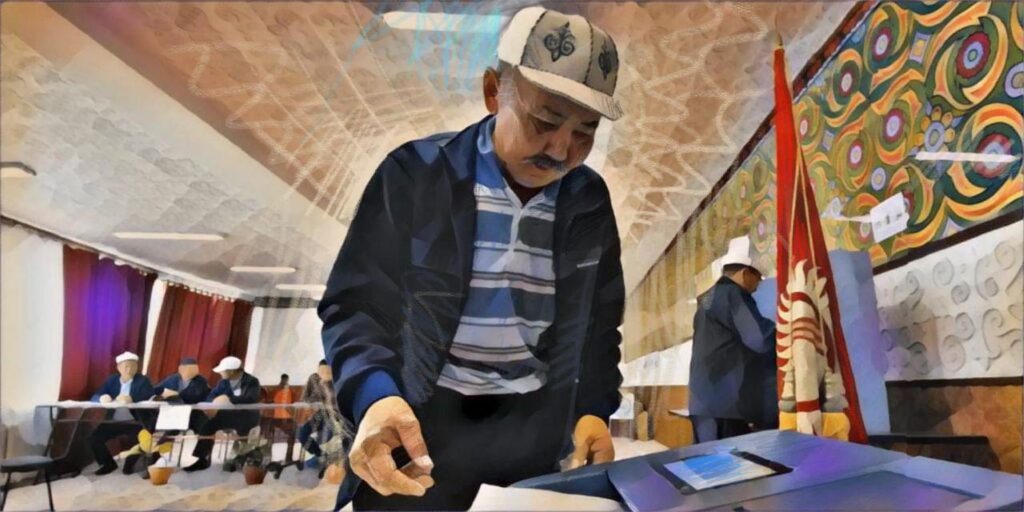
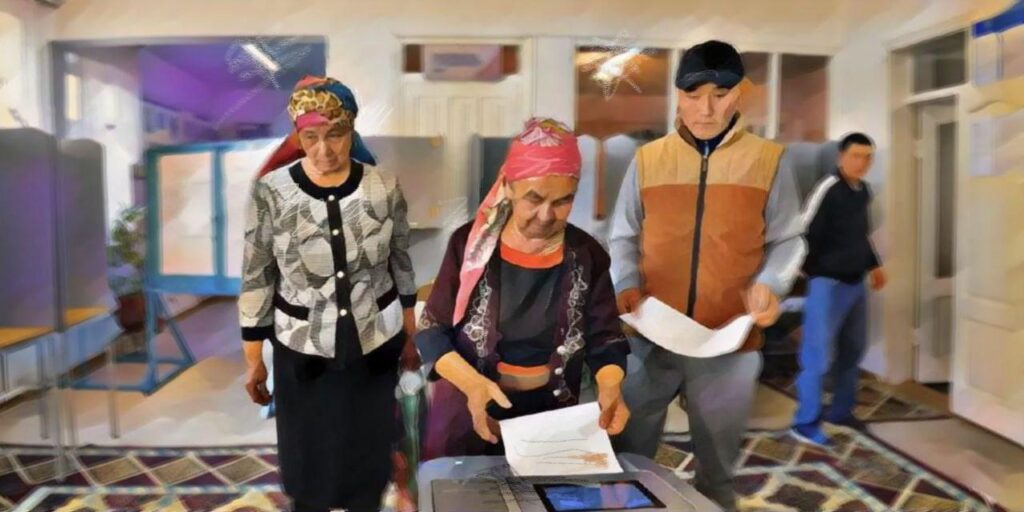
Kyrgyzstan held early parliamentary elections on November 30, with voter turnout reaching 36.9%, according to the Central Election Commission (CEC). Of the 4,294,000 registered voters, more than 1.5 million cast their ballots. Polling stations across the country and abroad closed at 8:00 p.m. local time. While an automated accounting system (AAS) was used during the voting process, Kyrgyz electoral law requires that electronic results be verified against manual counts. Members of precinct commissions conducted manual ballot counts after the polls closed. The CEC reported receiving 269 complaints regarding potential violations of electoral law during the campaign. These included 124 reports of campaign violations, 37 of the dissemination of defamatory information about candidates, eight related to the alleged use of administrative resources, 46 concerning possible vote buying, and 54 involving other types of violations. There were also reports of equipment malfunctions at several polling stations. Nevertheless, the CEC declared the elections valid. Elected candidates began receiving congratulations on December 1. The 2025 early elections marked a significant change in Kyrgyzstan’s electoral process. Party-list voting was fully abolished, and all candidates ran in single-mandate constituencies. President Sadyr Japarov cast his vote in Bishkek. He noted that the fully automated voting process this year significantly reduced opportunities for human interference in election outcomes. Japarov emphasized that citizens could vote using digital passports via the Tunduk app, and biometric registration took only a few minutes. While acknowledging that vote buying remains a challenge, Japarov stated that relevant authorities are responding quickly to any such incidents. He also noted that efforts to ensure the participation of Kyrgyz citizens abroad included doubling the number of overseas polling stations. A total of 100 polling sites were opened internationally, including in Russia, the United States, Kazakhstan, and several European countries.

Arrests of Opposition Politicians in Kyrgyzstan Sparks Outcry Ahead of Elections

On November 22, law enforcement agencies in Kyrgyzstan launched a large-scale special operation, detaining several opposition politicians, their relatives, and media representatives. The actions were carried out under criminal proceedings initiated under Article 278 of the Criminal Code of the Kyrgyz Republic, “Organization of Mass Unrest”. In three cases, the authorities also alleged attempts to “violently seize power” in what has become an increasingly familiar mantra. The scope of the operation and the number of individuals involved have drawn significant public attention. The arrests come just days before the parliamentary elections scheduled for November 30, prompting concerns among observers about the government's approach to managing opposition voices and maintaining stability during the electoral cycle. Official Version According to the Ministry of Internal Affairs, a “destructive group” was preparing to stage mass protests following the announcement of the election results in the Jogorku Kenesh (parliament). The group allegedly included politicians, former deputies, civil servants, and law enforcement officials. Investigators claim the suspects attempted to recruit members of the criminal underworld and sports organizations to provoke violent clashes. The ministry alleges that the planned unrest would start in the south of the country and then spread to Bishkek and other regions, creating an “effect of mass discontent.” The group reportedly operated through a defined structure, with “coordination groups” tasked with articulating political demands and criminal organizations responsible for applying pressure. Some participants allegedly pre-assigned themselves roles in a proposed political configuration. Investigators also claim the group intended to issue “unconstitutional appeals” and possibly seize government buildings, television channels, law enforcement facilities, weapons, and penitentiary institutions. Separately, the Interior Ministry announced the arrest of Social Democratic Party leader Temirlan Sultanbekov and said he had been charged with organizing mass riots. Waves of Searches and Detentions Local media reported that Kadyrbek Atambayev, the son of former President Almazbek Atambayev, and former first lady Raisa Atambayeva were brought in for questioning. Raisa Atambayeva was released later the same day. Former head of the State Service for Combating Economic Crimes, Syimyk Zhapykeyev, was detained in the Issyk-Kul region and transported to Bishkek for questioning before also being released that evening. Searches were conducted at the home of former deputy Shailoobek Atazov, while other prominent figures, including former Deputy Minister of Internal Affairs and ex-MP Kubanychbek Kadyrov, and the former CEO of the April TV channel, Dmitry Lozhnikov, were also questioned. Authorities linked Lozhnikov to the detained politicians. The Interior Ministry stressed that all actions were authorized by court orders and were part of an ongoing investigation into the organization of mass riots. Court Rulings: Arrests and Preventive Detentions On November 23, the Pervomaisky District Court in Bishkek issued preventive detention orders for ten individuals, including Temirlan Sultanbekov, Shailoobek Atazov, Ermek Ermatov, Damir Musakeev, Kadyrbek Atambayev, Kubanychbek Kadyrov, and businessman Urmat Baryktabasov (also known as Askarbekov). The identities of three additional detainees have not been publicly disclosed. Kadyrbek Atambayev has been remanded in custody until January 17, 2026, according to his lawyer Sergei Slesarev, who confirmed that...

Kyrgyzstan Elections 2025: Short Campaign, High Stakes

Campaigning for seats in Kyrgyzstan’s upcoming parliamentary elections is underway, and it is already shaping up to be a race unlike anything seen before in Kyrgyzstan. The 467 candidates competing for the 90 seats in parliament have only 20 days to make their cases to voters in their districts. Kyrgyz President Sadyr Japarov’s government has vowed to keep these elections clean and fair, and threatened severe punishment for those who attempt to cheat in any way. Uneven Electoral Landscape The country is divided into 30 voting districts, and in each district, the three candidates who receive the most votes will win seats. The level of competition varies, depending on the district. Electoral district 11, which is Manas city (formerly Jalal-Abad), has 155,023 eligible voters. Only five candidates are running in the district, three of whom are women. According to new election rules, a woman (or a man) must win at least one of the three seats available in each district. Name recognition is always important, and especially so in elections with many newcomers seeking seats in parliament. One of the candidates in District 11 is Shairbek Tashiyev, the brother of the current head of the State Committee for National Security (GKNB), Kamchybek Tashiyev. He is almost certain to win one of the seats. In electoral district 19 in Kyrgyzstan’s northern Chuy Province, with 138,373 eligible voters, there are 25 candidates competing. The two districts with the largest number of voters, district 15 in the Aksy area of western Kyrgyzstan with 160,218 voters, and district 28 in the Zhety-Oguz area of eastern Kyrgyzstan with 160,181 voters, have, respectively, 15 candidates and 17 candidates. In the districts where there are 15 or more candidates, the three winners might only receive around 10,000 votes, or even less. The candidates are out meeting with voters, but many are relying on social networks to promote their image and spread their message. Domestic television stations, ElTR and UTRK, are airing candidate debates that “will be distributed regionally, depending on the candidates' electoral districts.” Not Running Eleven of the current 90 deputies in parliament have opted not to run for reelection. Among them are Iskhak Masaliyev - currently in the Butun (United) Kyrgyzstan Party but previously the long-time head of Kyrgyzstan’s Communist Party - the son of Absamat Masaliyev, who was first secretary of the Communist Party of the “Kirghizia” Soviet Socialist Republic from 1985 until independence in August 1991. Another current member of parliament who is not running is Jalolidin Nurbayev, whose attempt to register was rejected due to two criminal cases having previously been opened against him, one in 2006, the other in 2021.” A new election rule prohibits people whose cases were “terminated on non-rehabilitating grounds” from being eligible to hold public office. Effectively, this means that any case against them has been closed without declaring the person innocent, but without restoring their reputation, even though they are no longer being prosecuted. Members of organized criminal groups and their family members have won seats...

Kyrgyzstan Election 2025: New Rules, New Map, Same High Stakes

Kyrgyzstan is conducting snap parliamentary elections on November 30. The deadline for would-be candidates to hand in their forms was October 30. Nearly 600 prospective contenders have submitted registration forms to run for the 90 seats in parliament. The Central Election Commission (CEC) now has until November to process candidates’ applications to ensure they meet all the requirements to participate in the upcoming poll. Those who qualify will then have 18 days to convince voters in their districts to cast their ballots for them. The Basics These will be the ninth parliamentary elections held in Kyrgyzstan since the country became independent in late 1991. The reason officials gave for moving elections forward from November 2026 is that the next presidential election is scheduled for January 2027. However, in June 2025, amendments to the electoral system came into effect that changed the voting system and redivided electoral districts, opening the way to hold early elections. Parliament voted to dissolve itself in late September, and shortly after, the date of the forthcoming election was announced. To be eligible to run for a seat in parliament, a Kyrgyz citizen must be at least 25 years old, have a higher education, and have lived continuously in Kyrgyzstan for the last five years. Anyone with a criminal record is barred from participating. In Kyrgyzstan’s parliamentary elections in the 1990s and early 2000s, some prominent opposition figures were convicted of what appeared to be politically motivated charges and imprisoned to prevent them from taking part in elections. This happened to so many opposition politicians that after Kyrgyzstan’s first revolution, the Tulip Revolution of March 2005, a rule was introduced that allowed people with previous convictions to run for office. Now, an exception is made only for those whose convictions were later overturned. What’s New? These elections will be decided through single-mandate voting. That is not new. It was the way Kyrgyzstan’s parliamentary elections were conducted until 2007. The constitutional referendum of October 2007 changed the electoral system and introduced voting by party-list. Then-President Kurmanbek Baliyev formed the Ak-Jol party immediately after the referendum, and the party went on to win more than 60% of seats in parliament in the elections in December 2007. Bakiyev’s attempts to concentrate power into his hands eventually backfired and played a role in his ouster in the revolution of April 2010. Elections continued to be conducted by party list in 2010, 2015, and 2020. However, the elections of 2020 were plagued by allegations of rigging and vote-buying during the campaign, and when two pro-government parties won the majority of seats, it sparked another revolution that saw current President Sadyr Japarov come to power. The deputies elected in 2015 remained in their posts for more than another year. The last parliamentary elections in November 2021 were held using a mixed system, whereby 36 seats were decided by single-mandate voting, and 54 by party lists. President Japarov signed amendments to the election laws in June 2025, one of which was to decide the...