
• KZT/USD = 0.00213
  • TJS/USD = 0.10810
  • UZS/USD = 0.00008
  • TMT/USD = 0.29760
  • KZT/USD = 0.00213
  • TJS/USD = 0.10810
  • UZS/USD = 0.00008
  • TMT/USD = 0.29760
  • KZT/USD = 0.00213
  • TJS/USD = 0.10810
  • UZS/USD = 0.00008
  • TMT/USD = 0.29760
  • KZT/USD = 0.00213
  • TJS/USD = 0.10810
  • UZS/USD = 0.00008
  • TMT/USD = 0.29760
  • KZT/USD = 0.00213
  • TJS/USD = 0.10810
  • UZS/USD = 0.00008
  • TMT/USD = 0.29760
  • KZT/USD = 0.00213
  • TJS/USD = 0.10810
  • UZS/USD = 0.00008
  • TMT/USD = 0.29760
  • KZT/USD = 0.00213
  • TJS/USD = 0.10810
  • UZS/USD = 0.00008
  • TMT/USD = 0.29760
  • KZT/USD = 0.00213
  • TJS/USD = 0.10810
  • UZS/USD = 0.00008
  • TMT/USD = 0.29760
08 August 2026

Viewing results 1 - 6 of 3

Kyrgyzstan and Tajikistan Begin Installing Border Pillars After Completing Border Delimitation

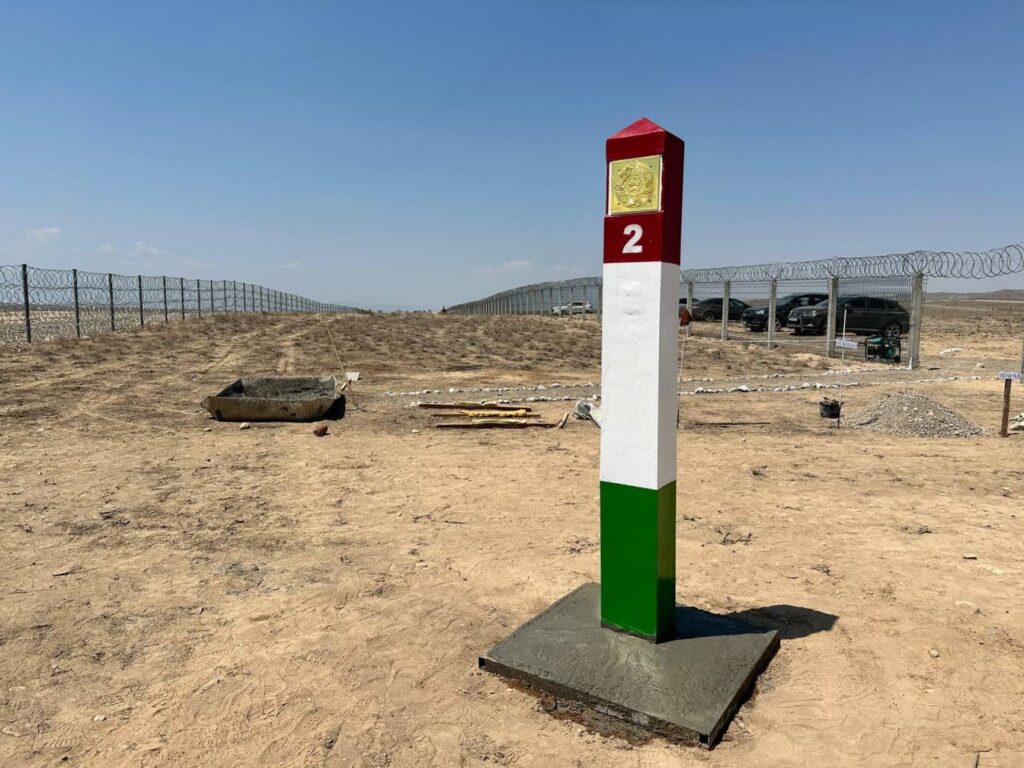
Kyrgyzstan and Tajikistan have begun installing border pillars along their shared frontier, marking the start of the final stage in implementing the landmark border agreement that ended one of Central Asia’s longest-running territorial disputes. On July 14, representatives of the two countries installed the first four border pillars on the section beginning at the tri-junction where the borders of Kyrgyzstan, Tajikistan, and Uzbekistan meet. The Kyrgyz-Tajik border stretches 1,008.14 kilometers, while the total perimeter of neutral territory amounts to 14.07 kilometers. The installation of border markers follows the completion of the border delimitation process, which began in December 2002 and is widely regarded as a historic breakthrough in relations between the two neighboring countries. On March 13, 2025, in Bishkek, Presidents Sadyr Japarov of Kyrgyzstan and Emomali Rahmon of Tajikistan signed the Treaty on the Kyrgyz-Tajik State Border, establishing the legal framework for long-term stability, confidence-building, and sustainable development in border regions. The joint Kyrgyz-Tajik demarcation commission has since carried out field surveys covering approximately 416 kilometers of the border between Kyrgyzstan’s Batken Region and Tajikistan’s Sughd Region. It has identified locations for 1,627 border signs, comprising 1,954 border pillars. Both governments describe the completion of legal border formalization and physical demarcation as a key step toward improving regional security, promoting socioeconomic development in border areas, expanding bilateral cooperation, and deepening relations between the two countries. For decades, the Kyrgyz-Tajik border was one of the most volatile in Central Asia. Disputes rooted in conflicting Soviet-era maps, competition over water resources and pastureland, and the complex geography of enclaves such as Vorukh repeatedly triggered clashes between local communities and security forces. The most serious confrontations occurred in April 2021 and September 2022, when fighting involving heavy artillery and armed drones resulted in military and civilian casualties and forced thousands of residents to flee their homes. The border settlement forms part of efforts by Kyrgyzstan, Tajikistan, and Uzbekistan to resolve territorial disputes inherited after the collapse of the Soviet Union. At a summit in Khujand on March 31, 2025, Presidents Japarov, Rahmon, and Shavkat Mirziyoyev signed an agreement defining the junction point of the three countries’ state borders, formally ending decades of territorial disagreements. The three leaders also inaugurated the Friendship Stele, erected at the point where the three national borders meet as a symbol of reconciliation and a new phase of regional cooperation. As previously reported by The Times of Central Asia, Kyrgyzstan has also proposed establishing the Dostuk, or Friendship, International Trade and Economic Park jointly with Tajikistan and Uzbekistan in the tri-border area. The initiative is expected to boost cross-border trade, attract investment, and create new economic opportunities throughout the Ferghana Valley.
Tajik Entrepreneurs Return to Kyrgyz Markets

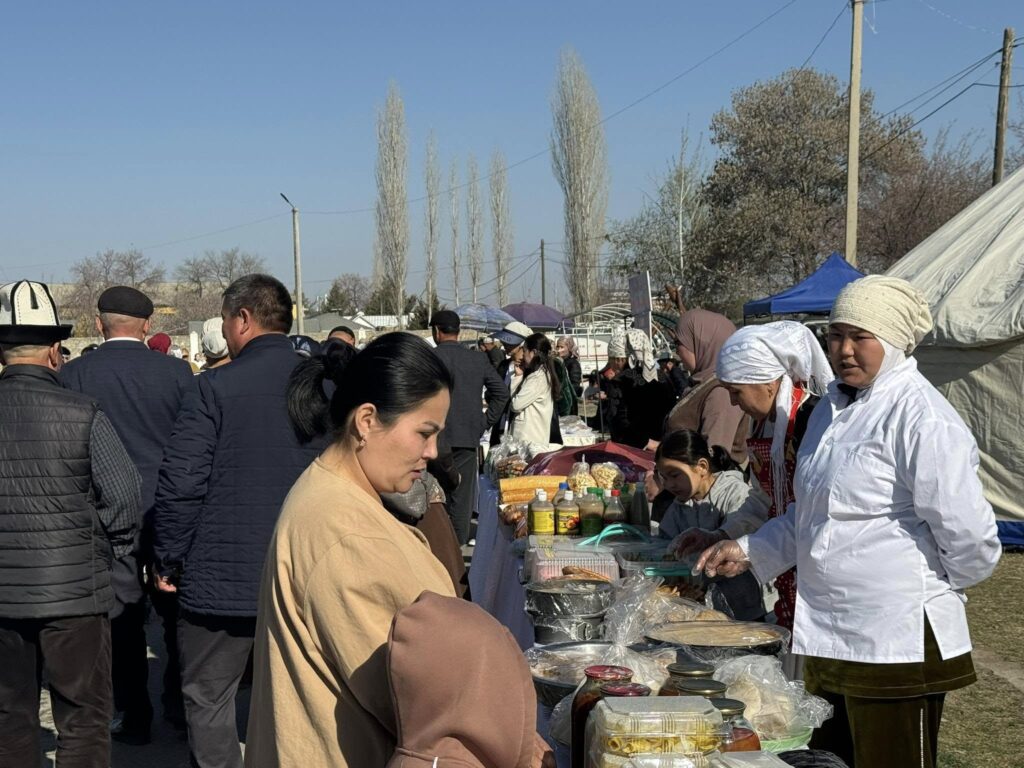
Following the reopening of the Kyrgyz-Tajik border, Tajik entrepreneurs have resumed visits to markets in Batken Oblast, Kyrgyzstan. Local media report that residents are welcoming the return of their southern neighbors​. Once a week, the market in Ak-Turpak village becomes a hub of activity, drawing sellers and buyers from across the region and neighboring countries. A major draw is Batken rice, which resellers purchase in bulk for export to Uzbekistan and Russia. According to local vendors, the market can sell up to 200 tons of rice on a busy day. Rice is cultivated across 3,000 hectares in this border region and remains a vital source of income for many farmers. With the border now open and economic ties restored, buyers from Isfara, Tajikistan, have begun frequenting the Ak-Turpak market, offering a welcome boost to Kyrgyz vendors. As previously reported by The Times of Central Asia, residents of Batken’s border districts also benefit from cross-border trade, often finding it more economical to purchase certain fruits and vegetables in Tajikistan than in Kyrgyzstan’s oblast centers. On March 13, 2025, following the signing of bilateral agreements, the Kairagach and Kyzyl-Bel border checkpoints in Batken Oblast officially reopened. According to Kyrgyzstan’s Border Guard Service, approximately 5,000 people crossed the Kyrgyz-Tajik border between March 13 and 17. An additional 500 individuals crossed by air. Prior to the agreement, all crossings had remained closed since 2021.

Kyrgyzstan and Tajikistan Discuss Border Agreement in Parliament

The head of the State National Security Committee of Kyrgyzstan, Kamchybek Tashiev, has detailed a draft agreement on border delimitation and demarcation with Tajikistan during a speech in the Jogorku Kenesh (parliament) on February 27. He specifically addressed the issue of territorial exchanges, though the Tajik government has yet to issue an official statement on the intergovernmental commission's progress. Parliamentary Review of Border Agreements During a joint session of multiple parliamentary committees, lawmakers reviewed and approved several documents related to the Kyrgyz-Tajik border. The committees involved included: Committee on International Affairs, Defense, Security, and Migration. Committee on Fuel and Energy Complex, Subsoil Use, and Industrial Policy. Committee on Constitutional Legislation, State Structure, Judicial and Legal Issues, and the Rules of Procedure of the Jogorku Kenesh. Committee on Agrarian Policy, Water Resources, Ecology, and Regional Development. Committee on Law and Order, Fight Against Crime, and Anti-Corruption. Committee on Transport, Communications, Architecture, and Construction. Following committee approval, the documents were submitted for full parliamentary review. Key Agreements Under Discussion The reviewed documents included: A draft agreement between Kyrgyzstan and Tajikistan on state border delimitation. A draft agreement on the construction and use of highways and border crossings. A draft agreement between the Kyrgyz Cabinet of Ministers and the Tajik government on access to water and energy facilities. Tashiev, who also serves as Deputy Chairman of the Cabinet of Ministers, led the presentation of these agreements. The decision to hold the joint committee meeting was made earlier on February 27, during a session of the Jogorku Kenesh.
