


Child Labor in Kyrgyzstan: Poverty and Gaps in Enforcement
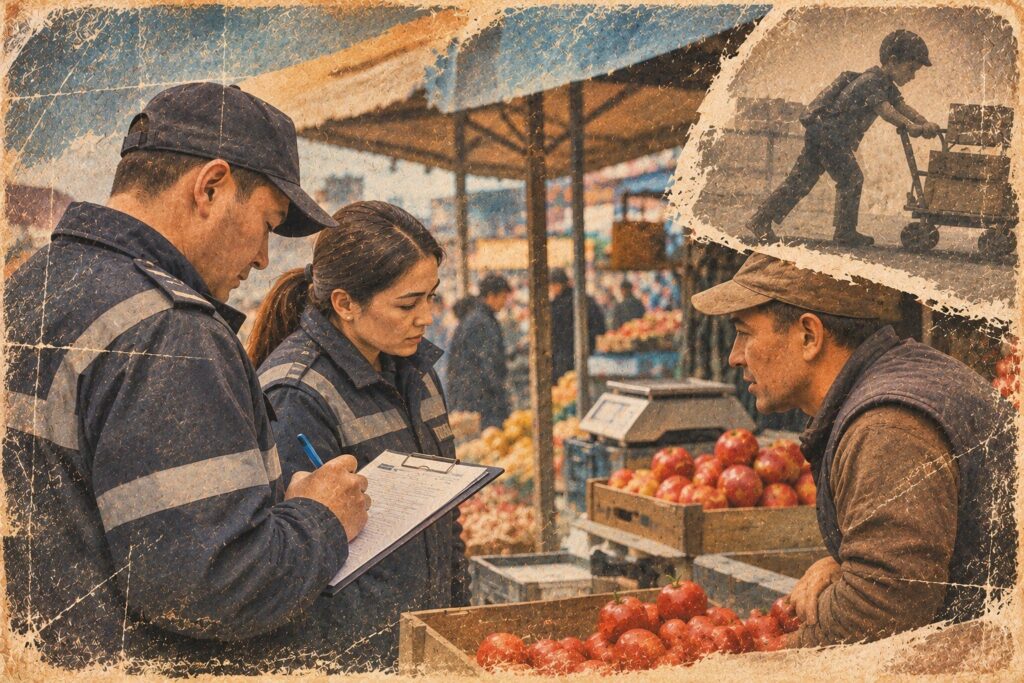
Dozens of children have been found working at markets in the southern Kyrgyz city of Manas, formerly Jalal-Abad. Police officers and social workers spoke to the children’s parents and guardians and issued warnings, Turmush reported on November 2. Nationwide, 19.6% of children aged 5–17 were involved in child labor in 2023, according to a survey conducted by Kyrgyzstan’s National Statistical Committee with support from the United Nations Children’s Fund. Yet the country had just 28 labor inspectors in 2025. Manas is in the Jalal-Abad region, where the survey found one of the country’s highest rates of child labor, at 24%. The figure was 31% in the mountainous Naryn region and 5% in Bishkek. Child Labor and Family Income Children working in Kyrgyzstan's markets may spend their days selling produce or carrying goods for traders. In rural areas, they help with livestock and crop cultivation, including cotton and tobacco. The United States Department of Labor also documents child labor in construction, garment workshops, cafes, and car washes. The survey found that child labor affected 26% of children in the poorest households, compared with 8% in the wealthiest. Boys were more likely to be involved than girls, at 23% versus 16%. Of the 7,200 households sampled, 6,639 were interviewed. The assessment used age-specific thresholds for time spent working or doing household chores. Hazardous working conditions were measured separately and affected 15% of children. Carrying heavy loads was the most common risk, affecting 9%, while other risks included exposure to extreme temperatures or dust and the use of dangerous machinery. Inspections and Legal Gaps Kyrgyzstan's Ministry of Labor, Social Security, and Migration reported in June 2025 that 50 cases involving children in the worst forms of child labor had been recorded in the first three months of that year. This category includes hazardous work as well as exploitation involving forced labor or trafficking. According to inspection figures published by the ministry in February 2026, labor inspectors conducted 1,173 workplace inspections in 2025, identifying 1,885 violations of labor legislation. The ministry did not specify how many involved child labor. The U.S. Department of Labor's 2024 report recommended increasing staffing to 144 inspectors to cover a labor force of approximately 2.9 million people. Using that workforce estimate, the 2025 staffing level amounts to roughly one inspector for every 100,000 workers. The inspectorate's work was restricted for several years by a moratorium on business inspections. The U.S. report said the moratorium was repealed in February 2025, allowing unannounced inspections to resume. However, a new moratorium was introduced in March 2026 and runs through December 31, with exceptions including inspections prompted by complaints. The Labor Code sets the general minimum employment age at 16, with exceptions for younger adolescents. But the U.S. report found that its minimum-age protections did not extend to children working without formal employment contracts. This gap is particularly relevant to family businesses and agriculture, where formal employment relationships are often absent. International Commitments Kyrgyzstan has benefited since 2016 from the European Union's Generalised...
