• KGS/USD = 0.01144 0%
  • KZT/USD = 0.00212 0%
  • TJS/USD = 0.10699 0.19%
  • UZS/USD = 0.00008 0%
  • TMT/USD = 0.28490 0%
  • KGS/USD = 0.01144 0%
  • KZT/USD = 0.00212 0%
  • TJS/USD = 0.10699 0.19%
  • UZS/USD = 0.00008 0%
  • TMT/USD = 0.28490 0%
  • KGS/USD = 0.01144 0%
  • KZT/USD = 0.00212 0%
  • TJS/USD = 0.10699 0.19%
  • UZS/USD = 0.00008 0%
  • TMT/USD = 0.28490 0%
  • KGS/USD = 0.01144 0%
  • KZT/USD = 0.00212 0%
  • TJS/USD = 0.10699 0.19%
  • UZS/USD = 0.00008 0%
  • TMT/USD = 0.28490 0%
  • KGS/USD = 0.01144 0%
  • KZT/USD = 0.00212 0%
  • TJS/USD = 0.10699 0.19%
  • UZS/USD = 0.00008 0%
  • TMT/USD = 0.28490 0%
  • KGS/USD = 0.01144 0%
  • KZT/USD = 0.00212 0%
  • TJS/USD = 0.10699 0.19%
  • UZS/USD = 0.00008 0%
  • TMT/USD = 0.28490 0%
  • KGS/USD = 0.01144 0%
  • KZT/USD = 0.00212 0%
  • TJS/USD = 0.10699 0.19%
  • UZS/USD = 0.00008 0%
  • TMT/USD = 0.28490 0%
  • KGS/USD = 0.01144 0%
  • KZT/USD = 0.00212 0%
  • TJS/USD = 0.10699 0.19%
  • UZS/USD = 0.00008 0%
  • TMT/USD = 0.28490 0%

Viewing results 1 - 6 of 12

Tajikistan to Gain Access to Concessional ADB Loans Starting in 2027

Tajikistan will gain access to concessional loans from the Asian Development Bank (ADB) beginning in 2027, in addition to the grants it already receives, according to Lea Gutierrez, Director General of ADB’s Central and West Asia Department. Currently, Tajikistan receives support exclusively through grant mechanisms provided by the Asian Development Fund. That status is set to change next year. “Starting in 2027, Tajikistan will be classified as an IDA gap country, which means access to concessional lending,” Gutierrez said. The designation applies to countries transitioning from reliance solely on grants to eligibility for low-interest financing. The move is expected to provide Tajikistan with additional financial tools for implementing state programs and infrastructure projects. ADB officials stressed that the bank will continue seeking additional grant resources for Tajikistan, particularly through climate-related and regional financing programs. At the same time, the bank warned of mounting economic risks facing the country. ADB forecasts that inflation in Tajikistan will remain elevated, driven in part by rising utility tariffs. External pressures are also contributing to inflationary risks, including higher global commodity prices, rising logistics costs, and the effects of instability in the Middle East. According to the bank, these factors could affect both food prices and agricultural production. More broadly, ADB estimates that the economies of Central and West Asia grew by 4.6% in 2025, although inflationary pressures across the region remain significant. Among the key risks identified by analysts are rising energy costs, disruptions to trade and logistics, and persistent global uncertainty. Against this backdrop, countries in the region are being advised to maintain cautious macroeconomic policies, continue structural reforms, and support the most vulnerable segments of the population.

Uzbekistan to Borrow $400 Million to Accelerate Agricultural Mechanization

Uzbekistan has approved a plan to attract up to $400 million in foreign loans to finance the purchase of agricultural machinery and equipment, according to a presidential decree signed on March 13. The initiative is intended to increase the level of mechanization in the agricultural sector, with particular emphasis on cotton harvesting. Officials have set a target of achieving a 70% share of machine-assisted cotton picking in 2026, aiming to improve efficiency and reduce labor intensity. Under the decree, commercial banks will distribute foreign credit lines provided under state guarantees to farmers and agricultural enterprises. The loans will have a maturity period of up to 10 years, including a two-year grace period. Interest rates will be set at the Central Bank’s base rate plus a 4% margin charged by participating banks. Payments for cotton and grain harvesters supplied through these preferential loans and leasing arrangements in 2026 will be scheduled twice a year, on January 31 and July 31. Uzbekistan has officially abolished Soviet-era practices of forced labor and eliminated state cotton production quotas in 2020. The government has also cooperated with the International Labour Organization to monitor labor conditions in the sector. In March 2022, the international coalition Cotton Campaign lifted its boycott of Uzbek cotton, citing the elimination of systemic forced labor that had previously prompted more than 330 global brands to avoid sourcing from the country.

Household Debt Persists Despite Lending Slowdown in Kazakhstan

At the start of 2026, Kazakhstan’s financial indicators appear promising: the population is borrowing less, and banks are increasing financing to businesses. Yet behind this macroeconomic optimism lies a more complex picture. The debt burden on citizens has not disappeared; it has simply changed form. While less visible in financial reports, household debt is becoming increasingly evident in everyday family budgets. Two Realities, One Economy Madina Abylkasymova, chair of the Agency for Regulation and Development of the Financial Market, reported to President Kassym-Jomart Tokayev that consumer lending has slowed, while business lending has begun to grow steadily for the first time in three years. Data from the National Bank confirm this trend. In 2024, lending to individuals increased by 23.5%. By the end of 2025, growth had slowed to 17.7%. Business lending, meanwhile, accelerated from 17.9% to 19%. From a macroeconomic perspective, the regulator has met its interim objective: banks are channeling more resources into the productive economy. However, an analysis of second-tier banks’ portfolios suggests that a fundamental imbalance persists. Excluding development institutions and the quasi-public sector, end-of-year data show household debt to commercial banks at $55.1 billion, compared with business debt of 15.4 trillion tenge, or approximately $34.2 billion. The resulting $22.2 billion gap points to a structural issue: individuals remain the primary source of income for major private banks, including Halyk Bank, Kaspi Bank, and Bank CenterCredit (BCC), while the real sector continues to be underfinanced by market-based institutions. Shift to Installment Plans In 2025, under pressure from regulators, banks tightened lending standards for consumer loans. Traditional cash loan issuance slowed significantly. Despite this, total household debt continued to grow. According to the National Bank, the consumer loan portfolio expanded by KZT 2 trillion in the first half of 2025, reaching $55.1 billion by year’s end. This growth was driven not by large loans but by installment plans and Buy Now, Pay Later (BNPL) services. The number of loan contracts is rising much faster than the number of borrowers, a classic sign of demand fragmentation. Instead of a single large loan, citizens are taking out multiple small loans for food, clothing, and everyday necessities. This reflects declining purchasing power. Inflation reached 12.3% by the end of the year, with food prices rising 13.5%. At the same time, official data shows real incomes fell by 2%. Installment plans, once used primarily to purchase durable goods, are increasingly being used to “make ends meet.” Statistically, this appears as a reduction in average loan size and risk exposure. In reality, it points to growing debt dependency among households. Why the Bankruptcy Law Has Fallen Short The 2023 law on restoring personal solvency and bankruptcy was designed to address over-indebtedness structurally. But by early 2026, it was clear the system was functioning unevenly. Data from 2025 reveals the scale of rejections. Of more than 270,000 submitted applications, only about 34,000, just 12%, were approved. Approximately 87% of applicants received official denials. The main reason lies in strict eligibility criteria. For out-of-court...

ADB Provides Tajik Bank with First Direct Loan of $10 Million

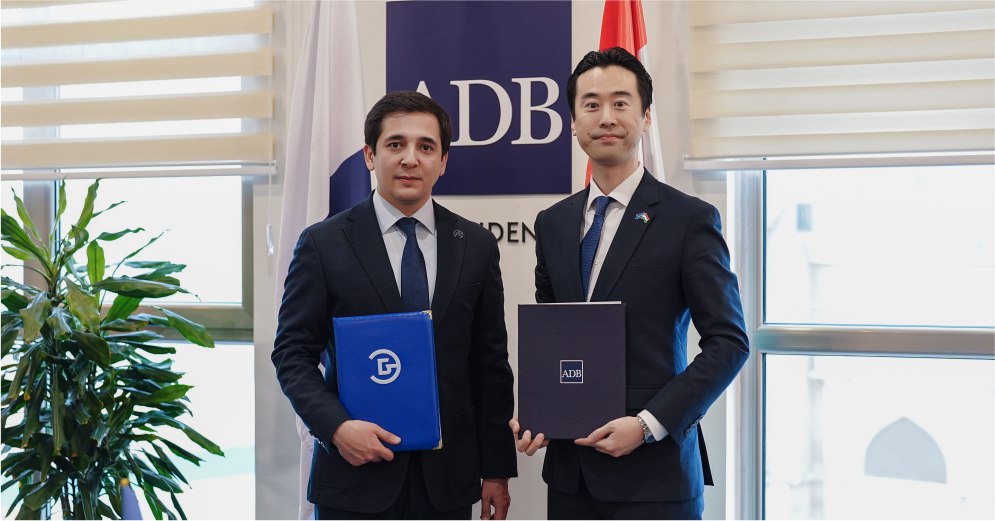
Bank Eskhata OJSC (Open Joint-Stock Company) and the Asian Development Bank (ADB) have signed a direct lending agreement, marking a new stage in financing for small and medium-sized enterprises (SMEs) in Tajikistan. This is the first time the ADB has issued a direct loan to a Tajik bank, bypassing intermediary financial institutions. The ADB stated that the format reflects a high level of trust in the partner bank and confidence in its stability within the national financial market. Tajikistan has been a member of the ADB since 1998. Under the terms of the agreement, the ADB is providing a loan in local currency equivalent to $10 million. The funds are intended to support entrepreneurs implementing environmentally friendly and energy-efficient technologies, as well as projects that reduce environmental impact and contribute to building a sustainable economy. Akmaljon Saifidinov, CEO of Bank Eskhata, described the agreement as strategically important. “We are honored to be the first financial institution in Tajikistan to receive direct lending from the ADB. This landmark event opens new horizons for supporting MSMEs and advancing green finance,” he said, referring to micro, small, and medium-sized enterprises. He added that the partnership with the ADB further strengthens the bank’s role as a leader in innovative financial solutions. The ADB expects the direct lending mechanism to significantly improve access to financing for businesses. “Direct lending will significantly expand enterprises’ access to financing and serve as a key stimulus for the development of green initiatives in Tajikistan,” said Ko Sakamoto, head of the ADB office in Dushanbe. The loan is expected to support projects in energy efficiency, green technologies, and sustainable business models, areas that have traditionally lacked access to long-term financing. In a separate initiative, the ADB recently approved a $3 million grant to enhance Tajikistan’s capacity for glacier monitoring and natural disaster forecasting.  The project includes the creation of a unified digital system for analyzing risks related to snow and ice melt and aims to improve public safety in mountainous regions.