
• KGS/USD = 0.01143 0%
  • KZT/USD = 0.00213 0%
  • TJS/USD = 0.10593 0.47%
  • UZS/USD = 0.00008 0%
  • TMT/USD = 0.28571 0%
  • KGS/USD = 0.01143 0%
  • KZT/USD = 0.00213 0%
  • TJS/USD = 0.10593 0.47%
  • UZS/USD = 0.00008 0%
  • TMT/USD = 0.28571 0%
  • KGS/USD = 0.01143 0%
  • KZT/USD = 0.00213 0%
  • TJS/USD = 0.10593 0.47%
  • UZS/USD = 0.00008 0%
  • TMT/USD = 0.28571 0%
  • KGS/USD = 0.01143 0%
  • KZT/USD = 0.00213 0%
  • TJS/USD = 0.10593 0.47%
  • UZS/USD = 0.00008 0%
  • TMT/USD = 0.28571 0%
  • KGS/USD = 0.01143 0%
  • KZT/USD = 0.00213 0%
  • TJS/USD = 0.10593 0.47%
  • UZS/USD = 0.00008 0%
  • TMT/USD = 0.28571 0%
  • KGS/USD = 0.01143 0%
  • KZT/USD = 0.00213 0%
  • TJS/USD = 0.10593 0.47%
  • UZS/USD = 0.00008 0%
  • TMT/USD = 0.28571 0%
  • KGS/USD = 0.01143 0%
  • KZT/USD = 0.00213 0%
  • TJS/USD = 0.10593 0.47%
  • UZS/USD = 0.00008 0%
  • TMT/USD = 0.28571 0%
  • KGS/USD = 0.01143 0%
  • KZT/USD = 0.00213 0%
  • TJS/USD = 0.10593 0.47%
  • UZS/USD = 0.00008 0%
  • TMT/USD = 0.28571 0%

Viewing results 1 - 6 of 5

Large Families in Kazakhstan Are Cutting Back on Food

A new study by analysts at Finprom.kz highlights a concerning trend: in Kazakhstan, food consumption declines as the number of children in a household increases, while the gap between low- and high-income families continues to widen. Drawing on data from the National Statistics Bureau for the fourth quarter of last year, the analysts found a clear pattern: per capita food consumption decreases as family size grows. In households with one child, per capita consumption of meat and meat products stands at 21.8 kg per quarter. In families with four children, this figure falls to 14.8 kg, roughly one-third lower. A similar pattern is evident across other food categories. In larger families, fish consumption is 33.4% lower, dairy products 26.4% lower, fruit 26% lower, and confectionery 22.8% lower. In households with five or more children, the disparities are even more pronounced. Year-on-year data show that the situation is deteriorating in families with four children, where consumption of staple foods continues to decline. Meat consumption fell by 3.2% (around 0.5 kg per person), fish by 5.6%, dairy products by 2%, and potatoes by 7.6%. By contrast, average consumption across Kazakhstan has not declined. On the contrary, overall food intake has increased slightly, suggesting that the negative trend is concentrated among larger, lower-income households. The disparity is particularly stark when comparing the wealthiest 10% of households with the poorest 10%. In the fourth quarter of last year, higher-income households increased consumption across most categories: meat by 3.8%, dairy products by 1.8%, eggs by 6%, and vegetables by 3.4%. Consumption of higher-cost items also rose, including fish and seafood (up 8%), oils and fats (up 10.8%), and confectionery (up 11.9%). In contrast, low-income households reduced consumption in several categories during the fourth quarter of 2025: fish and seafood fell by 11.9%, vegetable oils by 11.3%, and bread and cereals by 4.3%. Modest increases in some items, such as dairy products and eggs, did not offset the overall decline. Meat consumption illustrates the disparity most clearly. In higher-income households, per capita consumption rose from just over 25 kg to around 30 kg per quarter. In low-income households, it remains at approximately 10 kg. For comparison, the recommended daily intake for adults is about 150 grams, or roughly 18 kg per quarter. This suggests that lower-income groups consume significantly less than recommended levels. Overall, the gap between affluent and low-income households is substantial: nearly threefold for meat consumption, 2.4 times for dairy products, and 18.8% for bread and cereals.

The Income Gap Between Rich and Poor Kazakhs Is Widening

Analysts at Ranking.kz note that the income gap in Kazakhstan has remained consistently high in recent years. According to the National Statistics Bureau (NSB), from 2019 to 2023, the incomes of the poorest 10% and the wealthiest 10% of Kazakhstani citizens differed by an average factor of 5.9 to 6. In 2024, the gap reached a record high of 6.2 times. Who Are the Poor and Who Are the Rich? The NSB divides the population into ten equal income groups, or deciles. Formally, not only the bottom 10% can be classified as poor, but also the four adjacent deciles. Their average per capita income does not even reach the minimum monthly wage of 85,000 KZT ($157). Collectively, this bottom half of the population receives only 30.2% of the country’s total income. At the other end of the spectrum, the wealthiest 10% account for 24.1% of total income. This group includes individuals with monthly incomes ranging from 181,300 KZT ($336) to 1.6 million KZT ($2,963). However, this wide income range also includes many middle-class earners. Only a small fraction are truly wealthy. Salaried Employees: Who Earns What Among salaried employees (excluding the self-employed and those working in small businesses), income disparities remain stark. In 2024: 3.3% of employees (112,100 people) earned over 1 million KZT ($1,852) per month. 6.1% (210,600 people) earned less than 100,000 KZT ($185). The largest share of employees fell into the following income brackets: 100,000-200,000 KZT ($185-370) - 23.9% 200,000-300,000 KZT ($370-555) - 23.2% High salaries are more prevalent in sectors with higher nominal wages: Finance and insurance - 13.9% of employees earned over 1 million KZT Information and communications - 12.6% Professional, scientific, and technical fields - 10.1% Among civil servants, only 0.7% earn this amount. Meanwhile, low-wage earners (earning under 100,000 KZT) are most concentrated in: Administrative and support services - 18.4% Agriculture - 12.2% Across most industries, the most common salary level is between 200,000 and 400,000 KZT ($370-740). Regional Disparities Unsurprisingly, the highest concentration of “salary millionaires” is found in Kazakhstan’s oil-producing regions: Mangistau - 14.5% Atyrau - 11.5% In major cities, the numbers are more modest: Almaty - 6% Astana - 4.8% The regions with the lowest share of low-paid workers (earning under 100,000 KZT) are: Turkestan - 11.1% North Kazakhstan - 10.3% Zhambyl - 10% However, the Turkestan region remains one of the most economically vulnerable: in the first quarter of 2025, 8.1% of its population lived below the subsistence level, compared to the national average of 4.5%. More than 175,000 families survive on an income of just 52,500 KZT ($97) per person. Spending Patterns: Common Ground and Divergence Income inequality is also reflected in spending patterns. Despite the income gap, both poor and relatively affluent citizens spend a disproportionate share of their budgets on food. The lowest-income group spends 60.6% on food, while the wealthiest decile still spends 51.7%. For comparison, in developed European countries, the average is just 8-12%. However, differences become clearer in other spending categories. Wealthier citizens...

In Kyrgyzstan, 13,000 Low-Income Families Receive Funds to Launch Businesses

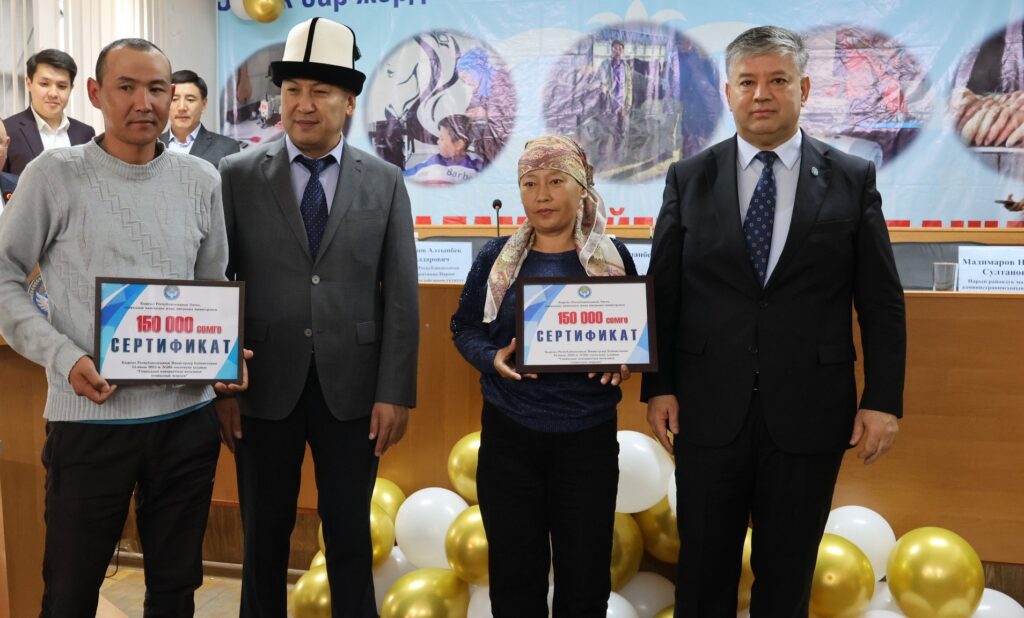
Over the past two years, 13,333 families in Kyrgyzstan living below the subsistence level have signed social contracts with the state. Through this initiative, each family received an interest-free loan of $1,700 to start a small business. According to the Ministry of Labor, the social contract program is designed to help families break the cycle of poverty by providing both start-up capital and practical support. Recipients use the funds to establish businesses, engage in subsistence farming, or purchase tools and equipment. In addition to financial assistance, the program offers training and consulting in sustainable agriculture and income-generating practices. How the Program Works Participants can use the funds to acquire equipment, materials, and other business essentials. The initiative has supported the creation of sewing workshops, food production facilities, apiaries, and small-scale poultry farms. Many recipients now produce honey, natural juices, felt goods, and meat products. The program is open to both new ventures and the expansion of existing microbusinesses. Specially trained consultants guide participants through the process of launching and managing their businesses, helping to increase long-term viability. Results and Regional Reach Although the social contract program was launched five years ago, its most significant impact has been seen in the past two years. More than 13,000 families have become self-sufficient and no longer require government aid. The majority of successful projects have emerged in Kyrgyzstan’s southern provinces, particularly Jalal-Abad and Osh, where rural entrepreneurship has rapidly expanded. Government data indicates that over 280 different products have been developed through the program. While most are sold domestically, a small number are now being exported abroad. This social contract initiative is a cornerstone of the government’s strategy to combat poverty and promote self-employment. Authorities emphasize its role in stimulating economic activity in rural areas and encouraging entrepreneurship among vulnerable populations.
