
• KGS/USD = 0.01144 0%
  • KZT/USD = 0.00203 0%
  • TJS/USD = 0.10448 -0.19%
  • UZS/USD = 0.00008 0%
  • TMT/USD = 0.28490 0%
  • KGS/USD = 0.01144 0%
  • KZT/USD = 0.00203 0%
  • TJS/USD = 0.10448 -0.19%
  • UZS/USD = 0.00008 0%
  • TMT/USD = 0.28490 0%
  • KGS/USD = 0.01144 0%
  • KZT/USD = 0.00203 0%
  • TJS/USD = 0.10448 -0.19%
  • UZS/USD = 0.00008 0%
  • TMT/USD = 0.28490 0%
  • KGS/USD = 0.01144 0%
  • KZT/USD = 0.00203 0%
  • TJS/USD = 0.10448 -0.19%
  • UZS/USD = 0.00008 0%
  • TMT/USD = 0.28490 0%
  • KGS/USD = 0.01144 0%
  • KZT/USD = 0.00203 0%
  • TJS/USD = 0.10448 -0.19%
  • UZS/USD = 0.00008 0%
  • TMT/USD = 0.28490 0%
  • KGS/USD = 0.01144 0%
  • KZT/USD = 0.00203 0%
  • TJS/USD = 0.10448 -0.19%
  • UZS/USD = 0.00008 0%
  • TMT/USD = 0.28490 0%
  • KGS/USD = 0.01144 0%
  • KZT/USD = 0.00203 0%
  • TJS/USD = 0.10448 -0.19%
  • UZS/USD = 0.00008 0%
  • TMT/USD = 0.28490 0%
  • KGS/USD = 0.01144 0%
  • KZT/USD = 0.00203 0%
  • TJS/USD = 0.10448 -0.19%
  • UZS/USD = 0.00008 0%
  • TMT/USD = 0.28490 0%

Viewing results 1 - 6 of 3

Environmentalists Urge Relocation of Hyrasia One Green Hydrogen Project

Kazakhstan’s Ministry of Ecology and Natural Resources is facing growing pressure from environmental experts to alter the course of the country's flagship green hydrogen initiative. The Public Council under the Ministry has recommended relocating key infrastructure of the €50 billion ($55 billion) Hyrasia One project, citing threats to biodiversity in the Mangistau region. Developed by the Swedish-German company Svevind Energy Group, Hyrasia One is poised to become Kazakhstan’s largest green hydrogen production facility, with plans to generate up to two million tonnes annually by 2030 using solar and wind power. But environmental groups argue that parts of the planned development risk causing irreversible ecological damage. In an official statement, the Public Council advised that the proposed “Rahim” and “Kanagat” renewable energy clusters be relocated to previously industrialized zones, such as former oil and gas fields, rather than pristine ecosystems home to endangered species. “It would be more practical for the company as well, as such territories already have existing infrastructure, including roads, power lines, and cellular coverage,” the council noted in its published protocol. Ecologists warn that the current project layout intersects with the habitat and migratory routes of the goitered gazelle, a species listed in Kazakhstan’s Red Book of endangered fauna. The installation of wind turbines, solar panels, roads, and transmission lines in these areas could fragment ecosystems and disrupt transboundary conservation initiatives involving Kazakhstan, Uzbekistan, and Turkmenistan. The development risks affecting several protected areas, including the Ustyurt Nature Reserve (and its proposed “Southern Ustyurt” extension), Kyzylsai Nature Park in Kazakhstan, Uzbekistan’s “South Ustyurt” National Park, and Turkmenistan’s Gaplangyr Reserve, home to the Sarykamysh and Shasenem wildlife sanctuaries. Council members also raised legal and procedural issues, alleging that land allocations for the project were made without proper legal oversight and that public consultations during the environmental impact assessment (EIA) process were inadequate. They further claim that Hyrasia One representatives have declined to attend two separate council sessions dedicated to the project. The council has formally submitted its findings and relocation proposal to the Presidential Administration, the Government of Kazakhstan, and regional authorities in Mangystau. As previously reported by The Times of Central Asia, Hyrasia One is central to Kazakhstan’s ambitions to become a key exporter of green energy to the European Union. The project may also benefit from emerging energy cooperation with China, further raising the stakes for its execution and environmental impact.

Another Suspected Drone Discovered in Kazakhstan’s Mangistau Region

On June 19, fragments of a suspicious object resembling an unmanned aerial vehicle (UAV) were discovered in the Karakiyan district of Kazakhstan’s Mangistau Region, near the Bolashak border station. According to the Mangistau Region Police Department, the UAV debris was found in a remote area, far from populated settlements. Authorities emphasized that "no damage" was reported. The incident is currently under investigation in cooperation with the relevant agencies. Potential Iranian Link Suggested While officials have not confirmed the origin or type of the device, speculation is growing. The KazTAG news agency reported that the shape of the debris may resemble that of an Iranian Shahed-136 drone. These drones have been reportedly supplied by Iran to Russia since late 2022 and used extensively in the war in Ukraine. According to independent sources, Russia may have paid Iran approximately 1.8 tons of gold, worth around $104 million, for a consignment of Shahed-136 drones. Despite denials from both Moscow and Tehran, the drones' deployment in Ukraine has been documented by independent journalists and military experts. Meanwhile, pro-Kremlin sources have speculated that it could be a British Banshee drone used by the Ukrainian Armed Forces. [caption id="attachment_33143" align="aligncenter" width="1280"] Image: TCA[/caption] Pattern Emerges Along Western Border This is not an isolated occurrence. Since early 2024, at least three similar incidents have been recorded in the West Kazakhstan Region (WKR). UAVs or drone parts were discovered in the villages of Ualy (February 18), Atameken (March 18), and Zhanibek (March 25). Regional media have noted that some of the discovered objects bear a resemblance to French-made Crecerelle reconnaissance drones, produced by Sagem. However, no official conclusions have been issued. Broader Security Implications The repeated discovery of drone-like objects in Kazakhstan raises broader security concerns, particularly given the proximity of Russian regions frequently targeted by Ukrainian drones. Strategic installations in Russia’s Saratov region, including airfields and oil depots, have been hit multiple times. In this context, the unexplained appearance of aerial objects near Kazakhstan’s borders is concerning. Experts stress the need for transparent investigations and enhanced monitoring of airspace, especially near critical infrastructure and transportation corridors. Kazakhstan’s Ministry of Defense previously stated that UAV fragments found in February and March 2025 may have originated from activities at Russia’s 929th State Flight Test Center, located near the Kazakh border. The facility, named after Chkalov, is used by the Russian Ministry of Defense for testing military aircraft.

Kazakhstan to Build $1.35 Billion Fertilizer Plant in Mangistau

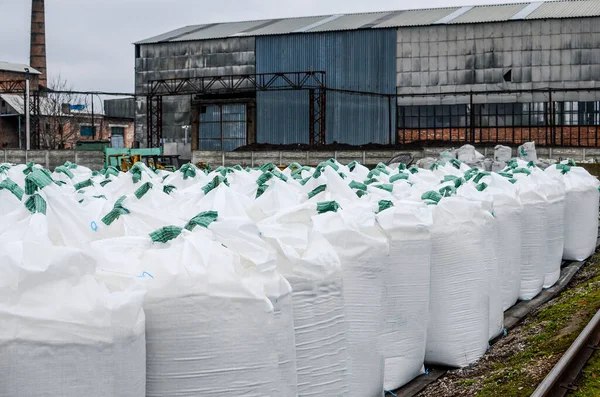
Kazakhstan will begin construction of a major fertilizer plant valued at $1.35 billion, under an investment agreement recently approved by the government. The project aims to boost domestic fertilizer production and reduce the country’s reliance on imports. Strategic Industrial Partnership The facility will be built in the Mangistau region under a joint venture between Kazakhstan’s national gas company QazaqGaz and Turkish construction firm ESTA Construction. The new company, Qazesta Fertilizers Ltd., will oversee the project, which is expected to benefit from Mangistau’s favorable logistics for export across the Caspian Sea. The plant is designed to produce up to 700,000 tonnes of urea and 42,000 tonnes of ammonia annually. Construction is scheduled to take three and a half years, creating an estimated 3,000 jobs during the building phase and 400 permanent positions upon completion. Officials say the project will support the development of Kazakhstan’s gas chemical industry and contribute to import substitution. Currently, the country produces three types of fertilizers, ammonium nitrate, ammophos, and ammonium sulfate, but domestic output meets only half of the 3.2 million tonnes required to satisfy national demand. Challenges in Fertilizer Use and Production Kazakhstan’s limited fertilizer use has drawn concern from analysts. According to Energyprom.kz, citing UN Food and Agriculture Organization (FAO) data, nitrogen fertilizer application has not exceeded 4.0 kg per hectare since 2000, and dropped to just 2.4 kg in 2022. In contrast, Uzbekistan applied 187.2 kg per hectare that year, while Russia applied 17.6 kg. Phosphate fertilizer usage in Kazakhstan was similarly low at 1.33 kg per hectare, compared to 5.91 kg in Russia. Domestic fertilizer production also declined in 2024. Total output fell by 9.3% to 367,500 tonnes. Production of nitrogen fertilizers dropped by 11.4% to 345,500 tonnes, while phosphate fertilizer output rose by 47.1% to 22,000 tonnes. Despite the gains, national supply still lags behind farmers’ needs. Import Dependency and Export Growth Kazakhstan remains dependent on foreign supplies of nitrogen fertilizers, with imports accounting for 57.8% of the market. In 2024, imports rose by 7.3% to 472,300 tonnes. Meanwhile, exports of nitrogen fertilizers nearly doubled to 214,400 tonnes. Phosphate fertilizers, however, are largely produced domestically, with imports making up just 1.2% of supply. Kazakhstan’s largest fertilizer export destinations in 2024 included Brazil (187,600 tonnes), Poland (92,500 tonnes), Ukraine (87,600 tonnes), and Russia (67,400 tonnes). However, declining global prices led to a 13.5% drop in export revenue, despite only a 1.1% decrease in volume. Global Market Dynamics Geopolitical factors continue to shape global fertilizer markets. Sanctions imposed on Russia and Belarus in 2022 initially triggered shortages and price spikes, although some restrictions were later eased to mitigate food security risks. In 2024, U.S. imports of Russian fertilizers rose by 20% to $85.5 million. At the same time, the European Union is weighing new duties on fertilizer imports from Russia and Belarus, a move that has drawn criticism from European agricultural associations concerned about rising input costs. In this shifting global context, Kazakhstan’s expanded fertilizer capacity could enhance its role as a regional...
