
• KGS/USD = 0.01144 0%
  • KZT/USD = 0.00202 0%
  • TJS/USD = 0.10448 -0.19%
  • UZS/USD = 0.00008 0%
  • TMT/USD = 0.28490 0%
  • KGS/USD = 0.01144 0%
  • KZT/USD = 0.00202 0%
  • TJS/USD = 0.10448 -0.19%
  • UZS/USD = 0.00008 0%
  • TMT/USD = 0.28490 0%
  • KGS/USD = 0.01144 0%
  • KZT/USD = 0.00202 0%
  • TJS/USD = 0.10448 -0.19%
  • UZS/USD = 0.00008 0%
  • TMT/USD = 0.28490 0%
  • KGS/USD = 0.01144 0%
  • KZT/USD = 0.00202 0%
  • TJS/USD = 0.10448 -0.19%
  • UZS/USD = 0.00008 0%
  • TMT/USD = 0.28490 0%
  • KGS/USD = 0.01144 0%
  • KZT/USD = 0.00202 0%
  • TJS/USD = 0.10448 -0.19%
  • UZS/USD = 0.00008 0%
  • TMT/USD = 0.28490 0%
  • KGS/USD = 0.01144 0%
  • KZT/USD = 0.00202 0%
  • TJS/USD = 0.10448 -0.19%
  • UZS/USD = 0.00008 0%
  • TMT/USD = 0.28490 0%
  • KGS/USD = 0.01144 0%
  • KZT/USD = 0.00202 0%
  • TJS/USD = 0.10448 -0.19%
  • UZS/USD = 0.00008 0%
  • TMT/USD = 0.28490 0%
  • KGS/USD = 0.01144 0%
  • KZT/USD = 0.00202 0%
  • TJS/USD = 0.10448 -0.19%
  • UZS/USD = 0.00008 0%
  • TMT/USD = 0.28490 0%

Viewing results 1 - 6 of 11

On the Eve of Valentine’s Day: Customs of Love and Marriage in Central Asia

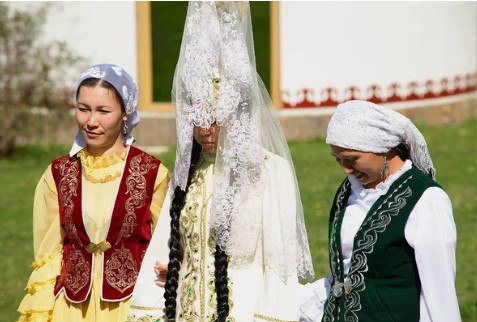
On the eve of Valentine’s Day, Central Asia is once again debating whether to celebrate the holiday or regard it as a symbol of foreign influence. Yet the region has its own rich and diverse customs related to love, matchmaking, and marriage. Accusations of Alien Influence and “Corruption” Valentine’s Day, like Halloween, spread to the former Soviet republics after the collapse of the USSR. In the first decades, young people embraced the new holidays. In recent years, however, critics have increasingly argued that commemorating a Catholic saint in a format centered on romantic love contradicts the traditions of the region’s peoples. For example, in Kazakhstan last year, deputies of the Mazhilis, the lower house of parliament, sharply criticized Valentine’s Day. Some deputies argued that it corrupts young people, promotes “free love,” and even carries “homosexual overtones.”  It is worth noting that Kazakhstan recently adopted legislation prohibiting so-called “propaganda of non-traditional sexual relations.” The Spiritual Administration of Muslims of Kazakhstan has also stated that Valentine’s Day promotes alien values and encourages promiscuity. Gratitude for Raising a Daughter Many matchmaking and marriage customs remain common across Central Asia, particularly the significant role of the bride’s and groom’s parents in ceremonies and celebrations. While traditions have evolved, many are still practiced in modern engagements and weddings. The well-known custom of paying bride price, kalym, has been preserved, though it has undergone significant change. Today, kalym varies depending on the wealth of the families. It may include apartments or cars, or it may amount to several hundred dollars. Importantly, kalym is now generally regarded as financial support for the young family and, as a rule, remains at the disposal of the bride and groom. Historically, in Kazakhstan and Kyrgyzstan, kalym was paid in livestock, and wedding celebrations could last more than a month.  One of the main Kazakh wedding rituals is the groom’s visit to the bride’s village or, in modern practice, her home. Before his first visit, the groom sends gifts to the bride’s family, known as Ilu,  an expression of gratitude for raising their daughter. In some regions of Kazakhstan, this ritual is called ana suty (“mother’s milk payment”). In the past, it included horses, camels, sheep, and riding equipment for the bride’s father. Today, it may consist of any valuable gift, and jewelry is often presented to the women in the bride’s family. The bride traditionally gives the groom a scarf as a symbol of her purity. Festivities then begin, with singing and dancing. Kazakh traditions often involve two weddings: one at the bride’s home and one at the groom’s. The bride’s farewell from her family home remains especially significant, reflecting her relatives’ wishes for her future life. Today, this ceremony is often held in a restaurant. The bride does not wear a white wedding dress at the farewell celebration but appears in an elegant outfit and a traditional headdress known as a saukele. During the farewell, the groom and his friends are subjected to playful pranks, for which they must...

Uzbekistan Proposes Ban on Marriages Between Relatives

Uzbekistan’s Ministry of Justice has drafted legislation that would ban marriages between distant blood relatives, including unions between uncles and nieces, aunts and nephews, and cousins up to the third degree, UzNews.uz reported. The proposed penalties for violating the ban include fines or correctional labor of up to two years. Exceptions would apply only in cases where one of the prospective spouses is an adopted child and no biological relationship exists. Under current law, Uzbekistan’s Family Code prohibits marriages between close blood relatives in a direct ascending or descending line, as well as between full and half-siblings and between adoptive parents and adopted children. The proposal follows alarming findings from a recent study highlighting the genetic risks associated with consanguineous marriages. According to Zamin.uz, researchers from the Center for Advanced Technologies have identified dozens of new genetic mutations in Uzbek individuals. The study revealed that every second child tested carried a hereditary mutation, and nearly 86% of children were found to be carriers of at least one damaged gene, twice the international average. Researchers attribute this trend to the high prevalence of kinship marriages, which in some Uzbek regions account for roughly one-quarter of all unions. Experts warn that these genetic anomalies not only increase the likelihood of hereditary disorders but also elevate the risks of diabetes, cardiovascular conditions, and cancer. The study's authors strongly recommend introducing genetic testing for couples prior to marriage as a public health measure.

Kazakhstan Criminalizes Forced Marriage in Landmark Legal Reform

Kazakhstan has introduced criminal liability for forced marriage for the first time, following the adoption of significant amendments to the country’s criminal legislation. Effective September 16, the reforms formally recognize coercion into marriage as a criminal offense. Penalties range from fines of up to $14,500 and corrective labor, to prison terms of up to 10 years in cases involving serious consequences. “These changes to criminal law are aimed at strengthening the protection of citizens' rights and freedoms,” the Ministry of Internal Affairs said in a statement. The legislation, titled On Amendments and Additions to Certain Legislative Acts on the Optimization of Criminal Legislation, also eliminates a loophole in Article 125 of the Criminal Code. Previously, individuals who voluntarily released a kidnapped person could avoid prosecution. That exemption has now been revoked. A new provision, Article 125-1, Coercion to Marry, has been introduced, criminalizing marriages entered into under duress or physical coercion. Penalties are more severe when the victim is a minor, when the crime is committed by a group, or when the perpetrator abuses an official position. Targeting Bride Kidnapping Practices The amendments aim in part to curb the persistent tradition of alyp qashu, the abduction of girls for the purpose of forced marriage. Despite its legal status as a crime, the practice still occurs in parts of the country. Human rights activists have highlighted that alyp qashu often involves physical and psychological abuse, with victims subjected to family pressure. Many are told that refusing to marry would bring shame or misfortune to their relatives. The psychological toll can be profound, leading to anxiety, depression, panic attacks, and social withdrawal. On July 16, President Kassym-Jomart Tokayev signed into law the specific criminalization of bride kidnapping. The Mangistau Region Prosecutor’s Office emphasized the importance of consent, stating: “Coercion into marriage is the conclusion of a marriage against a person's will through pressure or violence. Such an act is a gross violation of human rights.” The office also stressed that: “Kidnapping a girl without her consent is not a tradition, but a crime.” The legal reforms are designed to protect vulnerable people, particularly women and adolescents. By increasing penalties for forced marriages, Kazakhstan’s government signals a clear intent to confront deeply rooted practices that undermine basic human rights.

Over 100 Female Suicides Reported in Tajikistan in First Half of 2025

In the first six months of 2025, 102 women and 30 girls died by suicide in Tajikistan, according to figures announced by Bunafsha Fayziddinzoda, head of the Committee on Women and Family Affairs. Disturbing Trends While the overall number of female suicides declined by eight cases compared to the same period in 2024, the number among girls rose by six. The Committee has been conducting large-scale preventive efforts. As part of its outreach, 430,264 families were visited in a “door-to-door” campaign, accompanied by 3,847 “district-to-district” and “village-to-village” meetings and 795 school-based awareness events. Gender-Based Violence: Not Just a Women’s Issue From January to June 2025, authorities recorded 2,121 cases of violence, 277 more than in the same period last year. Women accounted for 1,763 of these cases, up by 256, while cases involving men fell to 251, a decline of 86. Fayziddinzoda cited the primary causes of domestic violence as spousal conflict, jealousy, third-party interference, and mental or physical illness. Economic and sexual violence were also reported. She added that in many cases, violence against men is perpetrated by in-laws, including a wife’s brothers, fathers, and uncles. In July, the Committee launched hotline 1313. It received 58 calls in its first month, nine of them from men. According to Azimova, male callers reported abuse by wives, daughters-in-law, and in some cases, their own mothers. Children and Marriage Official data showed that 30,356 marriages were registered in the first half of 2025, a slight increase of 78 from the same period in 2024. However, 4,117 marriages were dissolved, affecting 3,632 children. While divorces decreased by 291 cases, 230 court-sanctioned marriages involving minors were also registered, 100 fewer than last year. Nonetheless, 26 early marriages involving underage girls were reported. Those responsible have been prosecuted under Articles 168 and 169 of the Criminal Code. Penalties include fines of up to 150,000 somoni ($15,700), corrective labor, or up to five years of restricted liberty. Education Access and Structural Challenges Obstacles to compulsory secondary education also increased: 271 cases were recorded, 59 more than in the previous year. Those found guilty, usually parents or guardians, face prosecution under Article 164 of the Criminal Code, with penalties of up to $9,500 in fines, compulsory labor, or up to two years of imprisonment. Compulsory education in Tajikistan now includes grades 10 and 11, a move implemented in 2024 to combat early marriage, particularly in rural regions where girls were often removed from school after grade 9. Azimova stressed that violence is not confined to socially disadvantaged families. “Today, there are people who are seen as model citizens, even hajis, who unfortunately behave unacceptably toward their wives and children, unbeknownst to those around them,” she said. The Committee reiterated that violence and crime cut across all segments of society and must be addressed universally.

In Tajikistan, Tradition Defines the Ideal Bride in a Changing World

In Tajikistan, the image of the “ideal bride” is shaped not only by character but by deep-rooted societal expectations. While wedding customs vary across Central Asia, they are united by traditional values that place a high premium on modesty, obedience, and domestic skill—qualities that can determine a woman’s future prospects in marriage. Restraint in All Things In traditional Tajik households, modesty is synonymous with decency. Future mothers-in-law scrutinise prospective brides for soft-spoken voices, humble body language, and conservative attire. In some homes, daughters-in-law are expected not to make direct eye contact with their parents-in-law—considered a mark of humility. Clothing is another marker. Revealing outfits like shorts or miniskirts are widely viewed as signs of frivolity and can irreparably damage a girl's reputation. Respect for elders is paramount. During the matchmaking process, the groom’s family pays close attention to whether a girl rises when elders enter the room, places her hand over her heart in greeting, and avoids using first names. A “well-raised” kelinka is also expected to manage the home without protest—never challenging her husband or his family, and always deferring to elder relatives. Cooking, especially traditional dishes like pilaf, cleaning, and hospitality are seen as baseline qualifications for marriage. Chastity as a Social Standard Virginity remains a critical factor in bride selection. Although the Tajik Ministry of Health does not officially require it, virginity testing remains widespread. A joint statement from the UN and WHO has condemned these tests as “humiliating, traumatic, and medically unnecessary.” In Tajik culture, premarital sex is widely considered a dishonour to the family. Some households even prohibit young women from grooming practices like eyebrow plucking until marriage, believing these are reserved for wives only. Age Expectations and Digital Matchmaking Efforts to arrange marriages can begin as early as a girl’s 18th birthday. In conservative communities, being unmarried by 30 may carry social stigma. However, this does not always preclude education or employment—many families now see value in educated daughters-in-law. In recent years, digital matchmaking has gained traction. Platforms like Facebook host matchmaking groups where relatives post ads in search of “decent and well-mannered” partners. Girls introducing potential matches often include detailed preferences such as height and eye colour. While the legal marriage age is 18, Tajik courts can authorise marriage at 17 in “exceptional circumstances.” In reality, these exceptions often stem from emotional or economic hardship—such as orphanhood, poverty, or family pressure. A Society in Transition? Despite these enduring customs, signs of change are emerging. Urbanisation, rising education levels, and increased internet access are giving Tajik women new tools to assert choice in their personal lives. NGOs and human rights organisations are pushing for better enforcement of existing protections, and the growing discourse around women’s rights may gradually soften the rigidity of old expectations. While traditions still dominate, a slow cultural shift is underway—one that may eventually reshape what it means to be the “ideal bride” in Tajikistan.  

The Pressure of Tradition: Why Child Marriage Persists in Tajikistan

Although the legal age for marriage in Tajikistan is 18, courts may grant permission for girls to marry at 17 under “exceptional circumstances.” In reality, however, girls are often married off at even younger ages. Parents routinely petition courts with emotional appeals, citing poverty, orphanhood, or the wishes of elderly relatives, to secure early marriages for their daughters. Legal Loopholes and Judicial Discretion As explained by lawyers from PRO BONO DE JURE, applicants must justify their request to lower the marriage age and provide supporting evidence. Yet the law offers no clear definition of what qualifies as “exceptional,” leaving judges broad discretionary power. In practice, economic hardship is the most common justification. Sociologist Gulnora Beknazarova, who reviewed approximately 550 court cases on underage marriage, found that only one involved a couple in love. “The rest were applications from poor families or guardians claiming they couldn’t afford to care for the girl,” she said. In some instances, judges have approved marriages simply because wedding plans were already in motion and the bride’s age came to light only during registration. “These cases account for just 3%,” noted gender researcher Diana Ismailova, “but their very existence highlights a troubling precedent.” Social Pressures and Family Expectations In rural communities, many mothers fear their adolescent daughters may come under “bad influences” and lose their virginity before marriage. “After ninth grade, girls are impossible to control... they ruin their future,” said one woman who arranged her daughter’s marriage at 16, as quoted by Your.tj. Elder family members also play a significant role. In traditional Tajik households, their wishes often carry the weight of law. For some, marrying off a granddaughter is a final wish, one that younger family members feel obligated to fulfill. According to Beknazarova, societal expectations enforce a rigid timeline for girls. “There’s a ‘social clock’ that ticks faster for them. If a woman isn’t married by 22, she risks being labeled an ‘old maid,’” she explained. In contrast, men face far less societal pressure regarding marriage age. “Marriage at 16 isn’t rare,” she added. “Even if not officially registered until 18, society still views it as normal.” Cultural Norms vs. Practical Realities Early marriages are often poorly considered. Parents seldom ask: “What if she divorces?” or “How will she support herself?” Divorce rates are rising, but it is typically the woman who ends up raising the children alone. Beknazarova attributes these decisions to a traditional mindset in which a girl’s path is predetermined: marriage and motherhood. “You marry off your daughter because it’s time, because that’s what everyone does,” she said. Still, change is slowly taking root. In 2024, amendments to Tajikistan’s Education Act made schooling through grades 10-11 compulsory. More girls are completing their education, and awareness efforts by government and civil society groups are helping shift attitudes around women’s rights. “Young people are already thinking differently,” Beknazarova said. “And life will sort everything out in time.”
