


Kazakhstan Opens Central Asia’s First Brain Research Institute
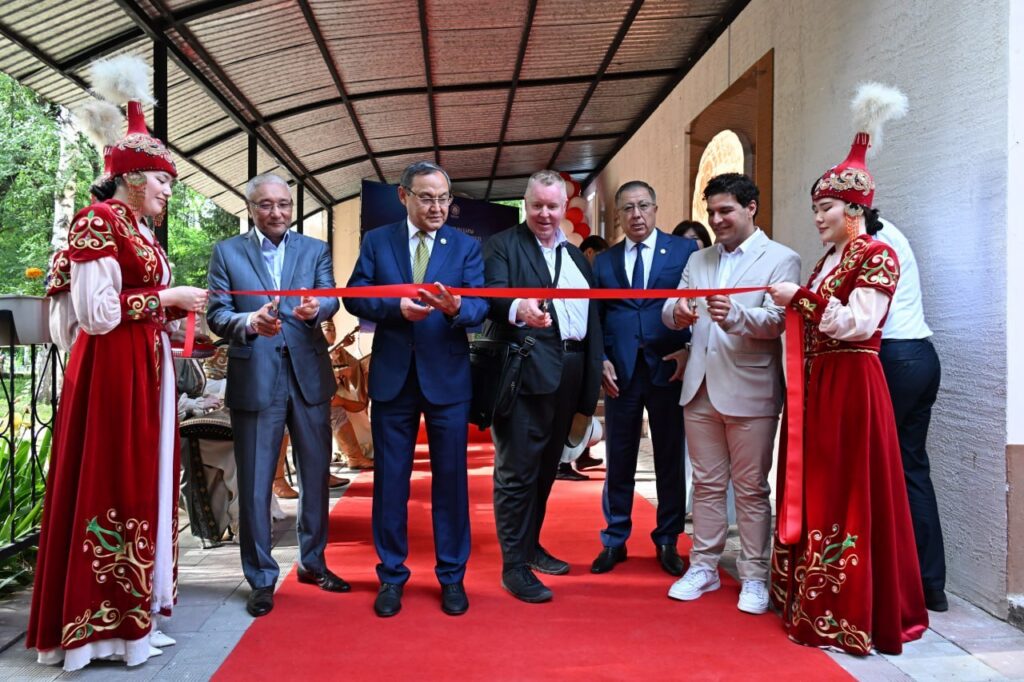
Kazakhstan has opened Central Asia’s first specialized Brain Institute, a new research and education center focused on neuroscience, brain health, and artificial intelligence-assisted medical research, officials said. The institute was launched at Al-Farabi Kazakh National University (KazNU) in Almaty and is the first facility of its kind in Kazakhstan and the wider Central Asian region. The center builds on KazNU’s Cognitive Neuroscience Center, established in 2018, and is intended to expand research into brain development, neurological disorders, cognition, and multilingualism, while training a new generation of neuroscience specialists. Research at the institute will use advanced equipment, including a 3-Tesla magnetic resonance imaging scanner, high-density electroencephalography systems, functional near-infrared spectroscopy technology, and AI and big data analytics tools. Led by Professor Almira Kustubayeva, the institute brings together laboratories specializing in cognitive, behavioral, and computational neuroscience, as well as neurolinguistics. Its research areas will include brain development, neurodegenerative diseases, decision-making, emotional regulation, and the neurological aspects of multilingualism. Scientists at the institute also plan to develop new diagnostic and predictive biomarkers that could improve the detection and treatment of neurological and cognitive disorders. The opening coincided with the 80th anniversary of Kazakhstan’s National Academy of Sciences (NAS) and is part of the government’s push to develop the country’s scientific and technological capacity. Speaking at the launch ceremony, KazNU rector Zhanseit Tuimebayev said the development of science and innovation had been identified as a national priority by President Kassym-Jomart Tokayev. NAS president Akylbek Kurishbayev described the project as an example of cooperation between academic and scientific institutions aimed at developing Kazakhstan’s research base. Kazakhstan has increased investment in scientific research and medical innovation in recent years. Earlier this year, researchers at the Kazakh Research Institute of Processing and Food Industry announced work on an antioxidant dietary supplement intended to help prevent cancer and cardiovascular disease. Last year, surgeons from Kazakhstan carried out Uzbekistan’s first robot-assisted joint replacement procedures using the MAKO robotic surgical platform. President Tokayev has also announced plans to establish two science cities in Almaty and Kurchatov as part of efforts to develop nuclear energy, nuclear medicine, and advanced scientific research.

