


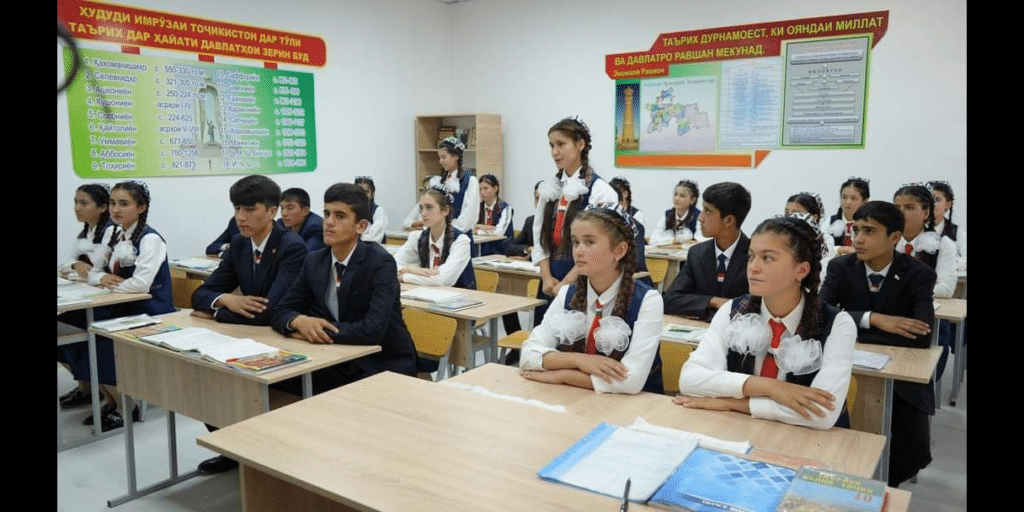
Russian Lawmakers Propose School Fees for Central Asian Migrants’ Children
Russia relies on millions of workers from Central Asia, but lawmakers want to charge some of their children, typically aged 15–17, for the final two years of public schooling. The move comes after tougher enrollment rules that have left thousands of migrant children struggling to attend Russian schools. The proposal, submitted to the government by deputies from the Liberal Democratic Party of Russia (LDPR) on October 14, would require foreign citizens and stateless people to pay for education in grades 10 and 11. LDPR leader Leonid Slutsky argued that migrant families should bear the costs of educating their children in Russian upper-secondary schools, allowing public funds to be redirected toward Russian students. The party claimed that more than 130,000 foreign children attend grades 10–11, costing the state over 37 billion rubles (about $440 million) annually. However, these figures contradict data from Russia's Ministry of Education analyzed by the data project Tochno, which found approximately 130,000 foreign pupils and another 3,000 stateless pupils enrolled across all school grades in 2025–26, with only 4% of foreign pupils attending grades 10–11. That would put the number of foreign pupils in the final two grades at roughly 5,200, casting doubt on the LDPR's estimated savings. Growing Pressure on Migrant Families The proposed fees follow a series of Russian restrictions that have already made it more difficult for Central Asian families to educate their children in Russia. Since April 2025, foreign children seeking admission to Russian schools have been required to demonstrate sufficient Russian-language proficiency and provide documentation establishing their legal residence. Enrollment among children from Uzbekistan, Tajikistan, and Kyrgyzstan fell by 27% in the 2025–26 school year, from approximately 122,000 to 89,000. In January 2026, Tajikistan's Minister of Education and Science Rahim Saidzoda reported that approximately 9,000 Tajik children had returned from Russia during 2025 following difficulties continuing their education there. Kyrgyzstan's membership in the Eurasian Economic Union (EAEU) raises a separate legal question. The EAEU treaty recognizes the right of migrant workers' children to receive education in the country where their parents work, subject to that country's legislation. However, it does not explicitly guarantee free tuition, leaving unclear whether children of workers from EAEU member states would qualify for exemptions. For migrant families, the immediate consequences would depend on the eventual tuition charges and exemptions. Some parents might choose vocational education for their children after grade nine, while others could leave them with relatives in their home countries rather than incur additional schooling expenses in Russia. Additional education costs could discourage migrant workers from bringing their families to Russia, even as the country continues to rely on Central Asian labor. Central Asia's Dependence on Remittances The proposed fees would affect families whose earnings are often vital to their home countries' economies. Tajikistan is the most dependent on remittances relative to the size of its economy, Kyrgyzstan relies particularly heavily on earnings from Russia, and Uzbekistan receives the largest remittance inflows in absolute terms. According to The Times of Central Asia's Central Asia Balance...
