

• KGS/USD = 0.01143 0%
  • KZT/USD = 0.00202 0%
  • TJS/USD = 0.10433 0%
  • UZS/USD = 0.00008 0%
  • TMT/USD = 0.28575 0%
  • KGS/USD = 0.01143 0%
  • KZT/USD = 0.00202 0%
  • TJS/USD = 0.10433 0%
  • UZS/USD = 0.00008 0%
  • TMT/USD = 0.28575 0%
  • KGS/USD = 0.01143 0%
  • KZT/USD = 0.00202 0%
  • TJS/USD = 0.10433 0%
  • UZS/USD = 0.00008 0%
  • TMT/USD = 0.28575 0%
  • KGS/USD = 0.01143 0%
  • KZT/USD = 0.00202 0%
  • TJS/USD = 0.10433 0%
  • UZS/USD = 0.00008 0%
  • TMT/USD = 0.28575 0%
  • KGS/USD = 0.01143 0%
  • KZT/USD = 0.00202 0%
  • TJS/USD = 0.10433 0%
  • UZS/USD = 0.00008 0%
  • TMT/USD = 0.28575 0%
  • KGS/USD = 0.01143 0%
  • KZT/USD = 0.00202 0%
  • TJS/USD = 0.10433 0%
  • UZS/USD = 0.00008 0%
  • TMT/USD = 0.28575 0%
  • KGS/USD = 0.01143 0%
  • KZT/USD = 0.00202 0%
  • TJS/USD = 0.10433 0%
  • UZS/USD = 0.00008 0%
  • TMT/USD = 0.28575 0%
  • KGS/USD = 0.01143 0%
  • KZT/USD = 0.00202 0%
  • TJS/USD = 0.10433 0%
  • UZS/USD = 0.00008 0%
  • TMT/USD = 0.28575 0%

Viewing results 1 - 6 of 9

Behind Turkmenistan’s Neutrality, Quiet U.S. Military Ties Endure

In late January, U.S. Special Envoy for South and Central Asia, Sergio Gor visited Turkmenistan. Accompanying Gor was U.S. Secretary of the Army Daniel Driscoll. Driscoll’s presence in Turkmenistan, a country with a roughly 1,150-kilometer border with Iran, sparked some speculation that his visit was related to escalating tensions between Washington and Tehran. But while it is unusual for any top foreign military officials to visit Turkmenistan, U.S. military officials have stopped by Turkmenistan relatively often over the course of the last 30 years. Neutral Turkmenistan A good trivia question about Central Asia is, which country was the first to join NATO’s Partnership for Peace (PfP) program? The answer is Turkmenistan, in May 1994, and NATO had just created the PfP program in January of that year. However, in December 1995, the UN approved giving Turkmenistan official status as a neutral country. Turkmenistan’s president at the time, Saparmurat Niyazov, said as part of that neutral status, Turkmenistan would not join any military blocs or join in aggression against another country. Then came the September 11, 2001, terrorist attacks on the United States and U.S. President George Bush Jr’s remark that “you’re either with us or against us.” Central Asia, with its nearly 2,400-kilometer border with Afghanistan, suddenly became a frontline in Washington’s campaign against terrorist groups inside Afghanistan. The other Central Asian countries, which had watched with dread as the Taliban advanced toward Central Asian borders, quickly expressed their support. Kyrgyzstan, Tajikistan, and Uzbekistan offered the use of military bases to the U.S. and NATO forces that were rapidly being assembled. Turkmenistan took a different position on events in Afghanistan. Remaining true to its UN-recognized neutrality status, Turkmenistan engaged with the Taliban and with the government of Burhanuddin Rabbani, whom the Taliban had ousted from power. A round of peace talks between the two Afghan parties was held in the Turkmen capital, Ashgabat, in March 1999. After 9/11, Turkmenistan agreed to allow U.S. planes carrying non-lethal cargo to transit through Turkmen airspace and to refuel at Ashgabat airport. But officially, that was as far as the Turkmen government was willing to become involved. The U.S. had already established a military connection with Turkmenistan. The head of the U.S. Central Command, General Tommy Franks, visited Turkmenistan in September 2000 and again in May 2001. U.S. Secretary of State Donald Rumsfeld visited Turkmenistan in April 2002. General Franks followed in August that year, promising to help Turkmenistan fight the illegal narcotics trade. The United States gave Turkmenistan two small naval patrol boats for use in the Caspian Sea in 2002, and in 2003, gave 40 Russian-made off-road vehicles to Turkmenistan’s border guards. Reports started to appear stating that Turkmenistan’s military cooperation with the United States was quietly deepening. The Turkmen government had said when agreeing to allow overflights and refueling that no foreign troops would be stationed in Turkmenistan. But it turned out that a small U.S. Air Force team, only about seven servicemen, was stationed in Ashgabat to help refuel U.S....
Kyrgyzstan Expands Security Cooperation with the U.S.

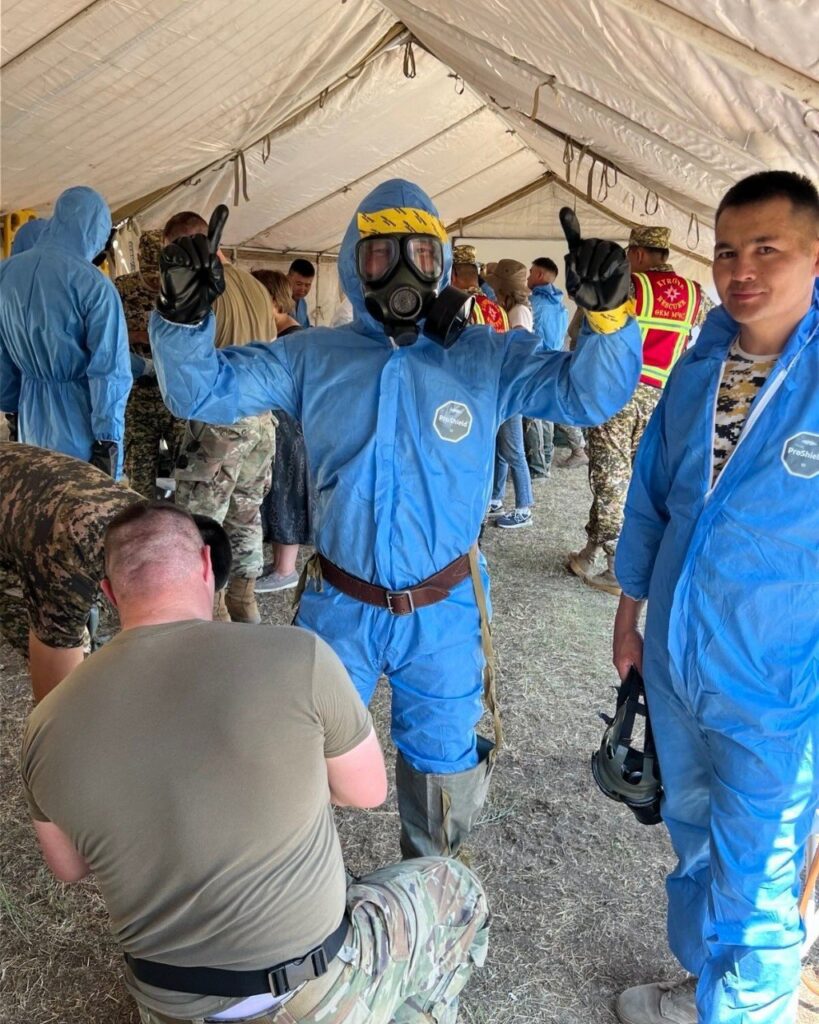
Alongside U.S. business leaders and government officials who arrived in Bishkek for the B5+1 business forum, security representatives from U.S. Central Command, the U.S. Air Force, and the Montana National Guard also visited the Kyrgyz capital, according to the U.S. Embassy in Bishkek. At a meeting held at the Kyrgyz Ministry of Defense in the village of Koy-Tash, both sides discussed military cooperation plans for the 2027 fiscal year. Participants carried out detailed planning of joint activities, focusing on experience-sharing and establishing common objectives for the near future. “We thank the Ministry of Defense of the Kyrgyz Republic for organizing this event. The participants joined forces to promote our regional goals aimed at enhancing security and stability,” the U.S. Embassy stated. U.S. Chargé d'Affaires Les Zentos emphasized that over the past 30 years of Kyrgyzstan's independence, a strong partnership has developed between the Montana National Guard and the Kyrgyz Ministry of Defense, as well as with the Ministry of Emergency Situations and the Border Service. This relationship, he noted, is based on trust and a commitment to shared goals. [caption id="attachment_43371" align="aligncenter" width="960"] Image: kg.usembassy.gov[/caption] “We hope to improve and optimize plans for military contacts in 2026 and 2027. Today's meeting is important for strengthening mutual understanding and finding common ground,” Zentos said. This is not the first visit by representatives of the Montana National Guard and the U.S. Air Force to Kyrgyzstan. Approximately six months ago, the two sides held joint military exercises under the name “Ak-Shumkar-2025.” According to U.S. officials, the drills facilitated exchanges of expertise in humanitarian operations, disaster relief, air medical evacuation, search and rescue, and border security. The Montana National Guard has maintained a long-standing relationship with Kyrgyzstan since 1996, under the U.S. National Guard Bureau’s State Partnership Program. The U.S. Embassy also noted that bilateral military cooperation extends beyond this program. It includes participation in regional exercises organized by U.S. Central Command, which bring together countries from Central and South Asia to pursue shared security objectives.

Five Countries Complete Large-Scale ‘Birlik-2025’ Military Exercises in Uzbekistan

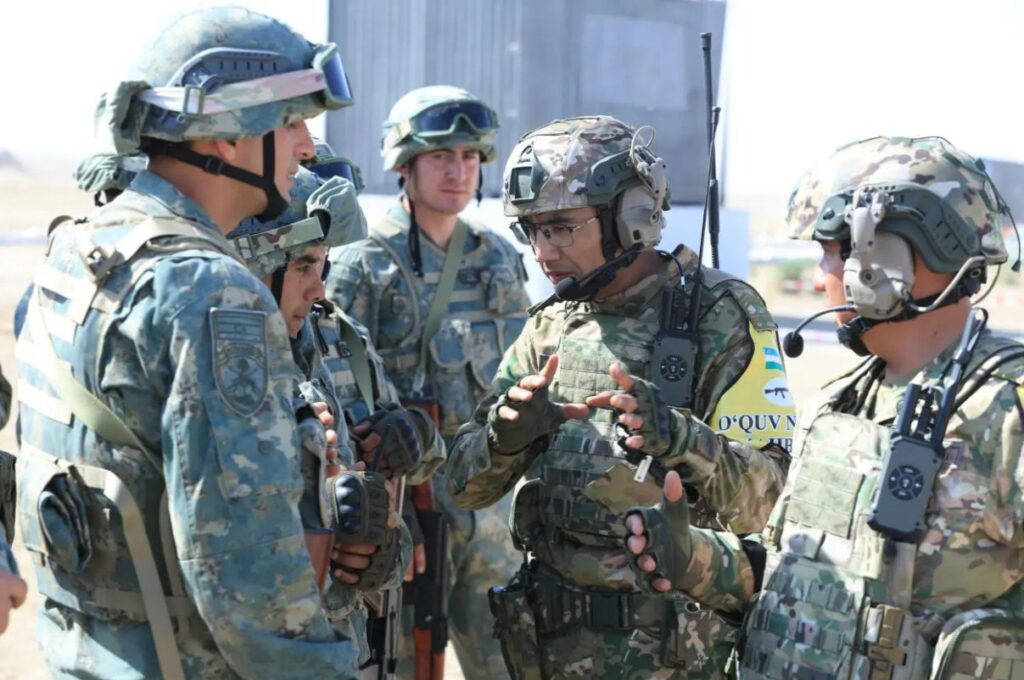
The multinational military exercises Birlik-2025 ("Unity-2025") have concluded at the Kattakurgan training ground in Uzbekistan’s Samarkand region. The joint maneuvers, which began on October 14, brought together armed forces from Uzbekistan, Kazakhstan, Kyrgyzstan, Tajikistan, and Azerbaijan. According to the Uzbek Ministry of Defense, the drills were among the largest in the history of regional military cooperation. The exercises focused on counterterrorism and defense operations, aiming to enhance interoperability, tactical coordination, and combat readiness among the participating countries. Scenarios included simulated urban warfare, reconnaissance, and joint air-ground operations. Commanders utilized computer modeling and simulation technologies to analyze battlefield decisions and identify optimal tactical responses. These digital tools played a key role in shaping the exercise outcomes and refining strategic planning. [caption id="attachment_37891" align="aligncenter" width="351"] @Ministry of Defense of Uzbekistan[/caption] Observers included the defense ministers of all participating states, along with military representatives from Turkmenistan, who attended in a monitoring capacity. The drills were conducted across more than 20 training grounds in multiple regions of Uzbekistan. In the initial phase, reconnaissance units deployed unmanned aerial vehicles to assess the territory of a hypothetical enemy. This was followed by a special operation to neutralize simulated illegal armed groups in an urban environment. Precision artillery and air strikes were executed by ground forces, while the air forces of Uzbekistan and Kazakhstan provided air cover and destroyed critical enemy positions. Combat helicopters and fighter jets demonstrated joint tactical coordination with land-based units. Troops also practiced offensive operations along the defensive line using a range of weapons and military equipment. The multi-stage training format included tasks of varying complexity, replicating conditions of high-intensity conflict. [caption id="attachment_37893" align="aligncenter" width="352"] @Ministry of Defense of Uzbekistan[/caption] According to the Uzbek Ministry of Defense, Birlik-2025 served as a valuable platform for exchanging experience in combating international terrorism, extremism, and armed insurgency. “Joint operations have made it possible to consolidate advanced methods of combat and improve interoperability between units from different countries,” the ministry stated. Following the conclusion of the active phase, participants visited mobile maintenance workshops, command posts, and exhibits showcasing modernized weaponry and defense technologies.
