


Opinion: Central Asia’s Minilateral Diplomacy and the Limits of Cooperation
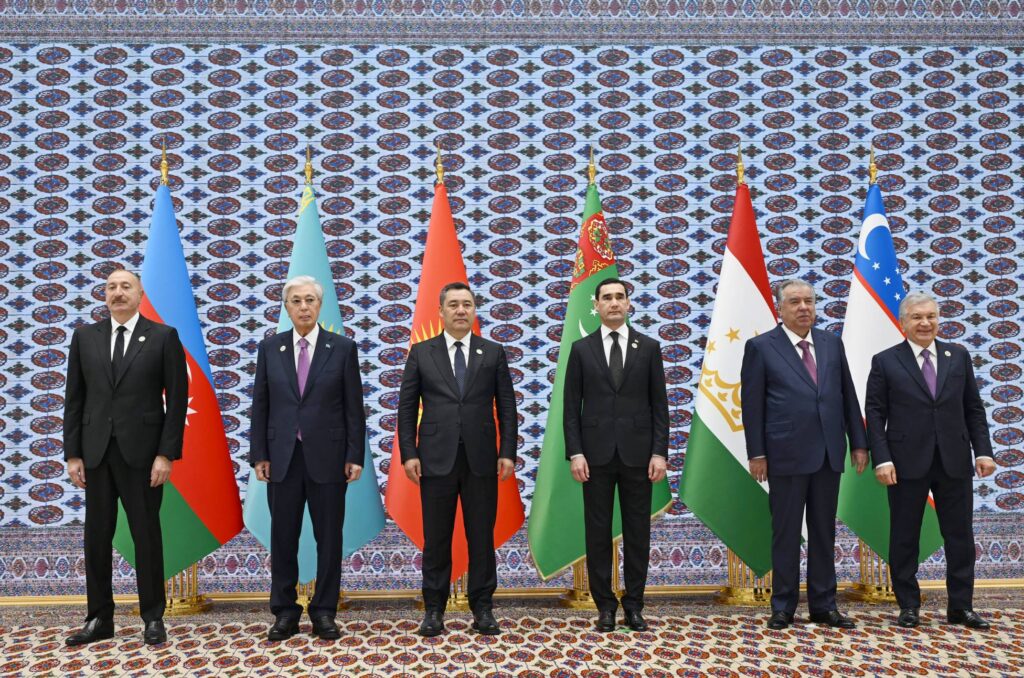
In the contemporary, largely fragmented world order, the concept of minilateralism has become increasingly relevant. As less powerful, smaller states are struggling with often ineffective multilateral diplomatic frameworks, cooperation on a smaller scale has been gaining momentum in international relations. Central Asian countries, although with an intrinsic set of strengths and resources, still lack the power to individually address some of their own issues and advocate more proactively for their interests, especially in global forums dominated by major powers and entities. Geopolitical weaknesses of each Central Asian country lie in insufficiently developed domestic economic and military power to compete with much stronger neighbors such as Russia or China. Furthermore, unfavorable geography, where Central Asia, as a landlocked region, has limited access to global trade chains, also dilutes its geopolitical strength. In addition, the transboundary nature of critical resources, especially concerning water flows and supply, often causes tensions among states of Central Asia. In such discouraging circumstances, minilateralism promises more realistic solutions that can place Central Asia on a more equal footing with external partners and enable the region to play a more significant role in regional and, to some extent, international politics. That is why the consultative meetings of the five Central Asian countries (C5), now expanded to include Azerbaijan as C6, and C5+1 dialogues with external partners have become important platforms for Central Asia’s diplomatic standing. Minilateralism and Central Asia Minilateralism represents an international relations concept that implies cooperation of a smaller group of countries (usually three to nine members) in order to resolve shared problems or pursue mutual objectives. While bilateralism remains the main form of cooperation in international politics and multilateralism is necessary for tackling global issues, minilateralism has emerged as a more appropriate response for addressing specific regional issues in a more flexible and efficient manner. One of the main features of minilateralism is prioritizing shared interests over values or ideological principles, which allows collaborating states to focus more on solving issues and avoid being burdened by ideological discrepancies. Take, for example, the Abraham Accords that managed to gather countries with very different ideological views, especially Israel and the United Arab Emirates, but still produced tangible results of cooperation. Another advantage of minilateralism is a quicker response to crises, as well as opportunities, with less of the bureaucratic hassle that often follows multilateral diplomacy. For Central Asia, working together provides a stronger platform for negotiating better outcomes, especially in the economic area. While the current major geopolitical tensions, such as the Russia-Ukraine conflict and the Iran war, continue to shake the international order, the Central Asian countries have become more aware of their opportunities, especially in terms of transit routes and natural resource demand. Central Asia has definitely caught the attention of major powers, and its geographical position along alternative transportation routes, as well as its considerable wealth of natural resources, including hydrocarbons and critical materials, opens doors for the region to gain more influence and power. However, for all of these opportunities to materialize, Central...
