• KGS/USD = 0.01143 0%
  • KZT/USD = 0.00207 0%
  • TJS/USD = 0.10465 0.1%
  • UZS/USD = 0.00008 0%
  • TMT/USD = 0.28571 0.28%
  • KGS/USD = 0.01143 0%
  • KZT/USD = 0.00207 0%
  • TJS/USD = 0.10465 0.1%
  • UZS/USD = 0.00008 0%
  • TMT/USD = 0.28571 0.28%
  • KGS/USD = 0.01143 0%
  • KZT/USD = 0.00207 0%
  • TJS/USD = 0.10465 0.1%
  • UZS/USD = 0.00008 0%
  • TMT/USD = 0.28571 0.28%
  • KGS/USD = 0.01143 0%
  • KZT/USD = 0.00207 0%
  • TJS/USD = 0.10465 0.1%
  • UZS/USD = 0.00008 0%
  • TMT/USD = 0.28571 0.28%
  • KGS/USD = 0.01143 0%
  • KZT/USD = 0.00207 0%
  • TJS/USD = 0.10465 0.1%
  • UZS/USD = 0.00008 0%
  • TMT/USD = 0.28571 0.28%
  • KGS/USD = 0.01143 0%
  • KZT/USD = 0.00207 0%
  • TJS/USD = 0.10465 0.1%
  • UZS/USD = 0.00008 0%
  • TMT/USD = 0.28571 0.28%
  • KGS/USD = 0.01143 0%
  • KZT/USD = 0.00207 0%
  • TJS/USD = 0.10465 0.1%
  • UZS/USD = 0.00008 0%
  • TMT/USD = 0.28571 0.28%
  • KGS/USD = 0.01143 0%
  • KZT/USD = 0.00207 0%
  • TJS/USD = 0.10465 0.1%
  • UZS/USD = 0.00008 0%
  • TMT/USD = 0.28571 0.28%

Viewing results 1 - 6 of 9

Kazakhstan Government to Cut Social Spending

The Kazakh government plans to reduce budgetary spending on social support. Prime Minister Olzhas Bektenov told parliament that only citizens who are objectively unable to work will continue receiving state assistance. According to the Cabinet of Ministers, approximately $16.9 billion was allocated to the social sector in 2024, representing 37.3% of total budget expenditures. Of that amount, $10.2 billion went toward social security and direct assistance to the population. In 2025, social spending is projected to rise to $18.4 billion, or 37.2% of the overall budget, with social payments continuing to represent a significant portion. “The social sector places a very heavy burden on the budget: benefits, payments, and various support measures account for about 60% of the total budget. For many years, these expenditures exceeded 40% of the republican budget. When forming the budget for the next three years, we reduced them to 38%,” Bektenov said during his remarks in parliament. He added that the government will continue its optimization efforts. Only citizens who are unable to work for objective reasons will qualify for state support, while those capable of working are expected to support themselves. According to the Ministry of Labor and Social Protection, as of October 1, 2025, targeted social assistance (TSA) was being provided to 274,400 individuals from 51,000 families. The total amount disbursed thus far in 2025 was $47 million, out of a planned $190 million for the full year. TSA is distributed quarterly to low-income families, with employable recipients required to participate in state employment programs. As previously reported by The Times of Central Asia, Deputy Prime Minister Serik Zhumangarin stated that the government would revisit the issue of increasing the minimum wage no earlier than 2027.
Kazakh Government to Reconsider Minimum Wage Increase No Earlier Than 2027

The Kazakh Cabinet of Ministers does not plan to revisit the issue of raising the minimum wage before 2027-2028, according to Deputy Prime Minister and Minister of National Economy Serik Zhumangarin. Earlier this year, in June, Minister of Labor and Social Protection Svetlana Zhakupova had announced plans to raise the minimum wage from January 1, 2026. At the time, the minimum wage stood at approximately $163, and Finance Minister Madi Takiev indicated that an increase to just over $172 was under consideration. However, in August, Zhumangarin announced that the minimum wage would remain frozen at its current level. Speaking at a government meeting this week, Zhumangarin confirmed that a review of the minimum wage is not scheduled in the near term. “In 2027-2028, the issue of raising the minimum wage will be considered,” he said, presenting a draft program of joint actions by the government, the National Bank, and the Agency for Regulation and Development of the Financial Market (ARDFM) aimed at macroeconomic stabilization and improving the population’s well-being from 2026 to 2028. Under the program, more than 100 investment projects in the manufacturing and agro-industrial sectors are to be launched annually to support employment. “The program’s priority is to increase real incomes by promoting high-quality, sustainable economic growth and reducing inflation. To this end, a set of tools has been developed across key areas of economic policy,” Zhumangarin stated. To curb inflation, the government plans to saturate the domestic market with local goods, strengthen pricing oversight, and tackle monopolistic practices. Zhumangarin also outlined plans to enhance transparency on e-commerce platforms. This includes requiring disclosure of commission fees included in the cost of goods, as well as optimizing commission structures for trading platforms and intermediaries. To protect consumers, dual pricing will be introduced, listing prices both with and without installment plans. A separate priority will focus on boosting long-term economic productivity through improvements in labor efficiency, effective employment, and capital modernization. These efforts aim to reduce the persistent gap between GDP growth and wage growth. Between 2026 and 2028, the government expects real income to grow by at least 2-3% annually. “At the end of the first nine months, nominal wage growth stood at 10%, but real growth was negative due to inflation,” Zhumangarin said at a briefing. “Our task is to ensure that inflation does not erode incomes. If we aim for real income growth of 2-3%, this means nominal growth must exceed inflation by that margin in the coming years.” As previously reported by The Times of Central Asia, inflation has significantly eroded household income this year, driven by Kazakhstan’s reliance on imports, rising utility rates, and an increased tax burden.

Tajikistan Raises Minimum Monthly Wage to $110 Amid Broad Income Hikes

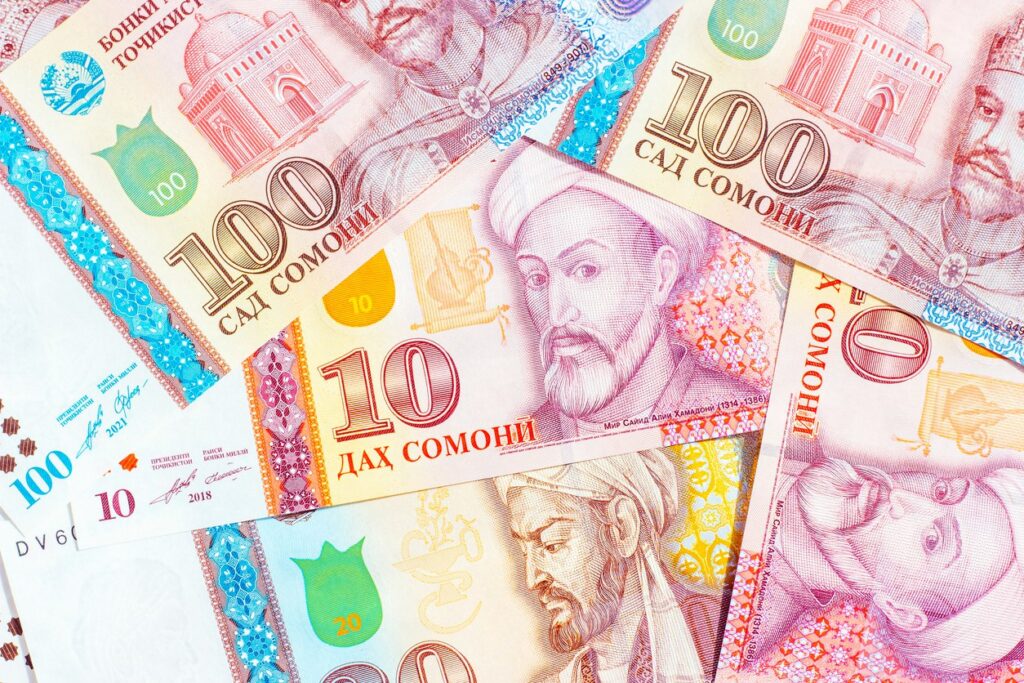
Effective September 1, Tajikistan has implemented a nationwide increase in salaries, pensions, and scholarships, ranging from 10% to 30% across various sectors. The country’s minimum wage is now officially set at 1,000 Tajikistani somoni (TJS) per month, approximately $110. This marks a 25% increase from the previous rate of 800 TJS ($88). “This means that from September 1, 2025, the monthly salary of employees of all institutions, organizations, and enterprises, regardless of ownership, must not be less than 1,000 TJS,” the official decree states. The salary hikes apply broadly. Employees of kindergartens and general education schools will see a 30% increase. Teachers at universities and research institutions will receive a 20% raise, matching the increase granted to doctors, chief physicians, nurses, and other healthcare personnel. The same 20% boost also extends to social workers, including staff at elderly care homes and facilities for people with disabilities, as well as to cultural sector employees, such as those working in theaters, libraries, museums, media, and public broadcasting. Civil servants at all levels of government have also received a 20% salary increase. In parallel, insurance, labor, and social pensions have been increased by 10%. Scholarships, including presidential scholarships and other academic grants, have also been raised, with the exception of stipends for cadets in military universities and the Academy of the Ministry of Internal Affairs. The 2025 state budget includes provisions to finance these increases. Funding sources include surplus revenue collections, local taxes, free budget balances, the Social Insurance and Pension Fund, and reallocation of reserve and discretionary funds. Total budget revenues are projected at TJS 49.6 billion (approximately $5.45 billion), with around 65% expected to come from tax revenues. The government forecasts a 20.8% increase in tax collections compared to 2024. Spending on public sector wages, pensions, and scholarships now accounts for more than 35% of the national budget. In 2025, the total wage fund has reached nearly TJS 13 billion ($1.43 billion), marking a 35.7% rise year-on-year. Pension allocations total TJS 5.1 billion ($561 million), while benefits and scholarships are funded at TJS 350 million ($38.5 million) and TJS 280 million ($30.8 million), respectively, each reflecting a 25% to 26% increase over last year. Despite the official wage growth, low salaries remain a persistent issue for many Tajik citizens. As consumer prices continue to rise, the increases are widely viewed as a form of income indexation rather than a substantial improvement in living standards.

Kazakhstan to Freeze Minimum Wage in 2026 Despite Earlier Promises

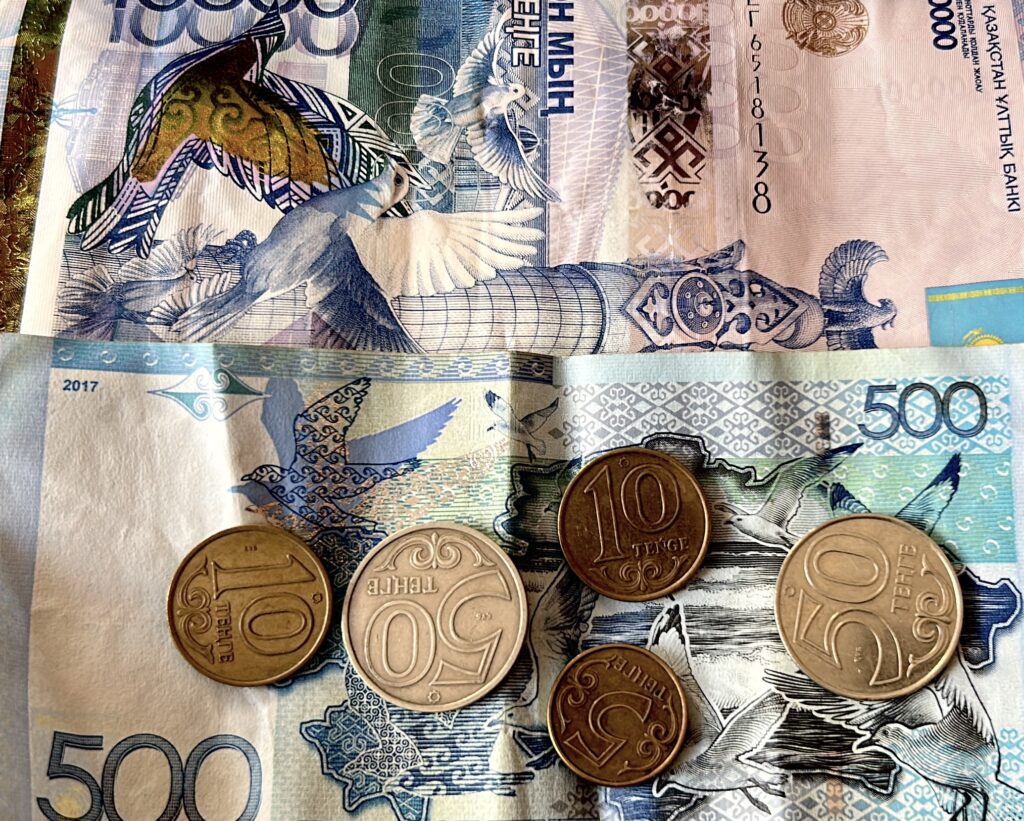
Kazakhstan will maintain its current minimum wage of 85,000 KZT per month (approximately $157) in 2026, Deputy Prime Minister and Minister of National Economy Serik Zhumangarin confirmed at a recent press conference. This announcement contradicts earlier statements made in June by Minister of Labor and Social Protection Svetlana Zhakupova, who indicated that the government intended to raise the minimum wage from January 1, 2026. Finance Minister Madi Takiev had even suggested a possible increase to just over 90,000 KZT ($166). However, Zhumangarin stated that the proposed adjustment has been scrapped. “We currently have no plans to increase the minimum wage. As of today, it remains at 85,000 KZT, and we are not considering an increase at this time,” he said. Zhumangarin noted that while pensions and benefits are indexed annually to inflation, the government has allocated 800 billion KZT ($1.4 billion) in the 2026 budget to cover these costs. Takiev added that while calculations had been made for a potential increase, “given the current situation,” the decision was made to leave the wage unchanged. The minimum wage was last raised in January 2024, from 70,000 KZT ($135 at the time) to its current level. Some members of parliament have called for a broader review of the minimum wage, the minimum subsistence level, and the structure of the official food basket. In response to a reporter’s question, Zhumangarin acknowledged that he himself could not live on 85,000 KZT per month under current market conditions but stressed that the issue must be approached cautiously. According to the Ministry of Labor, approximately 170,000 people in Kazakhstan currently earn the minimum wage, while another 160,000 earn around 100,000 KZT monthly. As of the first quarter of 2025, the total number of employed individuals in the country stood at 9.3 million. Over the summer, AMANAT parliamentary faction leader Yelnur Beisenbayev criticized government statistics, particularly the official average salary figure of 423,000 KZT ($830). “In our country, three million people earn around 200,000 KZT, of whom 1.8 million live on the minimum wage of 85,000 KZT. So the question arises: who earns 423,000? I believe the government calculates it like this: if Asan earns 1 million KZT, and Yessen and Usen earn 100,000 each, then the average among them is 400,000,” he remarked.

Kazakhstan to Raise Minimum Wage in 2026

Kazakhstan’s Minister of Labor and Social Protection, Svetlana Zhakupova, has announced that the government plans to raise the minimum wage starting January 1, 2026. While the exact amount was not disclosed, Finance Minister Madi Takiev suggested the minimum wage could increase to just over 90,000 KZT ($189) per month. Speaking on the sidelines of a joint meeting of both chambers of the Kazakh parliament, Zhakupova noted that last year her ministry approved a new methodology for calculating the minimum wage. The formula is based on labor productivity, median wages, and inflation. As all these indicators, especially inflation, have risen this year, an adjustment is being prepared. “Today, several institutions are conducting research to determine accurate indicators of labor productivity and median wages by region and by industry, all of which will inform the new minimum wage,” Zhakupova said. “By the end of the year, we expect to finalize the amount so that the increase can take effect from January 1.” Finance Minister Takiev echoed this projection, estimating the new figure at approximately 90,000 KZT. Currently, the minimum wage in Kazakhstan stands at 85,000 KZT ($164). If the forecast is accurate, the planned increase would be the smallest in seven years. For context, the minimum wage rose from 28,200 KZT to 42,500 KZT ($54 to $81) in 2019, to 60,000 KZT ($116) in 2022, and to 70,000 KZT ($135) in 2023. The current level was established in January 2024. Inflation for the first five months of this year reached 11.3%, according to official data. Earlier, parliamentary deputy Askhat Rakhimzhanov called for revising key social indicators, including the minimum subsistence level, minimum wage, and consumer basket. He argued the subsistence minimum, currently 46,000 KZT ($89), should be raised to at least 115,700 KZT ($223). Deputy Prime Minister Serik Zhumangarin, who also heads the Ministry of National Economy, agreed that the minimum wage should rise but cautioned against abrupt increases. “Raising the minimum wage is complex. It must be balanced with efforts to contain inflation, as it leads to higher production costs and stimulates demand, which can further drive inflation,” Zhumangarin said. He acknowledged the sharp rise in prices and admitted he could not live on 85,000 KZT. According to the National Statistics Bureau, the average monthly nominal wage in Kazakhstan during Q1 2025 was 423,100 KZT ($816), while the median wage stood at 300,300 KZT ($579). Only 6.1% of the working population, or around 170,000 workers, earn less than 100,000 KZT monthly, according to the Applied Economics Research Centre (AERC). The majority, 53%, earn between 150,000 and 350,000 KZT ($290 to $675). As previously reported by The Times of Central Asia, medical personnel remain among the lowest-paid occupational groups in the country.