• KGS/USD = 0.01144 0%
  • KZT/USD = 0.00216 0%
  • TJS/USD = 0.10562 0%
  • UZS/USD = 0.00008 0%
  • TMT/USD = 0.28530 0%
  • KGS/USD = 0.01144 0%
  • KZT/USD = 0.00216 0%
  • TJS/USD = 0.10562 0%
  • UZS/USD = 0.00008 0%
  • TMT/USD = 0.28530 0%
  • KGS/USD = 0.01144 0%
  • KZT/USD = 0.00216 0%
  • TJS/USD = 0.10562 0%
  • UZS/USD = 0.00008 0%
  • TMT/USD = 0.28530 0%
  • KGS/USD = 0.01144 0%
  • KZT/USD = 0.00216 0%
  • TJS/USD = 0.10562 0%
  • UZS/USD = 0.00008 0%
  • TMT/USD = 0.28530 0%
  • KGS/USD = 0.01144 0%
  • KZT/USD = 0.00216 0%
  • TJS/USD = 0.10562 0%
  • UZS/USD = 0.00008 0%
  • TMT/USD = 0.28530 0%
  • KGS/USD = 0.01144 0%
  • KZT/USD = 0.00216 0%
  • TJS/USD = 0.10562 0%
  • UZS/USD = 0.00008 0%
  • TMT/USD = 0.28530 0%
  • KGS/USD = 0.01144 0%
  • KZT/USD = 0.00216 0%
  • TJS/USD = 0.10562 0%
  • UZS/USD = 0.00008 0%
  • TMT/USD = 0.28530 0%
  • KGS/USD = 0.01144 0%
  • KZT/USD = 0.00216 0%
  • TJS/USD = 0.10562 0%
  • UZS/USD = 0.00008 0%
  • TMT/USD = 0.28530 0%

Viewing results 1 - 6 of 18

Mass Evacuation from Kyrgyzstan’s Seven-Thousanders, But One Climber Remains Trapped

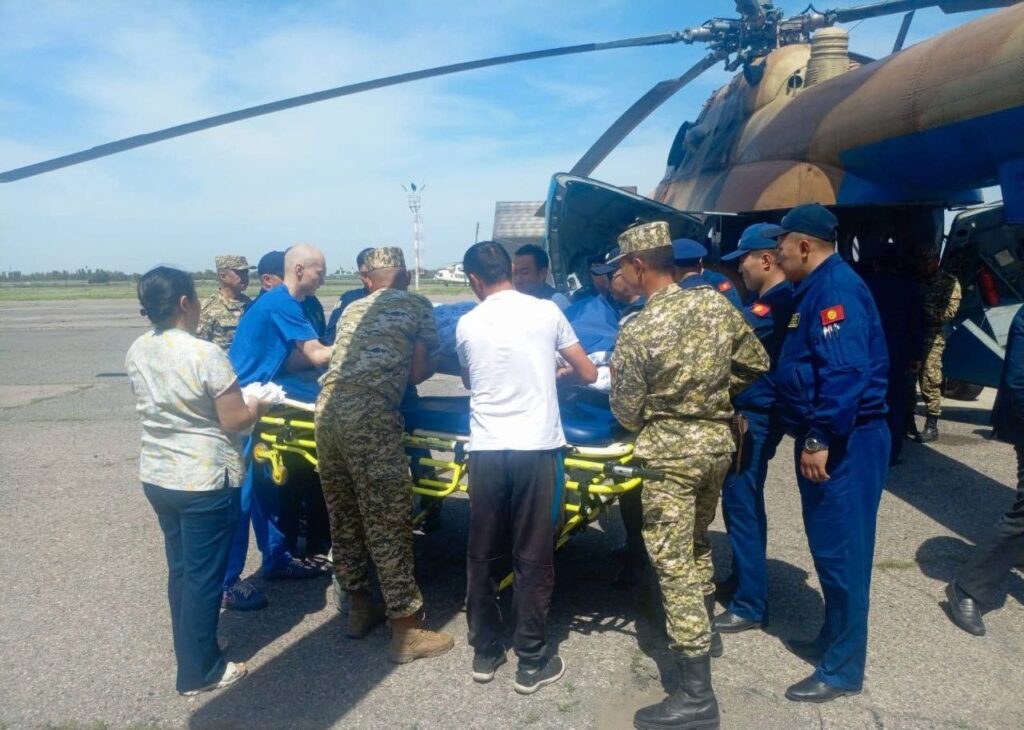
A major rescue operation has concluded in Kyrgyzstan, where military pilots evacuated 62 climbers and tourists from the high-altitude peaks of Pobeda and Khan Tengri. The evacuation was prompted by life-threatening conditions, including strong winds and a heightened risk of avalanches that left hundreds stranded. An international group of climbers had earlier become trapped on Victory Peak, where an Italian citizen died during the descent. A helicopter dispatched by the Kyrgyz Ministry of Defense was forced to make an emergency landing on the slope. Fortunately, the crew and rescuers sustained only minor injuries. Given the extreme altitudes, only military helicopters are capable of operating in the area, prompting authorities to deploy additional forces. Once weather conditions temporarily improved, two military helicopters conducted six flights, evacuating climbers from various countries, including Germany, the United Kingdom, Russia, China, and Kazakhstan. Some were flown to the Yuzhny Enilchek and Polyana base camps at approximately 5,000 meters, while others were hospitalized in Karakol. Those seriously injured are expected to be transferred to Bishkek for further treatment. Meanwhile, a 47-year-old Russian climber remains stranded at around 7,000 meters after breaking her leg during the descent. German and Italian climbers provided emergency assistance, including a tent, sleeping bag, and food supplies. Two attempts to evacuate her without professional support failed. One of the rescuers, an Italian climber, succumbed to severe hypothermia and died. According to the Kyrgyz Ministry of Emergency Situations, the stranded climber has survived for seven days at this extreme altitude. “She is alive and has been in high-altitude conditions for seven days. Preparations are underway for a rescue operation to transport her,” the Ministry of Defense stated. The situation remains critical as weather conditions continue to shift rapidly, diminishing the chances of a successful rescue with every passing hour.
Italian Climber Dies During Descent from Peak Pobeda in Kyrgyzstan

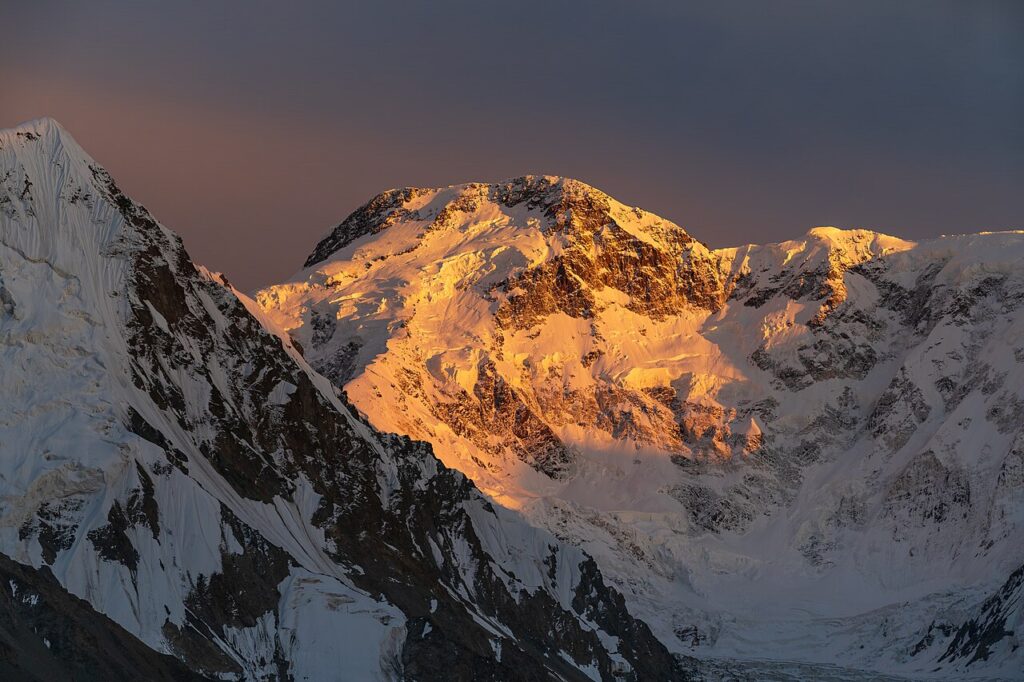
An Italian climber has died and several others were injured during a descent from Peak Pobeda (Victory Peak), one of Kyrgyzstan’s three seven-thousanders, according to the Kyrgyz Ministry of Defense. The injured include citizens of Germany and Russia who were part of the same mountaineering group. The Ministry dispatched a Mi-8 military helicopter with six rescuers on board to reach the group. However, adverse weather forced the helicopter to make a hard landing near the climbers. All those on board survived, though several sustained injuries of varying severity. A second helicopter was later sent to continue the rescue operation. “The helicopter made a hard landing at high altitude under difficult weather conditions. The crew members and mountain rescuers involved in the evacuation were on board, and all of them survived. Specialists were sent to the scene to evacuate the injured,” the Defense Ministry told The Times of Central Asia. The injured rescuers and crew members were transported to a hospital in Karakol, where they are in stable condition. [caption id="attachment_35055" align="aligncenter" width="800"] Peak Pobeda; image: 韵升(Yunsheng) 白(Bai)[/caption] Due to worsening weather and nightfall, not all climbers could be evacuated immediately. Recovery efforts resumed the following day. A special commission has been formed to investigate the incident, identify the causes of the accident, and assess the technical condition of the aircraft. At 7,439 meters, Peak Pobeda is the highest point in the Tien Shan mountain range. Its eastern slopes lie within China. The routes to its summit are among the most technically challenging in the world, marked by steep ice faces, sudden gusts of wind, and extreme cold. Despite the risks, the area attracts dozens of climbers annually, drawn by its remoteness and the allure of unclimbed neighboring peaks.

A Tale of Two Mountain Climbers in Asia: One Prevails, Another Succumbs

 The line between triumph and disaster is sometimes thin in the world of mountain climbing. On Aug. 11, Eduard Kubatov of Kyrgyzstan reached the summit of K2 in Pakistan without supplemental oxygen, part of his bid to climb the 14 mountains internationally recognized as “eight-thousanders,” or peaks that are more than 8,000 meters above sea level. On the same day, hundreds of kilometers to the north, Russian Nikolay Totmyanin, 66, died after ascending another extremely challenging mountain – Pobeda Peak, which lies on the border between Kyrgyzstan and China and is 7,439 meters above sea level. It is also known by the Kyrgyz name Jengish Chokusu (Victory Peak). Totmyanin made the summit but then fell ill on the way down. “He came down on his own, pushing hard, knowing he had to get lower as quickly as possible. On the evening of August 10, 2025, he was admitted to intensive care in Bishkek. By morning, he was gone,” said Anna Piunova, editor of Mountain.RU, a Russian website that covers climbing news. “His climbing resumé is staggering, hard to believe a single lifetime could hold so much,” Piunova said on Instagram. “More than 200 ascents in the Caucasus, Pamirs, Tien Shan, Alps, Himalayas, Karakoram, and North America, including 63 big-wall climbs.” Piunova did not go into detail about Totmyanin’s illness, but the lack of oxygen at such heights can have lethal effects. Both K2 and Pobeda Peak can be approached from the Chinese side of the borders, but the difficulty of access and logistical challenges deter most international climbers from a route via China. While Totmyanin was a more recognized figure on the international climbing scene, Kubatov, the 53-year-old head of Kyrgyzstan’s Mountaineering Federation, has been building an impressive record and enjoys wide appreciation in Central Asia. Kubatov has scaled several of the eight-thousanders without supplemental oxygen. He celebrated the K2 achievement with a message on Facebook on Thursday that acknowledged the dangers of the mountain, where climbers faced an especially tough environment this season because of low snowfall and an increased threat of rockfalls. “Friends, K2 is ours! On August 11 at 17:00, I was on this great summit without using oxygen!” the Kyrgyz climber said. “Friends, yesterday, August 13 at 5 a.m., I descended from the summit of K2 — 8,611 meters! Unfortunately, during the descent, many suffered severe injuries, and one female climber died.” The climber, Guan Jing of China, died on Aug. 12 while descending from the K2 peak with an expedition led by Imagine Nepal, a company founded by Sherpas. The Tourism Times, a publication based in Kathmandu, reported on Wednesday that efforts were underway to recover her body. Kubatov was with a joint team from Seven Summit Treks and 14 Peaks Expedition, which are also based in the Himalayan country. The climber, who will surely receive a big welcome on his return to Kyrgyzstan, said he was “slightly unwell” but looking forward to going home. Totmyanin, the Russian climber known in some mountaineering circles as...

Rysgul Akimjanova Becomes Second Female Kyrgyz Mountaineer To Climb Everest

Rysgul Akimjanova has become the second woman from Kyrgyzstan to reach the summit of Mount Everest, the world’s highest peak at 8,848 meters. Akimjanova reached the summit at 4:40 a.m. Nepal time on May 27 and has since begun her descent to a lower camp. Her success follows an earlier attempt just days prior, which was aborted at 8,400 meters due to a shortage of oxygen. Earlier this month, The Times of Central Asia reported that Asel Baibagysheva became the first Kyrgyz woman to summit Everest, accomplishing the feat on May 11. Baibagysheva is an experienced mountaineer, having previously summited Lenin Peak (7,134 m), Khan Tengri (7,010 m), and Pobeda Peak (7,439 m) in Kyrgyzstan, as well as Mount Elbrus (5,642 m) in Russia's Caucasus region. She was also the first Kyrgyz woman to climb Manaslu in Nepal, the world’s eighth-highest mountain at 8,163 meters. Dmitry Grekov was the first Kyrgyz man to summit Everest in 1997, followed by Eduard Kubatov in May 2021.

Kyrgyz Climber Ascends Annapurna on Same Day as Avalanche Disaster

The head of Kyrgyzstan’s mountaineering federation has climbed the Himalayan mountain of Annapurna, which has a reputation as a particularly dangerous climb because of the threat of avalanches and other factors. Two sherpas on a different team were swept away in an Annapurna avalanche on the same day, prompting a helicopter search for the missing men. Eduard Kubatov reached the peak of Annapurna, which stands 8,091 meters above sea level, on April 7. He did so without supplementary oxygen, which made the ascent much harder. He recorded a video at a location that appeared to be below the summit, saying it was hard to film at minus 40 degrees and with strong winds at the top. “Last night, our entire team safely descended from the summit, and today we officially announce the successful completion of the oxygen-free ascent of Annapurna!” Kubatov said in an Instagram post on Wednesday. The Kyrgyz climber, who described Annapurna as “the most difficult and dangerous mountain in the world,” said in a later post that he was still at Annapurna base camp following the ascent. “It snowed 20-30 cm at night, several snow and stone avalanches fell! Even base camp is not a safe place on this mountain! We all team walking from Annapurna to Pokhara. It will take about 25 km to the nearest village and 4-5 hours on jeeps to the city of Pokhara! Apparently we are going all day to get to civilization!” he said. Seven Summit Treks, a Nepal-based trek and expedition operator, said it suffered a “terrible disaster” when two of its climbing sherpas, Ngima Tashi and Rima Rinje, were caught in an avalanche on April 7 while transporting oxygen cylinders for the summit push. It said it deployed a helicopter to look for them. Annapurna “is considered one of the most challenging and dangerous mountains to climb due to its steep slopes, exposed routes and frequent avalanches and landslides that occur on the climbing route,” the company has said. Kubatov was among several dozen climbers who reached the summit of Annapurna on the same day. Last year, Kubatov ascended the Himalayan mountains of Lhotse and Makalu, which are also more than 8,000 meters above sea level. He did so without oxygen cylinders in those climbs as well. He has previously climbed Everest, the world’s tallest mountain above sea level. Kyrgyzstan has a strong mountaineering tradition, and several peaks in the Central Asian country are in the 7,000-meter range.

Elite Kyrgyz Climber Gets Warm Homecoming After Himalayan Ascents

A 52-year-old climber from Kyrgyzstan has returned home after scaling two of the worlds’ highest peaks in a 10-day span in May. He said he climbed both Himalayan mountains without supplemental oxygen. Eduard Kubatov, head of Kyrgyzstan’s mountaineering federation, was welcomed with flowers at Manas International Airport in Bishkek on Thursday after climbing the Lhotse and Makalu mountains, which are both more than 8,000 meters above sea level. Kubatov, who ascended Mount Everest three years ago, previously said he wanted to climb K2 in Pakistan this month in his bid to summit the 14 mountains internationally recognized as “eight-thousanders.” Kubatov and climbing sherpa Dawa Chhiring got to the top of Makalu on May 30, 10 days after Kubatov summited Lhotse, said 14 Peaks Expedition, a trekking company based in Nepal that assisted him. The Kyrgyz climber said on Instagram that both ascents were “non-oxygen,” meaning he took on the greater challenge of ascending without bottled oxygen, and that he accomplished “the first major mountaineering double in the history of Kyrgyz mountaineering.” Climbing the world’s highest mountains without supplementary oxygen can be about 40% harder and so few climbers go without it that they are “like an endangered species,” Kubatov said on Facebook. “It is extremely honorable and highly valued in the world mountaineering system!” said Kubatov, adding that he believes stronger Kyrgyz climbers will eclipse his accomplishments in the future. In 1978, Reinhold Messner and Peter Habeler became the first people to climb without supplemental oxygen to the summit of Everest, the world’s highest mountain at 8,849 meters above sea level. Messner was also the first person to climb all 14 so-called “eight-thousanders.” Veteran climber Tim Mosedale has said there will always be a debate about using supplemental oxygen to climb the highest mountains. “Whether or not it is viewed as being ethical, it is undoubtedly sensible,” he wrote. “After all, a client who becomes debilitated puts the lives of other climbers, and the Climbing Sherpas, at risk.” Kubatov returned to Bishkek with other Kyrgyz climbers who also climbed in Nepal. Ilim Karypbekov became the fourth Kyrgyz citizen to summit Everest, and Kadyr Saidilkan, who climbed Everest last year, added Lhotse to his list of accomplishments on this year’s trip. Kyrgyzstan has a strong mountaineering tradition, and several peaks in the Central Asian country are in the 7,000-meter range.