• KGS/USD = 0.01144 0%
  • KZT/USD = 0.00212 0%
  • TJS/USD = 0.10456 0.19%
  • UZS/USD = 0.00008 0%
  • TMT/USD = 0.28490 0%
  • KGS/USD = 0.01144 0%
  • KZT/USD = 0.00212 0%
  • TJS/USD = 0.10456 0.19%
  • UZS/USD = 0.00008 0%
  • TMT/USD = 0.28490 0%
  • KGS/USD = 0.01144 0%
  • KZT/USD = 0.00212 0%
  • TJS/USD = 0.10456 0.19%
  • UZS/USD = 0.00008 0%
  • TMT/USD = 0.28490 0%
  • KGS/USD = 0.01144 0%
  • KZT/USD = 0.00212 0%
  • TJS/USD = 0.10456 0.19%
  • UZS/USD = 0.00008 0%
  • TMT/USD = 0.28490 0%
  • KGS/USD = 0.01144 0%
  • KZT/USD = 0.00212 0%
  • TJS/USD = 0.10456 0.19%
  • UZS/USD = 0.00008 0%
  • TMT/USD = 0.28490 0%
  • KGS/USD = 0.01144 0%
  • KZT/USD = 0.00212 0%
  • TJS/USD = 0.10456 0.19%
  • UZS/USD = 0.00008 0%
  • TMT/USD = 0.28490 0%
  • KGS/USD = 0.01144 0%
  • KZT/USD = 0.00212 0%
  • TJS/USD = 0.10456 0.19%
  • UZS/USD = 0.00008 0%
  • TMT/USD = 0.28490 0%
  • KGS/USD = 0.01144 0%
  • KZT/USD = 0.00212 0%
  • TJS/USD = 0.10456 0.19%
  • UZS/USD = 0.00008 0%
  • TMT/USD = 0.28490 0%

Viewing results 1 - 6 of 14

Kazakhstan’s Central Bank Links Tenge Strengthening to Rising Oil Prices

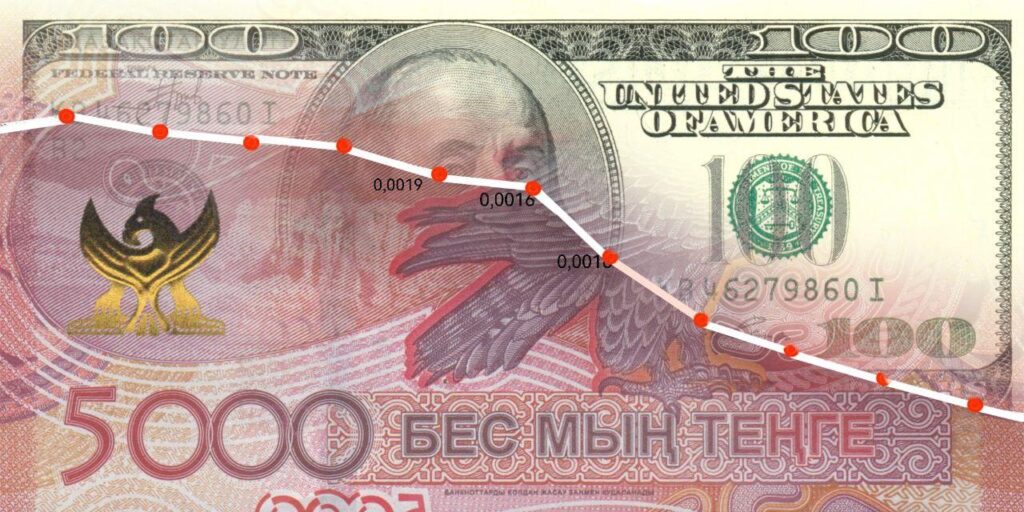
Governor of the National Bank of Kazakhstan, Timur Suleimenov, has attributed the recent strengthening of the tenge to rising global oil prices, which have increased export revenues and boosted the supply of foreign currency on the domestic market. According to the regulator, the tenge appreciated by 3.9% in March, reaching 478.15 KZT to the dollar. The average daily trading volume on the Kazakhstan Stock Exchange increased from $335 million to $372 million, while total trading volume reached $6.7 billion. Currency sales from the National Fund totaled $400 million, supporting transfers to the state budget. In addition, approximately $391 million was supplied through the mandatory sale of foreign currency earnings by quasi-state sector entities. No foreign exchange interventions were conducted during the period. As a result, the National Fund accounted for about 6% of total trading volume, or roughly $22 million per day. Exporters remained the primary source of foreign currency supply, Suleimenov noted. “Kazakhstan’s main export is oil. Prices are rising, volumes remain unchanged, and accordingly, export revenues and currency supply are increasing,” he said. Preliminary estimates indicate that National Fund currency sales in April will total $300-400 million, broadly in line with March levels. Suleimenov also said the tenge remains stable despite earlier forecasts by some analysts suggesting a potential weakening to 1,000-2,000 KZT to the dollar. At the same time, he warned of inflationary risks linked to rising tariffs. According to him, the government plans to factor inflationary pressures into future adjustments of utility and fuel prices. As of April 1, the moratorium on increases in utility and fuel tariffs in Kazakhstan, introduced in October 2025, has expired. The Times of Central Asia previously reported that economist Aidarkhan Kusainov had suggested the tenge could weaken to 1,000 per dollar or even further, arguing that the national currency is overvalued.

Turkmenistan Introduces New 200 Manat Polymer Banknote

Turkmenistan has unveiled a new 200 manat polymer banknote as part of a broader upgrade to its national currency, state news agency TDH reported on December 1. The Central Bank announced that the new note, along with updated polymer versions of the 1, 5, and 10 manat denominations, has entered circulation in honor of the 30th anniversary of Turkmenistan’s recognition as a permanently neutral state. The release also coincides with the 2025 theme: the International Year of Peace and Trust. While the 1, 5, and 10 manat notes retain their existing color schemes and general designs, each now includes the emblem of the International Year of Peace and Trust. The newly introduced 200 manat note depicts the Arkadag Monument on the front and the administrative building of the Arkadag city khyakimlik (mayor’s office) on the reverse. All updated notes bear the year of issue and the facsimile signature of the Central Bank chairperson. The Central Bank emphasized that the new and modified banknotes must be accepted at face value by all institutions and businesses, regardless of ownership or sector. Earlier series issued in 2009, 2012, 2014, 2017, and 2020 remain valid legal tender. To combat counterfeiting, authorities advised the public to verify at least five security features when handling cash. Detailed guidance is available on the Central Bank’s official website. Last year, the Central Bank implemented a range of reforms aimed at improving cash quality and strengthening anti-counterfeiting controls throughout the financial system. In a related regional development, Kyrgyzstan in March began domestic production of its national currency, the som, for the first time since gaining independence. The new Kyrgyz banknotes are printed by the Bishkek-based Open Joint Stock Company Uchkun, replacing previous reliance on European printing facilities.

Kyrgyz National Bank Conducts Largest Currency Intervention of 2025

To stabilize the som exchange rate, the National Bank of the Kyrgyz Republic (NBKR) carried out its largest currency intervention of 2025, selling nearly $174 million on the foreign exchange market. According to the NBKR, $65.3 million was sold on the day of the transaction, with an additional $108.6 million sold under deferred payment terms. This marks the bank’s sixth intervention of the year and its most substantial by volume. In previous months, the NBKR intervened with $158.3 million in April, $81.5 million in September, and $38 million in October. The regulator emphasized that the som remains a floating currency and that interventions are undertaken solely to limit excessive volatility and ensure market stability. Throughout 2025, the NBKR has only conducted dollar sales, without any reverse interventions to repurchase foreign currency. This pattern reflects sustained demand for foreign currency and active trade flows within the country. As a result of these actions, the som has remained stable, with the exchange rate holding just above 87 soms per $. Since the beginning of the year, the NBKR’s total foreign currency sales have exceeded $590 million. Over the past five years, the bank has carried out 99 interventions, selling nearly $3 billion on the market.

Inflation in Kazakhstan “Eating Away” at Incomes: Authorities Struggle for Answers

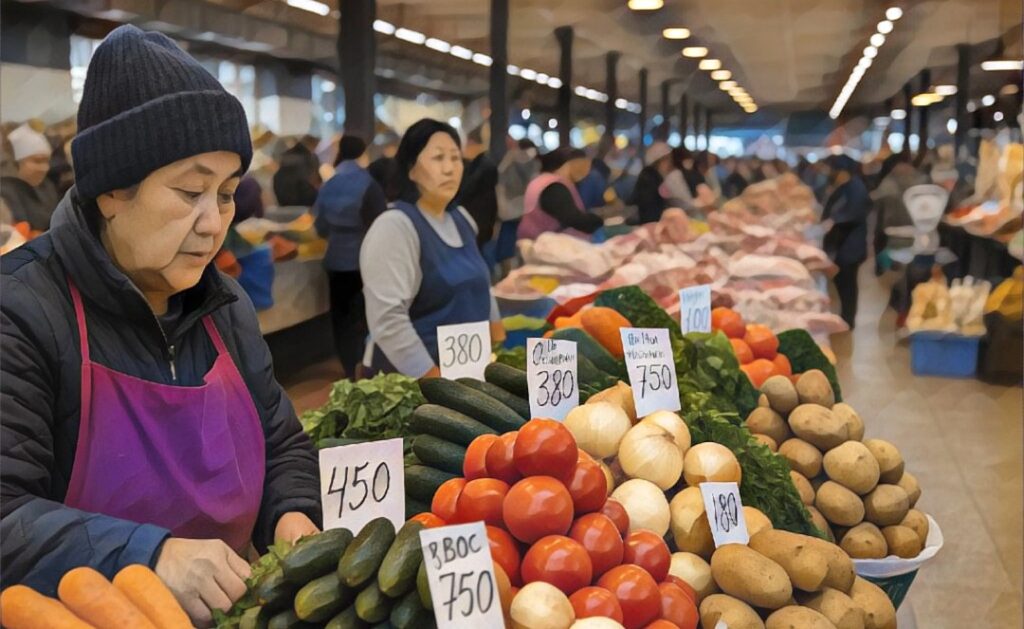
Inflation in Kazakhstan is continuing to erode household incomes, driven by the country’s dependence on imports, rising utility tariffs, and increasing tax burdens. While living costs soar, wages remain sluggish, forcing many families to allocate most of their earnings to essentials such as food, medicine, and utilities. Rising Prices, Stagnant Wages As of August, annual inflation had reached 12.2%, and experts warn it could climb even higher by year’s end. The National Bank’s original 2025 inflation target of 5% has proven to be overly optimistic. “This is a negative, sad trend. It shows that not enough measures have been taken. That it was necessary to tighten monetary policy earlier. It was necessary to contain inflation risks,” said Ramazan Dosov, chief analyst at the Association of Financiers of Kazakhstan. The National Bank’s base rate, its primary instrument for controlling inflation, currently stands at 16.5%. Financier Rasul Rysmambetov notes that the rate is unlikely to be lowered in the near future. However, high interest rates also reduce access to loans for businesses, curbing investment. Despite frequent government statements about inflation-control measures, experts argue that artificial price regulation offers only temporary relief. In his September 8 address to the nation, President Kassym-Jomart Tokayev acknowledged the severity of the issue, stating, “Today, the main problem is high inflation, which is eating away at economic indicators and household incomes. There is no ready-made solution to this problem.” Tokayev called for coordinated efforts across government agencies. At the beginning of 2025, Kazakhstan’s average monthly salary was reported at 424,200 KZT (about $800), reflecting a 24% increase over the previous year. However, this figure obscures wide regional disparities. In many areas, typical monthly salaries range between 180,000 and 230,000 KZT ($330-430). Per capita income reached 194,000 KZT ($362), up 17% from early 2023, but not enough to keep pace with inflation. According to kazkredit.kz, average families now spend up to 95% of their income on day-to-day expenses. In 2023, 52% of income went toward food; that figure has risen to more than 54% in 2025. Halyk Finance, cited by inbusiness.kz, reports that more than half of Kazakhstan’s workers earn below the national average. Salary data reveals stark income inequalities across sectors, with higher wages in mining, finance, and telecommunications, and significantly lower wages in agriculture, healthcare, and public administration. Analyst Arslan Aronov notes that although nominal wages increased by 11.3% in the second quarter of 2025 compared to the same period in 2024, real wage growth was effectively zero due to inflation. Public sentiment reflects the strain. Economists at KZTnomika reported a slight easing of inflation expectations in August 2025, but overall confidence in price stability remains low. Eighty-two percent of survey respondents reported rising food costs, with meat and dairy products leading the list. Among non-food items, medicines, clothing, and cleaning products were most frequently cited. For paid services, rising costs for housing, internet, mobile communication, and healthcare were prominent concerns. Background and Analysis Kazakhstan’s struggle with inflation is rooted in both external shocks and structural...

Kazakhstan Faces Turbulence as External Pressures Mount

Kazakhstan, Central Asia’s largest economy, is facing a convergence of pressures that President Kassym-Jomart Tokayev and National Bank Chairman Timur Suleimenov must now manage simultaneously, from currency depreciation and geopolitical turmoil to volatile oil markets and contentious fiscal reforms, that are testing its economic resilience. Geopolitical Pressures Escalate By mid-2025, it had become increasingly apparent that Kazakhstan has limited capacity to influence global geopolitical dynamics. Like many “middle powers,” the country must adapt to the actions of larger states, whose unpredictable decisions continue to exert downward pressure on the tenge and fuel inflation. On July 28, U.S. President Donald Trump shortened a previously issued 50-day ultimatum to Russian President Vladimir Putin, giving him just 10-12 days to agree to a peace deal with Ukraine. This development added to the mounting uncertainty already impacting Kazakhstan’s economy. As previously reported by The Times of Central Asia, analysts warn that Trump’s secondary sanctions, 100% tariffs targeting Russia’s trading partners, could potentially be extended to Kazakhstan and other Central Asian economies. Though Kazakhstan is not among Russia’s largest trading partners, its economic links to Moscow are still substantial. The country relies heavily on imports from Russia, including electricity, gasoline, food, and medicine. Adding to the pressure, on July 7, Trump announced a 25% tariff on Kazakhstani goods, effective August 1, 2025. While $1.8 billion of Kazakhstan’s $2 billion in exports to the U.S. (mostly oil, metals, and rare earth elements) are exempt, the move has nonetheless rattled Kazakhstan’s already fragile industrial sector and spooked investors. Oil price instability, largely driven by Western efforts to curtail Russian exports, also poses a major risk. Oil revenues make up the bulk of Kazakhstan’s export income and are a key source of budget financing. Further complicating matters, new Russian restrictions require foreign tankers to obtain Federal Security Service (FSB) approval before accessing key Black Sea ports. This affects the Caspian Pipeline Consortium (CPC), which handles more than 80% of Kazakhstan’s oil exports and is partly owned by U.S. firms Chevron and ExxonMobil. Reuters estimates the new rules could disrupt over 2% of global oil supply. Tenge Hits Historic Low As of July 28, the tenge dropped to a record low of 544.87 per U.S. dollar. The depreciation is driving up the cost of imports, an acute problem in an import-dependent economy, pushing more families to spend over half their income on food. Companies with debt obligations in U.S. dollars are also seeing their liabilities grow, worsening the investment climate and prompting firms to scale back on planned expansions. Central Bank Warns Against Intervention National Bank Chairman Timur Suleimenov cautioned against government intervention in currency markets, a position supported by President Kassym-Jomart Tokayev, who has repeatedly cautioned against short-term administrative measures that can destabilize the economy. Suleimenov noted that past attempts to control the exchange rate led to abrupt and damaging devaluations. Suleimenov attributed the tenge’s vulnerability to rising fiscal injections and an 18% increase in the money supply, stressing that without parallel growth in GDP and industrial output,...

Kyrgyzstan Begins Domestic Printing of National Currency Banknotes

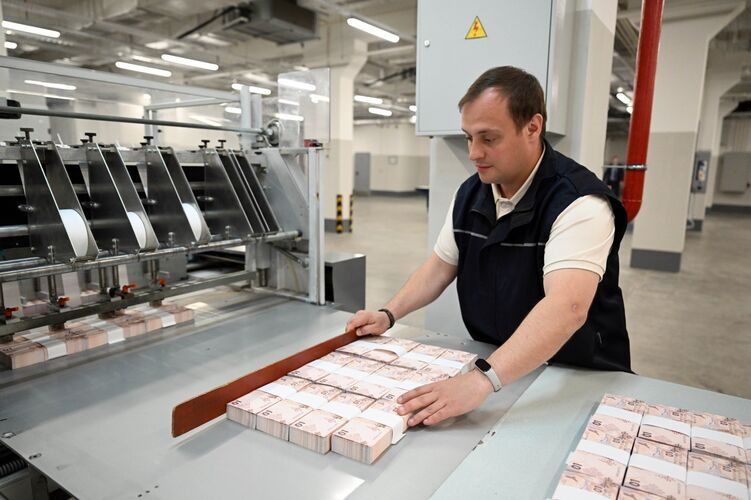
For the first time since gaining independence, Kyrgyzstan has begun printing its national currency, the som, within the country. Previously, Kyrgyz banknotes were produced in various European countries. The new notes are produced by the Bishkek-based Open Joint Stock Company Uchkun. Starting with Small Denominations Chairman of the National Bank Melis Turgunbayev announced that production has begun with small-denomination bills. This approach will enable a quicker replacement of worn or damaged notes scheduled for withdrawal from circulation. Turgunbayev stressed that the new banknotes adhere to the highest international standards for counterfeit protection. A Modernized National Printing Facility Uchkun has recently undergone a major modernization effort, acquiring state-of-the-art printing equipment. In addition to currency, the facility now produces passports, excise stamps, and educational materials. According to Uchkun's Director Bakytbek Sultanov, the enterprise has already begun printing passports and excise stamps. He stated that in his opinion the security features of Kyrgyz passports rank among the top ten globally for protection against counterfeiting. In 2024 alone, Uchkun produced over 770,000 passports and nearly one million books, marking a significant step forward in Kyrgyzstan’s self-reliance in secure printing technologies.