
• KGS/USD = 0.01144 0%
  • KZT/USD = 0.00205 0%
  • TJS/USD = 0.10722 0.19%
  • UZS/USD = 0.00008 0%
  • TMT/USD = 0.28490 -0.28%
  • KGS/USD = 0.01144 0%
  • KZT/USD = 0.00205 0%
  • TJS/USD = 0.10722 0.19%
  • UZS/USD = 0.00008 0%
  • TMT/USD = 0.28490 -0.28%
  • KGS/USD = 0.01144 0%
  • KZT/USD = 0.00205 0%
  • TJS/USD = 0.10722 0.19%
  • UZS/USD = 0.00008 0%
  • TMT/USD = 0.28490 -0.28%
  • KGS/USD = 0.01144 0%
  • KZT/USD = 0.00205 0%
  • TJS/USD = 0.10722 0.19%
  • UZS/USD = 0.00008 0%
  • TMT/USD = 0.28490 -0.28%
  • KGS/USD = 0.01144 0%
  • KZT/USD = 0.00205 0%
  • TJS/USD = 0.10722 0.19%
  • UZS/USD = 0.00008 0%
  • TMT/USD = 0.28490 -0.28%
  • KGS/USD = 0.01144 0%
  • KZT/USD = 0.00205 0%
  • TJS/USD = 0.10722 0.19%
  • UZS/USD = 0.00008 0%
  • TMT/USD = 0.28490 -0.28%
  • KGS/USD = 0.01144 0%
  • KZT/USD = 0.00205 0%
  • TJS/USD = 0.10722 0.19%
  • UZS/USD = 0.00008 0%
  • TMT/USD = 0.28490 -0.28%
  • KGS/USD = 0.01144 0%
  • KZT/USD = 0.00205 0%
  • TJS/USD = 0.10722 0.19%
  • UZS/USD = 0.00008 0%
  • TMT/USD = 0.28490 -0.28%

Viewing results 1 - 6 of 2

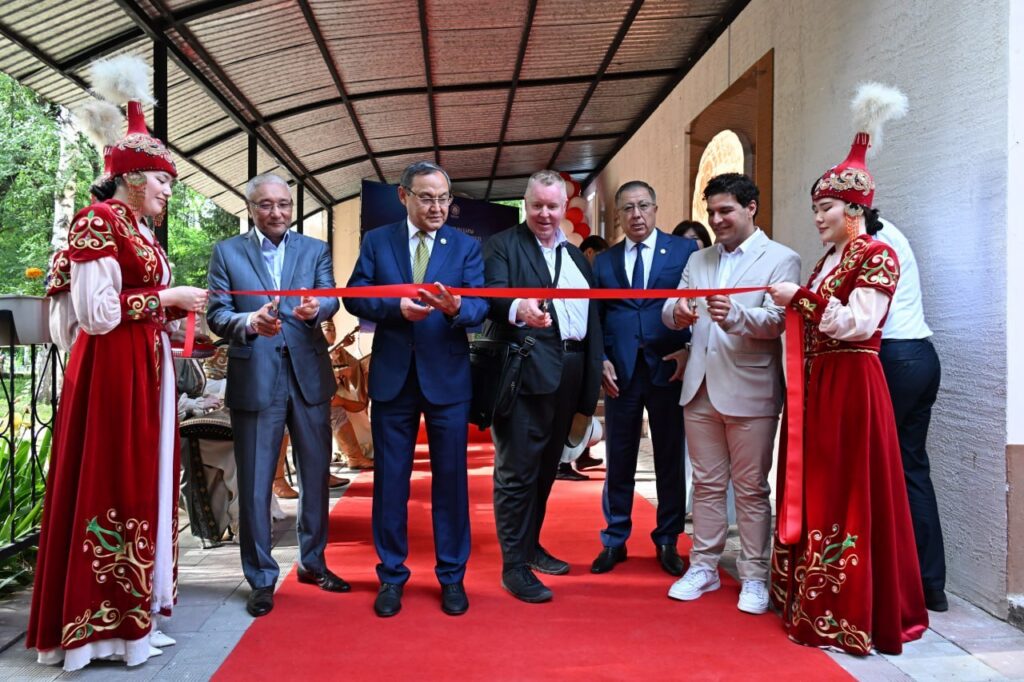
Kazakhstan Opens Central Asia’s First Brain Research Institute

Kazakhstan has opened Central Asia’s first specialized Brain Institute, a new research and education center focused on neuroscience, brain health, and artificial intelligence-assisted medical research, officials said. The institute was launched at Al-Farabi Kazakh National University (KazNU) in Almaty and is the first facility of its kind in Kazakhstan and the wider Central Asian region. The center builds on KazNU’s Cognitive Neuroscience Center, established in 2018, and is intended to expand research into brain development, neurological disorders, cognition, and multilingualism, while training a new generation of neuroscience specialists. Research at the institute will use advanced equipment, including a 3-Tesla magnetic resonance imaging scanner, high-density electroencephalography systems, functional near-infrared spectroscopy technology, and AI and big data analytics tools. Led by Professor Almira Kustubayeva, the institute brings together laboratories specializing in cognitive, behavioral, and computational neuroscience, as well as neurolinguistics. Its research areas will include brain development, neurodegenerative diseases, decision-making, emotional regulation, and the neurological aspects of multilingualism. Scientists at the institute also plan to develop new diagnostic and predictive biomarkers that could improve the detection and treatment of neurological and cognitive disorders. The opening coincided with the 80th anniversary of Kazakhstan’s National Academy of Sciences (NAS) and is part of the government’s push to develop the country’s scientific and technological capacity. Speaking at the launch ceremony, KazNU rector Zhanseit Tuimebayev said the development of science and innovation had been identified as a national priority by President Kassym-Jomart Tokayev. NAS president Akylbek Kurishbayev described the project as an example of cooperation between academic and scientific institutions aimed at developing Kazakhstan’s research base. Kazakhstan has increased investment in scientific research and medical innovation in recent years. Earlier this year, researchers at the Kazakh Research Institute of Processing and Food Industry announced work on an antioxidant dietary supplement intended to help prevent cancer and cardiovascular disease. Last year, surgeons from Kazakhstan carried out Uzbekistan’s first robot-assisted joint replacement procedures using the MAKO robotic surgical platform. President Tokayev has also announced plans to establish two science cities in Almaty and Kurchatov as part of efforts to develop nuclear energy, nuclear medicine, and advanced scientific research.


Kazakhstani Neurosurgeon Galymzhan Issabekov on Brain Research in Berlin

In an era of globalization, science has become an increasingly borderless field dedicated to advancing human well-being. This is especially evident in neuroscience, where ongoing discoveries are deepening understanding of the human brain, one of the body’s most complex and least understood organs, while shaping the future of medicine. Among the emerging researchers in this field is Kazakhstani neurosurgeon and PhD scholar Galymzhan Issabekov. Issabekov is part of a new generation of scientists building international careers in research and medicine. His academic path began at Peking University, where he received medical training and developed a strong foundation in research. He later completed a residency in functional neurosurgery in Beijing, combining clinical practice with scientific work and focusing in particular on hemispherectomy, a complex procedure used to treat severe pediatric epilepsy. [caption id="attachment_46916" align="aligncenter" width="300"] From G.Issabekov's personal archive[/caption] Seeking further professional development, Issabekov continued his training in Japan. With support from the Takeda Science Foundation, he joined Tokyo Women’s Medical University as a fellow, working alongside neurosurgeon Professor Takaomi Taira. This period was instrumental in shaping his research interests and integrating him into the international scientific community. He is currently based in Berlin, where he conducts research at Charité University Hospital. His work focuses on improving deep brain stimulation (DBS), an advanced therapy used to treat Parkinson’s disease. The procedure involves implanting electrodes in deep brain structures to regulate abnormal neural activity. As Issabekov explains, some DBS procedures are performed while the patient is conscious. During these operations, neurophysiologists monitor electrical brain activity in real time, providing neurosurgeons with highly precise, navigation-like guidance. This enables the accurate placement of electrodes in extremely small regions such as the subthalamic nucleus. Experienced specialists can even identify these areas through the distinct patterns, or “sounds,” of neuronal signals, reflecting a high level of surgical precision. Together with his colleagues, Issabekov is developing a new intraoperative protocol that allows for simultaneous brain stimulation and real-time monitoring of neural responses. Previously, combining these processes posed significant technical challenges. The new method is expected to offer deeper insight into the mechanisms of DBS and support more individualized treatment approaches. The research team has reached an important stage, with initial findings now being prepared for publication. Early results indicate strong potential for meaningful scientific advances. Despite working abroad, Issabekov maintains close ties with Kazakhstan’s academic community. He is co-founder and vice president of the Global Central Asian Science and Technology (CAST) Association, which connects more than 150 researchers from Kazakhstan and across Central Asia in over 30 countries. The organization supports early-career scientists by facilitating international placements and promoting global collaboration. “Many Kazakh researchers abroad are willing to contribute to the development of science in their home country,” Issabekov said. “What has been missing is a structured platform to connect them. Our association aims to fill that gap. We also help participants in the Bolashak program, particularly within the '500 Scientists’ initiative, find suitable research institutions and laboratories overseas.” Beyond his scientific work, Issabekov highlights a broader...