
• KZT/USD = 0.00209
  • TJS/USD = 0.10820
  • UZS/USD = 0.00008
  • TMT/USD = 0.29850
  • KZT/USD = 0.00209
  • TJS/USD = 0.10820
  • UZS/USD = 0.00008
  • TMT/USD = 0.29850
  • KZT/USD = 0.00209
  • TJS/USD = 0.10820
  • UZS/USD = 0.00008
  • TMT/USD = 0.29850
  • KZT/USD = 0.00209
  • TJS/USD = 0.10820
  • UZS/USD = 0.00008
  • TMT/USD = 0.29850
  • KZT/USD = 0.00209
  • TJS/USD = 0.10820
  • UZS/USD = 0.00008
  • TMT/USD = 0.29850
  • KZT/USD = 0.00209
  • TJS/USD = 0.10820
  • UZS/USD = 0.00008
  • TMT/USD = 0.29850
  • KZT/USD = 0.00209
  • TJS/USD = 0.10820
  • UZS/USD = 0.00008
  • TMT/USD = 0.29850
  • KZT/USD = 0.00209
  • TJS/USD = 0.10820
  • UZS/USD = 0.00008
  • TMT/USD = 0.29850

Viewing results 1 - 6 of 2

Uzbekistan and BRICS New Development Bank Agree on $4.5 Billion Joint Project Portfolio

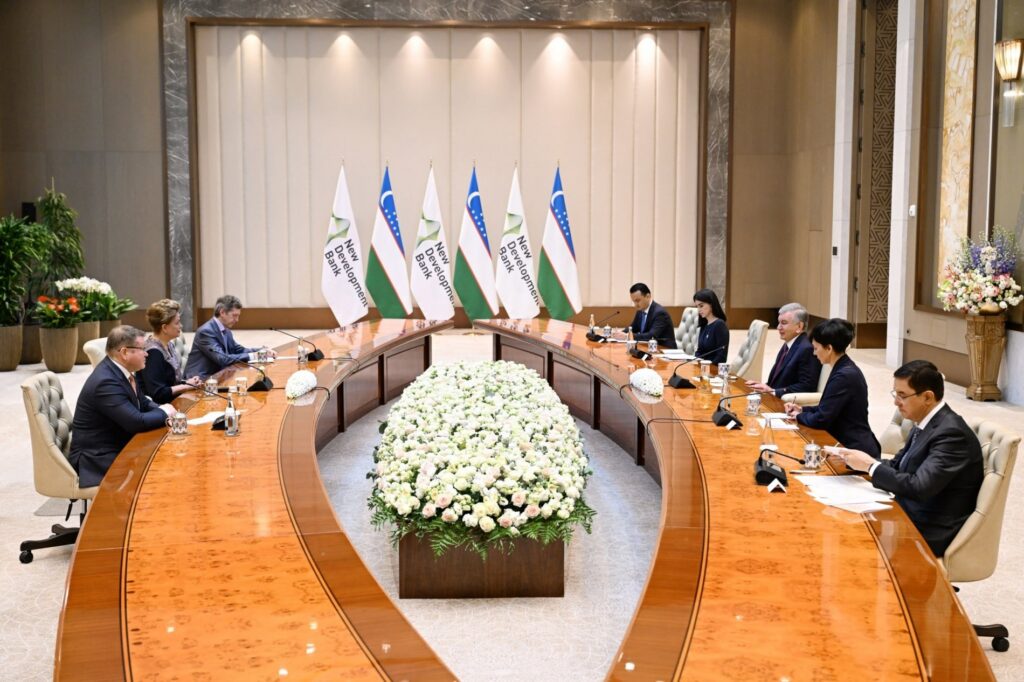
Uzbekistan’s President Shavkat Mirziyoyev has held talks with Dilma Rousseff, president of the New Development Bank (NDB), who arrived in Tashkent to take part in the Tashkent International Investment Forum. According to Uzbekistan’s presidential press service, Mirziyoyev and Rousseff discussed prospects for expanding cooperation with the NDB, including the implementation of agreements reached during previous negotiations. Rousseff praised Uzbekistan’s economic reforms and said the bank was ready to support the country’s priority socioeconomic development goals. The meeting also covered Uzbekistan’s recent accession to the NDB. Uzbekistan officially became the bank’s 10th shareholder in June 2026 and the first Central Asian country to join the institution. Mirziyoyev and Rousseff agreed to form a medium-term portfolio of joint projects in energy, water management, transport and engineering infrastructure, and support for the private and social sectors. NDB expert missions will help implement the initiatives. In May, Uzbekistan’s Ministry of Investment, Industry and Trade said a project portfolio worth $4.5 billion had been prepared for financing through the NDB. It includes projects in transport, energy, construction, and industry. In particular, the possibility of attracting funds for the construction of a nuclear power plant is under consideration. The meeting also covered the NDB’s participation in major regional transport and logistics projects, as well as Uzbekistan’s environmental transformation programs. The NDB was created by BRICS countries in 2014. It is one of the main financial institutions of the Global South. The bank holds an AA+ credit rating and is developing alternative financial mechanisms, including settlements in national currencies. According to the presidential press service, Uzbekistan’s accession to the NDB will help diversify sources of external financing and attract concessional investment for economic modernization.


Uzbekistan Joins BRICS Bank, Strengthening Global Ties

Uzbekistan’s bid to join the New Development Bank (NDB), commonly known as the BRICS Bank, has been officially approved, marking a notable step for the country as it seeks to enhance its engagement within the global financial and economic framework. Established by Brazil, Russia, India, China, and South Africa, the NDB aims to finance sustainable development projects and offer alternatives to traditional Western-led financial institutions such as the IMF and the World Bank. Membership was also approved for Colombia, with applications from Ethiopia and Indonesia currently under review. A New Opportunity for Uzbekistan Uzbekistan's membership in the BRICS Bank provides a potential avenue to strengthening economic ties with major emerging markets. The country's strategic position in Central Asia and its natural resources present opportunities for investments in infrastructure, renewable energy, and agriculture, aligning with the bank’s priorities on sustainable development. Uzbekistan’s recent economic reforms aimed at liberalization and improved governance make the BRICS Bank a practical partner for securing diversified funding sources for large-scale initiatives. Role of the BRICS Bank and Implications The NDB focuses on funding projects in emerging economies to promote growth while reducing dependence on traditional Western lenders. Since its inception in 2014, the bank has supported initiatives in renewable energy, infrastructure, and technology. The inclusion of Uzbekistan indicates the NDB’s interest in expanding its reach beyond its founding members. Uzbekistan's entry into the BRICS Bank takes place in the context of shifts in the global economic landscape, as countries seek new financial partnerships. For Uzbekistan, this step aligns with its foreign policy approach of maintaining balanced ties with global powers while engaging with the West, the Middle East, and neighboring countries. China, a driving force within the NDB and the Belt and Road Initiative (BRI), sees Uzbekistan’s strategic location as beneficial for advancing regional trade and connectivity, while Russia could view the membership as a positive development for maintaining close regional ties while navigating geopolitical challenges. Shared Priorities For the NDB, Uzbekistan offers a gateway to further investments in Central Asia, aligning with its mission to support emerging markets. For Uzbekistan, meanwhile, membership represents a significant development in its integration into international financial networks, potentially opening up opportunities for sustainable development projects that could contribute to the country’s economic growth and strengthen its global standing. The BRICS summit in 2025 will be held in Rio de Janeiro on July 6 and 7.